Here are six of the most famous unsolved problems in mathematics as of 2025:
This article profiles six unsolved mathematical problems defining 2025 frontier of informational constraints. Riemann Hypothesis governs prime distribution; P vs NP questions computational verification versus solution efficiency. Navier-Stokes seeks deterministic fluid smoothness; Birch and Swinnerton-Dyer links elliptic curves to L-functions. Collatz tests iterative convergence; Twin Prime probes infinite prime pairs. Framed within the Unification Project, these are lawful gaps in our informational substrate, not mystical puzzles. Solving them refines reality's computational architecture where number theory, fluid dynamics, and complexity converge. Each represents a boundary where current algorithms fail, urging deeper geometric invariants. Value flows from resolving these constraints, enabling secure cryptography, optimized computation, and precise modeling. These problems mark the edge of testable knowledge, where resolving uncertainty unlocks deterministic control.

The Riemann Hypothesis
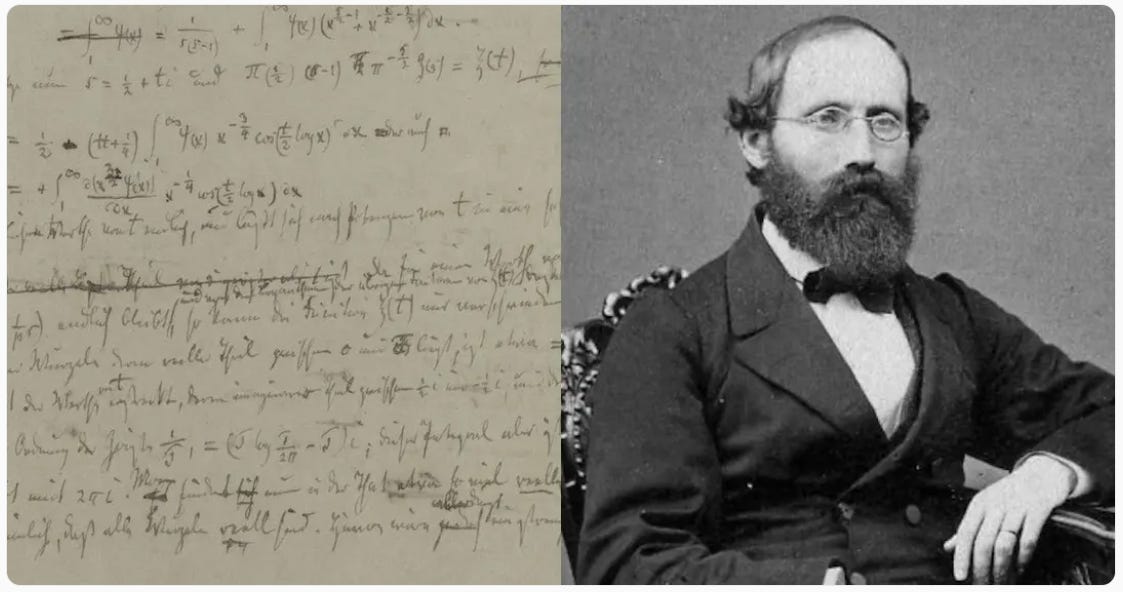
This conjecture suggests that all non-trivial zeros of the Riemann zeta function have a real part equal to 1/2. It’s central to understanding the distribution of prime numbers and has deep implications for number theory and cryptography .
P vs NP Problem
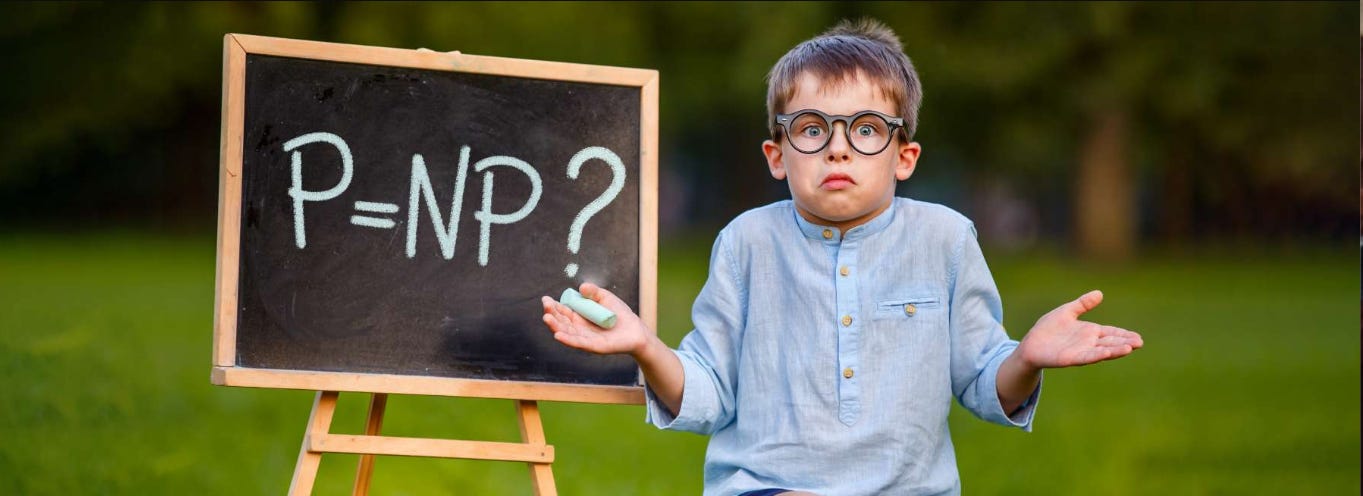
It asks whether every problem whose solution can be quickly verified by a computer can also be quickly solved by one. Solving it would revolutionize computer science, cryptography, and optimization .
Navier–Stokes Existence and Smoothness
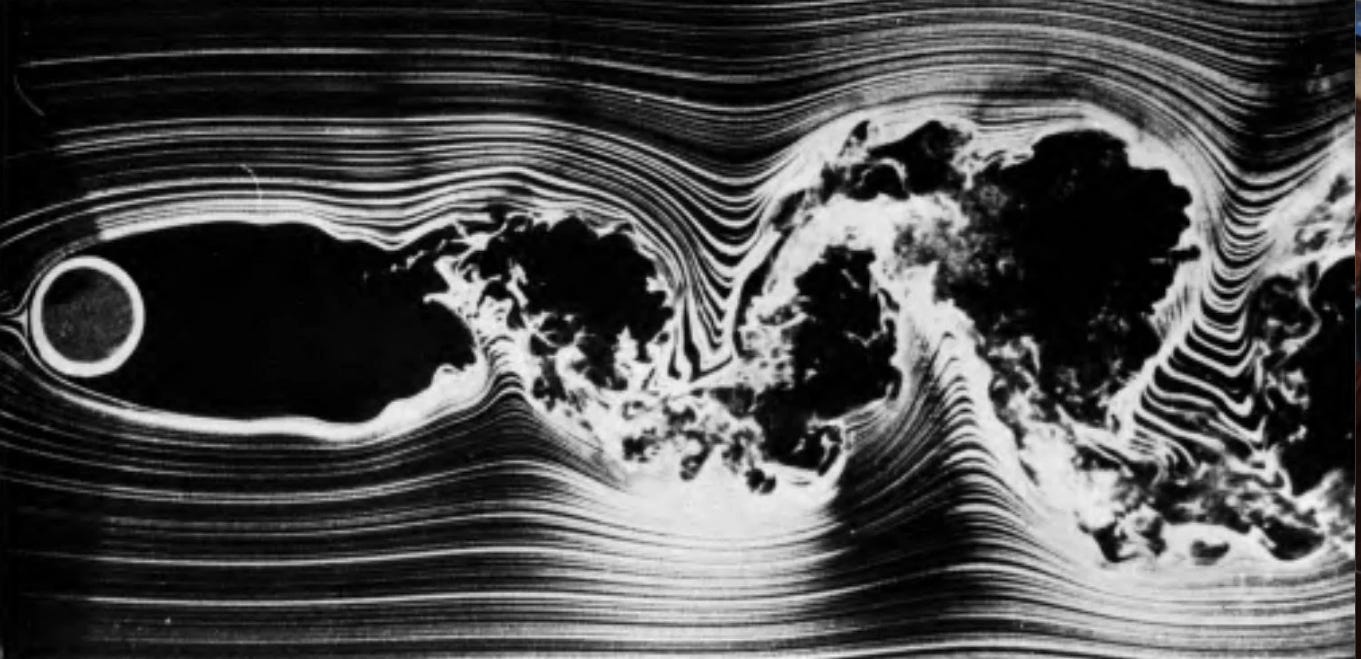
These equations describe fluid motion, but it’s still unknown whether solutions always exist and remain smooth over time in three dimensions. A solution would have major implications for physics and engineering .
Birch and Swinnerton-Dyer Conjecture
This conjecture connects the number of rational points on an elliptic curve to the behavior of its L-function. It’s a key problem in number theory and has applications in cryptography
Collatz Conjecture
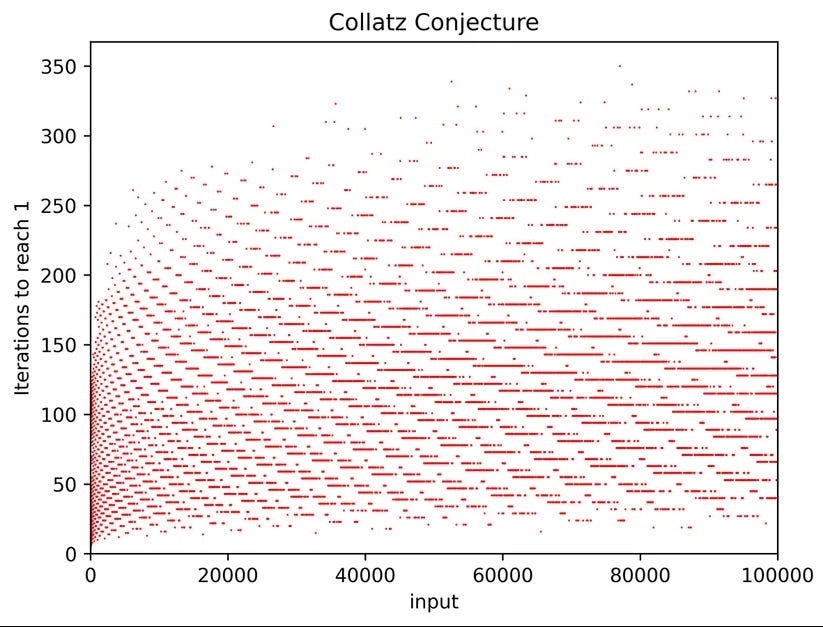
Start with any positive integer. If it’s even, divide by 2. If it’s odd, multiply by 3 and add 1. Repeat. The conjecture claims you’ll always reach 1. Despite its simplicity, it remains unproven
Twin Prime Conjecture
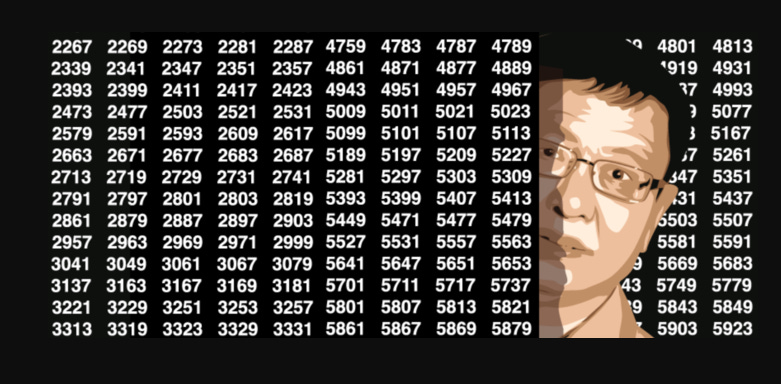
It posits that there are infinitely many pairs of primes that differ by 2 (like 11 and 13). While there’s strong numerical evidence, a proof is still missing .