Conformal Cyclic Cosmology (CCC)
This article profiles Roger Penrose's Conformal Cyclic Cosmology (CCC): a deterministic model where the universe comprises infinite sequential "aeons." Each begins with a Big Bang and ends in exponential expansion, connected via conformal rescaling identifying future infinity with the next Big Bang. Massive particles fade; massless entities (photons, gravitons) carry information across the boundary. Gravitational entropy (Weyl curvature) resets as black holes evaporate via Hawking radiation, leaving observable "Hawking points" in the Cosmic Microwave Background. Framed within the author's Unification Project, CCC treats infinity as a finite informational boundary—a geometric protocol ensuring unitary recycling. It rejects inflation and singularities, offering a rigorous cosmology where spacetime geometry enables eternal, lawful recurrence.
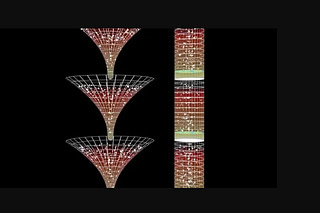
Conformal Cyclic Cosmology (CCC) is Roger Penrose’s audacious attempt to turn the entire history of the universe into an infinite relay race rather than a one-off fireworks show. Below is the full story, stripped of jargon where possible, but with all the conceptual meat left on the bone.
1. The Big Picture – no beginning, no end, no crunch
The universe does not start with a unique Big Bang and does not end in a Big Crunch.
Instead it consists of a countably infinite sequence of “aeons”.
Each aeon begins with a hot, smooth, spatially-flat Big-Bang-like hypersurface and ends with an exponentially expanding, particle-free de Sitter phase.
The trick: the future infinity of one aeon is conformally identified with the Big Bang of the next. – Mathematically this is possible because both regions are dominated by massless radiation; their geometry can be rescaled to fit together like two jigsaw pieces with the same shape but different size. – No contraction is required; every aeon expands forever .
2. Conformal rescaling – the magic glue
A conformal factor Ω(x) → 0 is multiplied into the metric so that infinite future time is squashed to a finite spacelike 3-surface (called crossover).
On that surface proper time stops, but conformal time continues, carrying the geometry straight into the next aeon’s Big Bang.
All massive particles must effectively “fade out” before crossover (via decay, annihilation, or becoming irrelevantly dilute) so that only conformally invariant entities (photons, gravitons) survive
3. Gravitational entropy – why the relay is possible
Penrose re-defines gravitational entropy as encoded in the Weyl curvature (the tidal, shape-distorting part of gravity). – Big Bang: Weyl curvature = 0 (special, low entropy). – Matter clumps → Weyl curvature grows → black holes form → entropy skyrockets. – Black holes evaporate via Hawking radiation; the Hawking quanta carry away the entropy. – Eventually the universe is again Weyl-flat on large scales, ready for the next aeon .
4. Quantum-information version – unitary recycling
A recent Hilbert-space formulation splits the universe into four sectors: – M: matter that will fall into black holes – G: gravitational degrees of freedom activated by clumping – H: Hawking radiation – A: “auxiliary” stuff that avoids horizons (free photons, gravitons, dark-matter wimps, etc.)
Global unitary evolution is constructed across the crossover; no information is lost.
The von-Neumann entropy of sector G rises and then falls back to zero, reproducing the Page curve of an evaporating black hole, but now for the entire aeon
5. Observational fossils – Hawking points
When the dominant super-massive black hole in a galactic cluster finally evaporates, its last quantum produces a localized burst of energy on the crossover surface.
That burst propagates into the next aeon and shows up as a circular hot spot in the Cosmic Microwave Background (CMB).
Penrose & Meissner (2025) calculate: – Temperature boost inside the spot ∝ mass of the old cluster. – Angular diameter ∝ length of a short gravitational-wave epoch (GWE) that exists just after crossover.
Using 2-spinor/twistor methods they show the observed spot size and temperature jump match the largest clusters seen today, suggesting the previous aeon had similar physics .
6. What CCC doesn’t need
No inflation field.
No quantum-gravity regime at the Big Bang.
No violation of the 2nd law of thermodynamics.
No mysterious “bounce” through a singular high-density phase.
7. What it does need (and critics highlight)
All massive particles must disappear or become irrelevantly dilute; proton decay is allowed by Grand-Unified extensions, but electron decay is not standard physics.
The conformal rescaling must remain smooth everywhere except at the discrete Hawking points; tiny inhomogeneities could accumulate and spoil the next aeon’s smoothness.
Independent groups have so far not confirmed that the claimed CMB rings are statistically significant
8. Minimal glossary
Conformal transformation: stretch or shrink spacetime by a position-dependent scale factor without changing angles or light-cone structure.
Weyl curvature: the part of curvature that changes shapes but not volumes; zero for the standard FLRW universe.
Crossover 3-surface: the spacelike slice where one aeon’s future infinity becomes the next aeon’s Big Bang.
Gravitational wave epoch (GWE): a short, early phase dominated by a stochastic gravitational-wave background; its duration sets the observed angular size of Hawking spots.
9. Take-away metaphor
Imagine an endless stack of photographic prints. Each print starts perfectly blank and smooth (low entropy). Over time you splash ink, tear holes, let it decay until only faint light shines through (high entropy). Now run the print through a photocopier that resets contrast and size so the tattered, almost-white page becomes the next perfectly smooth blank sheet. The tears (black holes) leave tiny pin-pricks (Hawking points) that show up as faint rings on the new print. CCC is that photocopier, set to “∞ copies”.
For the mathematically curious, the 2025 paper by Meissner & Penrose gives the full twist-or-based derivation of energy conservation across crossover and the spot-size vs GWE relation .
Geometrically, CCC does not treat “infinity” as a place you never reach; it treats it as a finite boundary that can be glued to another finite boundary once you rescale the ruler. Here is the cleanest way to see it, step by step, with pictures you can draw on a sheet of paper.
Penrose diagram of one aeon
Start with the usual conformal (Penrose) diagram for a ΛCDM universe that ends in eternal exponential expansion (de Sitter):
Copy
 ℐ⁺  (future null infinity)
              ╲╱
               │
               │   de Sitter region
               │
               │
             i⁺  (future timelike infinity)
               │
               │
               │
               │
             i⁻  (past timelike infinity)
               │
               │
             ℐ⁻  (past null infinity)
Every light ray ends on the 45° line ℐ⁺.
Every timelike world-line ends at the single point i⁺.
Proper time along any world-line → ∞ while the conformal time η = ∫ dt/a(t) remains finite. (Because a(t) ∝ e^{Ht} in de Sitter, the integral converges.)
Rescale the metric to make infinity finite
Introduce a conformal factor
Ω(η) = e^{-Hη} (de Sitter) (1)
and define a new metric
g̃_{μν} = Ω² g_{μν}. (2)
In the g̃ metric the infinite future is squashed to a finite coordinate distance.
The old i⁺ becomes a spacelike 3-surface of finite area.
Light rays still hit ℐ⁺ at 45°, but ℐ⁺ itself is now a finite cylinder (S²×ℝ) whose cross-sectional area shrinks to zero as Ω→0.
The crossover 3-surface
Because the Weyl curvature vanishes in the massless radiation that dominates the very late universe, the 3-geometry on that surface is locally conformally flat. CCC postulates that you can now identify that 3-surface with the Big-Bang 3-surface of the next aeon, provided you invert the conformal factor:
Big-bang scale factor a_{next}(η) ∝ 1/Ω(η). (3)
The zero-size Big Bang is thereby replaced by a finite-size smooth surface; the physical singularity is removed without invoking quantum gravity.
The identification is smooth except at isolated points where black-hole evaporation leaves behind energy concentrations (Hawking points).
Global picture – an infinite accordion
Stack the diagrams vertically and glue the top edge of one sheet to the bottom edge of the next:
Copy
┌--------------┐  ← ℐ⁺ of aeon n
│   aeon n     │
└--------------┘
┌--------------┐  ← Big Bang of aeon n+1
│  aeon n+1    │
└--------------┘
┌--------------┐  ← Big Bang of aeon n+2
│  aeon n+2    │
└--------------┘
    ⋮
Each aeon is future-complete (no event is missing).
The whole stack is past-complete as well: every event has a full past light-cone.
Infinity is literally a place you can draw—it is the horizontal line at the top of each sheet—yet it is also the initial surface for the next sheet.
What “lives” on the boundary
Only conformally invariant fields survive the Ω→0 limit:
Maxwell field F_{μν} (photons)
Weyl tensor C_{μνρσ} (gravitons)
Massless neutrinos (if any remain)
Massive particles see their proper energy E = Ω m → 0; they effectively decouple before the boundary is reached, solving the “infinite red-shift” problem.
A 2-D analogy you can draw
Take the upper half-plane with metric
ds² = (1/y²)(dx² + dy²), y > 0. (4)
Geodesics are semicircles hitting the axis y = 0 orthogonally.
The axis is infinite proper distance away, yet it is a finite line in the coordinate x.
Apply the map (x,y) → (x, 1/y); the old boundary y = 0 becomes the new boundary at y = ∞, and the geometry is identical. CCC does the 4-D Lorentzian version of this trick.
Key take-away
In CCC, “infinity” is not a missing piece of the manifold; it is a finite spacelike hypersurface whose geometry is smooth because the conformal rescaling (2) makes the diverging proper time and vanishing particle density mutually compatible. The relay race continues forever because every future boundary is also a past boundary—infinity, geometrically, is where the baton is passed.