String Theory - Pros and Cons
This article presents a balanced audit of String Theory, contrasting its mathematical triumphs with its empirical failures. The "Pros" highlight a lineage of breakthroughs: from Veneziano's amplitude and Nambu/Susskind's physical visualization to Witten's M-Theory unification, Polchinski's D-branes, and Maldacena's AdS/CFT holography—tools that revolutionized theoretical physics and mathematics. However, the "Cons" detail a profound crisis: critics like Woit, Smolin, and Feynman argue the theory is "not even wrong" due to its lack of falsifiable predictions, while the $10^{500}$-fold "landscape" renders it unfalsifiable. Additional charges include background-dependence (violating Einstein's spirit), sociological monoculture stifling rivals (Loop Quantum Gravity), and insider disillusionment (Gross, 't Hooft, Turok). The piece concludes that while String Theory provided powerful mathematical machinery, its failure to connect with experimental reality risks transforming it from a scientific program into a self-referential dogma.

“PROS”
Gabriele Veneziano 1968
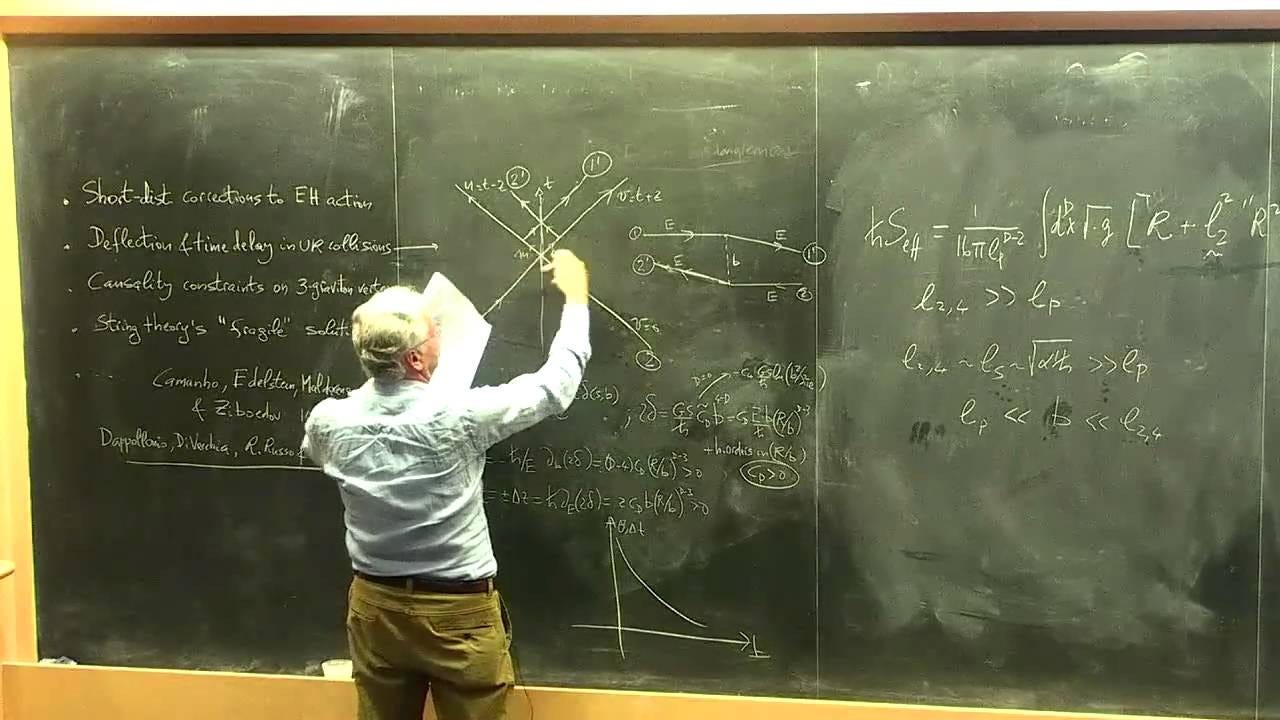
Wrote the Euler-beta-function amplitude that everyone soon realised was actually a quantum string .
Leonard Susskind 1969
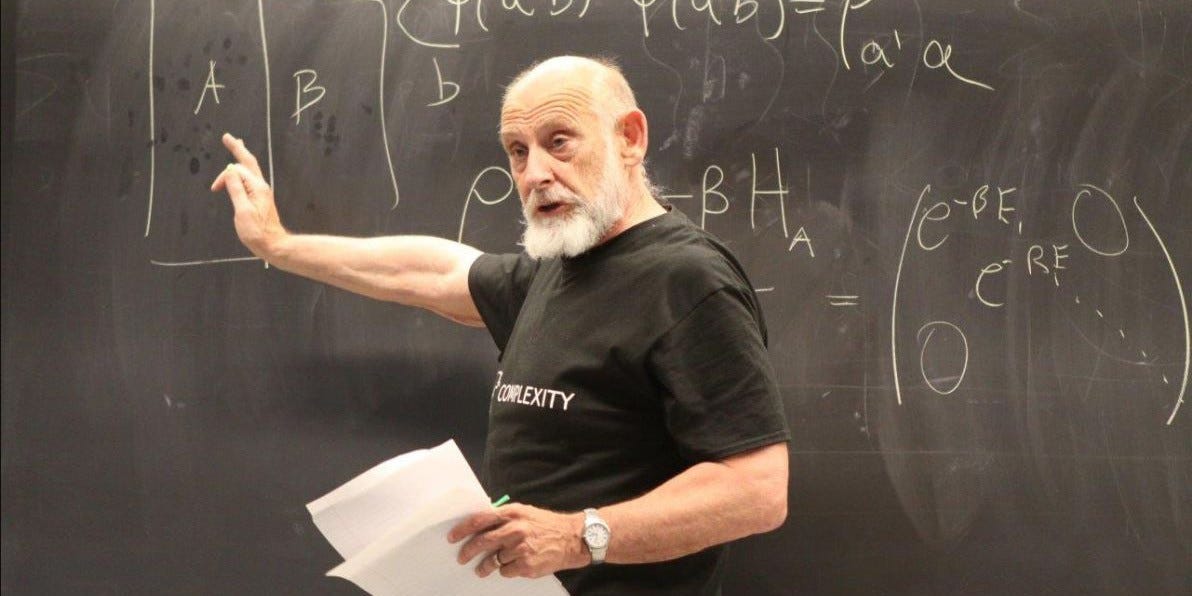
First to reinterpret Veneziano’s formula as vibrating relativistic strings, coining the physical picture
Yoichiro Nambu 1970

Independently produced the same string picture; his paper supplied the very name “string” .
Michael Green 1984
Co-demonstrated mathematical consistency of super-strings; the other half of the famous Green-Schwarz mechanism .
Edward Witten 1995
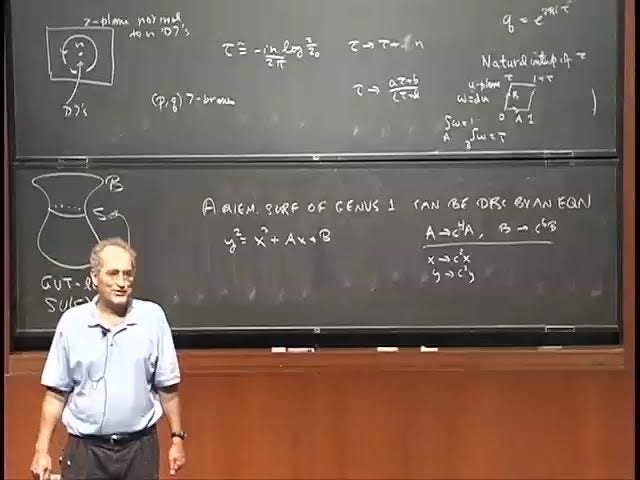
Unified the five 10-D super-string models into a single 11-D M-theory, launching the second super-string revolution .
Joseph Polchinski 1995
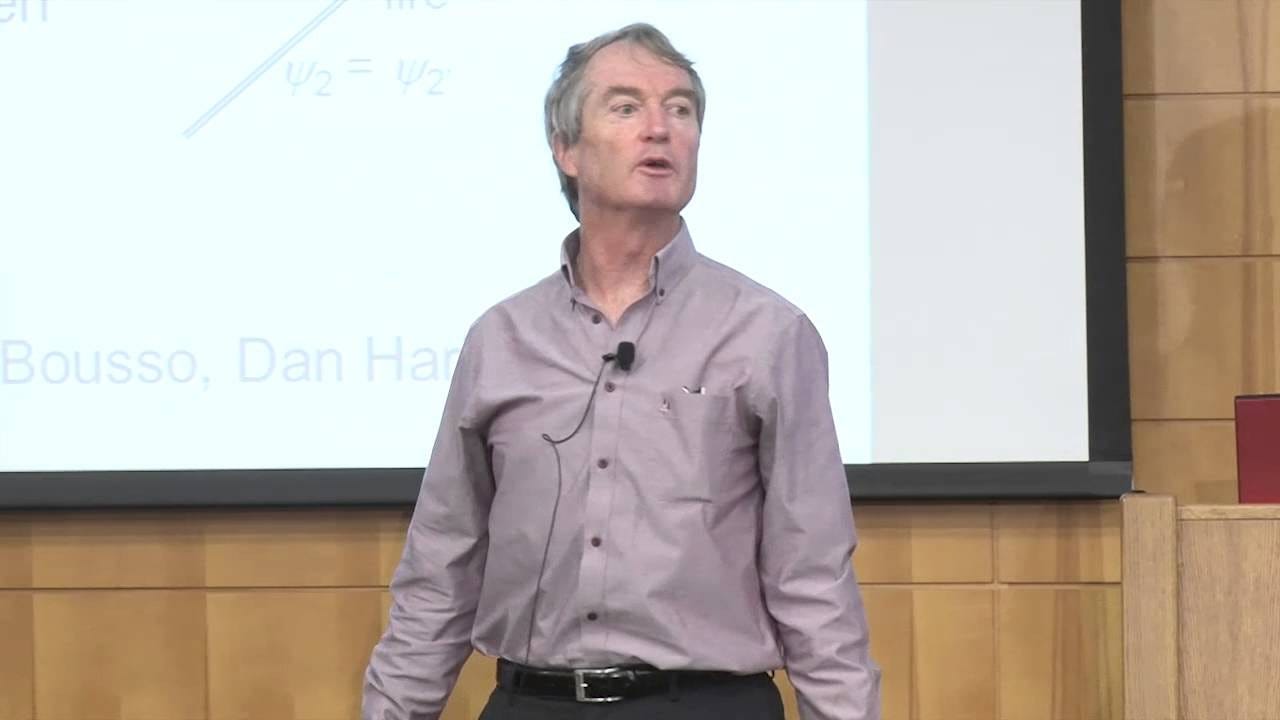
Proved string theory needs D-branes; his 1995 paper turned branes from curiosities into core ingredients .
Juan Maldacena 1997
Discovered AdS/CFT duality: a gravity-free field theory is a string theory in one higher dimension—modern holography
David Gross 1985
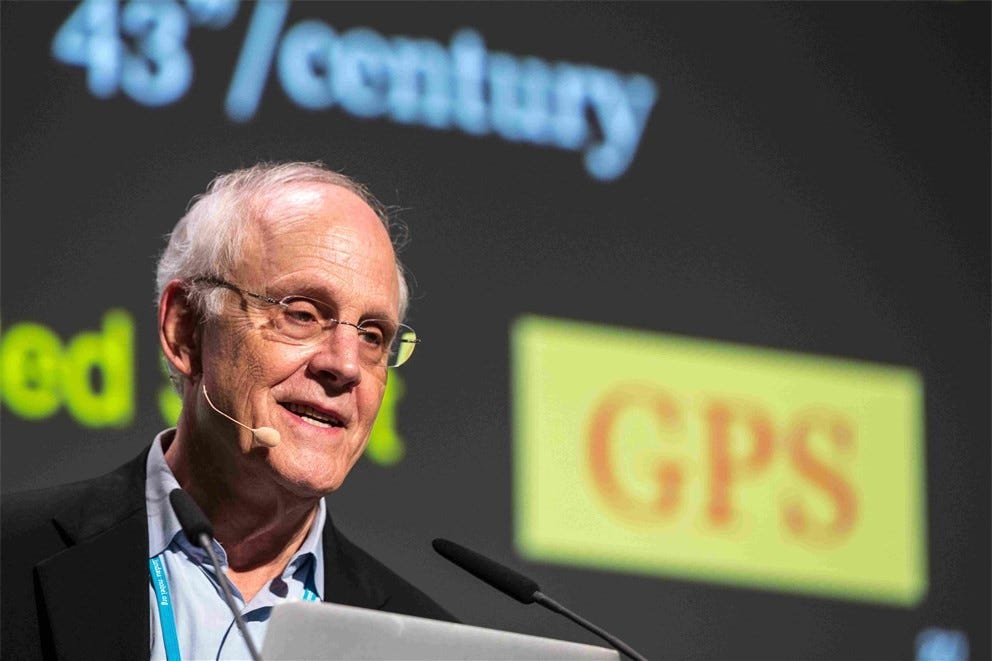
Co-invented heterotic strings, the version that naturally houses the Standard-Model gauge group .
Brian Greene 1995-99S
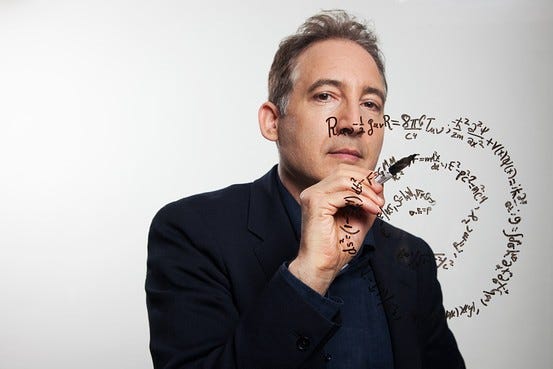
Showed how Calabi–Yau compactifications yield realistic 4-D physics; later became the public face via The Elegant Universe
Michio Kaku 1974

Co-founded string field theory; returned during the 1984 revolution and became the field’s most media-visible spokesman .
Sean Carroll
Not a string-theory architect; known instead for cosmology outreach and skeptical commentary on the programme’s empirical gap
“CONS”
1. “The theory is ill-defined & permanently safe from experiment”
Peter Woit – 2006 book Not Even Wrong: “string theory has failed as an idea about unification and refuses to admit it.”
Lee Smolin – 2006 book The Trouble with Physics: claims the field became a sociological monoculture that starves loop quantum gravity, etc.
Roger Penrose – 2003–06 public lectures: compactified dimensions collapse by his singularity theorems → the maths is “fantasy” unless proved otherwise.
Dan Friedan – 2002 Rutgers colloquium: “recognising failure is part of science; string theory has not done so.”
Richard Feynman – 1987 BBC Horizon interview: “I don’t like that they’re not calculating anything… it doesn’t look like science.”
2. “The landscape kills predictability”
George Ellis – 2006–13 cosmology meetings: 10^500 vacua reduce the theory to an unfalsifiable ensemble explanation.
Lawrence Krauss – 2005 book Hiding in the Mirror: landscape is “giving up on traditional science”; public debates Brian Greene.
Sheldon Glashow – 1988–2005 Harvard colloquia: “makes no experimentally testable predictions”; jokes he nearly left Harvard over its dominance.
Philip Anderson – 2001 Science letter: likens methodology to “medieval scholasticism: mathematical ideals without experiment.”
Sabine Hossenfelder – 2009–18 blog & book Lost in Math: landscape is “salami-slicing theory space” and sociology silences dissenters.
3. “Background-dependence contradicts Einstein”
Carlo Rovelli – 1995–2020 loop-gravity papers: only background-independent approaches honour GR’s core lesson; strings “hard-wire” a fixed geometry.
John Stachel – 1999 General Relativity & Gravitation essay: “strings propagate in spacetime, they do not explain spacetime.”
Abhay Ashtekar – 2004 Class. Quantum Grav. review: canonical quantisation of GR vs. perturbative string expansions show conflicting assumptions.
4. “Sociology & funding capture”
João Magueijo – 2008 New Scientist op-ed: string lobby is “strangling” rival programmes like VSL cosmology.
John Moffat – 2007 Reinventing Gravity: hiring & grant panels equate “quantum gravity = string theory”; alternatives filtered out.
Robert B. Laughlin – 2005 A Different Universe: micro-focused particle culture (string theory the extreme) ignores emergent macro-laws.
5. Insider dissidents – have done string work but now sound alarms
David Gross – 2012 Munich conference: still advocates, yet grades the theory “B+” and warns “we’re in utter confusion.”
Erik Verlinde – 2011 JHEP paper: AdS/CFT may be “a lamp-post effect”; urges more phenomenological creativity.
Gerard ’t Hooft – 2013 Found. Phys. editorial: organised issue “Forty years of string theory: what have we learned?” and keeps pushing cellular-automaton alternatives.
6. Neil Turok – special entry
2013 Perimeter welcome speech: “It’s the ultimate catastrophe: that theoretical physics has led to this crazy situation where the theory leads to the multiverse and has no predictions… String theory has hijacked the field.” – He still uses string-derived tools (e.g. brane-collision cyclic model, 2008), but argues the programme has become empirically empty and needs radical replacement
Neil Turok’s relationship with string theory is a classic “insider-turned-critic” arc.
Early-career insider
2010-now: open disillusionment
So the why for Turok is:
“I used the machinery, I helped popularise brane-collision cosmology, but the landscape/multiverse endpoint is empirically empty; therefore string theory must be abandoned for a simpler, calculable alternative.”