Planeth Earth Eons
This article chronicles Earth’s 4.5-billion-year history as a deterministic sequence of informational phase transitions, framed by the Long Scale numeration (Portuguese convention). It traces the planet from the Hadean (molten accretion, Theia impact, ochre sky) through the Archean (geodynamo onset, anaerobic life) and Proterozoic (Great Oxidation, Snowball Earth events, eukaryotic endosymbiosis) to the Phanerozoic (Cambrian explosion, mass extinctions, human emergence). Key drivers are treated as physical invariants: magnetic field intensity modulating cosmic-ray mutation rates; supercontinent cycles regulating climate via weathering; and oxygen thresholds triggering biological complexity. The narrative culminates in the anthropogenic CO₂ pulse—100× faster than natural precedents—framing humanity not as an exception but as the latest agent in Earth’s metabolic evolution, where value flows from individual agency (mutations, innovations) to systemic transformation.
About Numbers
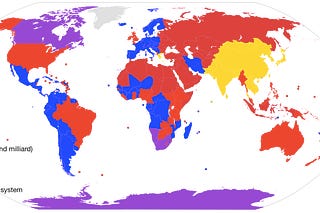
The Long Scale system, which is indeed used in Portugal and most of continental Europe. It contrasts with the Short Scale used in the US, most English-speaking countries, and Brazil.
🇵🇹 The Long Scale (Portugal)
The key difference lies in the value assigned to the number names after a million:
Basis: The long scale is based on powers of one million ($10^6). Each new “-illion” term (like billion, trillion, etc.) is a million times larger than the previous one.
Intermediate Term: A new term, the milliard (or similar, sometimes “mil milhões” in Portuguese, meaning “a thousand millions”), is used to represent $10^9.
🇺🇸 Comparison with the Short Scale
The short scale, on the other hand, is based on powers of one thousand ($10^3$). Each new “-illion” term is only a thousand times larger than the previous one.
The most common source of confusion is the term billion:
In Portugal (Long Scale): A Bilião is $10^{12}$ (a million million).
In the US/UK (Short Scale): A Billion is $10^9$ (a thousand million).
HADEAN EON 4 546 → 4 031 Ma
no eras)
4 567 Ma – first calcium-aluminium inclusions condense – birth certificate of the Solar System.
4 546 Ma – Earth accretion complete;.
Mars-sized Theia impact melts the proto-planet and launches the Moon only 22 500 km away (4 Earth-radii).
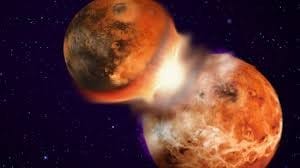
The newborn satellite looms 4 times wider and 15–16 times larger in area than the full Moon we see tonight.
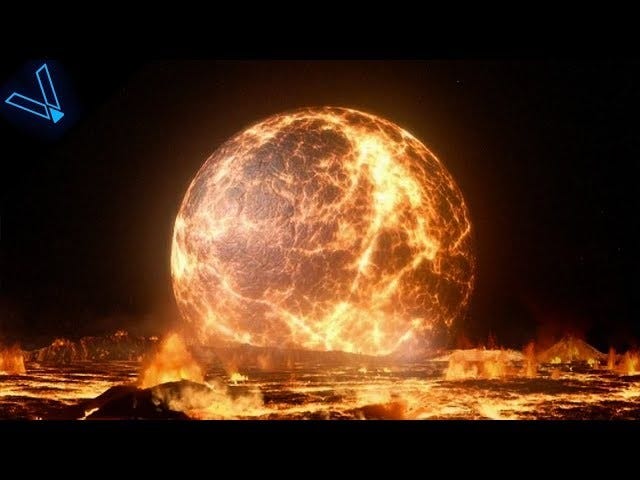
A 100-bar steam atmosphere condenses, leaving a 40-bar CO₂ haze; red light is scattered and the sky glows ochre-orange. Surface temperature hovers near 200 °C, oceans are hot and acidic, and the planet has no magnetic field yet – the core is still entirely molten.
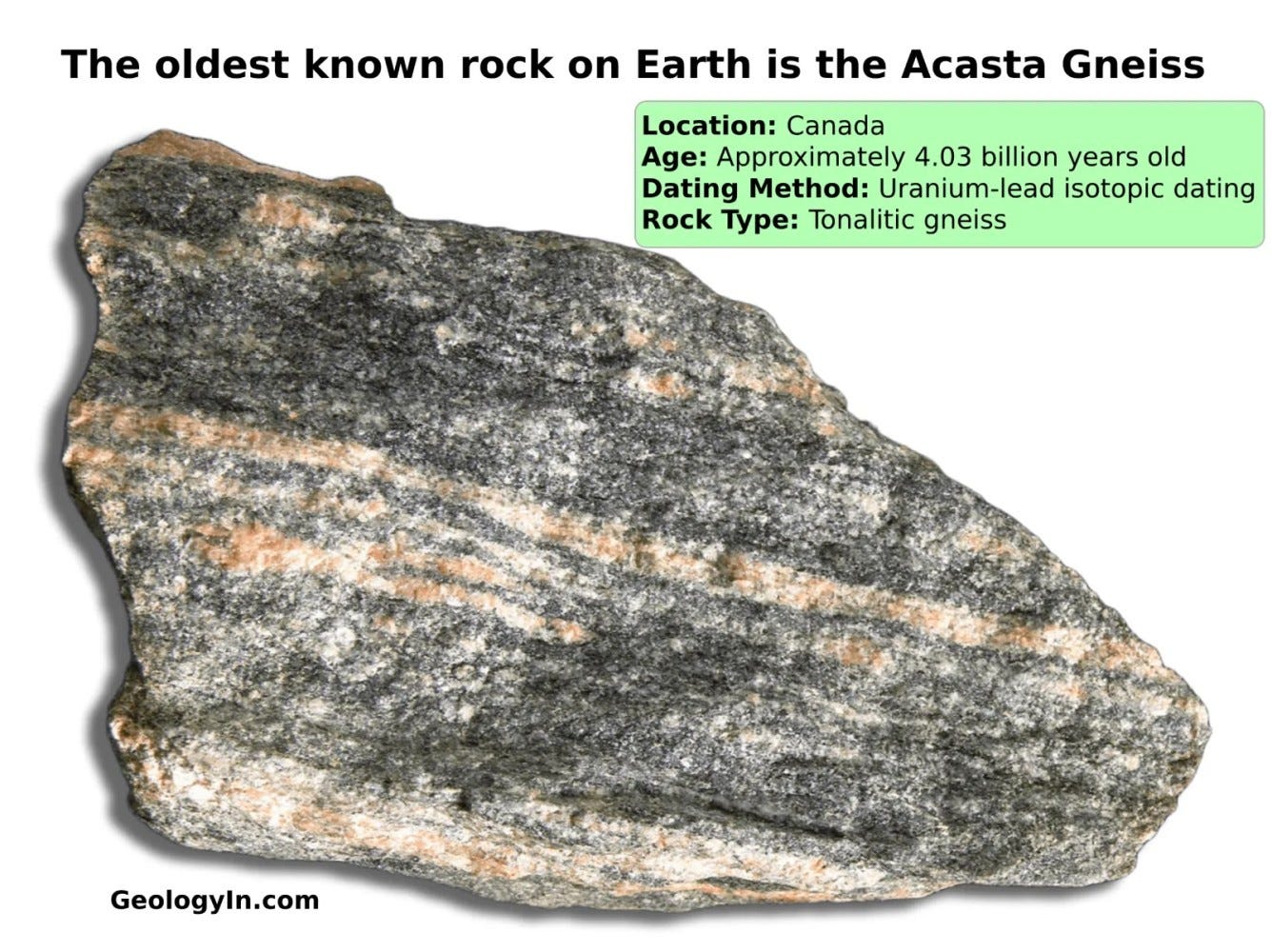
By 4 031 Ma the first microscopic continental nuclei (Acasta gneisses) crystallise – the seed-crystals of all future continents.
ARCHEAN EON 4 031 → 2 500 Ma (magnetic field begins, first continents drift, life appears)
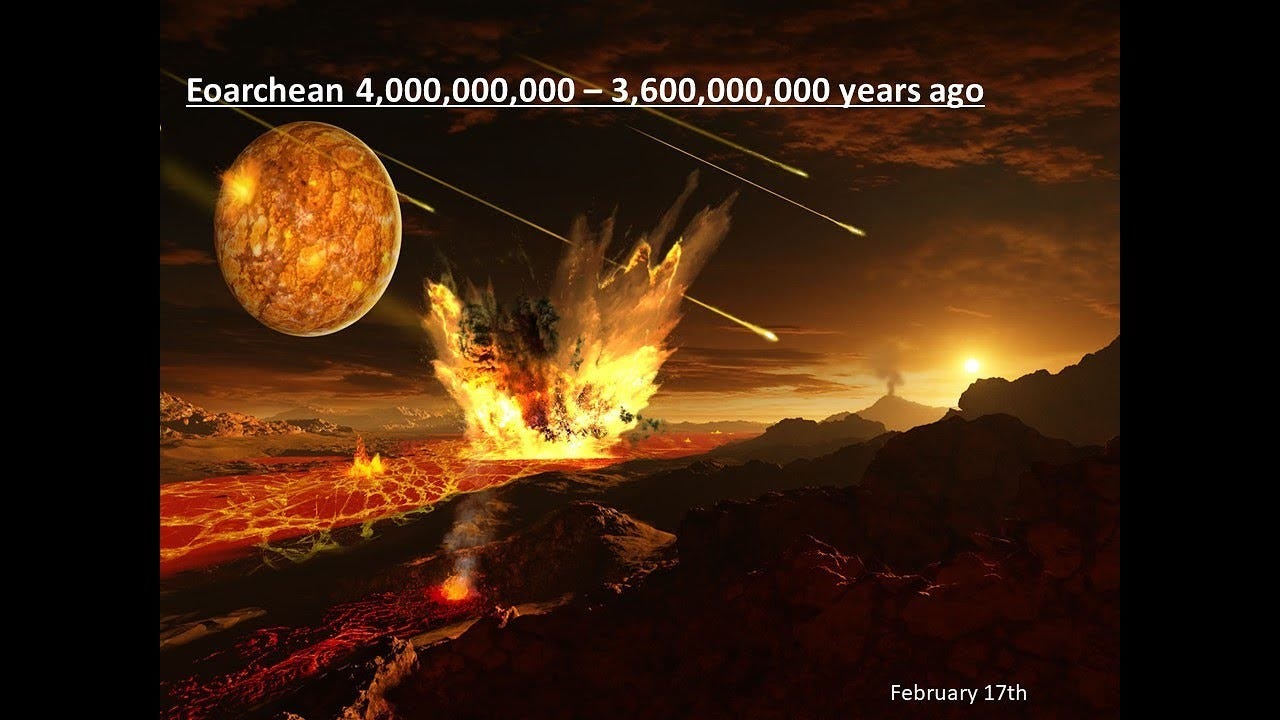
Eoarchean 4 031 → 3 600 Ma
The geodynamo switches on as the inner core starts to solidify; palaeo-intensity reaches 50–70 % of today’s value, deflecting much of the harsh solar wind that had previously stripped hydrogen from the steam-CO₂ atmosphere. – Micro-continents (Ur, Vaalbara) drift slowly across a basaltic seafloor; collisions build the first granitic keels. Surface temperature cools to 60–80 °C; oceans are still hot but liquid.
Paleoarchean 3 600 → 3 200 Ma
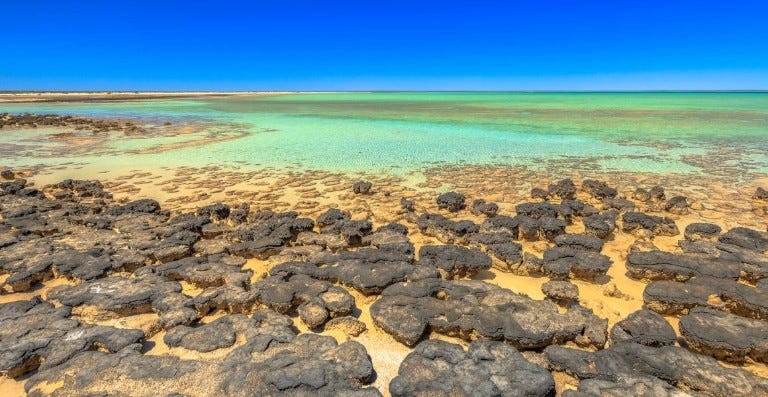
– Dresser stromatolites 3 480 Ma (firm) and disputed Isua life-signs 3 800 Ma record an anaerobic biosphere; sky remains orange, O₂ < 0,1 % PAL.
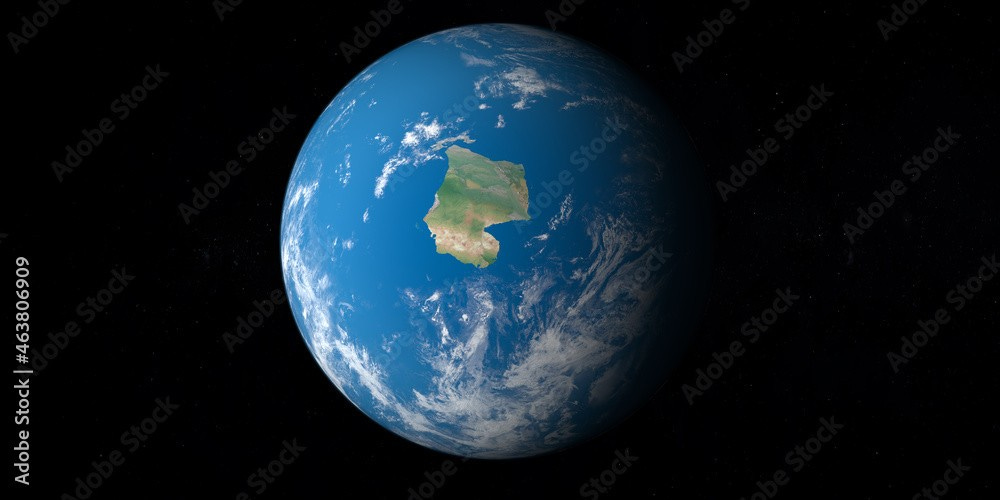
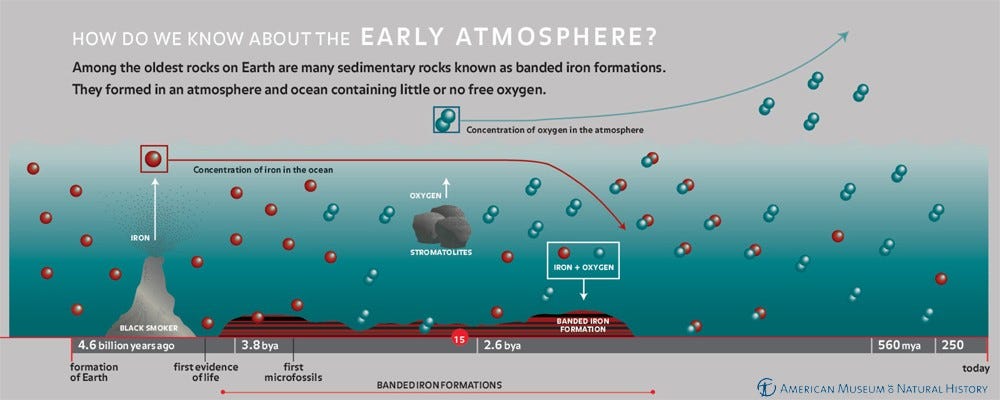
– Super-craton Vaalbara drifts, then rifts; banded-iron formations (BIF) precipitate as photosynthetic cyanobacteria begin to leak minute amounts of oxygen.
Mesoarchean 3 200 → 2 800 Ma
– Super-craton Kenorland assembles; global temperature 40–50 °C. BIF peaks; magnetosphere strength ~80 % modern.
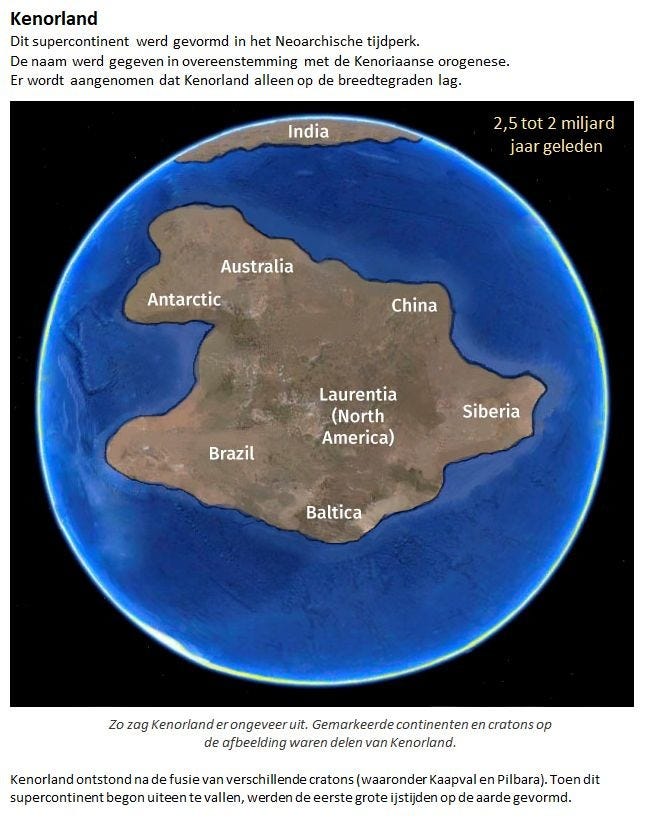
Neoarchean 2 800 → 2 500 Ma
– Cyanobacteria invent oxygenic photosynthesis; local O₂ “whiffs” (Se-isotope signals) appear.
Kenorland breaks apart;
rift-related basaltic provinces inject nutrients into oceans, fuelling microbial blooms.
Geomagnetic field intensity occasionally drops to 30 % during super-plume events, letting cosmic-ray flux rise and perhaps accelerating mutation rates in surface microbes.
PALAEOPROTEROZOIC ERA 2 500 → 1 600 Ma (first global oxygenation, first global glaciation, continents collide)
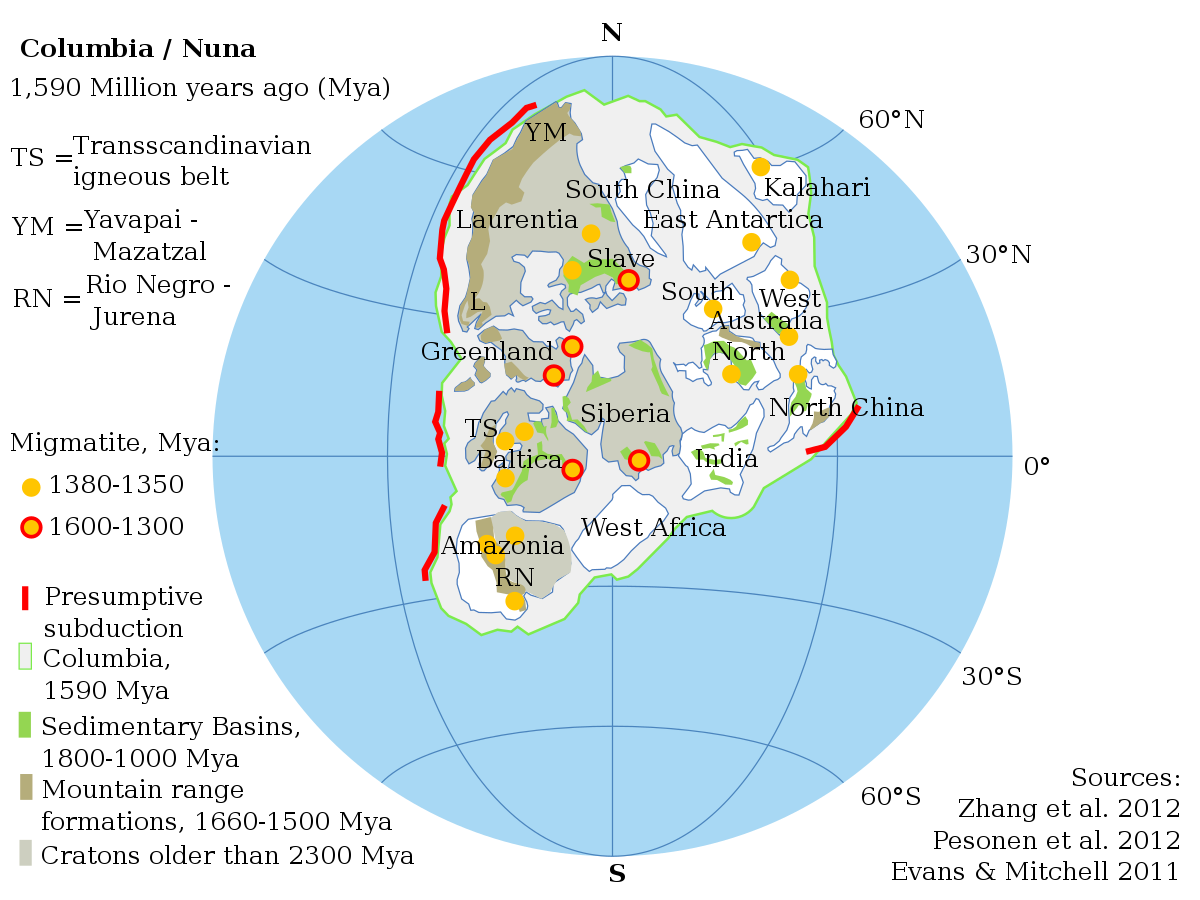
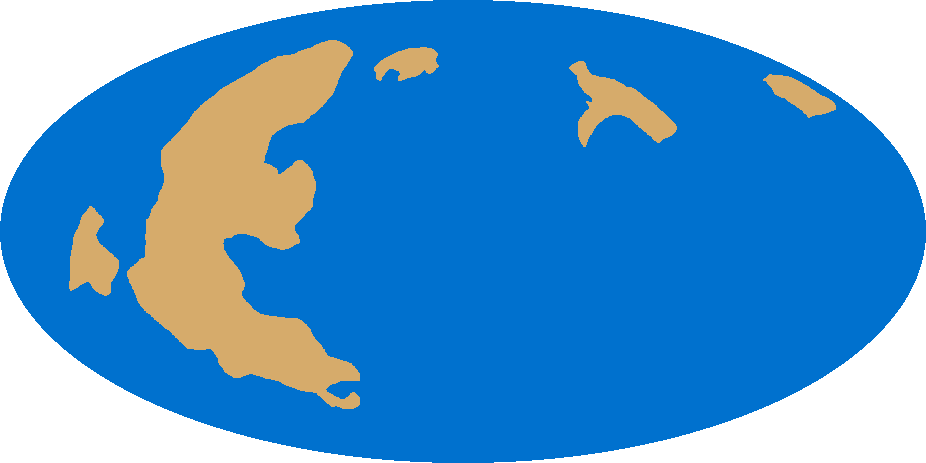
2 500 Ma – Super-craton Columbia (also called Nuna) begins to assemble; continents aggregate into one belt stretching from today’s North America to Siberia.
2 500 → 2 330 Ma – Great Oxidation Event: O₂ jumps to 10⁻²–10⁻¹ PAL, sky pales, red-beds appear. Methane collapses; greenhouse weakens.
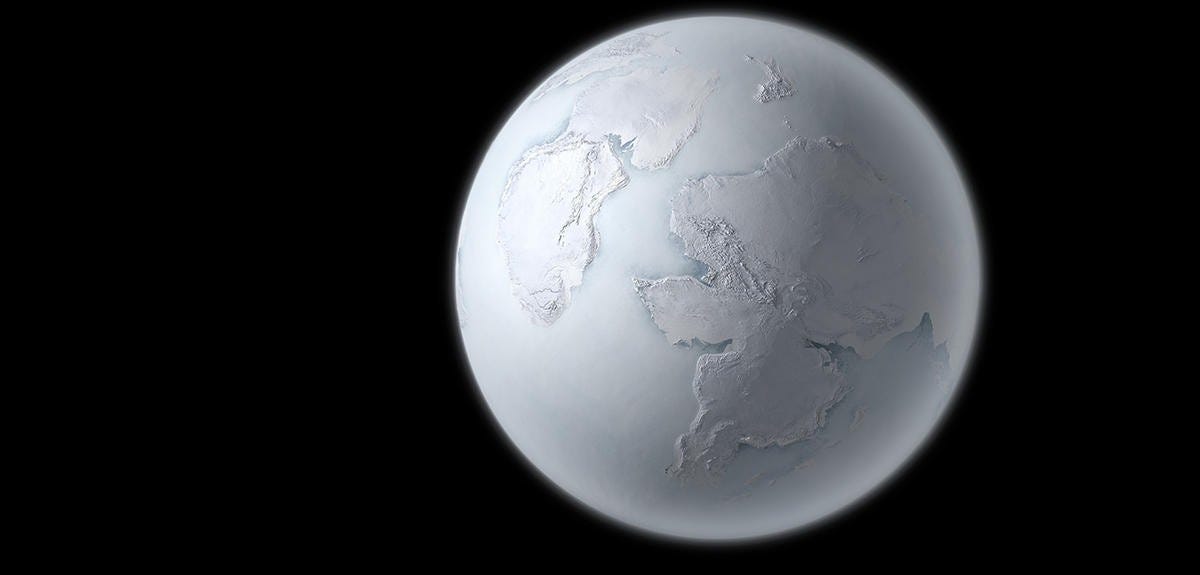
2 420 → 2 250 Ma – Huronian Snowball Earth (three separate pulses). Global mean temperature falls below –20 °C; ice reaches the equator. Each glacial maximum lasts 10–30 million years; magnetic reversals continue every ~1 Myr, but palaeo-intensity is high (90 % modern) because the solid inner core is growing rapidly.
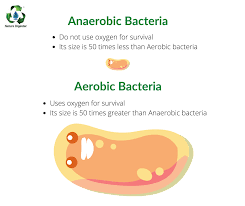
2 220 → 2 060 Ma – Lomagundi overshoot: O₂ peaks 10–30 % PAL; 84 bacterial lineages switch anaerobic→aerobic, ATP yield ↑15×, speciation rate 1,5–2× higher forever.
2 000 Ma – Columbia is fully assembled; mountain belts like the Trans-Hudson and Taltson–Thelon stitch Laurentia, Baltica and Siberia together. Super-continent creates vast interior deserts; weathering draws down CO₂, helping Earth stay cold.
MESOPROTEROZOIC ERA 1 600 → 1 000 Ma (Columbia breaks, Rodinia builds, eukaryotes rise)
Columbia rifts apart 1 600 → 1 400 Ma; new seaways open, Mg-rich seawater precipitates giant salt basins. Climate warms to 25–30 °C; no large ice-sheets.
1 500 Ma – Palaeo-intensity of magnetic field briefly collapses to 20 % modern during major mantle overturn; cosmic-ray flux doubles, possibly triggering adaptive radiations among protists.
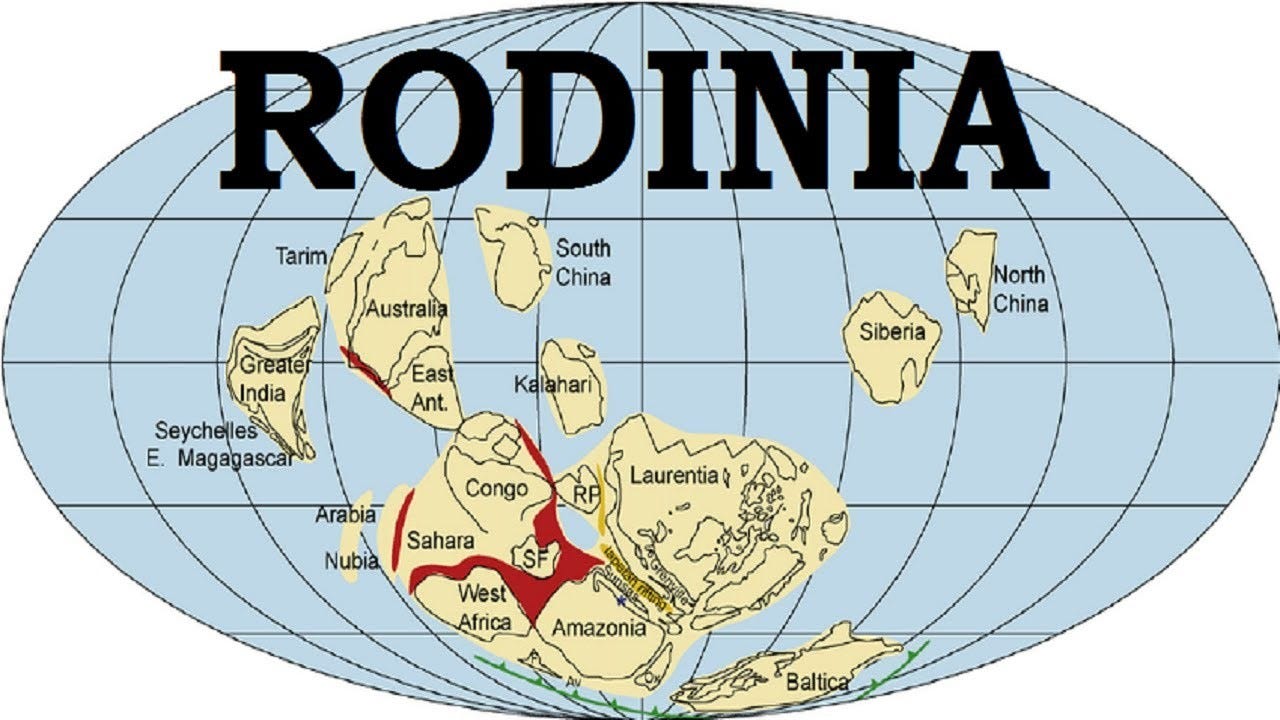
1 300 Ma – Super-craton Rodinia begins to assemble; continents cluster around the equator, enhancing silicate weathering and further cooling the planet.
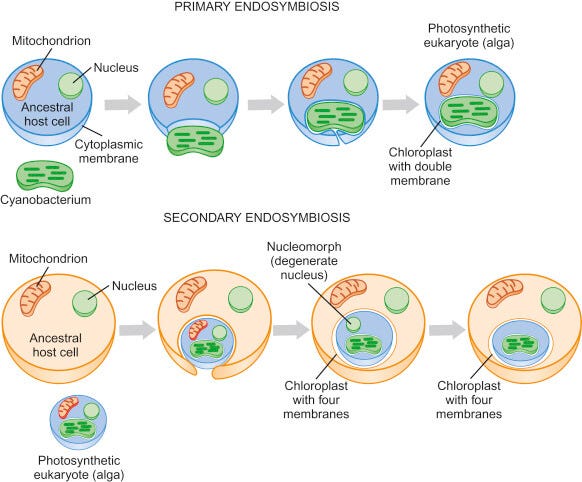
Endosymbiosis climax: an Asgard-archaeon engulfs an alpha-proteobacterium → mitochondrion; later a cyanobacterium → chloroplast. Sterane biomarkers 1 640 Ma confirm eukaryotic membranes; by 1 200 Ma fossil red-alga Bangiomorpha proves true mitosis, sex, and multicellularity.
NEOPROTEROZOIC ERA 1 000 → 541 Ma (Snowballs, magnetic chaos, animals)
850 Ma – Rodinia is fully assembled; interior basins evaporate, depositting huge salt giants.
775 → 717 Ma – Sturtian Snowball: temperature –30 °C, ice 1 km thick at the equator; magnetic reversals accelerate to every 0,3 Myr, perhaps linked to inhomogeneous core-mantle boundary flow.
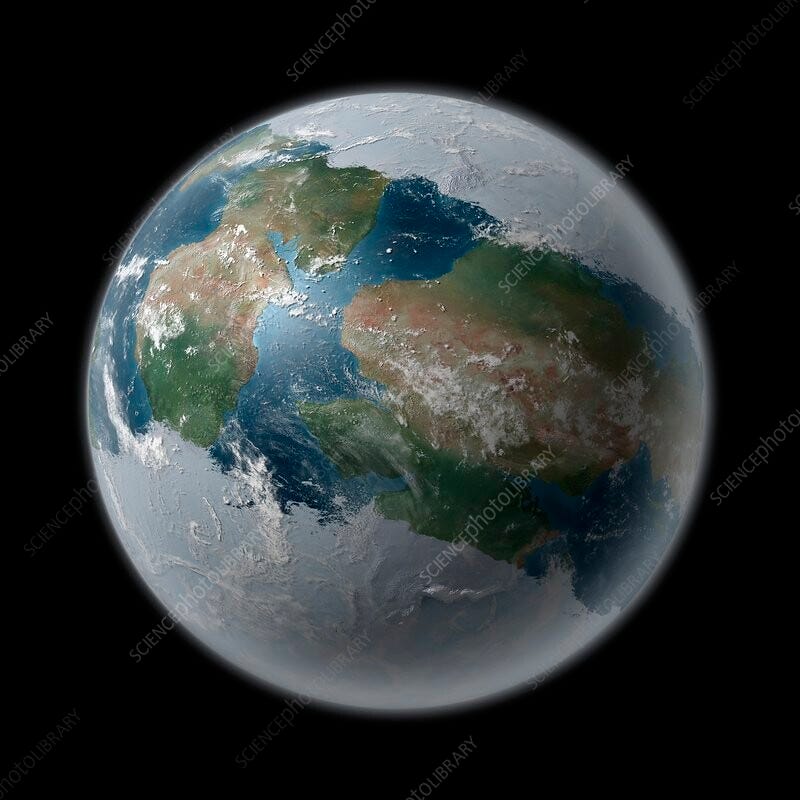
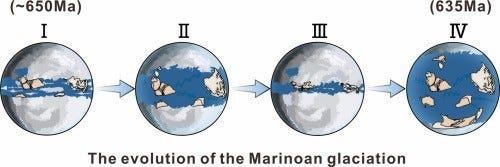
660 → 635 Ma – Marinoan Snowball; cap-carbonates precipitate when CO₂ reaches 0,1 bar.
635 → 580 Ma – Post-glacial O₂ ≥ 10 % PAL, sky permanently blue; Ediacaran soft-bodied fauna spread across shallow seas.
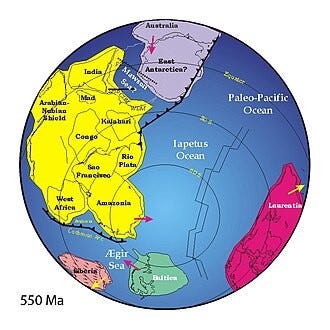
580 → 560 Ma – Super-continent Pannotia forms and almost immediately breaks apart; rift valleys pump nutrients into oceans, fuelling the rise of sponges and stem-group animals.
Mass-extinction horizon: a temporary return to anoxia 542 Ma wipes out many Ediacaran soft-bodied forms just before the Cambrian explosion.
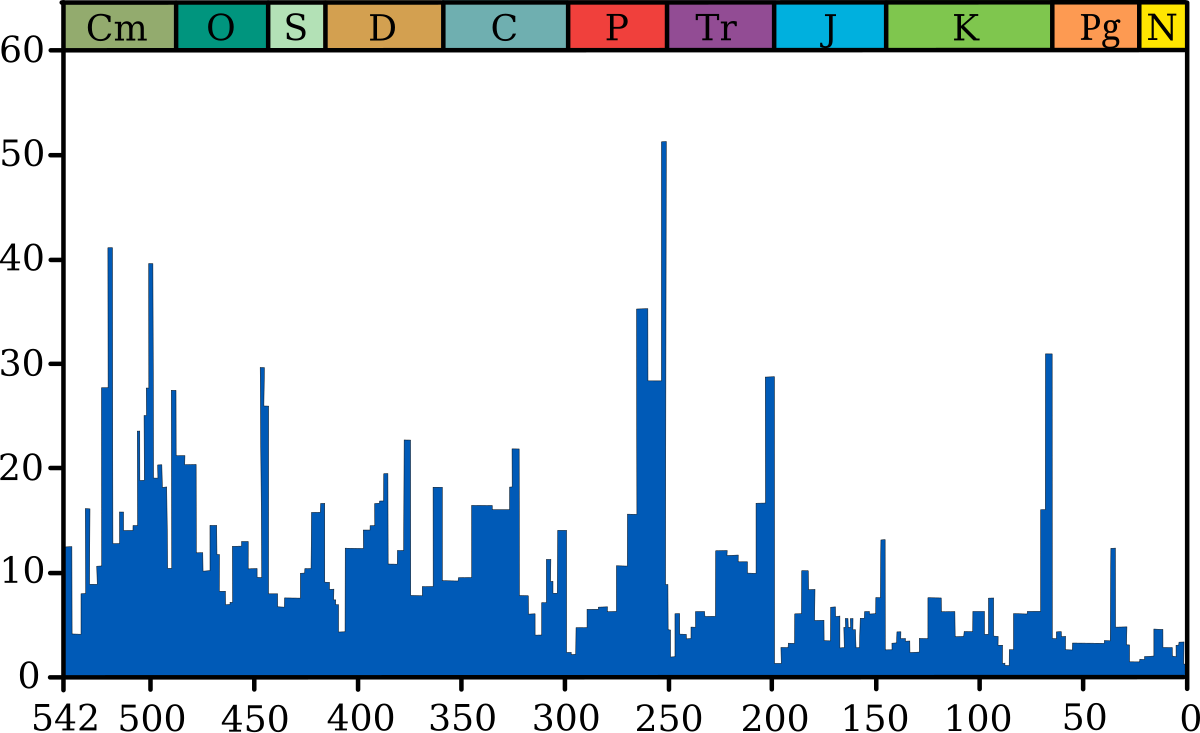
PHANEROZOIC EON 541 Ma → present
PALAEOZOIC ERA 541 → 251,9 Ma
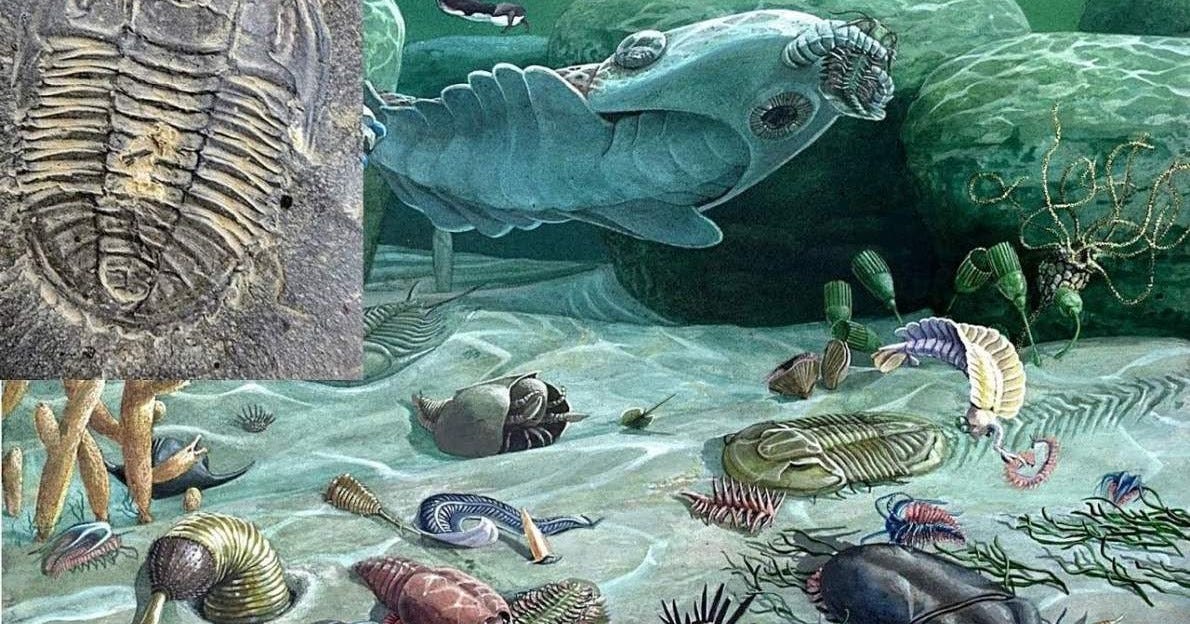
– Cambrian explosion 540 Ma; mass extinctions at 513 Ma (End-Botomian) and 488 Ma (End-early Cambrian).
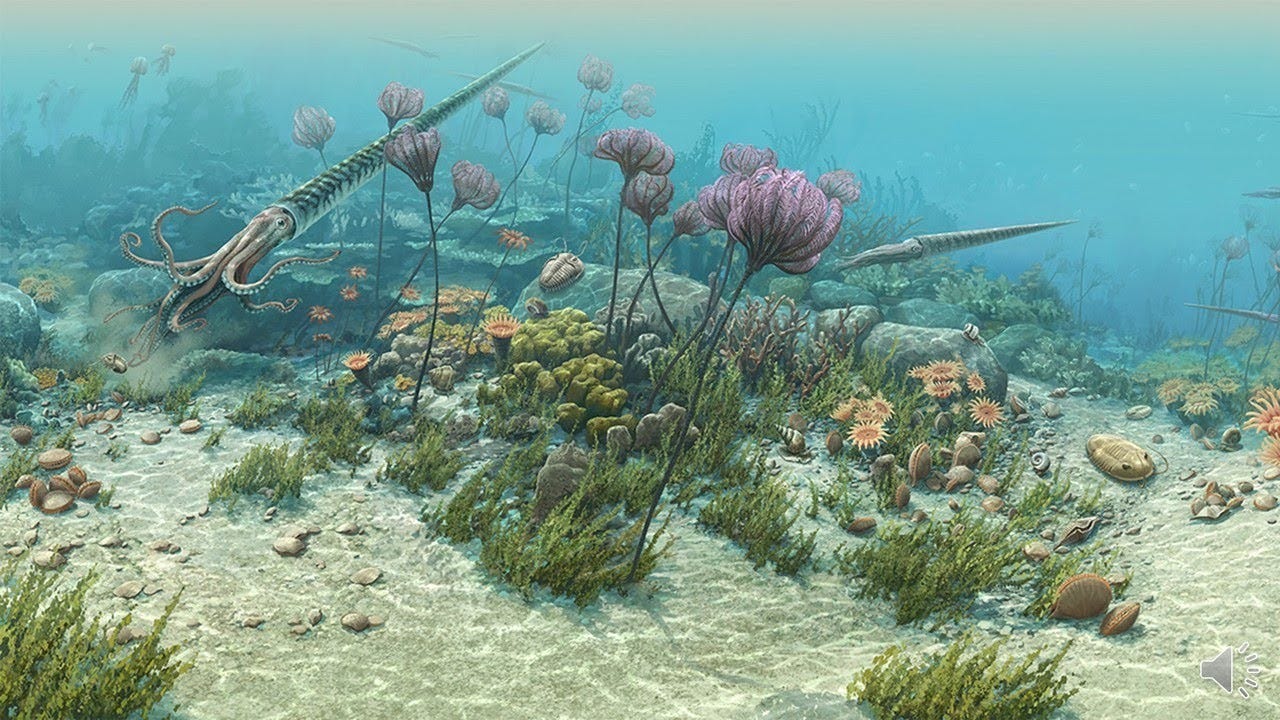
– Ordovician biodiversification followed by Hirnantian glaciation and End-Ordovician extinction 444 Ma (86 % marine species lost).
– Silurian recovery; first vascular plants colonise continents.
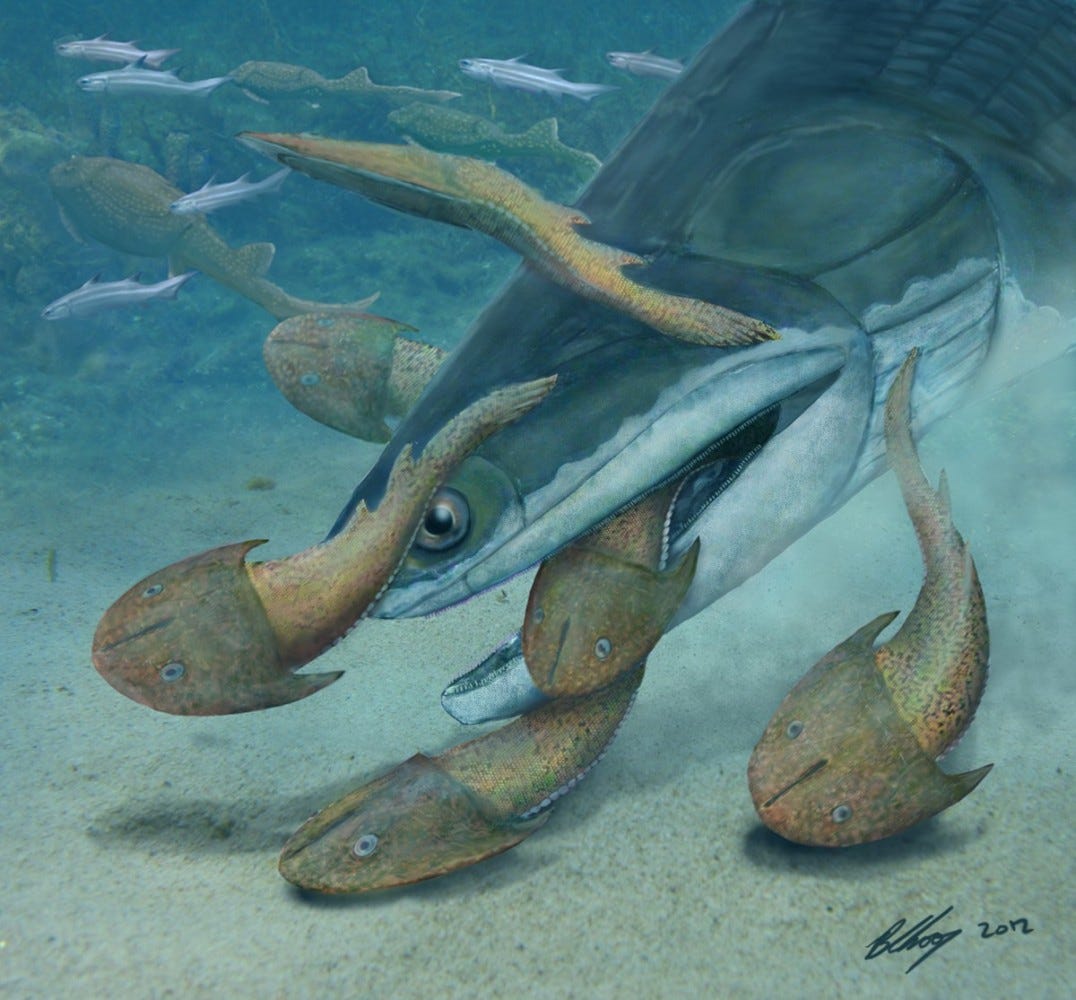
– Devonian forests draw down CO₂; temperature falls from 30 °C to 20 °C; Late-Devonian extinction 375 Ma.
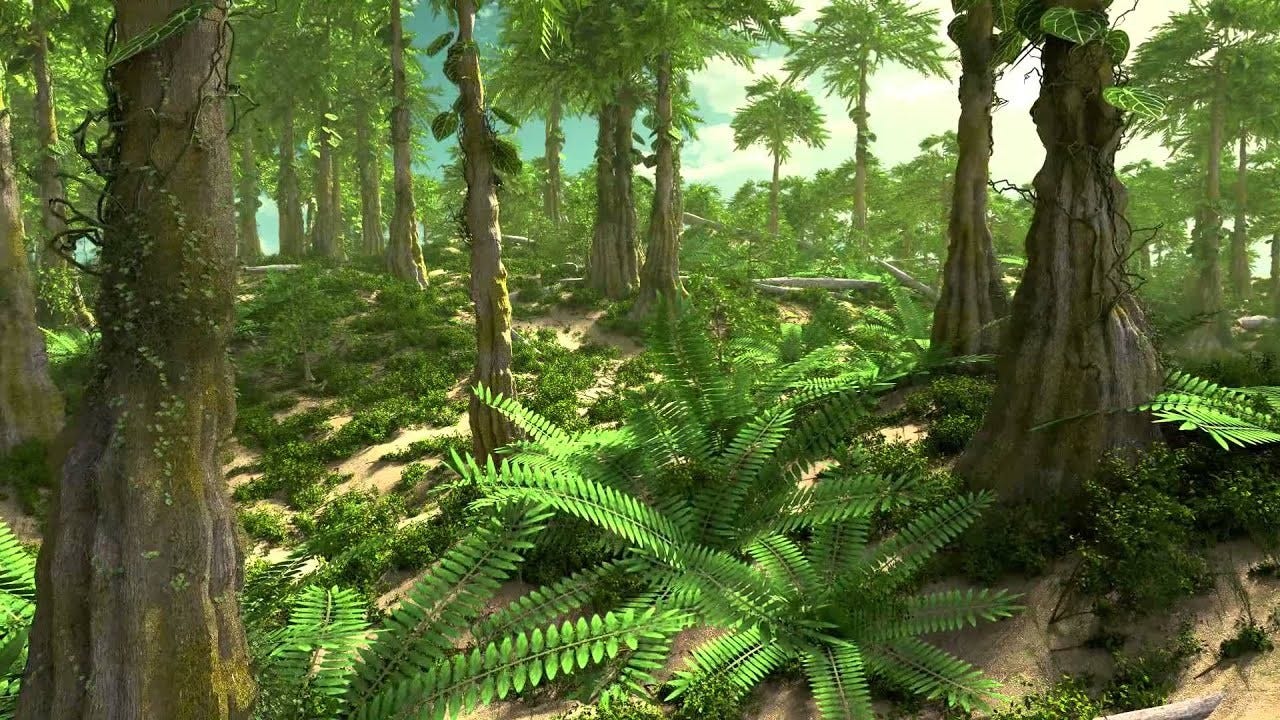
– Carboniferous coal swamps sequester carbon; Gondwana drifts across South Pole, builds huge ice-caps, sea-level drops 100 m.
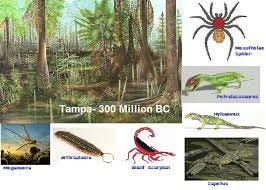
– Permian assembly of Pangaea creates mega-monsoon climate; Siberian Traps volcanism triggers End-Permian extinction 251,9 Ma
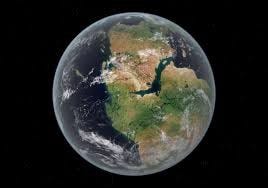
– 96 % marine species, 70 % terrestrial vertebrates lost; global temperature spikes to > 35 °C, magnetic field reversals every 0,1 Myr during the eruption pulse.
MESOZOIC ERA 251,9 → 66 Ma
– Triassic recovery; Pangaea begins to rift; Central Atlantic Magmatic Province causes End-Triassic extinction 201 Ma.
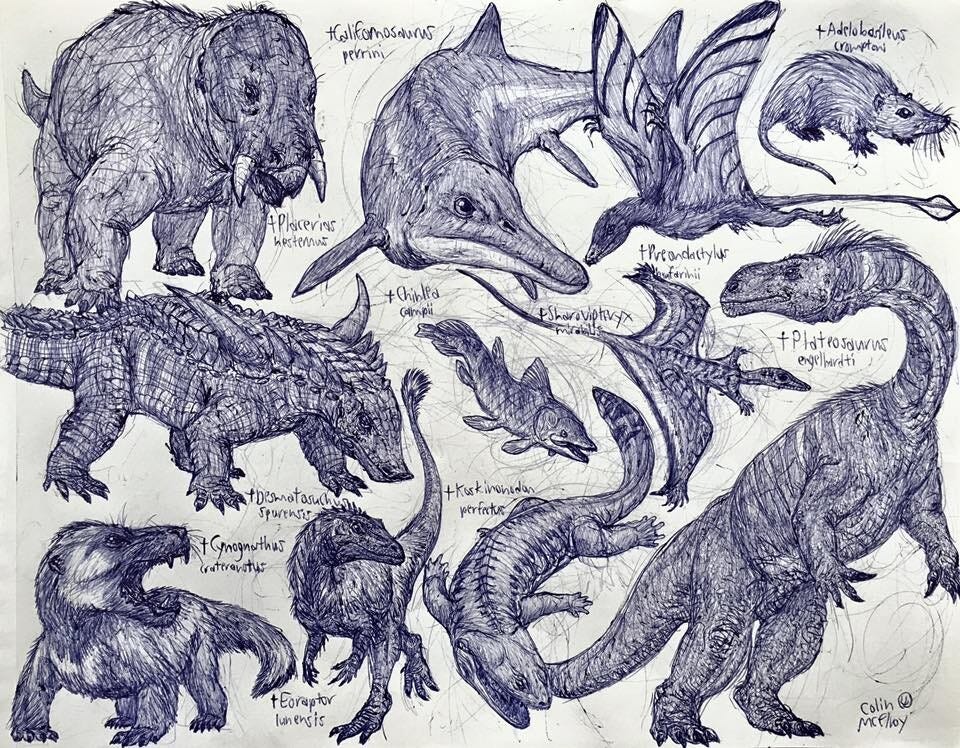
– Jurassic greenhouse: no polar ice, crocodilians in Siberia; magnetic field strength low but stable.
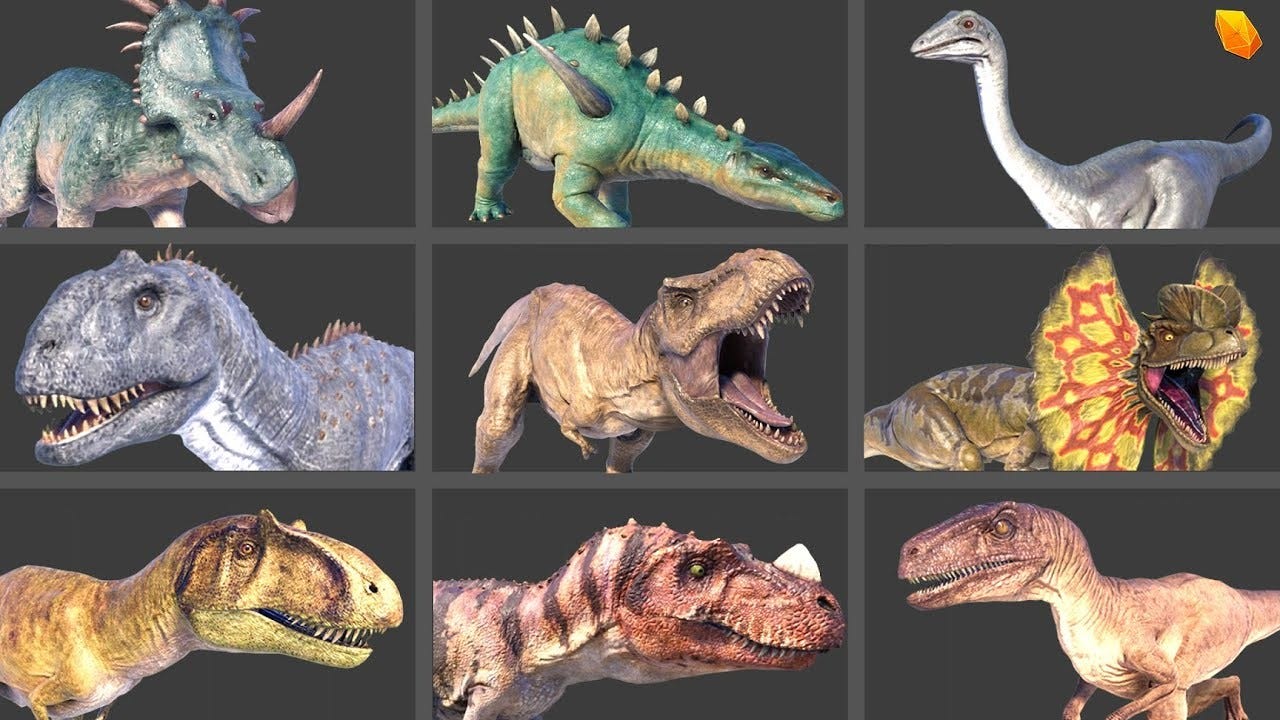
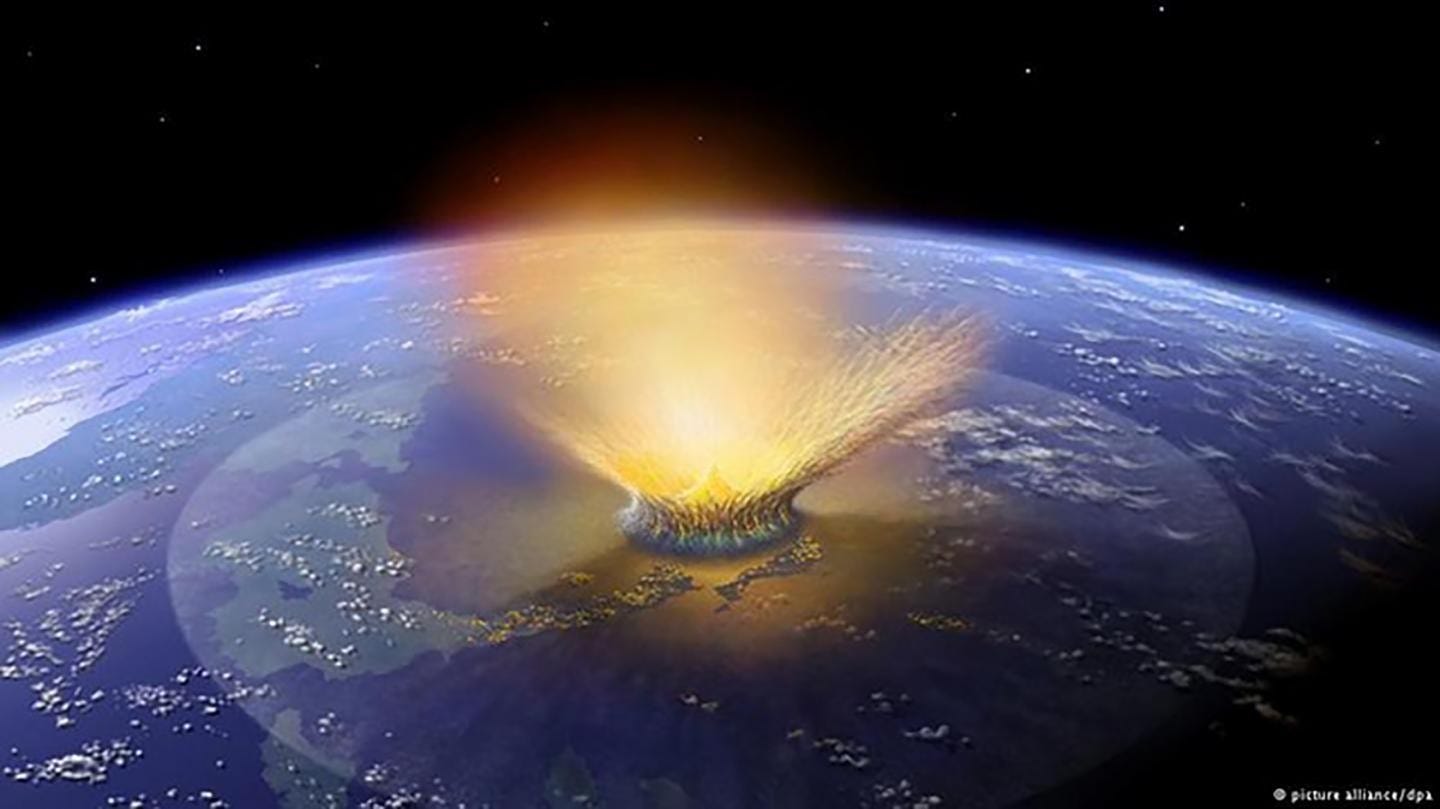
– Cretaceous chalk seas; flowering plants evolve; Deccan Traps start 67 Ma; Chicxulub asteroid impact 66 Ma ends the era in the End-Cretaceous extinction (non-avian dinosaurs, ammonites, 75 % species lost).
CENOZOIC ERA 66 → 0 Ma
– PALAEOGENE 66 → 23 Ma– India collides with Asia, raises Himalaya; global temperature falls from 28 °C to 12 °C; Antarctic ice-sheet forms 34 Ma.
– Magnetic reversals every 0,2 Myr; field strength ~90 % modern.
– NEOGENE 23 → 2,588 Ma– Isthmus of Panamá closes 3 Ma, launches Northern-Hemisphere glaciations; 26 orbital cycles pre-program future ice-ages
.– Reversals continue every 0,2 Myr; no major mass-extinction, but turnover of megafauna as climate dries.
– QUATERNARY 2,588 → 0 Ma– 2,6 Ma – onset of 26 glacial–interglacial cycles; each swing 100 000 yr thick ice
→ 10 000 yr warm interglacial.
– 3 000 000 years ago – Australopithecus afarensis (“Lucy”) walks upright in East-African rift; brain 400 cm³.
– 2 100 000 a – Homo habilis fashions Oldowan stone tools; brain 600 cm³.
– 1 800 000 a – Homo erectus masters fire, migrates out of Africa into Eurasia; brain 800–1 000 cm³.
– 700 000 a – Homo heidelbergensis hunts large game; brain 1 200 cm³; splits into African (→H. sapiens) and Eurasian (→Neanderthal) lineages.
– 300 000 a – earliest Homo sapiens fossils at Jebel Irhoud, Morocco; brain 1 300–1 400 cm³.– 60 000 a – our species reaches Europe (including future Portugal) and meets Neanderthals; limited gene-flow occurs.
– 11 700 a – Holocene interglacial begins; agriculture and civilisation follow.
– Present – anthropogenic CO₂ rise 100× faster than any natural pulse; debate on a “sixth” mass-extinction.