The Standard Model Langrangian
This article presents the Standard Model Lagrangian as a deterministic informational recipe: five symmetric chapters governing all known particles. (1) Force carriers (gluons, W/Z, photons) as massless gauge fields preserving local symmetry; (2) Matter fermions (quarks, leptons) with chiral structure coupling to forces; (3) The Higgs field, whose spontaneous symmetry breaking grants mass to weak bosons while leaving the photon massless; (4) Yukawa couplings ("flavor handshake") setting particle masses and mixing angles; (5) Ghost terms ensuring mathematical consistency in quantum calculations. Framed within the author's Unification Project, the Lagrangian is not mysticism but a testable, symmetry-constrained protocol—SU(3)×SU(2)×U(1) invariance as the computational invariant enabling universal prediction, from muon decay to collider jets.
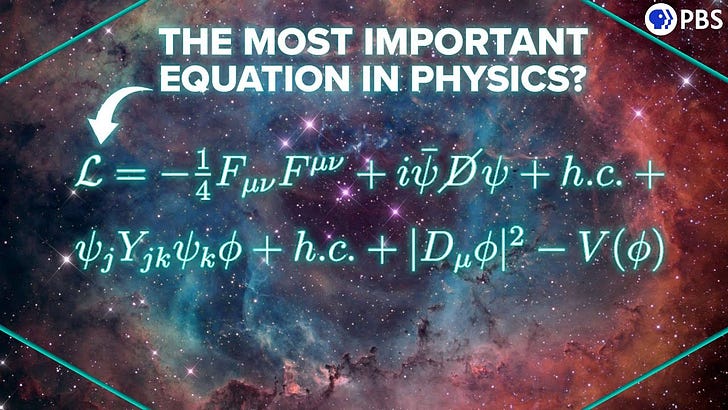
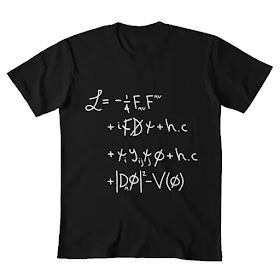
Imagine the whole thing as a single recipe that tells every known particle how to dance together.
It has five big chapters.
First chapter is the “force carriers.”
Here live the gluons that never leave the inside of a proton, the W and Z messengers that change one kind of particle into another, and the photon that carries light. Each of these carriers is represented by a field that ripples through space and time; the recipe keeps them massless at the start so the symmetry stays perfect.
Second chapter gives motion and talk to the matter grains.
These are the quarks that build protons and neutrons, the electrons that swirl around atoms, and their two heavier copies. Left-handed grains form double-partner pairs, right-handed grains walk alone. Every grain drags along the force carriers the way a swimmer feels water; the wording in the recipe makes sure the swimmer and the water stay in step.
Third chapter is the “Higgs ocean.”
A single, neutral, yet double-valued field fills the vacuum. When the universe cooled, this field settled into a calm sea everywhere. Three of its four possible ripples were grabbed by the W and Z messengers, giving them heaviness and letting the weak force stay short-ranged. The leftover ripple is the Higgs boson, the excitation of that sea.
Fourth chapter is the “flavor handshake.”
Each matter grain taps the Higgs ocean with its own personal strength. Stronger taps give heavier grains, weaker taps give lighter grains. These taps also let quarks of different generations swap identity, producing the mixing angles we measure in experiments.
Fifth and last chapter is the bookkeeping ghost.
It is not a real particle you can catch, but an internal calculator that keeps the math honest when we add up quantum possibilities.
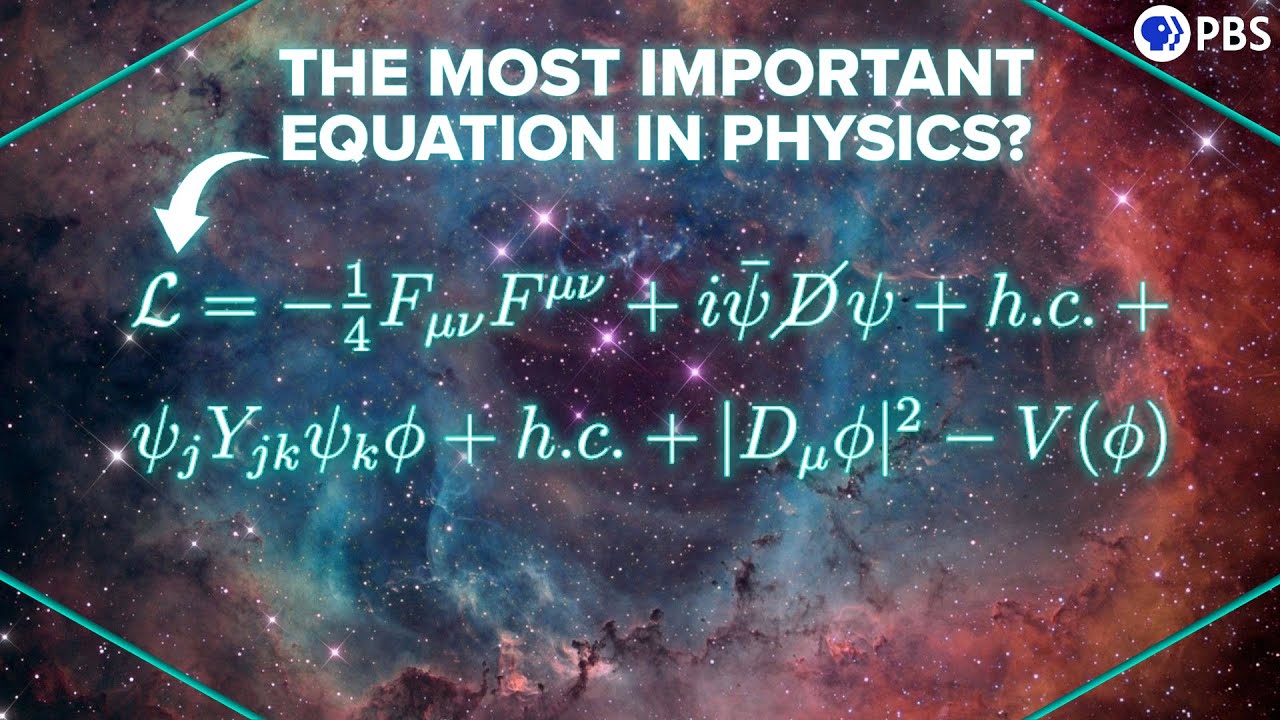
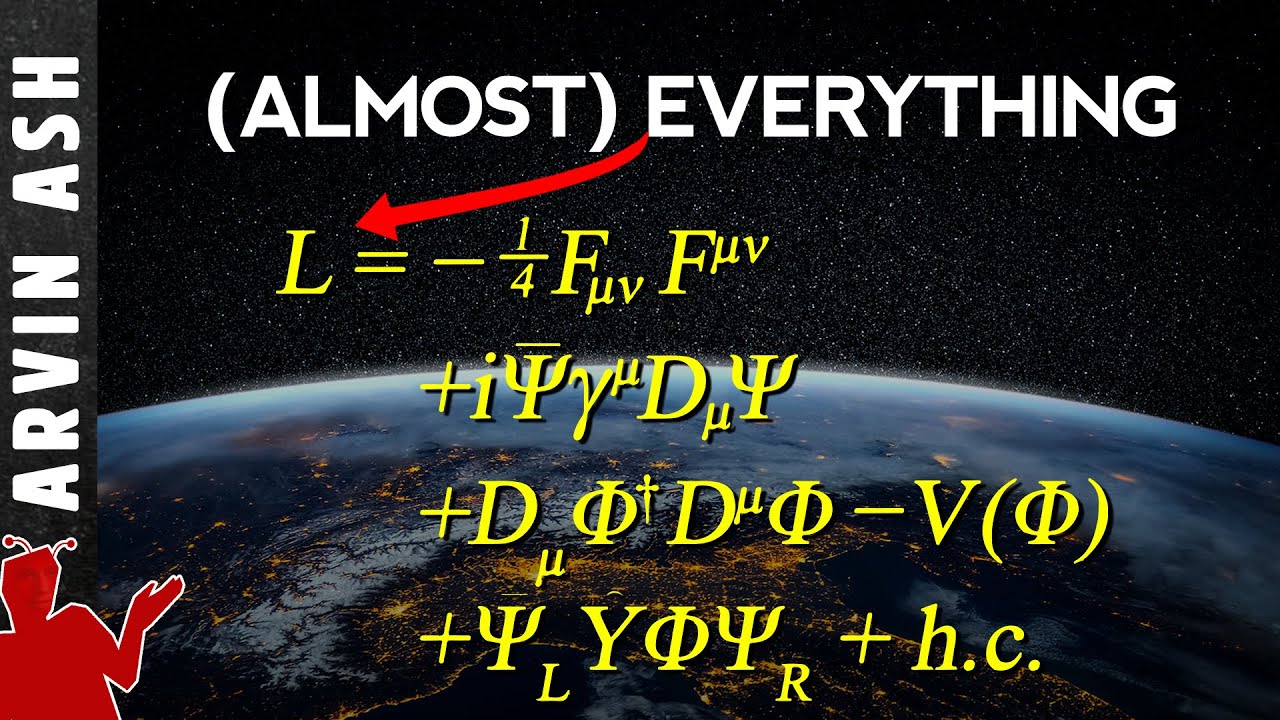
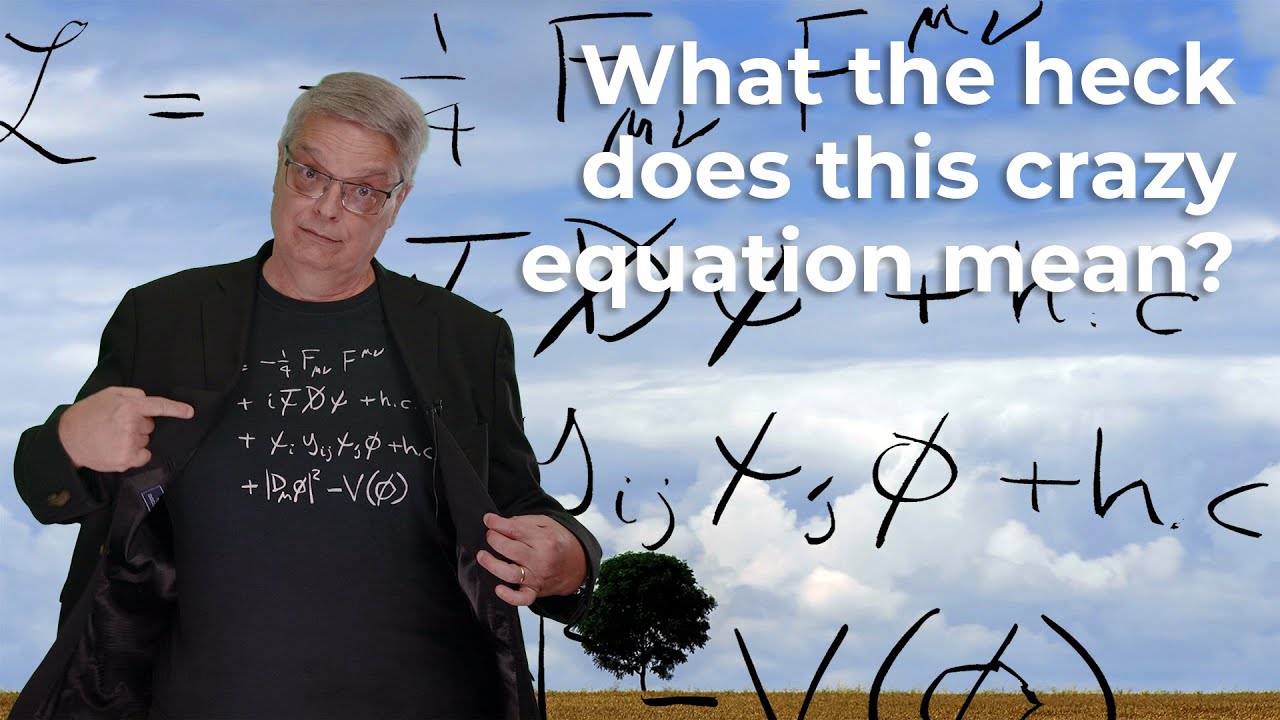
Put together, the five chapters predict every collision pattern we have ever seen, from the lifetime of a muon to the jets spurting from a billion-volt smash. The whole story stays unchanged if we simultaneously rotate colors, swap weak partners, and adjust hypercharge phases—those hidden symmetries are what make the recipe re-usable across every laboratory on Earth.