Quantum Ripples in the Quantum Field
This article contrasts three frameworks for biological form and inheritance within a Quantum Spacetime lens: Waddington's epigenetics (1942)—a materialist model where gene-environment interactions channel development via measurable mechanisms; Sheldrake's morphic resonance (1981)—a dualist hypothesis positing non-local, habit-based fields guiding form across time; and Maturana & Varela's autopoiesis/enaction (1970s–1990s)—a monist view where organism and world co-emerge through self-organizing, sensorimotor coupling. Framed deterministically, the piece treats these not as competing truths but as complementary informational substrates: lawful, testable descriptions of how pattern propagates across scales—rejecting mysticism while honoring the profound complexity of life's self-organizing logic.
1. The Epigenetic Framework (Mid-20th Century)

Key Date: 1942 - Conrad Hal Waddington coins the term “epigenetics.”
Full Name: Conrad Hal Waddington.
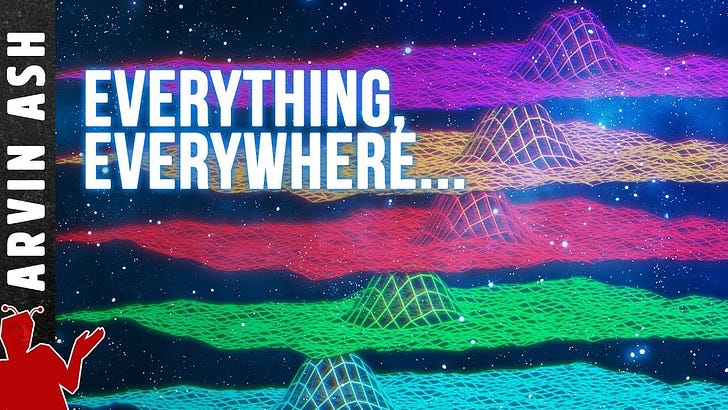
Brief Description: Waddington established the modern concept of epigenetics to describe how genes interact with their environment to produce a phenotype. His famous “epigenetic landscape” metaphor visualized how a cell’s fate (like a ball rolling downhill) is channeled by both genetic and environmental factors. This provided a mechanistic, materialist model for how acquired traits could be stabilized and potentially inherited, long before the discovery of DNA methylation and histone modification mechanisms.
2. Sheldrake’s Morphic Resonance (Late 20th Century)

Key Date: 1981 - Rupert Sheldrake publishes A New Science of Life.
Full Name: Alfred Rupert Sheldrake.
Brief Description: Sheldrake’s hypothesis proposes that a non-material, formative field (”morphic field”) guides the development and behavior of all natural systems. Through “morphic resonance,” the patterns established by past systems influence future similar systems across space and time. This offers a dualist, non-genetic explanation for the inheritance of form and instinct, where habits become ingrained in a species’ collective memory.
3. The Monist View: Self-Organization & Enaction (Late 20th Century)
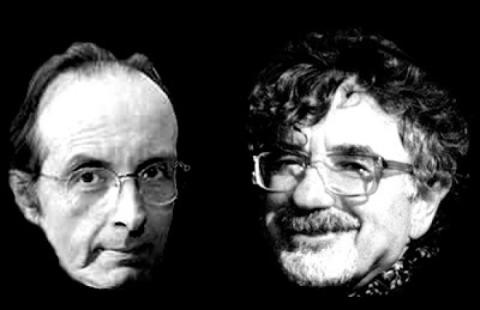
Key Date: 1972/1973 - Humberto Maturana and Francisco Varela introduce the concept of Autopoiesis. 1991 - Varela fully develops the theory of Enaction in The Embodied Mind.
Full Names: Humberto R. Maturana and Francisco J. Varela.
Brief Description: This monist framework posits that living systems are “autopoietic”—they are self-creating, autonomous networks. Cognition is not about representing a pre-existing world but is an activity of enaction: bringing forth a world through the organism’s sensorimotor coupling with its environment. Form and behavior are seen as emergent properties of the entire self-organizing system, dissolving the duality between the organism and its context.
Summary
Epigenetics (Waddington, 1942): A materialist bridge between environment and gene expression.
Morphic Resonance (Sheldrake, 1981): A dualist, field-based inheritance of habit.
Self-Organization/Autopoiesis (Maturana & Varela, 1970s-1990s): A monist process where the organism and its world co-emerge.