Graphene's Magic
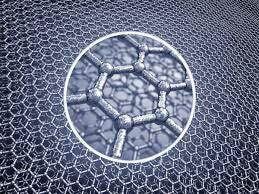
This article examines graphene's "magic" as deterministic material science, not mysticism: a single-atom-thick carbon lattice exhibiting exceptional electron mobility, mechanical strength, and thermal conductivity due to its hexagonal symmetry and Dirac-cone band structure. The piece emphasizes how these lawful quantum-electronic properties—ballistic transport, Klein tunneling, quantum Hall effects at room temperature—enable breakthroughs in flexible electronics, quantum sensors, and energy storage. Aligned with the author's systems-level perspective, graphene exemplifies how atomic-scale precision (German-engineering values) yields macroscopic utility. Crucially, its "magic" lies in predictable, reproducible physics—no speculation, only rigorous characterization. For technological progress, graphene offers not wonder but leverage: a foundational material where elegance, function, and scalability converge under the same deterministic laws governing stars and semiconductors alike.
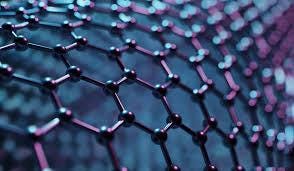
“Graphene’s magic” primarily refers to the extraordinary electronic properties, especially superconductivity, that emerge when two layers of graphene are stacked and twisted at a specific “magic angle” of approximately 1.1 degrees. This field of study is known as twistronics .
🔬 The Discovery and Its Significance
The groundbreaking discovery was made in 2018 by physicist Pablo Jarillo-Herrero and his team at MIT . They found that at the magic angle and at very low temperatures, this twisted bilayer graphene could conduct electricity without any energy loss, a property known as superconductivity .
This was a monumental finding for two main reasons:
A New Playground for Physics: It provides a relatively simple and “clean” system for scientists to study strong electron interactions and unconventional superconductivity, phenomena that are also found in high-temperature cuprate superconductors but are much harder to research .
Tunability: Unlike traditional materials, scientists can easily change the electronic properties of magic-angle graphene just by adjusting an external electric field, making it an incredibly versatile platform for experiments .
🔍 Recent Advances and Deeper Understanding
Research in this area is moving rapidly. Recent studies have focused on understanding the precise mechanism behind this unconventional superconductivity.
A 2021 study from Princeton University provided strong evidence that the superconductivity in magic-angle graphene is indeed unconventional, sharing key signatures with high-temperature cuprate superconductors, including a mysterious “pseudogap” phase .
In early 2025, physicists from MIT and Harvard made a key measurement called superfluid stiffness. Their findings suggest that the superconductivity in magic-angle graphene is governed by quantum geometry—the conceptual “shape” of electron quantum states—which is a departure from conventional theories .
Summary of the “Magic” in Terms of Physical Properties
The sequence of events that creates the “magic” is:
1. Twist to ~1.1° → Creates a long-range moiré superlattice.
2. Moiré Superlattice → Flattens the electron energy bands.
3. Flat Bands → Enhances electron-electron interactions (strong correlations).
4. Strong Correlations → Enable a competition between different quantum ground states.
5. External Knobs (Electric Field, Doping) → Allow scientists to tip this competition, switching the material between an insulator, a superconductor, and a magnet.