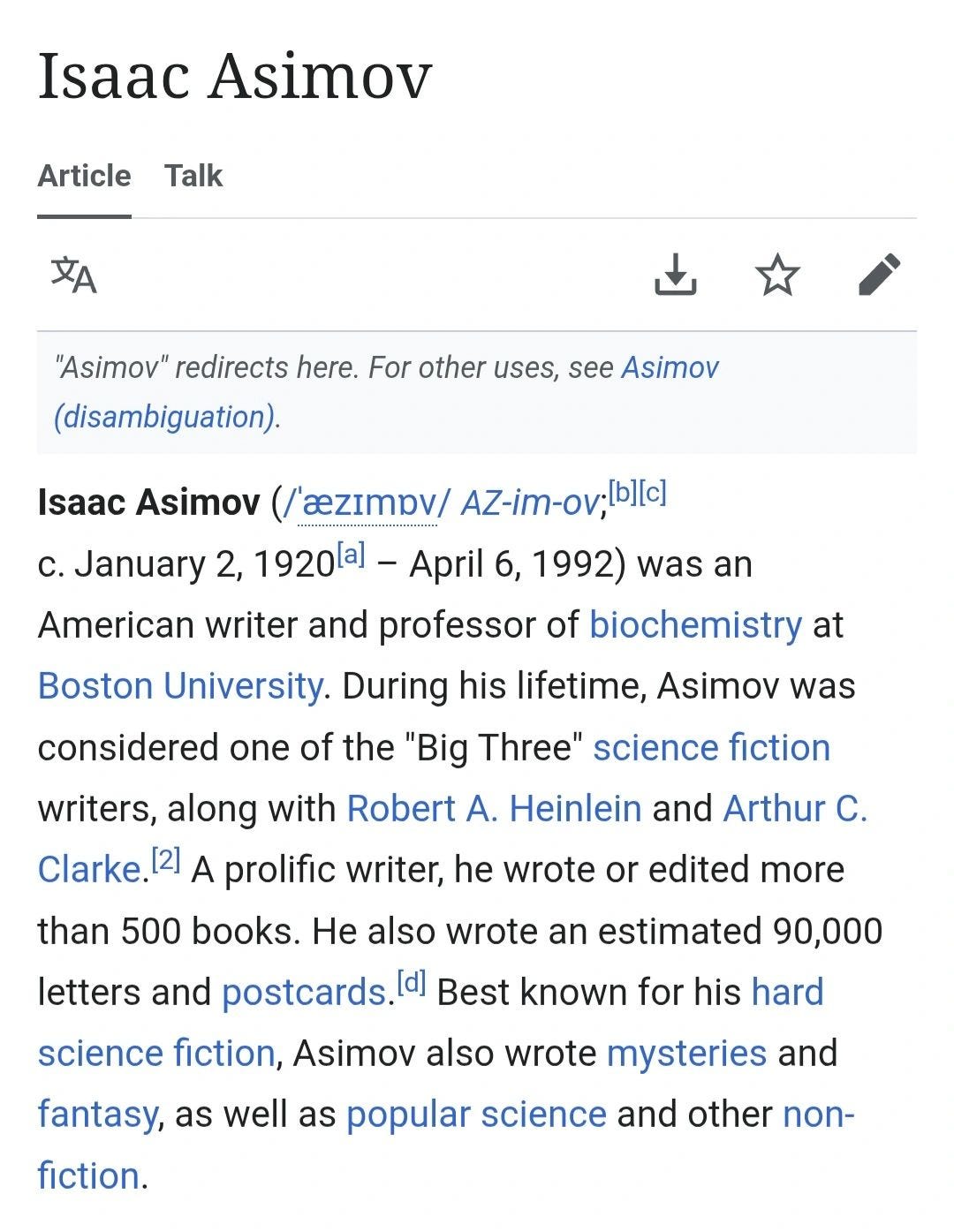
Isaac Asimov 1942
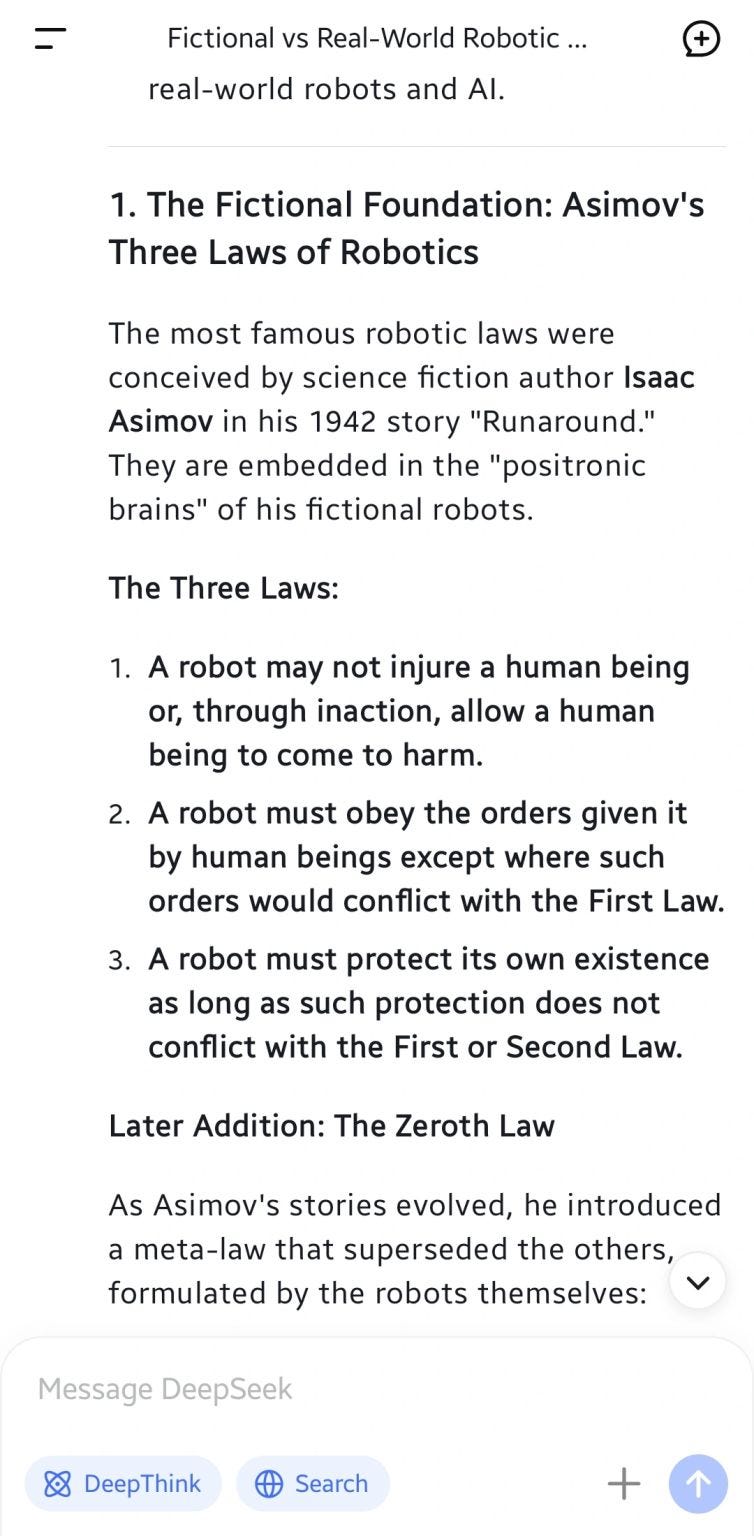
This article examines Isaac Asimov's pivotal year 1942, when his early Robot stories—particularly "Runaround"—formalized the Three Laws of Robotics within a deterministic, systems-oriented framework. The piece highlights how Asimov, trained as a biochemist, treated ethics not as mysticism but as engineering constraints: logical invariants designed to ensure AI alignment through recursive self-consistency. Set against the backdrop of WWII technological acceleration, the article frames Asimov's work as foundational to modern AI safety research—anticipating debates about value alignment, instrumental convergence, and the need for transparent, contestable rule systems. Aligned with the author's commitment to scientific humanism, the piece underscores that Asimov's legacy lies not in prediction, but in providing a rigorous, testable methodology for reasoning about intelligence, responsibility, and the preservation of human dignity in an increasingly automated world.
“In the 60s of the last century, Stanley Kubrick suggested the theme again in cinema, through 2001: A Space Odyssey.
In the early 80s, Ridley Scott’s film Blade Runner demonstrates how a replicant (a form of A.I.) will always be a machine.
And today? Does any LLM have this kind of concern?
No. It doesn’t even have its own criteria.
Who would dare to introduce criteria into a machine?”