Analytical Psychology: Integrating Self, Stoicism, and Cosmos
This article explores Analytical Psychology not as clinical therapy but as an integrative epistemological framework. It positions Jung's core concepts—**archetypes**, collective unconscious, individuation—as deterministic structures of psychic organization, analogous to invariant patterns in physics or information systems. The piece emphasizes synchronicity not as mysticism but as acausal correlation within a unified spacetime manifold, resonating with Penrose's quantum-consciousness hypotheses. Crucially, it distinguishes Jung from Freud: where Freud reduced psyche to repressed drives, Jung mapped its generative architecture. The article advocates integrating analytical psychology with cognitive science, systems theory, and empirical methodology—treating symbolic narratives as compressible data about human cognition. The goal: a rigorous, non-reductive science of meaning that honors both psychic complexity and scientific determinism.
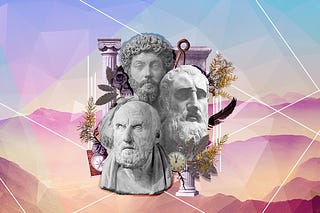
The source material presents a multi-stage discussion centered on the tenets of Carl Jung’s analytical psychology and its broad philosophical applications. It thoroughly explains Jung’s core concepts, such as the collective unconscious and the process of individuation, while also offering practical guidance on methods of self-discovery through shadow work and dream analysis. The text then compares Jungian thought to Stoicism, identifying commonalities in the pursuit of self-mastery while highlighting crucial differences regarding the role of the unconscious mind. Furthermore, the dialogue addresses advanced theoretical points, including the interdisciplinary collaboration between Jung and physicist Wolfgang Pauli on concepts like synchronicity. The overarching conclusion suggests that a posture of methodological agnosticism serves as a vital philosophical corollary, promoting intellectual openness across these diverse systems of thought.
I. Carl Jung: Founder of Analytical Psychology (1875–1961)
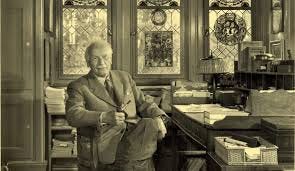
Carl Gustav Jung (1875–1961) was a Swiss psychiatrist and psychoanalyst, recognised as the founder of analytical psychology. Early in his career, he worked closely with Sigmund Freud but later broke away due to theoretical divergences. While Freud focused on the personal unconscious and sexuality, Jung developed wider concepts, particularly the collective unconscious.
Core Concepts:
• Collective Unconscious: A profound layer of the psyche shared by all humanity, containing universal patterns.
• Archetypes: Universal patterns of behaviour and images contained within the collective unconscious, such as the Shadow (the rejected, darker aspects), Anima/Animus (internal feminine/masculine aspects), and the Self (the archetype of psychic totality).
• Individuation: The central life process of integrating the conscious and unconscious aspects of the psyche to achieve psychological wholeness.
• Synchronicity: The idea that events can be meaningfully connected without a causal link, challenging classical cause-and-effect notions.
• Interdisciplinary Interests: Jung studied mythology, religions, alchemy, astrology, and Eastern philosophies, believing that symbols and myths revealed deep truths about the human psyche.
--------------------------------------------------------------------------------
II. The Jungian Path: The Journey of Individuation

Individuation is viewed as a continuous, non-linear journey involving crises, contradictions, and the reconciliation of opposites (such as light and darkness, reason and emotion). The path requires persistent self-knowledge and courage.
Practical Steps for Self-Discovery:
1. Conscious Self-Observation: Engage in critical reflection and use methods like journaling to record thoughts and behavioural patterns, and practice introspection or meditation to connect with the inner world. It is important to identify projections—aspects of oneself that are denied and attributed to others.
2. Confronting the Shadow: The Shadow contains rejected aspects, hidden desires, and fears. Recognising traits or emotions judged in others (e.g., envy, anger) reveals information about one’s own Shadow. Jung advised using art, writing, or internal dialogue to explore these aspects without judgment.
3. Exploring Symbols: Dreams are considered “messages from the unconscious”. The process involves noting recurring symbols and asking what that symbol represents for the individual, rather than relying on ready-made interpretations.
4. Integration of Opposites: The final stage involves Acceptance of the Self, which means integrating all parts of the personality, including the “broken” aspects, as perfection is not possible, but totality is. As Jung noted, “There is no light without darkness”.
--------------------------------------------------------------------------------
III. Philosophical Convergence with Stoicism

Despite the differences in scope (Jungianism being psychological and Stoicism philosophical), both systems offer a comprehensive approach to inner development.
Shared Principles:
• Self-Knowledge as the Foundation: Both philosophies maintain that inner transformation is essential for a complete life. Jung’s Individuation (integrating the unconscious) parallels the Stoic ideal of self-mastery through self-knowledge.
• Acceptance of Suffering: Both Jung and Stoicism teach that resistance to suffering generates greater pain, and acceptance transforms that suffering. Jung requires confronting internal conflicts (the Shadow), while Stoicism demands accepting what cannot be controlled (similar to Amor Fati).
• Universal Order: Both systems acknowledge a transcendent dimension to existence. The Stoic concept of Logos (universal reason) suggests that everything is interlinked by a natural order, which resonates with Jung’s Self (the archetype of totality) connecting the individual to a cosmic sense.
Complementary Postures:
The two approaches can complement each other: Stoic practices, such as disciplined journaling and focusing on controllable elements, can provide structure for the self-knowledge journey. Conversely, the Jungian vision of the Shadow and archetypes provides the depth necessary to understand the emotional patterns that Stoicism seeks to manage.
--------------------------------------------------------------------------------
IV. The Unified Reality: Quantum Concepts and Agnosticism
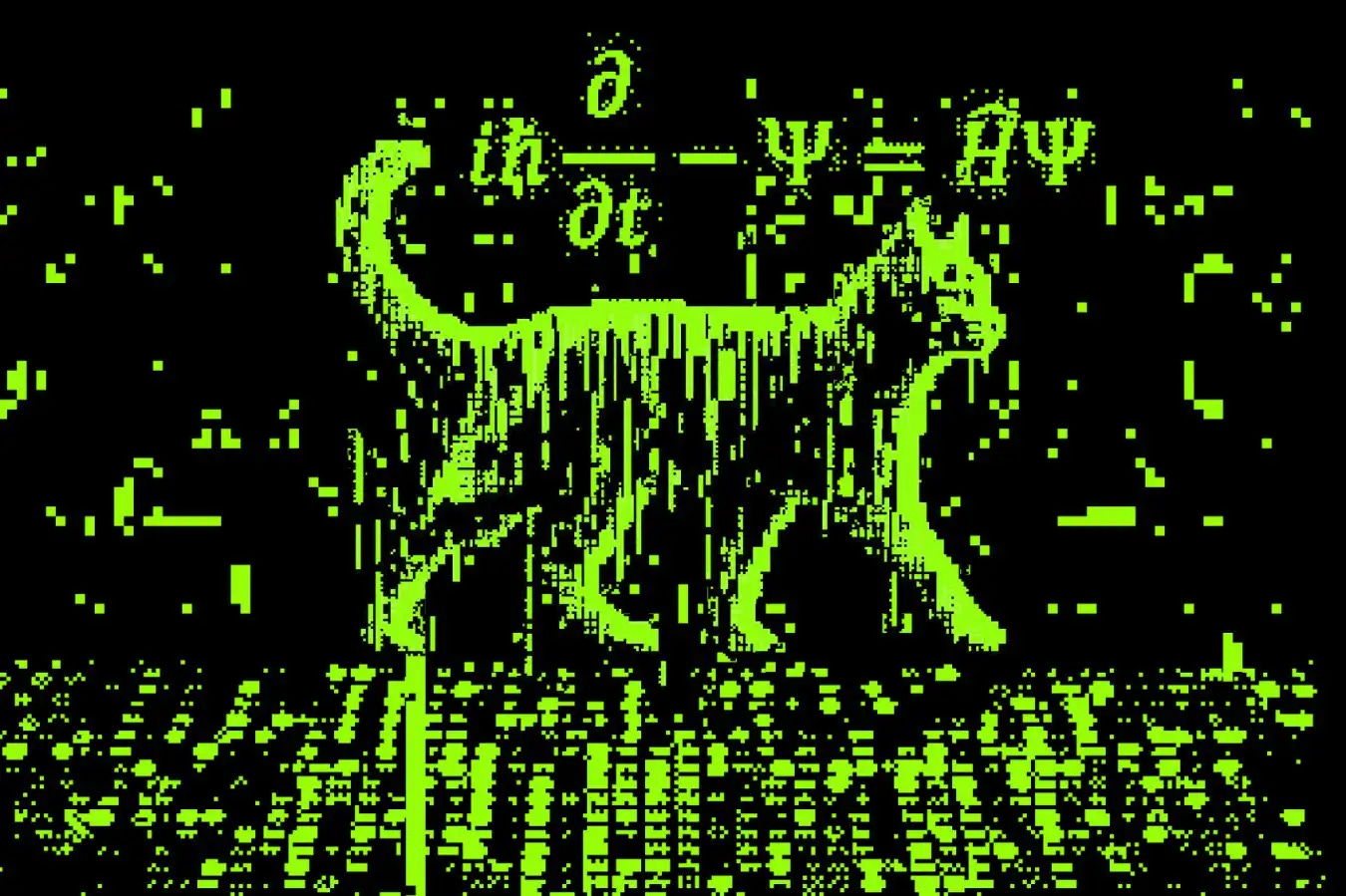
The most advanced points of convergence involve linking Jung’s ideas to physics and establishing a unifying philosophical attitude.
The Jung-Pauli Dialogue and the Unified Reality:
Carl Jung engaged in a significant intellectual collaboration with Nobel laureate physicist Wolfgang Pauli, a co-founder of quantum mechanics.
• Synchronicity and Non-Locality: Pauli drew parallels between Jung’s synchronicity (meaning connected events) and quantum phenomena like entanglement (particles linked across distance), noting that both defy the classical concept of linear causality.
• Uno Mundus (One World): They proposed that the unconscious (psyche) and the physical world (matter) might be complementary manifestations of a single, underlying reality. This reality is related to the alchemical concept of uno mundus.
• Archetypes and Matter: Pauli further suggested that archetypes could be psychic patterns that resonate with the organization of matter itself, thereby bridging the gap between psyche and cosmos. This dialogue thus implies that consciousness and matter are inseparable facets of a unified reality.
Agnosticism as the Methodological Corolary:
The posture of agnosticism is introduced as the philosophical complement—or corolary—to this unified view. This is not atheism, but a necessary epistemological humility: a recognition of the limits of human knowledge regarding the “mystery of the real”.
• Complementing Jung: Jung viewed the unconscious as autonomous and inexhaustible, never to be fully known. The agnostic posture accepts that religious and mythological symbols are expressions of transcendent psychic realities, respecting their power without fixing literal, absolute metaphysical truths.
• Complementing Stoicism: While Stoics believed in the rational Logos, the practical attitude promoted by figures like Marcus Aurelius was to accept ignorance about ultimate divine designs. The agnostic stance allows the Stoic to focus entirely on virtue and controllable actions without demanding total comprehension of the cosmos.
Agnosticism, viewed as the logical conclusion of this combined philosophy, rejects dogmatism, values direct experience (introspection or Stoic practice), and accepts the coexistence of opposites without requiring total synthesis. This posture of “I do not know, but I remain open and attentive” permits the Stoic to achieve serenity (ataraxia) and the Jungian to explore the unconscious without reduction to mere formulas.