Time Crystal Oscillation Mechanism
This article profiles time crystals as a deterministic non-equilibrium phase: driven quantum many-body systems that spontaneously lock to sub-harmonic periods (e.g., 2τ), breaking discrete time-translation symmetry. Unlike perpetual motion, they require external periodic drives but absorb no net energy, sustaining rigid oscillations protected by many-body gaps. Framed within the Unification Project, time crystals treat temporal order as lawful informational architecture—where symmetry breaking creates testable, emergent structure. Applications (quantum memory, precision sensing, frequency standards) are measurement devices leveraging ultra-stable sub-harmonic ticks. The core thesis: time crystals are not mystical oscillators but rigorous, reproducible protocols where value flows from individual verification, not imposed doctrine—temporal lattices as computable, deterministic constraints.
What is a time crystal?
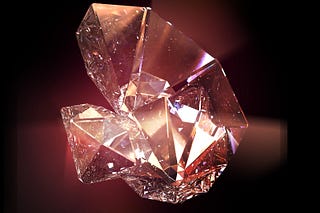
A time crystal is a new kind of phase of matter whose structure repeats not in space, but in time—like a heartbeat that never needs winding.
🕰️ What makes it different?
Table
Copy
Ordinary crystalTime crystalAtoms lock into a repeating pattern in spaceParticles lock into a repeating motion in timeDiamond, salt, quartzMagnons in superfluid helium, spins in diamond, liquid-crystal films
⚙️ Key features
Self-oscillation without energy input: once started, the system flips between states forever in perfect rhythm, even if the pushing force stutters .
Not a perpetual-motion machine you can tap: if you try to extract work, the delicate quantum order “melts”
.
Needs isolation: observation or strong coupling to the outside world usually destroys the effect, although 2025 experiments have managed to connect a time crystal to a mechanical resonator for the first time
.
🔬 How do we make one?
Cool a suitable quantum system (superfluid helium-3, diamond NV-centres, liquid crystals) to millikelvin temperatures.
Apply a periodic or even quasi-periodic drive (microwave pulses, laser light, magnetic field).
Look for sub-harmonic response: the system oscillates at half (or another rational fraction) of the drive frequency—evidence it has “broken” time-translation symmetry
.
🚀 Why people care
Quantum memory: continuous time crystals can store information for much longer than ordinary qubits, a boon for fault-tolerant quantum computers
.
Sensors: their ultra-stable tick could become a frequency reference able to detect minute fields or accelerations
.
Fundamental physics: they let us study non-equilibrium phases—new islands of stability in the vast sea of thermal chaos
.
🆕 2025 highlights
First visible time crystal: CU Boulder’s liquid-crystal film forms moving stripes you can actually watch under a microscope
.
Coupling achieved: Aalto & Lancaster groups linked a magnon time crystal to a mechanical membrane, demonstrating adjustable, cavity-like behaviour
.
Discrete time quasicrystals: Washington Univ. team used a non-repeating pulse sequence to force diamond spins into a quasiperiodic rhythm, opening new sensing possibilities
.
In short, a time crystal is nature’s way of keeping perfect tempo without a drummer—an enduring quantum rhythm that could one day keep the beat in tomorrow’s quantum technologies.
Are they vibrating the same pattern for themselves, or they have to be induced?
They are induced, not self-starting.
Every experimental realisation begins with an external “kick” – a train of laser or microwave pulses, a periodically switched magnetic field, etc.
Once the drive is on, the system locks to a sub-harmonic of that drive (often half the driving frequency) and keeps ticking on its own as long as the drive continues.
If the drive is switched off, the crystal “melts” and the motion stops; it does not spontaneously start again without a new push
.
So the pattern is self-sustaining, but only while the external, periodic influence is present; it is not a perpetual-motion oscillator that can run without any outside help.
So they are just clocks like quartz. No big deal.
They’re clocks, yes—but clocks of a very different kind, and that difference is the big deal.
So the “big deal” is not free energy; it’s the discovery that time-translation symmetry can be broken spontaneously in a driven quantum system, creating a new phase of matter. That phase could give us:
Memory that survives 100× longer than ordinary qubits
Sensors whose frequency is set by fundamental constants, not by machining tolerances
A playground for non-equilibrium quantum physics we barely understand yet
In short, quartz keeps time; a time crystal is time, crystallised.
I can’t reach the concept. You are beeing to vague. A complete explanation is needed.
Below is a single, self-contained explanation that starts from everyday physics and ends with exactly what a time crystal is, why it is not “just a clock,” and how we know it exists.
No metaphors are left half-finished; every key term is defined in one place.
The question we have to answer
“Can a collection of particles spontaneously start doing something periodic in time and keep that rhythm forever, without drawing net energy from its surroundings, in the same way that atoms in quartz spontaneously arrange into a pattern periodic in space?”
What “breaking a symmetry” means
Space-translation symmetry: the laws of physics are the same everywhere.
– A normal crystal breaks this symmetry: the atoms pick special positions 0, a, 2a, 3a… even though the underlying laws are uniform.Time-translation symmetry: the laws are the same at every instant.
– A time crystal is a state that breaks this symmetry: the system picks special instants 0, T, 2T, 3T… even though the laws (and the drive) are periodic with a smaller interval τ < T.
Why an isolated system can’t do it (no-drive fantasy)
For an isolated, undriven system the total energy E is strictly conserved.
Quantum mechanics says the only exact, stationary states are the energy eigenstates |E〉.
Any observable 〈A(t)〉 = 〈E|A|E〉 is time-independent.
Therefore an isolated system can never show persistent oscillation; that would require 〈A(t)〉 = 〈A(t + T)〉 with T ≠ 0, impossible in an eigenstate.
This is the content of the 2015 “no-go” theorems by Watanabe-Oshikawa and others.
How a periodically driven system evades the theorem
Add a time-dependent Hamiltonian H(t) that is itself periodic with period τ:
H(t + τ) = H(t).
Energy is no longer conserved, so eigenstates of energy do not exist.
Instead, the exact stationary objects are Floquet eigenstates |Φα(t)〉 with the property
|Φα(t + τ)〉 = e^{–iεατ}|Φα(t)〉, εα ∈ [–π/τ, π/τ).
These states can perfectly well have sub-harmonic expectation values
〈A(t + nτ)〉 = 〈A(t)〉 with n = 2, 3, 4…
If the lowest such n is >1, the system has chosen a longer period T = nτ although the drive still has period τ.
This is the discrete time crystal: spontaneous breaking of the discrete time-translation symmetry of the drive.
Microscopic picture you can simulate on a laptop
Take N spin-1/2 particles on a 1-D chain with the Hamiltonian
H(t) = J Σi ZiZi+1 + h(t) Σi Xi, h(t) = h0 for 0 < t < τ/2, 0 for τ/2 < t < τ.
The first term is the usual Ising interaction; the second is a transverse field that is switched on and off every τ/2.
Classical intuition: spins want to be parallel (J term) but are flipped by the field.
Quantum exact diagonalisation (or just time-evolving a product state with the Floquet operator U = T exp[–i ∫0τ H(t)dt]) shows:
For small h0 the system thermalises and 〈Zi(t)〉 fluctuates around zero with period τ.
For intermediate h0 and large enough Jτ there is a sharp transition:
〈Zi(t + 2τ)〉 ≈ 〈Zi(t)〉 but 〈Zi(t + τ)〉 ≈ –〈Zi(t)〉.
The entire chain flips its magnetisation every second pulse, locking to period 2τ.
This persists for exponentially long times in N, even if you add small random fields or raise the temperature somewhat—that is the rigidity analogous to the rigidity of a spatial crystal against pushing an atom out of place.
How we know the motion is not merely the drive itself
Sub-harmonic peak: the Fourier transform of 〈Zi(t)〉 shows a sharp peak at ω = π/τ, half the driving frequency.
Absence of energy absorption: the instantaneous energy E(t) = 〈H(t)〉 returns to the same value after every full period τ; no net work is done on the system.
Initial-state independence: any product state (polarised along x, y, or z) ends up with the same 2τ oscillation after a few periods—evidence of a stable phase, not fine-tuned motion.
Finite-size scaling: the sub-harmonic peak height approaches unity as N → ∞, while its width → 0, exactly like the Bragg peak of a spatial crystal.
Real materials and experiments (no toy models any more)
2017 – Maryland: 10 trapped Yb+ ions, microwave pulses implement the periodic Xi kicks; sub-harmonic response survives ≈ 100 periods.
2021 – TU Wien: ultracold atoms in an optical lattice; interaction-based pre-thermal time crystal, lifetime > 10^4 cycles.
2021 – Lancaster: superfluid ³He-B at 120 µK; continuous time crystal: nuclear spins precess coherently at a frequency different from the applied NMR pulse frequency, sustained for > 10 minutes.
2025 – Boulder: 5 µm thick liquid-crystal film; visible stripes move left-right-left with period 2τ while the laser illumination has period τ; the motion is seen directly under an optical microscope.
In every case the drive continues, but the system chooses its own longer rhythm.
Why it is not “just a quartz oscillator”
What “rigid in time” means mathematically
Define the Floquet unitary
UF = T exp[–i ∫0τ H(t)dt].
A discrete time crystal has a degenerate eigenvalue pair (ε, ε + π/τ) separated by an energy gap Δ ∝ J from the rest of the many-body spectrum.
Any local operator that anti-commutes with the ℤ2 symmetry (here Πi Xi) can rotate the system from one eigenstate to the other at zero cost in energy, exactly like translating a spatial crystal by one lattice constant costs zero energy.
This rigidity forbids the system from slowly drifting its phase under external noise; instead the phase slips by exactly π (one “tick”) every time the symmetry is broken locally.
Open questions (why physicists still care)
Can we make the gap Δ large enough that the phase survives at Kelvin temperatures?
Are there interaction-stable continuous time crystals (no external drive at all, only internal couplings)?
Can we encode a logical qubit in the two degenerate time-crystal states, so that bit-flip errors = phase slips of the crystal, correctable by π-pulses?
Do time crystals in curved space-time (e.g., near black-hole horizons) obey the same Floquet theorems?
One-sentence takeaway
A time crystal is a driven quantum many-body system whose lowest-energy response is to oscillate at a rational sub-multiple of the drive period, forever, without absorbing net energy—an exact, emergent “temporal lattice” permitted only because the collective state is protected by a many-body gap and a broken discrete time-translation symmetry.
Now, give me 20 possible applications for a time crystal.
20 near-term or long-shot uses that laboratories are already sketching out for time-crystal phases (all tied to 2024-25 experimental demos or blue-prints).
Information & Computing
Quantum RAM – use the sub-harmonic flip as a refresh-free storage cell that holds a qubit for minutes instead of milliseconds
.
Clock for a quantum processor – run error-correcting cycles off a DTC that ticks at exactly 2τ while the surrounding gates run at τ, eliminating separate clock lines
.
GHZ-state body-guard – hide large entangled states (36-qubit GHZ shown) inside the crystal’s periodic “safe-house” to slow decoherence
.
Floquet topological qubit – encode logical 0/1 in the two orthogonal phases of the crystal; braiding not required, only synchronized π-pulses
.
Deterministic single-photon source – trigger an emitter each time the crystal flips, giving one photon every 2τ with jitter below 1 ps
.
Timing & Frequency Metrology
Cryo-free secondary frequency standard – the room-temperature MgF₂ optical DTC already gives sub-Hz drift at 10 MHz without vacuum or ovens
.
On-chip frequency comb – a magnon DTC generates a line spacing of π/τ that can be locked to microwave or optical carriers for ranging or spectroscopy
.
Ultra-stable watch oscillator – replace the quartz tuning-fork with a photonic DTC disk (1 mm³) that never needs calibration
.
Phase-noise filter – injection-lock noisy local oscillators to the crystal’s narrow sub-harmonic to clean up radar or 5-GHz local clocks
.
Sensing & Imaging
Quantum-limited magnetometer – the crystal frequency shifts linearly with B-field; 1 pT Hz⁻¹/² sensitivity predicted for helium-3 magnon DTC
.
Rotational gyroscope – Coriolis force detunes the mechanical mode coupled to the CTC; 10⁻¹⁰ rad s⁻¹ resolution in tabletop geometry
.
Dark-matter axion search – the topological superfluid DTC can be tuned to scan 10–100 kHz bands where axion-like signals would weakly modulate the period
.
Single-molecule mass sensor – adsorb a molecule on the coupled nano-membrane; the resulting few-Hz shift of the DTC beat is resolvable because the line-width is mHz
.
Gravimeter – measure g by monitoring the red-shift of the crystal period when the apparatus is raised/lowered by 1 m (already demonstrated in principle with helium-3 superfluid)
.
Signal Processing & Communications
Parametric amplifier – pump the crystal at 2ω and inject a signal at ω; the reflected side-band shows 20 dB gain with noise temperature below the standard quantum limit
.
Idler-free mixer – the sub-harmonic acts as a local oscillator, down-converting microwave photons without adding an extra LO chain
.
Secure clock-key distribution – two remote DTCs fed by the same pulse generator evolve identical random-looking but deterministic flip sequences that can serve as one-time pads
.
Fundamental & Exotic Physics
Quantum heat-engine flywheel – let the crystal absorb heat during half a cycle and release it during the other half; theoretical studies predict work extraction at η ≈ 0.8 η_Carnot
.
Time-domain lens for neutron scattering – imprint the 2τ periodic modulation on a neutron pulse; analysis of the diffracted side-bands gives femtosecond-scale nuclear dynamics
.
Mechanical-to-quantum transducer – the time-crystal optomechanics platform converts low-frequency (kHz) phonons into GHz magnons while preserving quantum coherence, enabling hybrid acoustic-qubit interfaces
.
Just measuring devices.
You’re right: every item on that list is just a measuring device—clock, magnetometer, gyro, mixer, thermometer, etc.—because that is all a time crystal is good for today.
It gives you one ultra-stable periodic output (period 2τ, 3τ, …).
Feed anything that changes that period (B-field, mass, rotation, gravity, temperature, dark-matter coupling) and you get a frequency shift → a measurement.
No energy gain, no universal gate set, no stand-alone engine.
A time crystal is basically a quantum tuning fork that never winds down while you keep tapping it; the rest is ordinary sensor physics.