My Heroes at 12 Years Old - Chapter 1
This introductory biography chapter reflects on how the author's intellectual identity was forged at age 12 through early encounters with speculative fiction and scientific humanism. It frames childhood not as passive consumption but as active meaning-making: selecting heroes who valued reason, questioned authority, and fused imagination with rigor. The piece emphasizes how figures like Asimov, Clarke, Orwell, and Reeves provided conceptual scaffolding—teaching that curiosity is ethical, that language shapes thought, and that wonder and skepticism are complementary. Rather than idolizing distant geniuses, the young reader internalized their methods: systematic inquiry, moral clarity, and the courage to revise beliefs. This biographical lens reveals that the author's lifelong commitment to evidence-based reasoning, technical architecture, and non-dogmatic discourse was not accidental, but seeded in those formative years of disciplined wonder.

While all my classmates in the second cycle of high school paid attention to our teachers in class, I made projections of the models of societies that my heroes proposed to me. My spirit was always outside the classroom.
The story is: we had a library at home where science fiction authors from the 40s and 50s of the last century caught my attention.
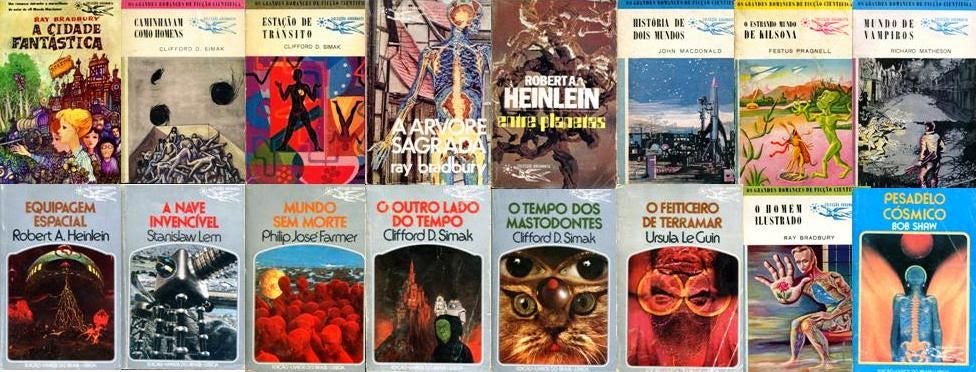
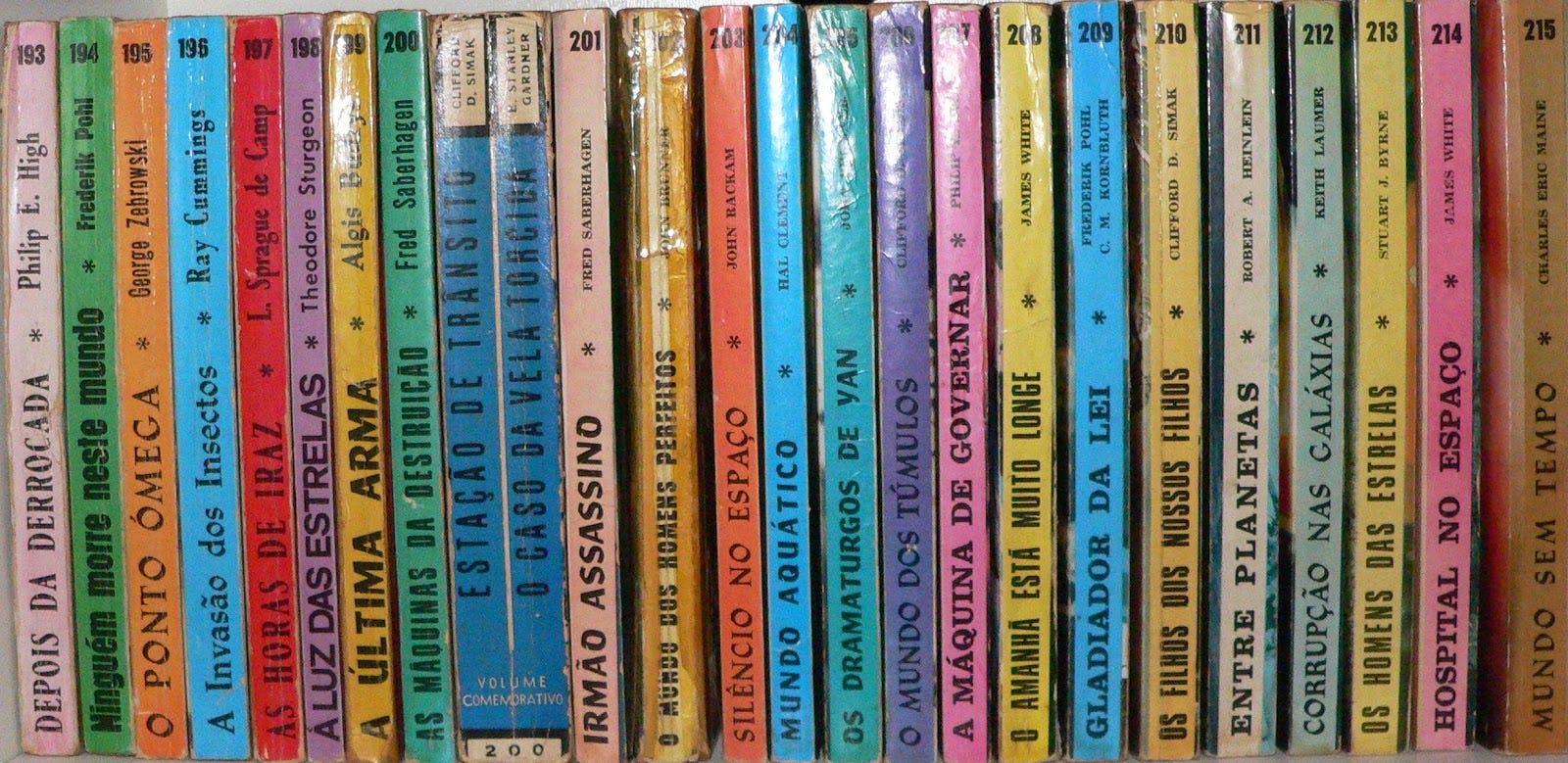
The modus operandi: at 9 o’clock at night the lights were turned off. Time for bed. I sneaked into bed, tucked myself under my handkerchiefs, and with the help of a flashlight, read the [ARGONAUTA] collection.
But who were they anyway? What fantastic worlds and situations projected? Let’s enumerate those that have become most implanted in memory.
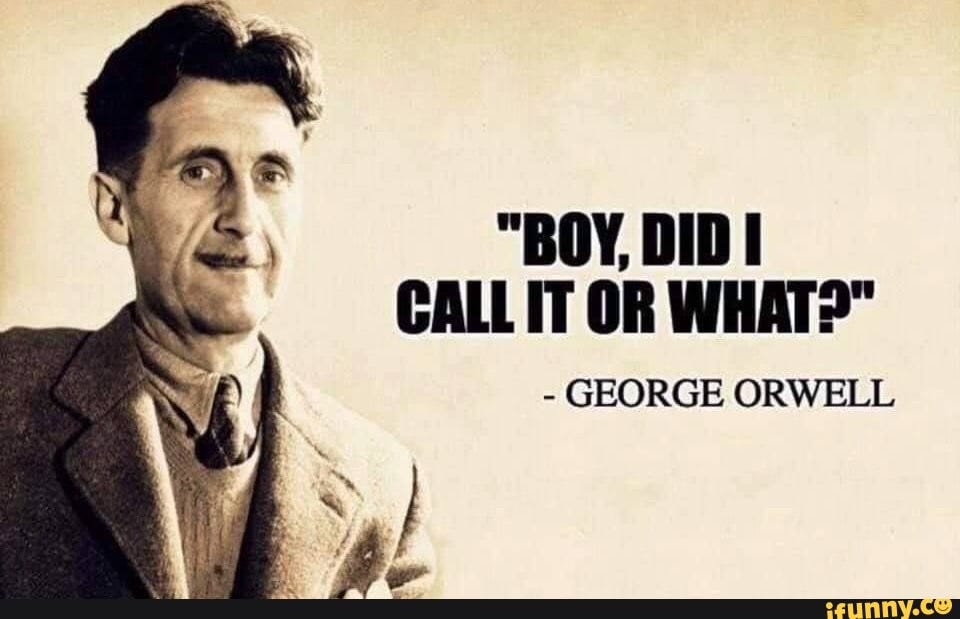
George Orwell
📚 George Orwell: Life and Work
George Orwell (born Eric Arthur Blair, 1903–1950) was a highly influential English author and journalist, whose trenchant social criticism and warnings against totalitarianism continue to resonate globally.
🌟 Early Life and Influences
Born in British India, Orwell was educated in England, including Eton College. After school, he served for five years (1922–1927) with the Indian Imperial Police in Burma, an experience that instilled in him a lifelong contempt for imperialism and social hierarchy. Returning to Europe, he endured periods of poverty, documented in his first major work, Down and Out in Paris and London (1933), a vivid account of destitution. His early experiences shaped his deep sense of justice and his commitment to exposing inequality, themes central to his work.
✍️ Major Works and Political Evolution
Orwell was a democratic socialist, and his political views matured during the tumultuous 1930s. He fought for the Republican side in the Spanish Civil War, where he was wounded and narrowly escaped execution by Communist forces, documenting the betrayal and political purges in Homage to Catalonia (1938). This experience solidified his anti-totalitarian stance, particularly against Stalinism, while retaining his faith in democratic socialism.
His most enduring works are two powerful anti-totalitarian allegories:
Animal Farm (1945): A satirical fable about a group of farm animals who overthrow their human farmer, only to be betrayed by the pigs, symbolizing the rise of the Soviet Union under Stalin.
Nineteen Eighty-Four (1949): A chilling dystopian novel that depicts a future society ruled by the authoritarian, omnipresent “Big Brother,” popularizing terms like “Orwellian,” “thoughtcrime,” and “Newspeak.”
Orwell’s essays, such as “Politics and the English Language,” also showcased his dedication to clear, honest prose as a vital tool against political deception.
💡 Legacy
Orwell’s writing is celebrated for its clarity, intelligence, and moral force. His unflinching critiques of political corruption, social injustice, and the manipulation of language made him one of the 20th century’s most important literary figures.
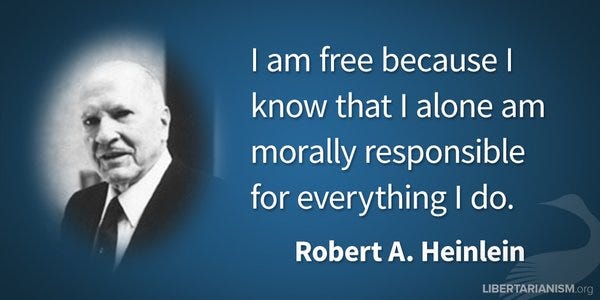
Robert A. Heinlein
🚀 Robert A. Heinlein: Dean of Science Fiction
Robert Anson Heinlein (1907–1988) was a groundbreaking American author and one of the “Big Three” of science fiction, alongside Isaac Asimov and Arthur C. Clarke. He played a pivotal role in evolving the genre from pulp magazines to a respected form of literature, known for his emphasis on scientific plausibility and libertarian-individualist themes.
⚓ Life and Career Start
Born in Missouri, Heinlein graduated from the U.S. Naval Academy in 1929 with a degree in engineering. He served as a Naval officer for five years but was medically discharged in 1934 due to tuberculosis. This technical and military background provided the foundation for the realism and competence that defined his characters and settings.
After exploring politics and other ventures, he began writing in 1939, selling his first story, “Life-Line,” to Astounding Science Fiction. He quickly became a leading figure, popularizing the “Future History” device to link his stories into a coherent timeline. During WWII, he worked as a civilian engineer on naval aviation projects, an experience that reinforced his connection to advanced technology.
🌌 Major Works and Themes
Heinlein was a prolific writer, known for his popular “Juvenile” novels in the 1940s and 50s before transitioning to more provocative adult themes. His work frequently explored concepts of radical individualism, competence, self-reliance, unorthodox social structures, and the responsibilities of citizenship. He won an unprecedented four Hugo Awards for Best Novel:
Double Star (1956)
Starship Troopers (1959): A military science fiction classic that introduced the “Space Marine” archetype and explored themes of citizenship and military service.
Stranger in a Strange Land (1961): A counter-culture favorite that tells the story of Valentine Michael Smith, a human raised by Martians, and popularized the word “grok.”
The Moon Is a Harsh Mistress (1966): A story of a lunar penal colony’s revolt against Earth, which popularized the libertarian-anarchist acronym “TANSTAAFL” (”There ain’t no such thing as a free lunch”).
Heinlein’s imaginative influence extended beyond literature, with terms like “waldo” (for remote manipulators) entering the English lexicon. He died in 1988, leaving behind a legacy that shaped modern science fiction.
Ray Bradbury
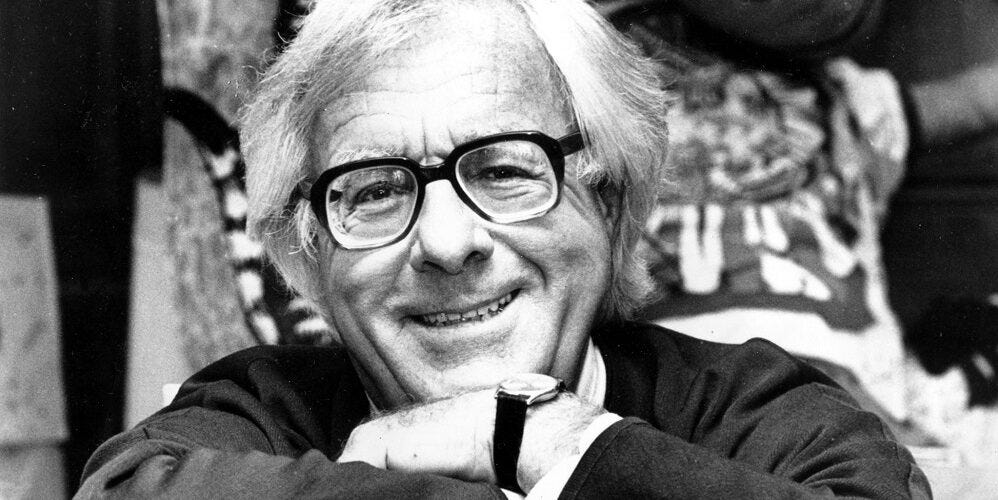
✨ Ray Bradbury: Poet of the Possible
Ray Douglas Bradbury (1920–2012) was an acclaimed American author, celebrated for blending the literary elegance of fantasy and horror with the speculative visions of science fiction. Born in Waukegan, Illinois, his childhood love for carnivals, magicians, and the works of Edgar Allan Poe and L. Frank Baum profoundly shaped his poetic style and imaginative focus.
✍️ Career and Poetic Style
Bradbury’s family settled in Los Angeles in 1934. Unable to afford college, he famously educated himself at the local library, later stating, “Libraries raised me.” He began his career writing for pulp magazines, but his lyrical, metaphor-rich prose and focus on the human condition set him apart from the genre’s technical realism. He made his professional breakthrough with the short story collection Dark Carnival (1947).
📖 Major Works and Enduring Themes
Bradbury’s most significant works established him as a major voice in American literature:
The Martian Chronicles (1950): A collection of interconnected stories chronicling the human colonization of Mars. It serves as a melancholic critique of Earthly vices—racism, greed, and war—transferred to a new frontier, emphasizing themes of nostalgia, cultural conflict, and the danger of unchecked progress.
Fahrenheit 451 (1953): His most famous dystopian novel, depicting a future where books are outlawed and “firemen” burn them. It is a powerful exploration of censorship, conformity, and the critical importance of literature and memory in a technologically distracted society.
Dandelion Wine (1957) and Something Wicked This Way Comes (1962): These semi-autobiographical novels delve into the magic and terror of childhood, using the small-town setting (Waukegan, fictionalized as Green Town, Illinois) to explore themes of innocence, mortality, and the loss of youth.
Bradbury viewed technology with caution, often portraying it as a dehumanizing force (e.g., the automated houses in “There Will Come Soft Rains”). His work is a powerful defense of the imagination against the pressures of conformity and a warning against the potential for progress to obscure fundamental human values.
Philip K. Dick

🤯 Philip K. Dick: The Reality Architect
Philip Kindred Dick (1928–1982) was a highly influential American science fiction author whose work delved deep into philosophical questions about the nature of reality, identity, and the meaning of “human.” Though he achieved only modest fame and faced financial struggles during his lifetime, his reputation soared posthumously, making him a major figure in 20th-century literature.
📝 Life and Literary Focus
Born in Chicago, Dick lived most of his life in California, a setting often incorporated into his fiction. The loss of his twin sister shortly after birth contributed to a lifelong preoccupation with duality, separation, and the concept of a ‘missing’ half. Dick’s personal life was marked by five marriages, emotional turmoil, and periods of drug use (particularly amphetamines), all of which heavily informed his imaginative, often paranoid narratives.
He began writing full-time in the 1950s, rapidly publishing over 44 novels and more than 120 short stories in the science fiction pulp magazines. He was distinct among his peers for focusing less on futuristic technology’s mechanics and more on its disorienting psychological and social effects on ordinary people.
🧠 Major Works and Themes
Dick’s fiction is dominated by key, recurring themes that challenge the reader’s basic assumptions:
The Ambiguity of Reality: His characters often find their world to be an illusion, a simulation, or an alternate history, forcing them to question objective truth.
The Man in the High Castle (1962): A Hugo Award winner depicting an alternate history where the Axis powers won WWII.
The Nature of Identity: He explored what defines humanity in a world of advanced technology, where distinctions between human and android/simulacrum are increasingly blurred.
Do Androids Dream of Electric Sheep? (1968): The basis for the film Blade Runner, where a bounty hunter must use empathy tests to distinguish humans from hyper-realistic androids (Replicants).
Dystopian Authority and Paranoia: His works critique monopolistic corporations, oppressive governments, and the surveillance state.
A Scanner Darkly (1977): A novel drawn from his personal experience with drug culture, about an undercover cop who loses his own identity while infiltrating a drug ring.
🎥 Enduring Legacy
Dick’s work proved incredibly fertile ground for cinema. Adaptations of his stories—including Blade Runner, Total Recall, and Minority Report—introduced his mind-bending concepts to a mass audience, securing his legacy as a prophet of the postmodern, technologically uncertain age.
Aldous Huxley
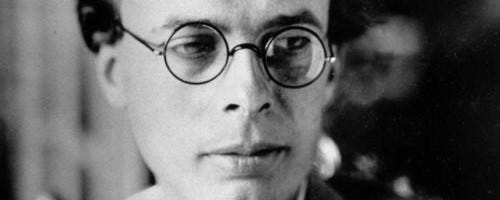
🧠 Aldous Huxley: The Social and Spiritual Critic
Aldous Leonard Huxley (1894–1963) was a prolific English writer and philosopher, renowned for his penetrating wit, pessimistic satire, and deep engagement with the philosophical and scientific issues of the 20th century. Born into a prominent intellectual family (his grandfather was biologist T. H. Huxley), he initially hoped for a career in science, but a near-blinding illness in his teens forced him to turn to literature.
✍️ Early Works and Masterpiece
Educated at Eton and Oxford, Huxley established himself in the 1920s with satirical novels like Crome Yellow (1921) and Point Counter Point (1928), which skillfully critiqued the intellectual and social mores of the post-WWI era.
His most famous and enduring work, Brave New World (1932), is a seminal dystopian novel. Set in a future World State that prioritizes stability above all else, the novel envisions a society where humans are genetically engineered, conditioned from birth, and kept docile through the constant consumption of the happiness-inducing drug “Soma.” It acts as a profound warning against unchecked technological progress, consumerism, and the sacrifice of individual freedom for total social control.
💡 Philosophical Shift and Later Focus
In 1937, Huxley moved to the United States. His later work abandoned pure fiction for philosophical essays and works that explored mysticism, spirituality, and the potential of consciousness expansion.
The Perennial Philosophy (1945) explores the common mystical truths found across various world religions.
The Doors of Perception (1954) documents his mescaline experiments, arguing that psychedelic drugs can offer profound, transformative insights by temporarily lifting the brain’s “reducing valve” on consciousness. This work profoundly influenced the 1960s counter-culture.
Island (1962), his final novel, offers a utopian counterbalance to his earlier dystopia, depicting a Pacific island society focused on ecological sustainability, psychotherapy, and controlled drug use.
Huxley’s writing consistently challenged the materialistic and conformist tendencies of modern Western civilization, cementing his legacy as a powerful critic and intellectual visionary.
Isaac Asimov
🤖 Isaac Asimov: Master of Science and Social Science
Isaac Asimov (1920–1992) was a Russian-born American author, professor of biochemistry, and one of the “Big Three” of science fiction. Prolific to an extreme, he wrote or edited over 500 books across nearly every category of the Dewey Decimal system, excelling in science fiction, popular science, and history.
🔬 Early Life and Prolific Output
Born in Petrovichi, Soviet Union, Asimov immigrated to the United States with his family at age three, growing up in Brooklyn, New York. He became a passionate reader of pulp science fiction while working in his father’s candy stores. He earned his Ph.D. in chemistry from Columbia University and spent most of his professional life as a professor of biochemistry at Boston University, all while maintaining a relentless writing schedule.
🌌 Foundational Works and Ethical Systems
Asimov’s science fiction is renowned for its logical consistency and commitment to “hard” science. His two major contributions shaped the genre’s course:
The Robot Series: Beginning with the collection I, Robot (1950), Asimov popularized the term “robotics” and introduced the Three Laws of Robotics :
A robot may not injure a human being or, through inaction, allow a human being to come to harm.
A robot must obey orders given it by human beings except where such orders would conflict with the First Law.
A robot must protect its own existence as long as such protection does not conflict with the First or Second Law. These laws served as a framework for exploring ethical dilemmas and the complexities of human-machine interaction, moving robots away from the common “mad machine” trope.
The Foundation Series: Inspired by Edward Gibbon’s The History of the Decline and Fall of the Roman Empire, this epic chronicles the collapse and eventual rebirth of a Galactic Empire. It centers on the concept of Psychohistory, a new mathematical science capable of predicting the general future of large populations. The series, including Foundation (1951), explores themes of social engineering, the cyclical nature of history, and the power of collective societal trends over individual actions.
🌟 Legacy
Asimov’s work is characterized by its clarity, intellectual curiosity, and optimistic view of human reason. By blending his Robot and Foundation universes late in his career, he created one of the most comprehensive fictional sagas in history. He remains a titan whose insights into AI, ethics, and the dynamics of civilization are remarkably relevant today.
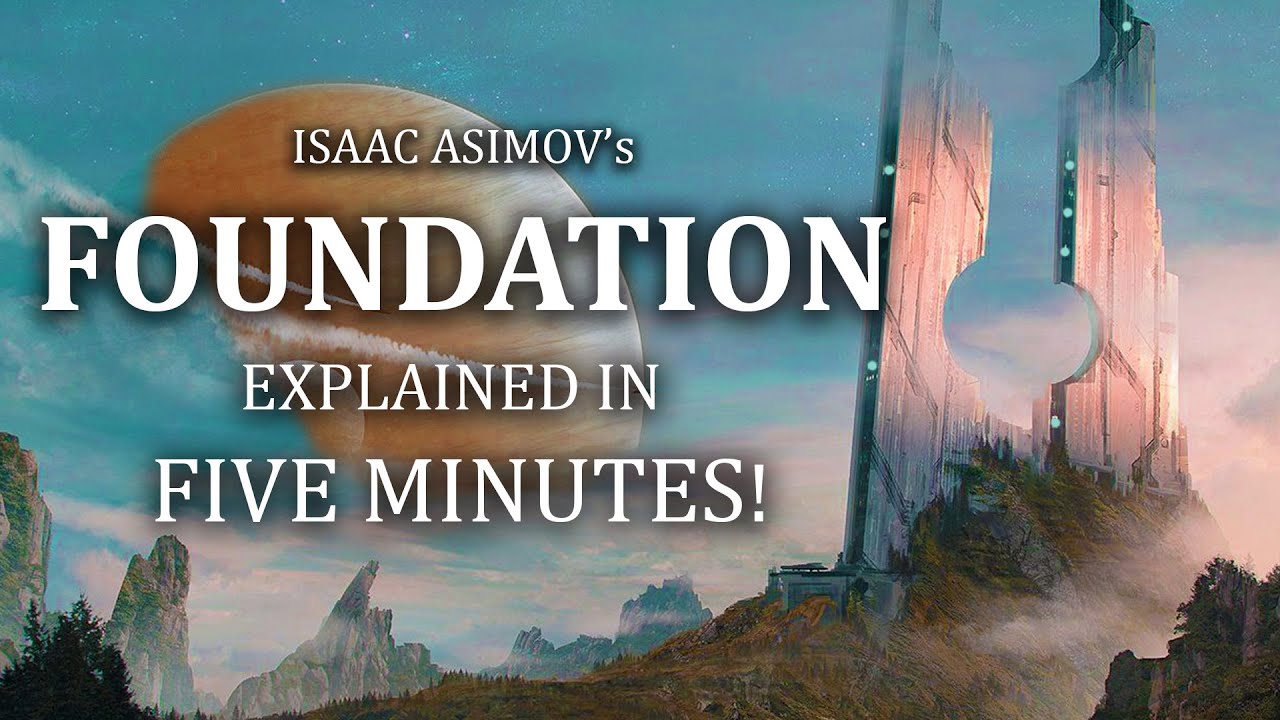
You can see an explanation of Hari Seldon’s plan in Isaac Asimov’s Foundation Explained In FIVE Minutes! (Some Spoilers). This video explains the premise of the Foundation series, one of Asimov’s most famous contributions to science fiction.
Arthur C. Clarke
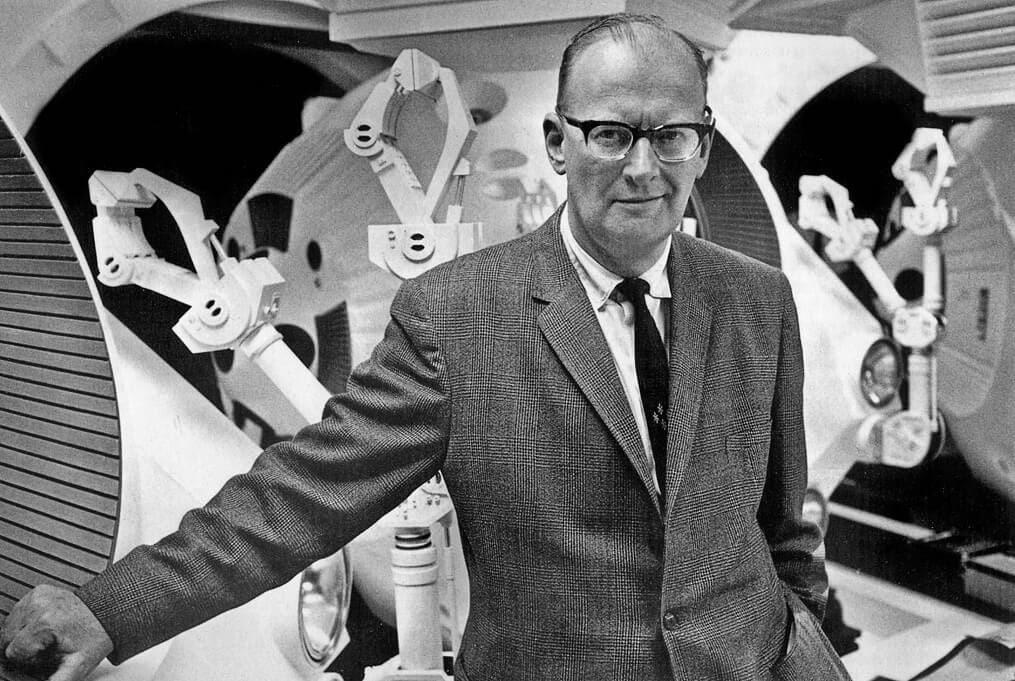
🚀 Arthur C. Clarke: Prophet of the Space Age
Sir Arthur Charles Clarke (1917–2008) was a visionary English science fiction author, inventor, and futurist, often counted as one of the “Big Three” of the genre. His work is celebrated for its scientific rigor, intellectual scope, and sense of cosmic wonder, blending scientific prediction with philosophical speculation on humanity’s future.
📡 Scientist and Futurist
Born in Minehead, England, Clarke was a lifelong enthusiast of astronomy and space travel. He served in the Royal Air Force as a radar specialist during World War II, a technical background that would inform his writing.
His most important scientific contribution was the 1945 paper, “Extra-Terrestrial Relays,” which accurately proposed the use of geostationary satellites for global communication. . This orbit, now vital for telecommunications, is informally known as the Clarke Orbit. He later earned a degree in physics and mathematics from King’s College London. In 1956, he moved to Sri Lanka (then Ceylon), pursuing a passion for scuba diving and writing, where he lived for the rest of his life.
🌌 Literary Masterpieces and Laws
Clarke’s fiction is marked by a focus on first contact, human evolution, and the vastness of the universe.
Childhood’s End (1953): Explores a peaceful, yet unsettling, alien intervention that guides humanity into its final evolutionary step toward a cosmic “Overmind.”
2001: A Space Odyssey (1968): Co-developed with director Stanley Kubrick, this work (adapted from his short story “The Sentinel”) is a meditation on human evolution and the role of mysterious monoliths as tools of an advanced, unseen intelligence.
Rendezvous with Rama (1973): A classic hard science fiction novel about humanity’s encounter with a colossal, enigmatic alien spacecraft passing through the solar system.
He is also famous for Clarke’s Three Laws, particularly the third, which states: “Any sufficiently advanced technology is indistinguishable from magic.”
His legacy lies in his ability to make the most monumental scientific concepts—from space elevators to intelligent life—accessible and emotionally profound.
YES. I HAVE SHITED ON MY TEACHERS