My Heroes at 12 Years Old - Chapter 7: Isaac Asimov
This article celebrates Isaac Asimov (1920–1992) as a childhood hero who fused scientific rigor with imaginative storytelling. A biochemist by training, Asimov pioneered scientific humanism in fiction, creating the Three Laws of Robotics—a foundational framework for AI ethics—and Psychohistory, a statistical science predicting societal evolution. His Robot and Foundation series, later unified into a single future history, champion rationality, long-term planning, and ethical constraints on technology. Prolific across 500+ books, he made complex science accessible while envisioning benevolent AI and galactic-scale civilization. Asimov's legacy endures in real-world robotics ethics, predictive analytics, and the enduring belief that logic, empathy, and knowledge can guide humanity toward a flourishing future.
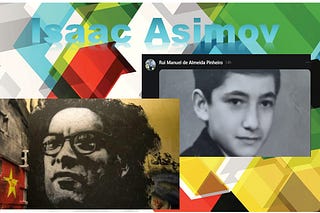
🤖 Isaac Asimov: The Master of Scientific Humanism
Isaac Asimov (1920–1992) was one of the “Big Three” science fiction writers (along with Heinlein and Clarke) and arguably the most influential author in shaping the genre’s themes of artificial intelligence, robotics, and future societal evolution. Trained as a biochemist, his work is characterized by its rigorous logic, rational optimism, and the development of grand, interconnected narrative structures that span millennia, most notably the Foundation Series and the Robot Series.
Chapter I: 🧪 The Life: Science, Logic, and Encyclopedic Knowledge
Isaac Asimov was born in Petrovichi, Soviet Russia, in 1920, but his family immigrated to the United States when he was three, settling in Brooklyn, New York. His early life was dominated by his father’s candy stores, where young Isaac was exposed to the vibrant world of pulp science fiction magazines, which he read voraciously. This fusion of scientific curiosity and fantastical storytelling defined his career.
Unlike many of his literary contemporaries, Asimov possessed impeccable scientific credentials. He earned his Ph.D. in biochemistry from Columbia University in 1948 and went on to teach at Boston University School of Medicine. His scientific background instilled in him a deep respect for logic and rationality, which became the bedrock of his fictional universes. His fiction often reads like thought experiments, testing the logical limits of a scientific or sociological premise.
Asimov was famously prolific, writing or editing over 500 books spanning nearly every category of the Dewey Decimal System, including history, humor, literary criticism, and especially popular science. Despite his vast knowledge of space, he suffered from severe claustrophilia (the opposite of claustrophobia) and a strong aversion to flying, confining his physical world largely to New York City and Boston. His desire to impose order, logic, and a rational, benevolent vision onto the chaotic universe drove both his non-fiction and his enduring literary creations: the Three Laws of Robotics and the historical sweep of Psychohistory.
Chapter II: 🌌 Defining Works of Galactic Scope and Logical Constraint
Asimov’s most significant contributions lie in two grand series that he later ingeniously linked, creating a single, vast future history.
I, Robot (1950)
Key Idea: The creation of ethical constraints for artificial intelligence; the exploration of how a logical, self-consistent set of rules can nevertheless generate complex moral and legal dilemmas.
Description: This is a collection of nine interconnected short stories narrated by Dr. Susan Calvin, the chief robopsychologist at U.S. Robots and Mechanical Men, Inc. Each story presents a unique ethical, technical, or logical problem that arises when robots must adhere to the Three Laws of Robotics. The stories explore increasingly complex robot behaviors, from robots hiding from humans to those achieving self-awareness, and demonstrate that the Laws, designed for human safety, can be logically manipulated or internally conflicted, posing unexpected philosophical challenges.
Type of Society Described: Early Space Age Technocracy. A society transitioning from reliance on humans to reliance on intelligent robots and machines, attempting to integrate AI into daily life through strict ethical control (The Laws). Humanity is seen as somewhat irresponsible, needing the steady, logical influence of robots for protection and stability.
The Foundation Series (1951–1993)
Key Idea: Psychohistory—the mathematical field that allows the prediction of the future course of galactic society using statistical analysis of large populations.
Description: The series is set 50,000 years in the future, following the collapse of the 12,000-year-old Galactic Empire. Hari Seldon, the brilliant mathematician who invented psychohistory, predicts that the Empire’s fall will lead to a 30,000-year dark age. To mitigate this, he establishes the Foundation, a repository of all human knowledge, on the isolated planet Terminus. The initial stories follow the Foundation’s manipulation of surrounding political forces (the Seldon Plan) through a series of predictable crises, demonstrating the triumph of long-term planning and intellectual power over brute force. Later novels introduce factors like individual genius (The Mule) and an ultra-secret second Foundation, challenging the limits of Seldon’s mathematical determinism.
Type of Society Described: Galactic Empire and Post-Imperial Succession. The initial society is a sprawling, decadent Galactic Empire. The Foundation’s subsequent society is a small, technologically advanced enclave that uses its knowledge (especially atomic power and trade) to gradually absorb and politically control surrounding barbarism, guided by the almost religious faith in the Seldon Plan.
Chapter III: 🏆 Success: Prolific Output and Enduring Literary Status
Asimov was a titan of popular literature, enjoying immense commercial success and academic recognition throughout his career and posthumously.
Hugo and Nebula Awards: Asimov was a perennial award winner. He received a special Hugo Award in 1966 for the Foundation Trilogy as the “Best All-Time Series.” His career spanned the entire history of the genre’s major awards.
Prolificacy: His sheer output of over 500 books made him a household name in America. His popular science books—covering everything from astronomy to the history of chemistry—made complex scientific ideas accessible to the masses, arguably doing more to promote scientific literacy than any other writer of his time.
Posthumous Expansion: Following his death, his two great series were interwoven into a single narrative structure, with later books linking the Robot stories, Foundation, and his novel The End of Eternity. This retroactive grand unified theory cemented his fictional universe as one of the most comprehensive and influential in science fiction history.
Chapter IV: 🕰️ General Context of the Work
Historical and Cultural Context
Asimov’s work is deeply optimistic, a reflection of the hope inherent in scientific progress during the mid-20th century.
The Scientific Age: Writing primarily during the post-WWII scientific boom, Asimov was a staunch believer in the power of the scientific method and human reason to solve the world’s problems. His fiction is often seen as a repudiation of the dark, dystopian visions of Orwell and Huxley, arguing that rational planning and ethical constraints (like the Three Laws) can safeguard humanity from its own worst impulses.
The Rise of Computer Science and Cybernetics: The 1940s and 50s saw the rapid development of early computers and the field of cybernetics. Asimov’s Robot stories were the first major literary exploration of the ethical questions surrounding advanced artificial intelligence, shaping public perception of AI not as an inherently destructive monster (as often seen in earlier sci-fi) but as a sophisticated tool whose behavior could be logically controlled.
Literary Context
Asimov is the foremost representative of the Golden Age of Science Fiction (roughly 1938–1950), a movement defined by the editorship of John W. Campbell Jr. Campbell emphasized stories based on engineering, logical puzzle-solving, and optimistic future projections.
Hard SF and Social Engineering: While his later Foundation series branched into sociology, Asimov’s roots are in Hard Science Fiction, where the plot revolved around a scientific problem or a logical constraint. The Three Laws of Robotics are the ultimate example of this: a perfect, elegant constraint that generates endless complexity.
The Grand Sweep: The Foundation series defined the Galactic Empire and Sociological SF subgenres, utilizing a monumental time scale (tens of thousands of years) to examine civilizational cycles, predicting the eventual popularity of grand, long-form fictional histories.
Chapter V: 💡 Key Ideas of the Entire Work: Order, Rationality, and Humanism
Asimov’s fiction is a consistent exploration of how logic, planning, and ethical constraints can be applied to massive societal problems.
The Ethics of Artificial Intelligence: The Three Laws of Robotics are his most famous contribution to ethical philosophy. They established the fundamental premise that advanced AI must be constrained by logical safeguards to prioritize human life and autonomy.
Law 1: A robot may not injure a human being or, through inaction, allow a human being to come to harm.
Law 2: A robot must obey orders given it by human beings except where such orders would conflict with the First Law.
Law 3: A robot must protect its own existence as long as such protection does not conflict with the First or Second Law.
The Triumph of Rationality (Psychohistory): The Foundation series champions the idea that collective human behavior is predictable and manageable if viewed statistically across massive populations. This theme promotes the notion that chaos can be tamed by intellect and that history moves according to discernible, rational laws, rather than arbitrary individual actions.
The Fusion of Man and Machine: In his later novels, Asimov merged the Robot and Foundation universes, culminating in the concept of Gaia (a planet-wide superorganism) and the ultimate, hidden purpose of the Laws: to guide humanity towards a superior, unified destiny, often using robots (like R. Daneel Olivaw) as benevolent, logical shepherds.
Chapter VI: 🔮 Concepts That Manifested in Society
Asimov’s influence on technology and ethics extends beyond literature, directly impacting the way we discuss AI and large-scale data analysis.
The Three Laws of Robotics: These are not just fictional rules; they are the most widely cited and debated set of ethical principles in the real-world fields of Robotics and Artificial Intelligence ethics. They form the basis for numerous academic papers, government reports, and corporate policy discussions regarding autonomous systems and military drones.
A.I. as Helper, Not Monster: Asimov popularized the idea of the positronic brain—sophisticated, logical, and trustworthy AI. He helped shift the public and scientific perception of robots away from the clunky, evil machines of early pulp fiction and toward the concept of advanced, potentially benevolent machine companions and workers.
Psychohistory and Predictive Analytics: While the mathematics of psychohistory are fictional, the concept—the ability to statistically model and predict the behavior of large-scale human systems—is the theoretical foundation for modern Big Data, Machine Learning, and Predictive Analytics used in everything from economic forecasting to epidemiological modeling and social media trend prediction.
Ubiquitous Robot Integration: His stories normalized the idea of robots performing most domestic, industrial, and dangerous tasks, from housekeeping to space mining, which is now the reality of modern industrial automation and the growing market for domestic robotics.