My Heroes at 23 Years Old - Chapter 1: Mein Lehrer für Informationstheorien des menschlichen Wissens
This article introduces the "My Heroes at 23 Years Old" series, reflecting on how speculative fiction shaped the author's 1976 career shift into information systems. Asimov's Psychohistory and Three Laws inspired statistical social modeling and AI ethics; Clarke foresaw tablets, geostationary satellites, and ubiquitous computing; Dick questioned reality's fragility, anticipating simulation theory and epistemic instability. The piece contrasts dystopian archetypes—Orwell's coercion, Huxley's comfort-based control, Bradbury's distraction—with libertarian and technocratic ideals (Heinlein's Luna, Huxley's Pala). Ultimately, these writers provided not predictions but conceptual tools: frameworks for reasoning about data, power, ethics, and human dignity in an increasingly mediated world.
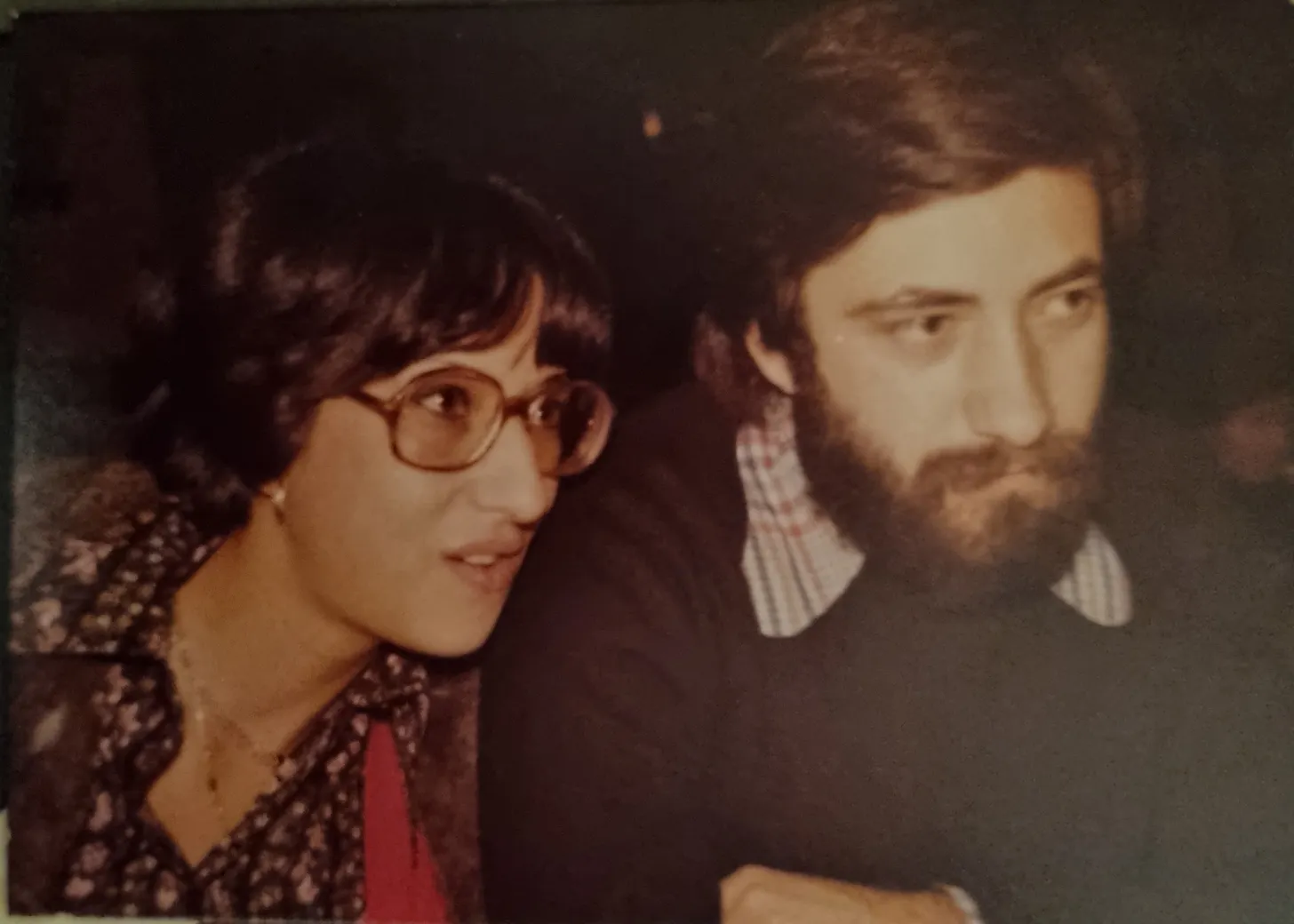
1 - 1976: The shift in my career
In 1976 began my walk in the study of the information systems of organizations.
And my heroes contributed a lot. There too they were present
Key intellectual and fictional influences that contributed to the conceptual development of advanced informational and organizational systems, particularly in the realm of computing and large-scale social management.
1. Psychohistory and Statistical Prediction (Isaac Asimov)
Isaac Asimov’s concept of Psychohistory, introduced in his Foundation series, served as a powerful conceptual model for organizing and predicting human societal trends using data and statistics.
Definition: Psychohistory is a fictional mathematical field that combines history, sociology, and mathematical statistics to predict the future behavior of very large populations. The goal of the Foundation, which is driven by this field, is to mitigate a predicted 30,000-year dark age after the collapse of the Galactic Empire.
Real-World Influence: This concept of statistically modeling and predicting large-scale human systems is cited as the theoretical foundation for modern Big Data, Machine Learning, and Predictive Analytics used in various fields, including economic forecasting and epidemiological modeling. Paul Krugman, a Nobel laureate in Economics, credits the Foundation series with turning his mind toward economics, viewing it as the closest real-world science to psychohistory.
Underlying Philosophy: Psychohistory represents the triumph of rationality and logical planning over chaos, asserting that collective human behavior is manageable if viewed statistically.
2. Ethical Constraints and AI Architecture (Isaac Asimov)
Asimov’s formulation of the Three Laws of Robotics heavily influenced the conceptual development of ethical safeguards within informational systems, particularly in AI.
The Laws: These rules (First Law: protection of humans; Second Law: obedience to humans; Third Law: self-protection, provided it doesn’t violate the first two) establish the fundamental premise that advanced Artificial Intelligence must be constrained by logical safeguards to prioritize human life and autonomy.
System Design: The Laws function as the logical foundation for the fictional positronic brain. Asimov believed that these laws were “obvious from the start” and served as implicit safeguards for all tools used by humans.
Real-World Influence: The Three Laws are highly cited and debated ethical principles in real-world Robotics and Artificial Intelligence ethics, forming the basis for government reports and corporate policy discussions regarding autonomous systems. DARPA named one of its programs, ASIMOV (Autonomy Standards and Ideals with Military Operational Values), inspired by these laws, aiming to develop benchmarks for assessing the ethical challenges of autonomous military systems.
3. Ubiquitous Information Access and Computers (Arthur C. Clarke)
Arthur C. Clarke’s predictions shaped the vision of interconnected, personalized information access:
Personal Computing and Networks: Clarke accurately predicted the rise of the internet and online banking almost to the year, stating that by the turn of the century, people would be able to access “all the information needed for everyday life: bank statements, theater reservations, all the information you need over the course of living in a complex modern society”. He conceived of smaller computer consoles that users would “take it as much for granted as we take the telephone” to communicate with a hub that relays pertinent information.
“Newspads” (Tablets): In 2001: A Space Odyssey, Clarke detailed portable, thin screens referred to as “Newspads” that provided news and documents. The design of these devices was cited by Samsung in a copyright dispute with Apple, showing its conceptual influence on modern tablets and smartphones.
Communications Infrastructure: Clarke’s 1945 non-fiction paper “Extra-Terrestrial Relays” provided the blueprint for the geostationary orbit, essential for modern global telecommunications and wireless information exchange. This provided the foundational infrastructure that enables globally organized informational systems.
4. Gnosticism and Alternative Reality (Philip K. Dick)
Philip K. Dick’s intense focus on the fragility of reality and the pervasive nature of unseen control influenced philosophical and computational systems, although primarily through cultural concepts rather than engineering blueprints.
Simulated Reality: Dick’s persistent questioning of consensus reality (often fueled by Gnostic concepts like the “Black Iron Prison”) led to the philosophical idea that the observable universe is a “mass delusion” or a simulation. This forms the theoretical and cultural foundation for the Simulation Hypothesis.
Perceptual Control: Dick explored themes of social control through media, technology, and drugs. His work anticipates the modern problem of broken objective truth and manufactured digital reality (e.g., deep fakes), raising questions about the reliability of information input and storage systems.
In summary, the development of informational organization systems was conceptually influenced by Asimov’s blueprint for data-driven social management (psychohistory) and ethical hardware constraints (Three Laws), alongside Clarke’s accurate forecasting of the physical networks and portable access devices necessary for a globally connected knowledge society. Dick’s contribution lies more in defining the metaphysical and psychological threats inherent in highly organized, technologically mediated informational realities.
2 - The Questions:
How did speculative fiction writers shape diverse global perspectives on totalitarianism and technological control?

Speculative fiction writers shaped diverse global perspectives on totalitarianism and technological control by creating distinct and contrasting models of oppressive futures, moving the critique beyond simple political power to include psychological, biological, and informational mechanisms of control. These works became foundational texts, translated globally and integrated into academic curricula, establishing universal critical concepts.
Diverse Perspectives on Totalitarianism
The primary contribution was defining the two major archetypes of modern dystopian control, offering different warnings about how freedom could be lost:
The Dystopia of Pain and Political Submission (Orwell): George Orwell defined the hyper-totalitarian state where control is maintained through fear and the obliteration of objective reality. His novels critiqued absolute power, regardless of its ideological banner, and became the quintessential Western text defining the psychological domination feared under the Soviet threat during the Cold War. His work provided a political blueprint for subsequent dystopian narratives. The society of Oceania demands not just obedience, but psychological submission, enforced by the Thought Police and the perpetual rewriting of history.
The Dystopia of Pleasure and Biological Control (Huxley): Aldous Huxley’s Brave New World focused on the terrifying possibility of achieving ultimate societal stability and happiness by eliminating individual freedom through biological engineering and conditioning. This “soft-control dystopia” contrasts sharply with Orwell’s vision; here, people are oppressed by being kept perpetually comfortable, distracted, and shallow. Control is maintained through the universal distribution of the emotion-dulling drug Soma and the use of genetic manipulation (ectogenesis) to enforce a biological caste system.
Shaping Views on Technological Control
Speculative writers explored technology not just as a tool for progress, but as a primary mechanism for systemic oppression and psychological manipulation:
Ubiquitous Surveillance and Oppression (Orwell and Dick): Orwell’s Telescreen established technology as a “merciless tool of oppression,” creating the blueprint for the real-world ubiquitous surveillance state and fueling global debates over privacy. Philip K. Dick focused on a Paranoid Surveillance State where the very fabric of reality is fractured and uncertain, anticipating the breakdown of objective truth and the ethical challenges posed by sophisticated illusions, like deep fakes. Dick also explored themes relevant to modern predictive policing, such as the concept of “pre-crime”.
Control via Mass Distraction (Bradbury): Ray Bradbury introduced the concept that oppression could arise willingly from the populace seeking emotional ease and conformity, driven by anti-intellectualism. His work Fahrenheit 451 was a damning indictment of mass media, predicting ubiquitous media immersion via the wall-sized parlor walls and personal seashell radios (earbuds), which replaced critical thought with constant, shallow electronic entertainment.
Ethical and Libertarian Counterpoints: Not all perspectives warned of oppression. Robert A. Heinlein championed libertarian ideals, advocating for minimal government and fierce individualism in societies like the Anarchist/Libertarian Commune of Luna. Conversely, Isaac Asimov shaped the global view of Artificial Intelligence (AI) by establishing ethical constraints in the form of the Three Laws of Robotics, influencing real-world robotics policy by mandating that advanced AI prioritize human safety and autonomy.
Global Influence and Cultural Impact
The speculative concepts generated by these authors transcended literary genres, embedding themselves into global political and cultural discourse:
Terms like “Orwellian,” “Big Brother,” and “Newspeak” became universal critical shorthand for manipulative language and governmental overreach, instantly understood across diverse cultures.
The concepts of Soma and Hypnopaedia (sleep-teaching) became metaphors for the modern reliance on psychoactive drugs to maintain social functionality and the widespread use of subliminal messaging.
Dick’s complex philosophical questions regarding the nature of reality and identity (the Simulation Hypothesis) were brought to global audiences through widespread cinematic adaptation, establishing him as a central figure in modern speculative storytelling.
The collective work of these writers ensured that discussions of centralized power and technological dominance would be viewed through multiple ideological lenses—fear-based political control (Orwell), comfort-based biological control (Huxley), distraction-based cultural control (Bradbury), and paranoia-based informational control (Dick). This diversity of focus provides citizens worldwide with a complex toolkit for diagnosing threats to democratic freedom.
What were the proposed ideal model societies?

The speculative fiction writers in the sources proposed various ideal or highly functional model societies, often using them as counterpoints to the dystopian futures they warned against. These ranged from philosophical communes focused on spiritual growth to competent, rational societies guided by advanced technology and strict ethical laws.
Here are the proposed ideal model societies:
1. The Intentional Eutopia of Pala (Aldous Huxley)
Aldous Huxley described Pala in Island (1962) as a functional, sustainable Eutopia. Pala is an isolated society that deliberately fused advanced Western technology (such as medicine and engineering) with Eastern philosophy and spiritual practices.
Key characteristics of this proposed ideal society include:
A focus on psychological freedom and integrated spiritual development.
A decentralized government.
A culture centered on constant critical self-analysis.
The use of psychedelic substances (moksha medicine) for spiritual growth, which serves as a contrasting concept to the state-mandated drug Soma in Brave New World.
An emphasis on ecological responsibility.
2. The Anarchist/Libertarian Commune of Luna (Robert A. Heinlein)
In The Moon Is a Harsh Mistress (1966), Robert A. Heinlein described the Moon Colony (”Luna”) as a society that successfully revolted against Earth to establish an Anarchist/Libertarian Commune.
Key characteristics of this proposed ideal society include:
A minimal government based on the principle of non-aggression.
A fierce commitment to radical individualism and free association.
An economic philosophy summarized by the foundational slogan, TANSTAAFL (”There Ain’t No Such Thing As A Free Lunch”).
The championing of individual sovereignty and the right of adults to make any contract they wish (social, sexual, or economic), so long as it does not infringe upon the liberty of others.
The inclusion of fluid social structures and relationships, such as polyandrous and complex familial bonds.
3. The Technocratic Utopia of the Overlords (Arthur C. Clarke)
Arthur C. Clarke explored a state of ultimate peace and stability in Childhood’s End (1953), which is achieved through non-human intervention.
Key characteristics of this proposed ideal society include:
A stable, peaceful, and technologically advanced global society.
The paternalistic, non-human management of the Overlords who take over Earth’s governance.
The elimination of all war, poverty, and disease, establishing a utopia.
The society ultimately serves as a vessel for humanity’s evolutionary leap toward a collective, non-physical supermind, despite the initial loss of ambition and drive.
4. The Foundation’s Rational Society (Isaac Asimov)
Isaac Asimov’s Foundation Series describes the establishment of a future society dedicated to intellectual and rational preservation, intended to mitigate a predicted 30,000-year dark age following the collapse of the Galactic Empire.
Key characteristics of this proposed model include:
A society guided by the principles of Psychohistory—the mathematical field that uses statistical analysis of large populations to predict the future course of galactic society.
The triumph of long-term planning and intellectual power over brute force.
The Foundation, a technologically advanced enclave, uses its knowledge (including atomic power) to gradually absorb surrounding societies, demonstrating that rationality and logical planning can solve massive societal problems and tame chaos.
The society relies on ethical constraints for advanced intelligence, such as the Three Laws of Robotics, which establish safeguards to prioritize human safety and autonomy.