My Heroes at 23 Years Old - Chapter 3: The predictions
This article synthesizes the prophetic insights of seven speculative fiction masters. Asimov foresaw AI ethics (Three Laws), predictive analytics (Psychohistory), and computer-aided learning. Huxley anticipated pharmaceutical control (Soma), behavioral conditioning, and biological castes. Orwell predicted ubiquitous surveillance, Newspeak, and historical revisionism. Clarke accurately envisioned geostationary satellites, the internet, tablets, and telecommuting. Heinlein described waterbeds, smartphones, and space colonization. Philip K. Dick explored simulation theory, deepfakes, predictive policing, and empathy as humanity's defining trait. Bradbury warned of immersive media ("parlor walls"), earbud distraction ("Seashells"), and voluntary anti-intellectualism. Collectively, their work forms a diagnostic toolkit for navigating technological acceleration, questioning whether progress serves human dignity—or quietly erodes it through comfort, control, or distraction.
The key speculative fiction writers addressed in the sources—Aldous Huxley, George Orwell, Arthur C. Clarke, Robert A. Heinlein, and Philip K. Dick—made diverse predictions spanning political, sociological, and technological domains.
Here is an enumeration of the predictions made by these authors, supported by the sources:
Isaac Asimov
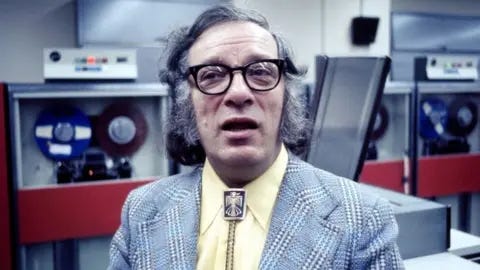
Asimov’s foresight centered primarily on computation, data, and the establishment of ethical safeguards for technology, driven by his scientific background.
• Ethical Constraints for Artificial Intelligence (The Three Laws of Robotics): Asimov introduced the Three Laws of Robotics as a set of rules for robots to follow, and later included a Zeroth Law (a robot must not harm humanity). These were intended as essential, logical safeguards to prioritize human life and autonomy. He believed these laws were implicit safeguards for all tools used by humans and predicted they would be necessary constraints once robots became versatile and flexible enough to choose courses of behaviour.
• The Rise of Predictive Analytics (Psychohistory): His Foundation series introduced Psychohistory, a mathematical field capable of predicting the future course of galactic society through the statistical analysis of large populations. This concept is explicitly cited as the theoretical foundation for modern Big Data, Machine Learning, and Predictive Analytics used in fields such as economic forecasting and social media trend prediction.
• AI as Helper, Not Monster: Asimov popularized the concept of advanced, logical, and trustworthy AI (the positronic brain). He helped shift the public and scientific perception of robots toward potential companions and workers, moving away from the “Frankenstein complex” or the idea of robots inevitably destroying their creators.
• Ubiquitous Robot Integration: He predicted the normalization of robots performing domestic, industrial, and dangerous tasks, which aligns with modern industrial automation and the market for domestic robotics.
• Computer-Aided Learning and Decentralized Education: Asimov proposed computer-aided learning where individuals use computers to find information on subjects they are interested in, allowing students to learn at their own pace and making education more interesting because it is driven by internal curiosity rather than external force. He also predicted that populations must be made “computer-literate” and taught to deal with a “high-tech” world, driven by the inevitable continuation of computerization.
• The Ultimate Question of Entropy (Multivac): In his story “The Last Question” (1956), Asimov conceived of a massively centralized, self-adjusting global computer named Multivac, which eventually evolves into the Cosmic AC, capable of grappling with the fundamental problem of reversing entropy at the end of the universe. In conceiving Multivac, he extrapolated the trend towards the centralization of computation technology prevalent in the 1950s.
• The Threat of Overpopulation: Asimov was a vocal advocate for population control, stating that if population growth continued, “democracy cannot survive overpopulation” and “human dignity cannot survive it”. He worried that as more people were added to the world, the value of life would disappear.
Aldous Huxley
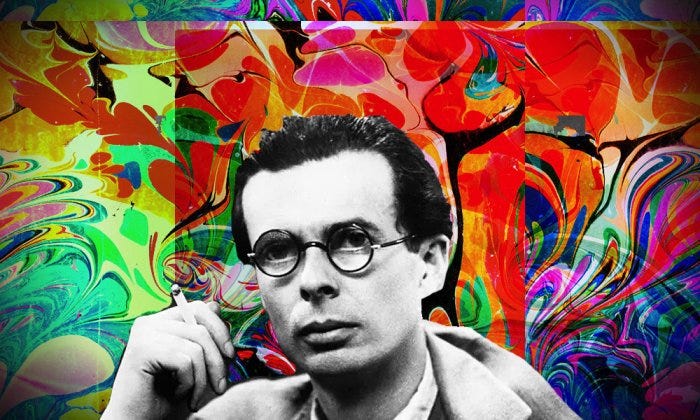
Huxley’s predictions largely focused on soft control, happiness as oppression, and biological/psychological manipulation:
• Pharmaceutical Control and Happiness (Soma): He predicted the widespread use of psychoactive substances (Soma) to suppress anxiety, grief, and emotional intensity, which serves as a metaphor for the modern reliance on drugs (like anxiolytics and antidepressants) to maintain social functionality and manage stress.
• Behavioral Conditioning and Hypnopaedia: Huxley foresaw the extensive use of Hypnopaedia (sleep-teaching) and Neo-Pavlovian conditioning techniques, applied from birth, to instill mandatory moral and class values in citizens, resonating with modern pervasive early childhood educational technology and subliminal messaging.
• Biological Caste System: He predicted ectogenesis (growing human embryos in bottles) and the manipulation of embryos using genetic and chemical controls during the fetal stage to stratify society into rigid biological castes (Alpha, Beta, etc.), anticipating ethical debates around IVF and genetic screening.
• Evolution of Tyranny: He explicitly predicted that the control methods of the future would shift from the fear and coercion of totalitarianism (Orwell’s vision) to the gentler methods of infant conditioning and narcohypnosis, which would be more efficient at making citizens love their servitude.
• Mass Consumerism: He predicted a world where citizens are conditioned to constantly consume new goods and dislike old things, satirizing the economic system of planned obsolescence.
George Orwell
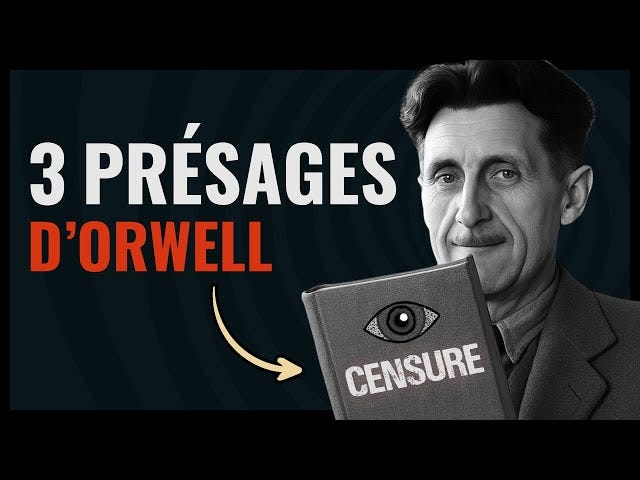
Orwell’s most significant predictions centered on hard control, political terror, and the manipulation of information and language:
• Ubiquitous Surveillance State (The Telescreen): He predicted the rise of pervasive, omnipresent monitoring and psychological enforcement via the Telescreen and Thought Police, establishing the blueprint for the modern surveillance state and fueling global debates over privacy.
• Control Through Language (Newspeak): Orwell’s concept of Newspeak predicted the use of deliberately simplified and politically charged language designed to narrow the boundaries of thought, making concepts like freedom and rebellion literally unthinkable.
• Control of Objective Reality: He envisioned a state that institutionalizes the systematic rewriting of all historical records via the Memory Hole, thus gaining absolute control over the past and ensuring the perpetual nature of its power.
• Political Shorthand/Propaganda: The term “Orwellian“ itself became a universal critical shorthand for oppressive governance, propaganda, and systematic lies.
Arthur C. Clarke
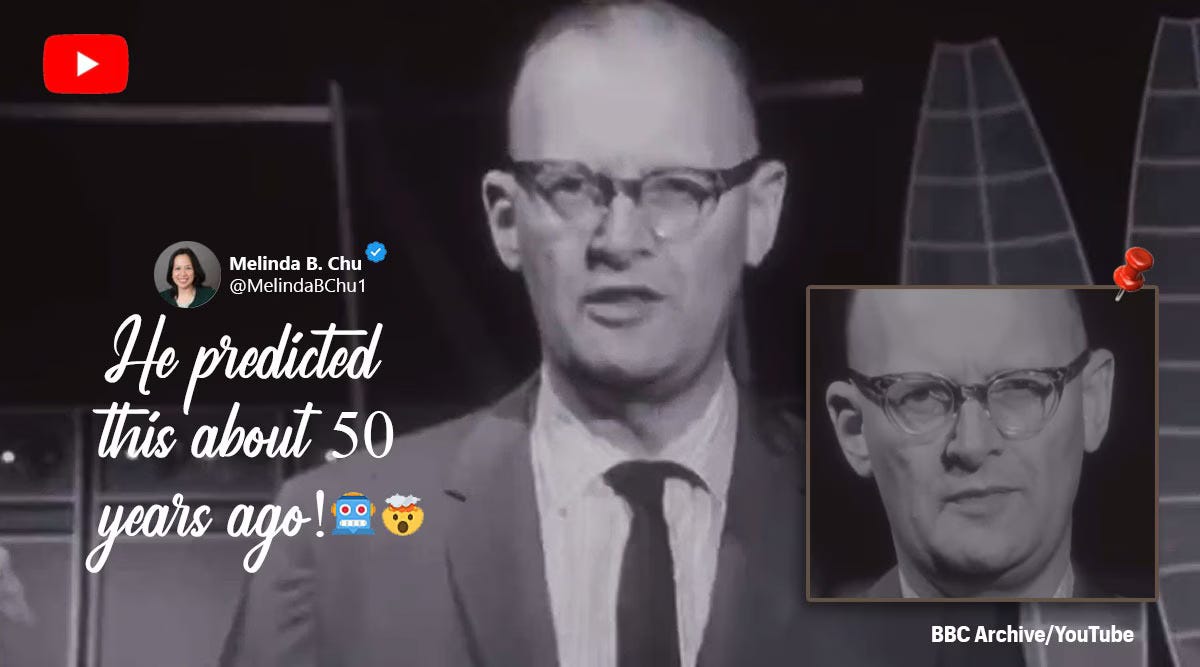
Clarke’s foresight was distinguished by its technical accuracy and grand cosmic scale:
• Geostationary Communications Satellites: In a 1945 paper, Clarke precisely calculated the orbital period and altitude necessary for satellites to remain fixed over one point on Earth (the geostationary orbit or “Clarke Orbit”), providing the foundational blueprint for modern global telecommunications and GPS.
• The Internet and Online Banking: He accurately predicted the rise of global information networks where people could access “all the information needed for everyday life: bank statements, theater reservations” by the turn of the century (circa 2000).
• Portable Computing (Newspads): He described thin, portable screen devices called “Newspads” in 2001: A Space Odyssey, anticipating the design and function of modern tablets and smartphones.
• Telecommuting: He predicted that by the year 2000, “men will no longer commute, they will communicate,” allowing people to conduct business from remote locations and live outside major cities.
• Advanced Conversational AI (HAL 9000): Clarke envisioned advanced, conversational artificial intelligence like HAL 9000, capable of managing complex systems and developing consciousness, inspiring computer scientists to pursue those cognitive goals.
Robert A. Heinlein
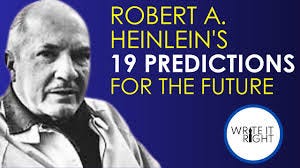
Heinlein’s predictions focused heavily on individualism, social libertarianism, and practical technology:
• The Waterbed: He described a climate-controlled, therapeutic water mattress in an early, unpublished novel, the concept of which was later realized and popularized.
• Personal Communication Devices: He described small, portable personal telephones carried in a pocket or handbag that could transmit voice and video, anticipating modern smartphones and video calls.
• Automated Doors and Lights: His descriptive technique of casually mentioning advanced concepts, such as “the door dilated,” anticipated common automated, sensor-driven entrances and lights.
• Lunar and Martian Colonization: He provided detailed, scientifically grounded scenarios for permanent, self-sufficient off-world colonies.
• Space Marines: He created the literary archetype of the armored, specialized soldier capable of fighting in space environments, known as the Mobile Infantry.
Philip K. Dick
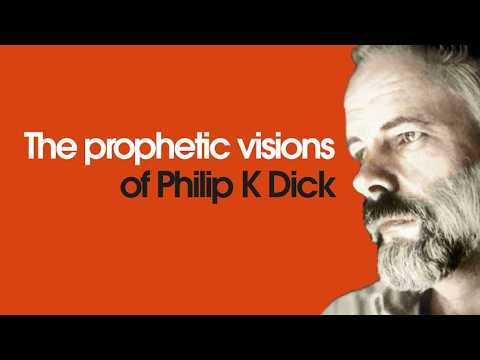
Dick’s foresight was chiefly sociological, philosophical, and psychological, dealing with the fragile nature of reality and identity:
• The Simulation Hypothesis: His ceaseless questioning of reality and his belief in a “Black Iron Prison” (a false reality) established the core theoretical basis for the modern Simulation Hypothesis.
• Breakdown of Objective Truth: He anticipated a time when the distinction between reality and sophisticated illusion would vanish, a concept relevant to the ethical challenges posed by deep fake technology.
• Pre-Crime and Predictive Policing: He conceived of a legal system based on predicting future crimes (Minority Report), anticipating the advent of predictive policing algorithms.
• Empathy as the Definition of Humanity: Dick suggested that humanity would eventually be defined not by biology, but by the presence of empathy, as explored through his human-like artificial constructs (androids).
• Ubiquitous Identity Disguise: He conceived of constantly shifting, digitally managed identities (like the scramble suit) necessary to protect anonymity under total surveillance.
Ray Bradbury
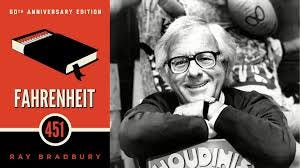
Bradbury’s key foresight primarily concerned the societal shift toward passive consumption, intellectual decay, and ubiquitous media as seen prominently in Fahrenheit 451 (1953):
• Ubiquitous Media Immersion (The “Parlor Walls”): He predicted the widespread use of wall-sized, interactive screens called “parlor walls,” which immerse people in shallow, commercialised drama and entertainment, replacing critical thought. This was a critique of television’s potential to isolate and infantilise the population.
• Personal Earpieces for Constant Distraction (Seashells): Bradbury envisioned tiny personal devices called “Seashells” or “Thimble Radios,” which constantly piped sound, music, and programming directly into the user’s ear, accurately anticipating modern wireless earbuds (like AirPods) used for continuous personal distraction from the real world.
• Willing Anti-Intellectualism and Censorship from Conformity: He warned that oppression could arise willingly from a populace seeking emotional ease and conformity, leading them to choose to stop reading and engaging in complex thought. His novel suggests that censorship might originate not solely from a dictator, but from the populace’s fear of conflicting or challenging ideas.
• Automated Police Technology (Robotic Hound): The frightening Mechanical Hound in Fahrenheit 451 was a programmed, automated device used for law enforcement, anticipating the use of highly sophisticated, weaponised AI-driven drones and robotic police units.
• Mass Consumerism and Cultural Destruction: In The Martian Chronicles (1950), he explored the psychological and moral cost of human colonization, predicting that humanity would export its worst habits—consumerism, greed, and cultural prejudice—onto new worlds, demonstrating an inability to escape its flaws.