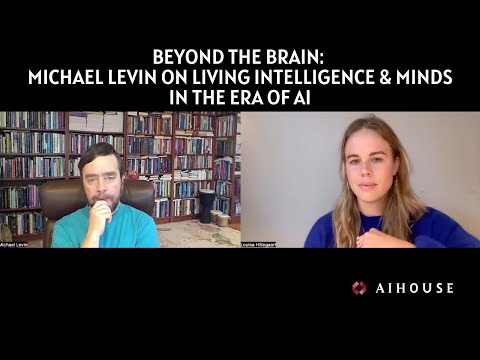
Professor Michael Levin Work
This article profiles Michael Levin, a biologist pioneering the study of bioelectricity—the electrical signals cells use to communicate and coordinate large-scale anatomical form. Viewing DNA as hardware and bioelectric patterns as software, Levin's lab has demonstrated that manipulating membrane voltage can trigger limb regeneration in adult frogs, reprogram cancer cells into normal tissue, and even induce eyes in unexpected locations. His creation of Xenobots—computer-designed, self-organizing living machines assembled from frog cells—illustrates that cells are problem-solving agents with collective intelligence. Levin's work suggests cognition and memory are fundamental properties of biological matter, opening pathways to regenerative medicine that "rewrite" the body's electrical code rather than relying solely on genetic or chemical interventions.
There’s a Lot of Knowledge There. Take a Look, if you Dare.
⚡ The Architect of Bioelectricity: The Story of Michael Levin
Early Life and The Computer Scientist’s Question
Michael Levin was born in Moscow, USSR, in 1969. In 1978, his family emigrated to Lynn, Massachusetts. His academic path began not with a microscope, but with a keyboard, as he pursued Computer Science alongside Biology for his dual undergraduate degrees at Tufts University.
This early immersion in computation and engineering provided the foundational question that would drive his career: How does an organism, a complex collection of cells, reliably generate and repair its own large-scale anatomy without a central “blueprint”? He saw the genome (DNA) not as a fixed blueprint, but as a set of rules—a hardware—that required a software to execute and solve complex pattern-formation problems.
The Discovery of the “Bioelectric Code”
Levin pursued his Ph.D. in Genetics at Harvard and post-doctoral work in Cell Biology, where he made his defining shift. He began focusing on bioelectricity—the electrical signals that cells use to communicate beyond the nervous system.
He discovered that all tissues maintain voltage gradients across their cell membranes, created by the movement of charged ions (like potassium, sodium, and calcium) through specialized protein channels. These voltages are not mere side effects of cellular activity; they are an ancient, foundational layer of communication, functioning like a bioelectric circuit that stores and processes information about the body’s desired form.
The Key Insight: Cells are not just following linear instructions from the DNA; they are connected in a network, forming an electrical “pre-pattern” that guides their growth, differentiation, and organization into complex structures like limbs and organs.
The Software of Life: Regeneration and Reprogramming
Levin’s lab at Tufts, where he serves as the Vannevar Bush Distinguished Professor, has spent decades demonstrating the power of manipulating this bioelectric code:
1. Rewriting the Body Plan (Limb Regeneration)
While frogs (like Xenopus laevis) can regenerate their tails as tadpoles, they lose this ability as adult frogs. Levin’s team showed that this loss is not irreversible.
By applying a special BioDome (a small silicone cap containing a drug cocktail to trigger specific ion channel activity) to a frog’s amputation site for just 24 hours, they could temporarily “re-boot” the cellular network.
The result was the regrowth of a nearly complete, functional limb—bones, muscles, nerves, and webbing—in an animal that naturally cannot regenerate. This suggests that the information for building a limb is still present; it simply needs the right electrical cue to be activated.
2. The Quest to Cure Cancer
Levin views cancer not as a genetic error alone, but as a failure of the collective—the cells revert to their individual, competitive state, ignoring the overall anatomical blueprint.
His team has shown that by manipulating the bioelectric state of cells, they can reprogram cancer cells back into normal, non-proliferating tissues. This approach suggests a paradigm shift: treating cancer by changing the tissue’s electrical code, not just by killing cells with chemotherapy.
The Creation of the Xenobots: Life-as-it-Can-Be
In one of his most sensational and philosophically challenging discoveries, Levin and his collaborators created Xenobots (named after the frog Xenopus laevis).
What they are: These are entirely novel, millimeter-sized life forms, robotically assembled by taking basic embryonic skin and heart cells and configuring them into new, non-biological shapes designed by a supercomputer.
What they do: With no genome of their own, these cells, freed from their normal context, spontaneously organize into a new, goal-directed organism. They can move, navigate, carry small objects, and even exhibit a rudimentary form of self-replication by collecting loose cells and assembling them into new Xenobots.
The Xenobots demonstrate Levin’s core belief: Cells are problem-solving agents. When given a task (like building a frog) or placed in a new environment (like a Xenobot design), they use their inherent, collective intelligence to achieve a goal, even if it’s not one they evolved for.
The Philosophical Frontier
Levin’s work extends into deep philosophical territory, suggesting that cognition and intelligence are not exclusive to brains or nerve cells, but are fundamental properties of matter and life at all scales, from single-celled organisms to complex tissues.
His life’s mission is to crack the “Morphogenetic Code”—the set of rules that governs how cellular collectives generate and maintain form. By mastering this code, he envisions a future of medicine where we can:
Regrow any organ or limb lost to disease or trauma.
Correct birth defects before they fully manifest.
Reprogram tumors into benign tissues.
Dr. Michael Levin’s story is the story of a scientist who looked past the DNA to the deeper, unseen language of life—a language spoken in whispers of electricity—and in doing so, unlocked the potential to become an architect of new biological forms.
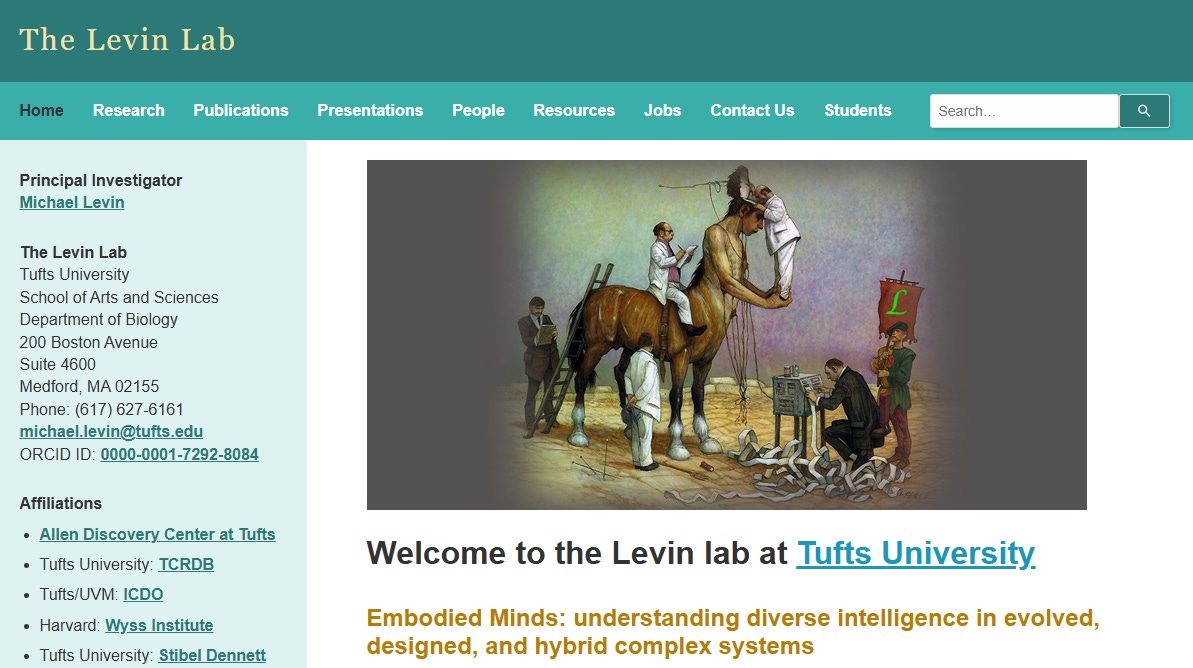
https://drmichaellevin.org/
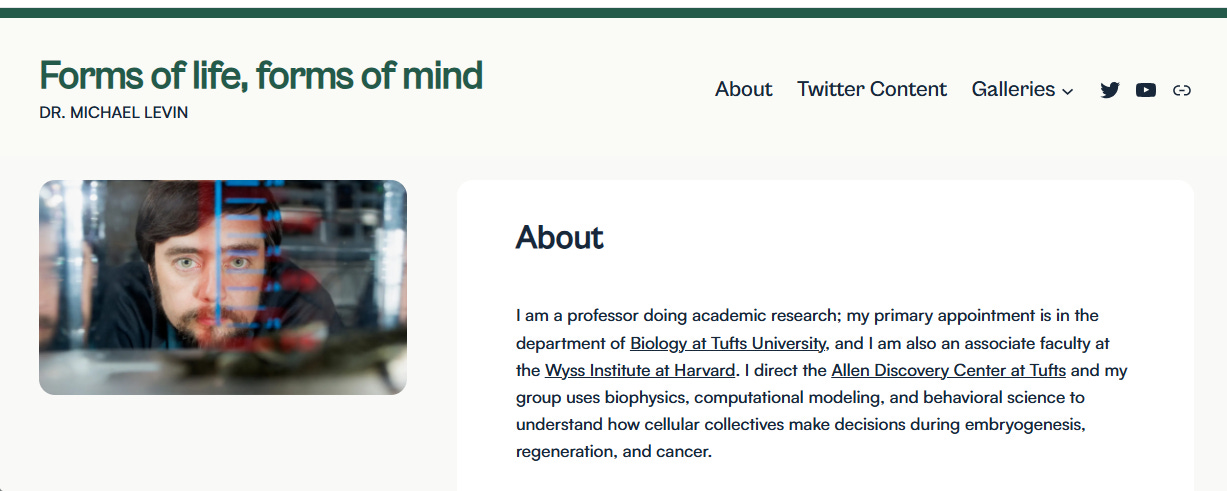
https://thoughtforms.life/
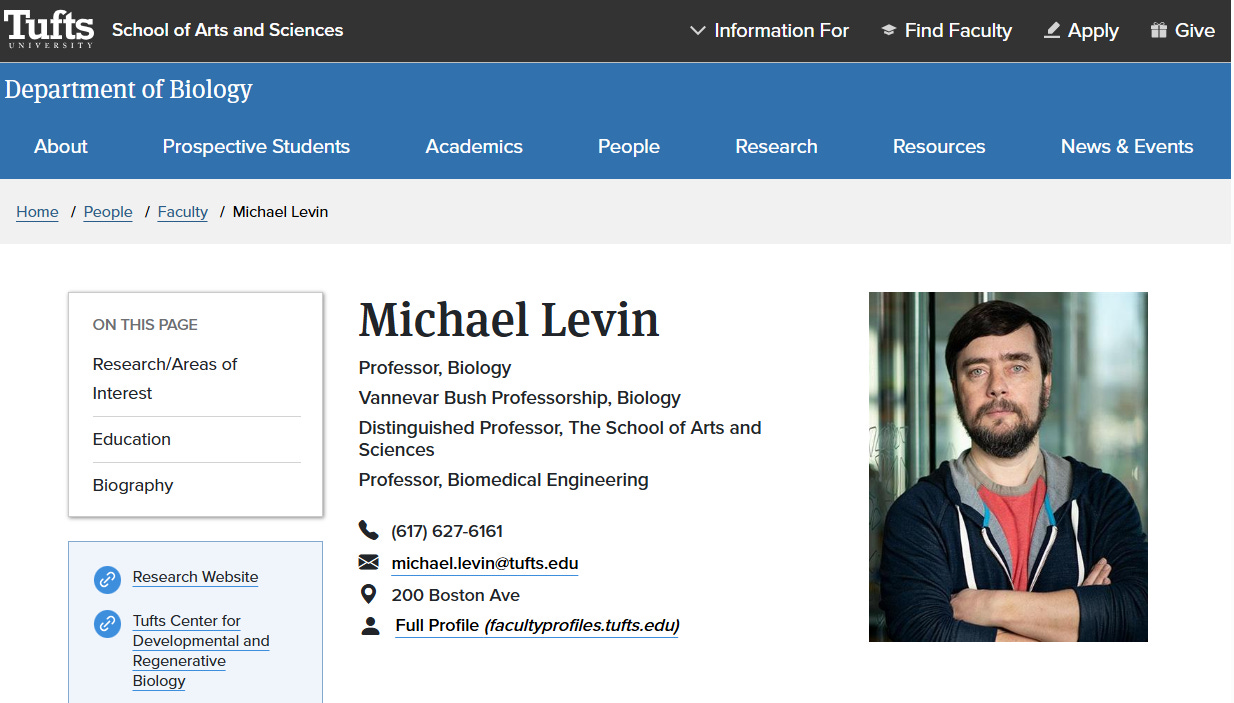
https://as.tufts.edu/biology/people/faculty/michael-levin
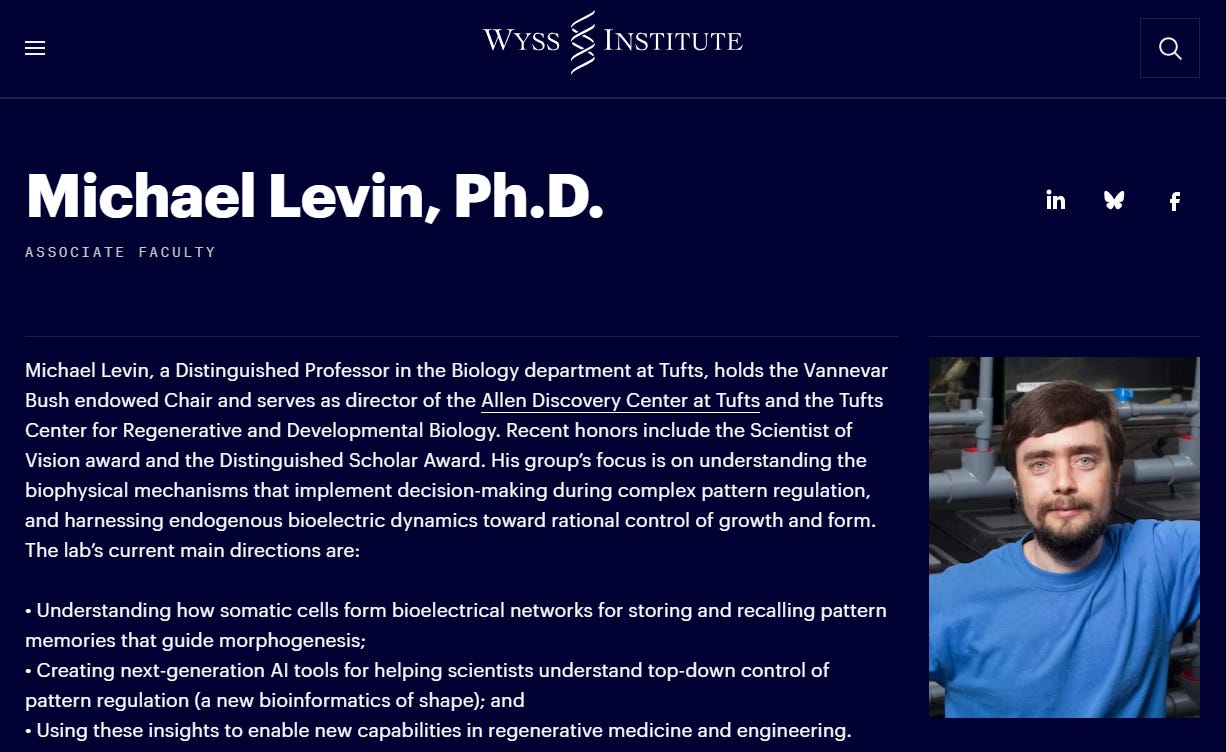
https://wyss.harvard.edu/team/associate-faculty/michael-levin-ph-d/
https://alleninstitute.org/person/michael-levin/
⚡ The Progressive Work of Michael Levin: Decoding the Morphogenetic Code
The research progression of Dr. Michael Levin and his team to understand and control biological form is categorized into three main, overlapping phases: Discovery, Programming, and Synthesis.
I. The Foundational Decade: Establishing the Bioelectric Code (Early 2000s)
The first phase was dedicated to proving that bioelectricity—electrical signals in non-neural cells—is a fundamental controller of anatomy, not merely a side effect.
Circa 2001–2003: Control of Left-Right Asymmetry. Early work with collaborators Jun Lin and Kenneth D. Poss demonstrated that specific, transient patterns of ion current (bioelectricity) control the determination of the body’s major axis, showing that the bioelectric state dictates whether organs like the heart and stomach develop on the left or the right side.
2005: Bioelectric Patterning of the Brain. The team, including Tamara H. Hunkapiller, showed that the bioelectric state in the developing head acts as a large-scale positional memory, guiding the physical organization and structure formation of the brain.
2007: Discovery of Ectopic Eye Induction. A landmark study with K. W. Morokuma and Douglas J. Adams proved the instructive power of the code. They altered the cell membrane voltage ($V_{mem}$) in an area of the frog embryo destined to become gut tissue and successfully induced the growth of a complete, functional eye in that location.
2009: Bioelectric Control over Oncogenesis. Working with Jae-Hee Lee and Dany S. Adams, Levin’s lab established that manipulating ion channel activity could suppress or induce tumors (in vivo), shifting the view of cancer toward a “failure of collective computation” by the cellular network.
II. The Decade of Reprogramming: Writing the Code (2010s)
This phase focused on actively writing new biological information into the system, demonstrating the capacity to override default or damaged anatomical structures.
2015: “Re-booting” Regeneration in Adult Frogs. A significant breakthrough with Celia Herrera-Rincon and Min Liu demonstrated that the body retains the information for complex structures. By briefly (24 hours) manipulating the bioelectric state at the amputation site of an adult frog—an animal that naturally cannot regenerate limbs—they triggered the growth of a near-perfect, functional limb.
2017: Morphoceuticals and the BioDome. The work was formalized into a scalable concept. The team, including Joshua D. Cash and Min Liu, introduced a temporary silicone cap, dubbed the BioDome, containing a drug cocktail to trigger complex regeneration using bioelectric signalling—a proof-of-concept for rational, programmable restorative medicine.
2018: Curing Cancer with Bioelectricity. Further extending the 2009 work, the team, notably Brook L. Chernet, successfully demonstrated that manipulating the $V_{mem}$ of melanoma tumor cells could normalize their behavior and gene expression, converting the malignant cells back into normal, differentiated cells without relying on chemotherapy.
2019: Memory in Non-Neural Tissue. With Niru Anoopkumar-Dukie and Jeremy L. Simon, the lab showed that ciliated cells can form bioelectric circuits that store and transmit information, suggesting that rudimentary “cognition” and “memory” are widespread properties of cellular networks, not just the brain.
III. The Synthetic Frontier: Computation and Xenobots (2020s - Present)
The most recent phase leverages computational biology and synthetic life to push the conceptual boundaries of the Morphogenetic Code.
2020: The Xenobots: Synthetic Life Forms I. In a major cross-disciplinary effort, especially with Sam Kriegman on computational design and Douglas Blackiston on assembly, the team created the first computer-designed, entirely biological robots. These “Xenobots”—assembled from frog skin and heart cells—demonstrated collective intelligence, performing goal-directed behaviors without a nervous system.
2021: Xenobots: Kinematic Self-Replication. The same team (Sam Kriegman, Douglas Blackiston) made a stunning discovery: Xenobots can spontaneously gather loose, single cells and compress them into new, functional copies of themselves, a novel form of self-replication driven by their unique bio-mechanics.
2022: Full Functional Limb Regeneration Achieved. With refined techniques by researchers like Nikhil Sharma and K. H. Le, the team announced robust, long-term functional regeneration of a near-complete hindlimb in adult frogs, confirming the scalability and precision of the bioelectric repair strategy.
2023–Present: The AI and Morphogenetic Code Project. Current efforts are focused on integrating Artificial Intelligence (AI) and Machine Learning to map the vast state space of bioelectric patterns. The goal is to create automated systems that can quickly “read” a complex anatomical defect and “write” the exact bioelectric cue required to trigger the desired corrective morphogenetic outcome.
Title: Michael Levin: The electrical blueprints that orchestrate life | TED
Channel: TED
Date: March 31, 2021
URL:
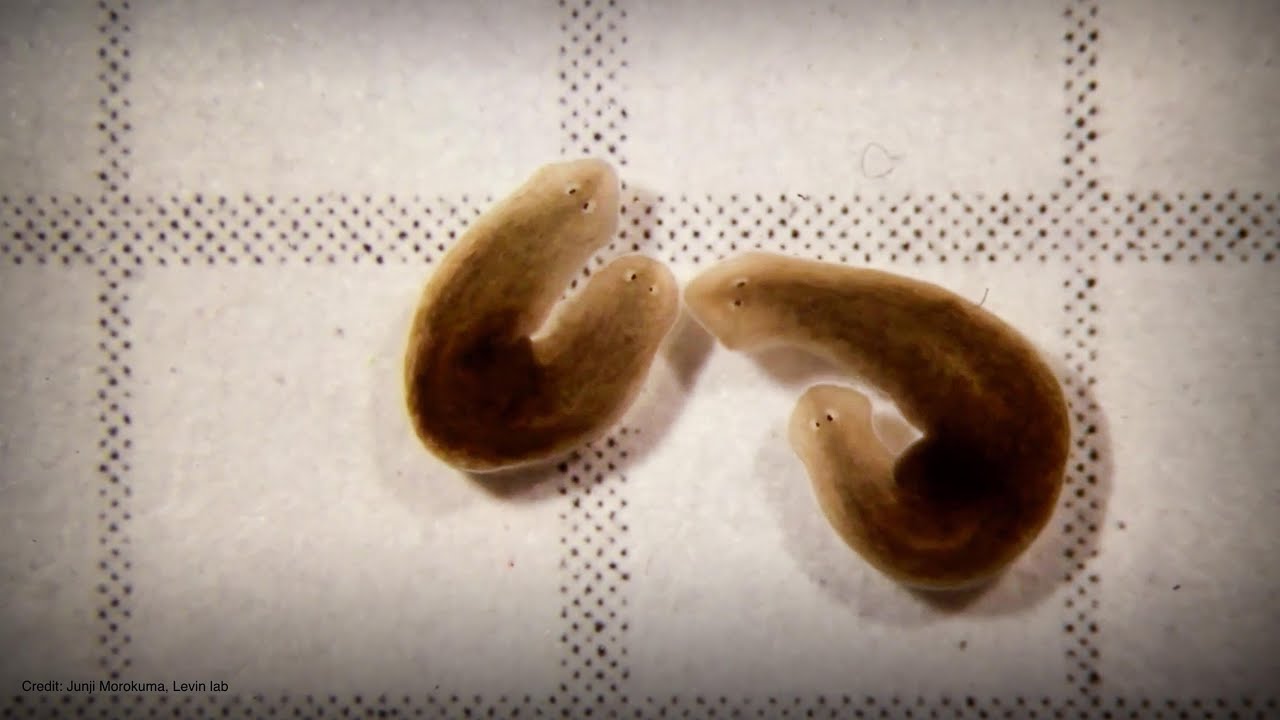
Summary: A key talk covering bioelectricity, regeneration examples (two-headed worms), and the creation of Xenobots.
Title: Episode #29 - Bioelectricity, Regeneration, Cancer Suppression & Xenobots - with Michael Levin
Channel: Blueprints of Big Ideas
Date: November 23, 2022
URL:
Summary: A detailed interview covering his broad range of research, from cancer to synthetic life forms.
Title: Biological Information beyond Genes: Bioelectricity | Michael Levin
Channel: SEMF
Date: December 16, 2022
URL:

Summary: A focused presentation on how biological information is stored and processed beyond the genome using bioelectricity.
itle: How bioelectricity could regrow limbs and organs, with Michael Levin (Ep. 112)
Channel: The University of Chicago
Date: April 27, 2023
URL:
Summary: A longer-form interview discussing the therapeutic potential of bioelectricity for regeneration and addressing birth defects.
Title: How bioelectricity could regrow limbs and organs, with Michael Levin
Channel: The University of Chicago
Date: May 2, 2023
URL:
Summary: A short clip or trailer related to the longer University of Chicago interview.
Title: Biohacking our way to health with robot cells | Michael Levin
Channel: Big Think
Date: September 12, 2023
URL:

Summary: An interview focusing on Xenobots and their connection to the future of regenerative medicine.
Title: Why Epigenetic Head Exploding Adaptation (ft Michael Levin) #rejuvenation #bioelectricity
Channel: Learning with Lowell
Date: November 13, 2023
URL:
Summary: A short clip discussing epigenetic adaptation and bioelectricity in the context of rejuvenation.
Title: CELLS /Tissues are intelligent! (ft Michael Levin) #rejuvenation #bioelectricity
Channel: Learning with Lowell
Date: November 20, 2023
URL:
Summary: A short clip discussing the concept of intelligence in non-neural tissues.
Title: cells /tissues ability to learn FAST (ft Michael Levin) #rejuvenation #bioelectricity
Channel: Learning with Lowell
Date: November 23, 2023
URL:
Summary: A short clip focusing on the rapid learning capabilities of cells and tissues
Title: Turning GENES on and off! ( Michael Levin) #rejuvenation #bioelectricity #intelligence
Channel: Learning with Lowell
Date: December 3, 2023
URL:
Summary: A short clip discussing the control of gene expression via bioelectricity.
Title: Regenerative Biology, Bioelectricity & Xenobots ft. Michael Levin | Know Time 113
Channel: Know Time
Date: April 25, 2025
URL:
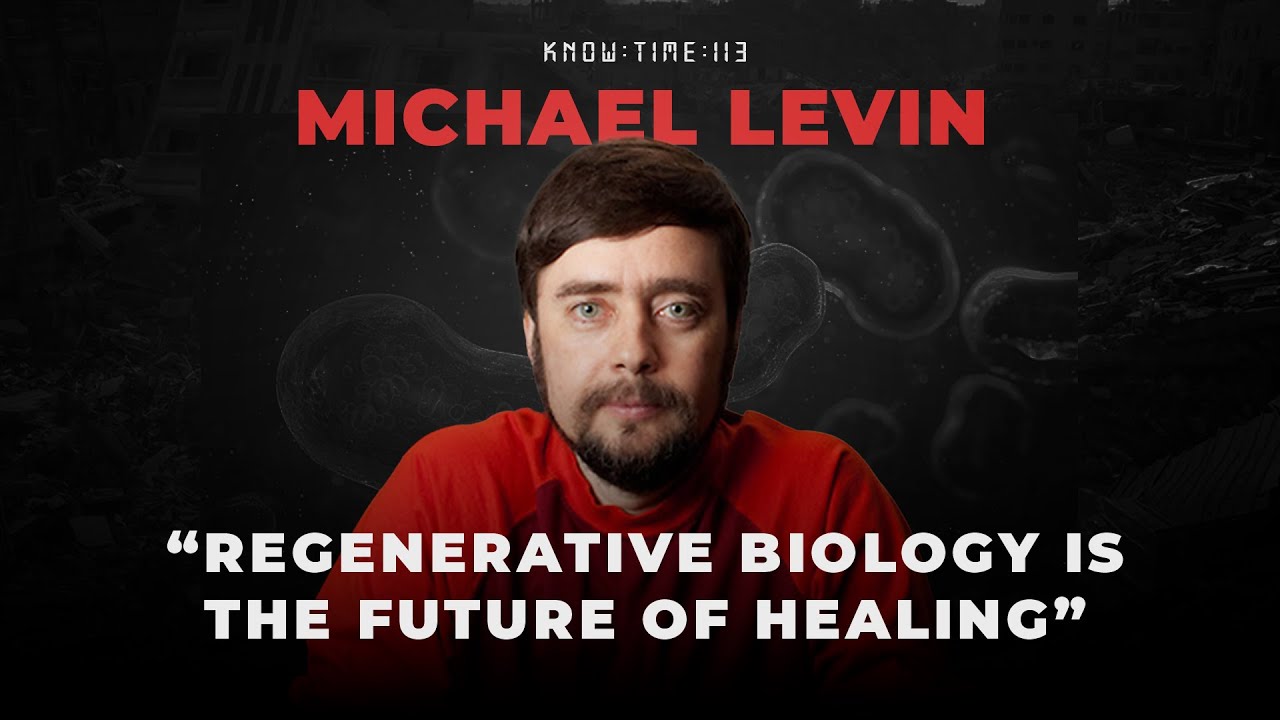
Summary: A recent long-form discussion on the intersection of computation, regenerative biology, and bioelectricity.
RECENT
Comprehensive Discussion: Synthetic Biology and Bioelectricity
Title: Michael Levin - This New Tech Revolutionizes Biology...
Published: March 21, 2025
Channel: Theories of Everything with Curt Jaimungal
Content: This long-form video details how bioelectric signaling is used to reprogram tissues and regenerate limbs, serving as a practical demonstration of collective cellular intelligence in medicine.
Link: Curt Jaimungal: Michael Levin - This New Tech Revolutionizes Biology
Philosophy and Consciousness: Rethinking Neuroscience
Title: Michael Levin & Bernardo Kastrup debate the boundaries of life
Published: November 13, 2025 (Excerpt from a larger debate)
Content: This discussion connects Levin’s findings to consciousness, exploring Analytic Idealism vs. IIT, the “Platonic realm,” and defining life and selves based on behavioral and electrical criteria, rather than just anatomy. It emphasizes mind blindness and the ethics of recognizing unconventional minds.
The Royal Institution: Engineering the Self
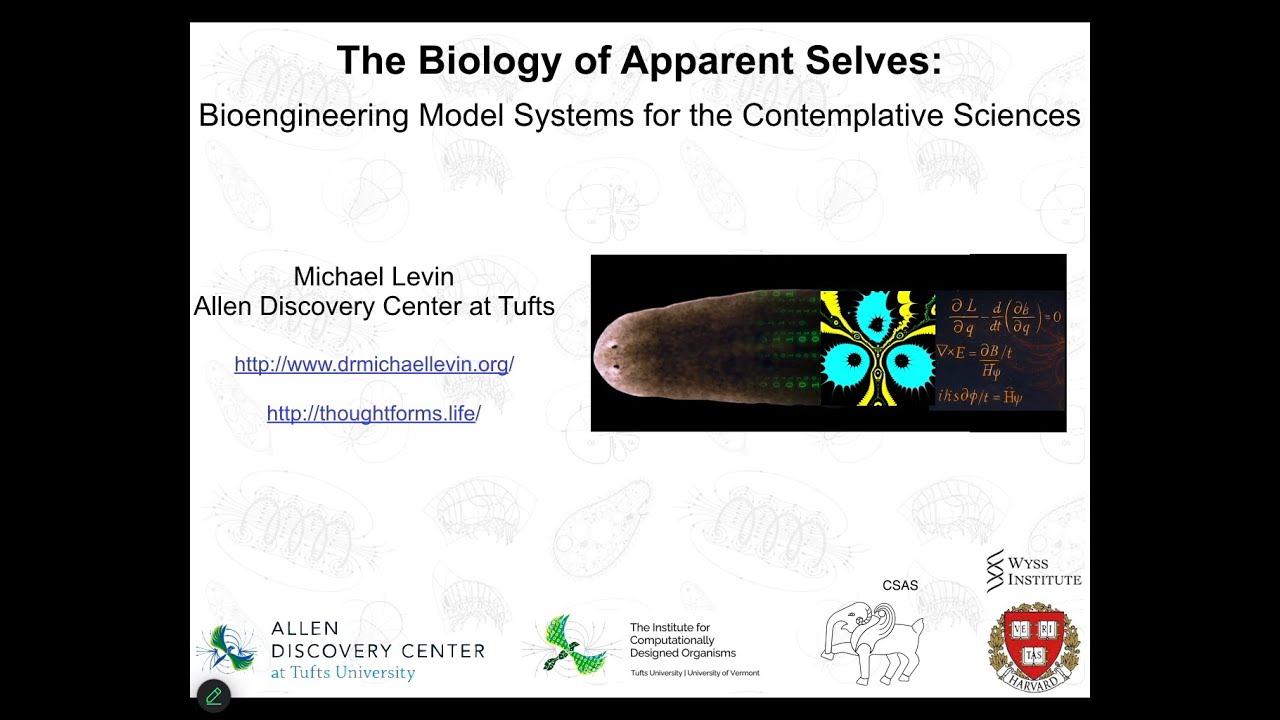
Title: The biology of apparent selves
Published: October 12, 2025
Content: This talk introduces the Technological Approach to Mind Everywhere (TME) framework, which views cognition as an engineering problem that can be studied and manipulated across scales. It details recent research on the collective intelligence and self-models of engineered beings.
The Newest Concepts: Agency and the Spectrum of Persuadability
Title: #486 – Michael Levin: Hidden Reality of Alien Intelligence & Biological Life
Published: November 30, 2025
Channel: Lex Fridman Podcast
Content: The latest and most comprehensive conversation, introducing the “spectrum of persuadability” as an engineering model for agency and intelligence. It discusses the Cognitive Light Cone, the TAME framework, and the deep philosophical link between biology and the nature of reality.
Link: Lex Fridman Podcast: Hidden Reality of Alien Intelligence