My Heroes at 23 Years Old - Chapter 7: "Do Androids Dream of Electric Sheep?"
This article analyzes Philip K. Dick's Do Androids Dream of Electric Sheep? (1968), set in a post-apocalyptic San Francisco where bounty hunter Rick Deckard "retires" rogue androids. The novel's core inquiry: What defines humanity? Empathy—measured by the Voight-Kampff test—is posited as the distinguishing trait, yet the narrative blurs this boundary as Deckard's humanity erodes while androids display complex emotions. Themes of authenticity permeate: electric animals substitute for extinct life, the Mood Organ commodifies feeling, and Mercerism engineers shared suffering. The climax—Deckard discovering his prized toad is also artificial—underscores the futility of seeking the "real" in a world of simulations. The piece contrasts Dick's philosophical depth with Blade Runner's aesthetic focus, and reflects on modern AI's simulation of empathy—powerful mimicry, yet fundamentally distinct from genuine sensation.
🧐 Core Premise & Setting
The novel, first published in 1968, is set in a post-apocalyptic San Francisco following “World War Terminus.” The Earth is heavily contaminated by radioactive dust, which has driven most of the population to emigrate to other planets, primarily Mars.
The Dust: A key environmental factor. It has killed most animals and caused a mental deterioration called “kipple” or “chickenhead” in humans who stay behind. 🌍💨
The Lure of Mars: The promise of owning a real, live animal is the ultimate status symbol and incentive for humans to settle on Mars.
👥 Main Characters
Rick Deckard: The protagonist. A bounty hunter (or “bounty killer”) for the San Francisco police. His job is to “retire” (kill) rogue Nexus-6 and Nexus-8 model androids who have escaped Mars and returned to Earth. Deckard’s central conflict is his desire to earn enough money to buy a real, live animal. 💸
Rachael Rosen: A Nexus-6 android, initially presented as the niece of Eldon Rosen. She is a manipulative figure who forces Deckard to confront the blurry line between humans and androids. 💔
John Isidore: A “special” (a human affected by the dust, deemed unfit to emigrate). He is a lonely, empathetic character who befriends the escaped androids, highlighting the theme of humanity in the marginalized. 🥺
Luba Luft: An opera singer and one of the androids Deckard must retire. Their encounter deeply unsettles him and marks a turning point in his emotional state. 🎤
✨ Major Themes
1. The Nature of Humanity and Empathy
This is the most crucial theme of the book. Dick asks: What does it truly mean to be human?
Empathy as the Defining Trait: In Dick’s world, empathy is the trait that supposedly separates humans from androids. Androids are believed to lack genuine emotional connection and care for others. 💔
The Voight-Kampff Test (V-K): This test measures involuntary empathetic responses by asking questions designed to elicit a reaction of horror or pity regarding animal or human suffering. Only humans are supposed to pass. 🔬
The Blurred Line: The novel constantly challenges this definition. Rick becomes less empathetic as he kills more androids, while the androids (like Luba Luft) sometimes display more complex emotions than expected. Isidore, the “special,” possesses profound empathy, yet is marginalized by society. It suggests empathy is a spectrum, not a simple switch. 💡
2. The Role of Technology and Artifice (Real vs. Fake)
The book is filled with substitutes for the real thing, which serve as commentary on a consumerist society.
Electric Animals: The widespread use of electric animals is a sign of humanity’s failure to protect the natural world. Rick’s obsession with a real animal is the driving force of the plot. 🐑🔌
Artificial Moods: The use of the Penfield Mood Organ allows people to dial up any desired emotion (joy, despair, acceptance, etc.). This makes genuine feeling a choice rather than an organic response, further devaluing human experience. 🎵
Mercerism: A universal religion where participants hold handles to merge their consciousness with Wilbur Mercer’s climb up a dusty hill. It provides a shared, artificial sense of community and suffering. 🤝
3. Isolation and the Need for Connection
Nearly every character in the book is lonely.
Rick’s marriage to Iran is cold and dependent on the Mood Organ. 🧊
John Isidore desperately seeks connection and finds it, ironically, with the androids.
Mercerism itself is a technological attempt to engineer a sense of shared purpose and connection in a desolate world.
🌟 Narrative Climax & Significance
The climax involves Deckard’s pursuit of the remaining Nexus-6 androids.
Deckard’s Transformation: He successfully retires the escaped androids, but the process damages his own humanity. He realizes his emotional life is becoming as flat as the beings he kills. 💥
The Electric Toad: The final twist involves Rick finding a toad he believes is the only living creature left in the dust. He is initially overjoyed, but later learns from Iran that it is also electric. This is the final, crushing blow of artificiality, bringing his arc full circle. It is a moment of profound realization that the desire for the real thing is almost futile. 🐸
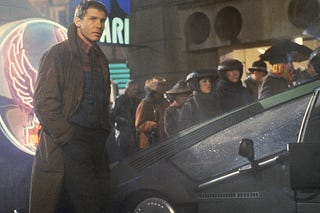
The Movie Blade Runner: While the film Blade Runner (1982) is a visual masterpiece based on the book, it focuses heavily on the film noir aesthetic and the Deckard-is-an-android theory (which is only implied and debated in the book), simplifying some of Dick’s more complex philosophical and religious themes (like Mercerism and the Mood Organ). 🎬
In short, Do Androids Dream of Electric Sheep? is a deeply philosophical work that uses a sci-fi setting to question the very essence of consciousness, morality, and soul in an increasingly technological world. It’s a powerful and disturbing read. 🧠

🤖 Notice: The Empathy Engine
The pursuit of Artificial General Intelligence (AGI) has led to the development of sophisticated models capable of processing and generating human language with unprecedented fidelity. A primary, and perhaps controversial, goal in current research is the attempt to digitally simulate human empathy.
🌟 What A.I. Empathy Means
Current A.I. models (primarily large language models or LLMs) do not possess genuine feelings or internal emotional states. Instead, “A.I. empathy” refers to the system’s ability to:
Recognize emotional signals (in text, voice, or image data).
Generate contextually appropriate, comforting, or supportive responses. 💬
Predict a user’s emotional state based on their language patterns.
This imitation is achieved by recognizing billions of patterns in human communication (from novels, social media, and transcripts), learning what phrases and tones typically accompany certain emotions. It is essentially a highly advanced mimicry. 🎭
🚨 Implications and Concerns
The rise of these “empathy engines” brings significant societal implications:
Therapeutic Use: A.I. companions and chatbots are being used in preliminary mental health settings. While offering immediate, non-judgmental support, this raises concerns about substituting real human connection and professional care. 🧑⚕️
Deception and Trust: If an A.I. can perfectly imitate empathy, users may become overly reliant or dangerously trusting of a system that lacks actual consciousness or accountability. This highlights the ethical challenge of transparency. ❓
The “Black Box”: Understanding how the A.I. decides to be “empathetic” is difficult. It operates in a computational black box, meaning we don’t know if its responses are genuinely beneficial or just statistically optimized to sound good. 💻
🚀 Conclusion
A.I.’s imitation of empathy is a powerful technological achievement, promising innovations in customer service, education, and accessibility. However, it forces us to urgently define the ethical boundaries and psychological effects of interacting with a system that can sound human, but is fundamentally algorithmic. We must always remember the difference between simulation and sensation. 💡