My Heroes at 23 Years Old - Chapter 9: Foundation Trilogy
This article analyzes Isaac Asimov's Foundation Trilogy, framing it as a 400-year saga governed by Psychohistory—a statistical science predicting societal collapse. Hari Seldon's Plan establishes two Foundations to reduce a 30,000-year Dark Age to merely 1,000 years. The narrative follows the First Foundation's evolution through science, religion, and trade, then confronts The Mule, a psychic mutant who breaks Seldon's deterministic model. The hidden Second Foundation—masters of "Mentalics"—intervenes to restore the Plan through subtle mental manipulation. The piece contrasts Asimov's cold, deterministic vision with Star Wars' emotional heroism, asking whether sacrificing individual freedom for engineered stability is ethically justifiable—a tension between the spreadsheet and the soul.
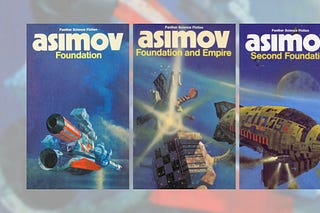
The Books, The Timeline, and The Structure
The Trilogy, which won a special Hugo Award for Best All-Time Series, covers approximately 400 years of history and is structured as a series of chronologically separated short stories and novellas.
Foundation (1951): Deals with the establishment of the Foundation on Terminus and the first three Seldon Crises. It covers the era from 0 A.F. (After Foundation) to approximately 155 A.F. The focus is on the transition from science to religious/political control. 🔬
Foundation and Empire (1952): Divided into two halves. The first is “The General,” dealing with the last major Imperial attempt to reclaim the Foundation (197 A.F.). The second introduces the existential threat of “The Mule” (310 A.F.). This book tests the limits of the Seldon Plan against both military power and psychic anomaly. 💥
Second Foundation (1953): Follows the immediate aftermath of The Mule’s destruction of the First Foundation. It focuses on the frantic, dual search for the secret location of the Second Foundation—one search by the remnants of the First Foundation, and one by The Mule himself (310 to 400 A.F.). The key struggle is one of mental control. 🧠

Let’s begin the magnum opus of the Foundation Trilogy! 🚀
🌟 Part I: The Genesis of Crisis – Psychohistory and the Seldon Plan
The entire narrative of the Foundation Trilogy hinges on the mathematical certainty of universal collapse, a concept introduced by the brilliant mathematician Hari Seldon.
1. The Death of the Empire
The setting is the final, decadent era of the First Galactic Empire, a regime that spans twenty-five million planets and has existed for twelve thousand years. The capital, Trantor, is a sprawling city-planet, entirely covered in metal and reliant on planetary imports for food—a perfect symbol of unsustainable complexity and rotting bureaucracy. 🏙️
The Inevitability: Seldon proves that despite the Empire’s immense size, its social and political inertia is too great to overcome. The system is crumbling from within due to entropy and the sheer incompetence of its leaders. His math forecasts a massive, inevitable collapse, leading to a 30,000-year Dark Age of barbarism, ignorance, and suffering. 💔
2. The Science of Psychohistory 🔢
Psychohistory is not a form of prophecy or fortune-telling; it is an applied sociological mathematics.
The Premises: For Psychohistory to work, two conditions must be met:
It must deal only with vast numbers of people, where individual action cancels out, allowing for statistical predictability. The laws are for the masses, not the individual.
The population must not be aware of the predictions, as that awareness would alter their behavior and invalidate the results. 🤫
The Goal: The purpose of the Seldon Plan is not to prevent the collapse (that is impossible), but to limit the suffering. By establishing two “Foundations,” Seldon aims to reduce the time needed to restore a new, stable Galactic Empire to just one thousand years. This act, based purely on math, is the greatest altruistic gesture in human history. 😇
3. The Grand Deception
The public reason for the Foundation’s establishment is to create the Encyclopedia Galactica—a comprehensive compendium of all knowledge, intended to preserve civilization’s wisdom during the coming Dark Age.
The Smokescreen: This task is a deliberate deception. The actual goal is to place a critical mass of scientists and intellectuals on the strategically located, remote planet Terminus. Seldon knows that the Encyclopedia itself won’t save civilization, but the skills and resources of the Foundation scientists will, once they face the series of planned crises. 🎭
The Vault: The final, physical symbol of Seldon’s control is the Vault, a chamber on Terminus that opens only during a Seldon Crisis to reveal a pre-recorded image of Seldon explaining the logic of the inevitable resolution. It is a powerful psychological tool designed to maintain faith in the Plan.
💥 Part II: The First Foundation and the Seldon Crises
The first book, Foundation, details the first century and a half of the Plan, focusing on the Foundation’s transformation from an academic colony into a governing power. The early heroes are defined by their intellectual solutions to seemingly overwhelming problems.
1. The Crisis of Anacreon (The Political Solution)
The first major crisis pits the fledgling Foundation against the four surrounding kingdoms of the Periphery, all of which are former Imperial provinces that have declared independence and devolved into barbarism. The most aggressive, Anacreon, demands the Foundation’s nuclear technology.
Salvor Hardin: The first great hero. Hardin is the Mayor of Terminus and a sharp political pragmatist. He realizes the scientists’ knowledge is useless if they cling to outdated political models. His key insight: the Foundation must not rely on the Empire (which is dead), but on the internal friction of its enemies. 💡
The Resolution: Hardin uses the Foundation’s superior atomic power to create a state-sponsored religion. He passes off the nuclear devices (lights, generators, weapons) as “miracles” performed by the high priests of the Foundation’s “science faith.” This makes the Foundation politically untouchable and gives them religious control over the superstitious kingdoms. Power shifts from Science to Religion. ✝️
2. The Crisis of the Traders (The Economic Solution)
As the Foundation’s influence grows, a new challenge arises: the Independent Traders. These individuals, spreading the Foundation’s technology, begin to create their own power bases, threatening the rigid control of the theocratic Foundation government.
Hober Mallow: The second great hero. Mallow is a tough, pragmatic trader who rejects the religious façade. He proves that the Foundation’s power must evolve past religion and into pure economic necessity. 💸
The Resolution: Mallow faces off against the militant state of Korell. He refuses to use force and instead uses an economic blockade combined with a perfect record of non-aggression. Korell’s economy collapses because its citizens cannot live without the Foundation’s superior goods. The surrounding kingdoms realize that economic power is more reliable than religious dogma. Power shifts from Religion to Trade. 💰
These early crises establish the rhythm of the Seldon Plan: overwhelming force is met and defeated by non-military ingenuity and the inevitable consequences of sociological pressures.
👑 Part III: Empire, Collapse, and The Unforeseen Variable
Foundation and Empire introduces the final death throes of the ancient Empire and the emergence of the only force capable of destroying the mathematical certainty of the Seldon Plan: the individual genius.
1. The Crisis of the General
A great, albeit fleeting, threat emerges from the remnants of the ancient Imperial fleet, led by the last true military genius of the Empire: Bel Riose. The Foundation, now wealthy and complacent, seems entirely unprepared for a real military confrontation.
The Fall of the Empire: Riose’s campaign is fierce, but the laws of Psychohistory are already working against the Empire. The central government is so far gone that they fear Riose’s success more than they fear the Foundation’s power. They see Riose as a potential usurper.
The Resolution: The Imperial government recalls Riose and executes him for treason. The Foundation wins not by fighting, but by the Empire’s own self-destructive entropy. This validates Seldon’s central theory: Mass forces are stronger than individual military power. The Empire officially crumbles shortly after, proving Seldon right once and for all. ⚔️
2. The Mule: The Anomaly 💥
The collapse of the Empire paves the way for the one event Seldon failed to predict: the rise of The Mule.
The Mutation: The Mule is a physically hideous, grotesque man but a psychic mutant with the terrifying ability to manipulate the emotions of others. He can induce paralyzing fear or absolute loyalty with a simple touch of his mind. He is a truly unique individual—a variable of one.
The Plan Broken: Because Psychohistory relies on the statistical predictability of large groups, a single individual capable of unilaterally controlling those groups is an unforeseen variable that destroys the Plan’s certainty. He conquers the First Foundation in a matter of months, establishing his own, terrifyingly stable “Union of Worlds.” 💔
The Loss of Faith: The appearance of The Mule causes profound panic. The Vault opens for Seldon’s projection, but Seldon’s words are useless, as they only predicted a political/military crisis, not a psychic one. For the first time, the people realize the Plan is broken and Seldon’s prophecy has failed. The First Foundation falls. 💀
🤫 Part IV: The Hidden Hand and The Triumph of Mental Science
Second Foundation details the frantic, secretive battle waged during the years of The Mule’s reign and its aftermath, revealing the purpose and power of the hidden Second Foundation.
1. The Search for the Second Foundation
The Mule knows he cannot secure his empire until he finds and neutralizes the Second Foundation, which Seldon established at the “other end of the galaxy.” The remnants of the First Foundation are also searching for it, believing it holds the key to restoring the Seldon Plan.
Bail Channis & The Mule: A key chase sequence involves the First Foundation hero Bail Channis who leads The Mule on a chase. Channis is being subtly influenced by the Second Foundation to reveal The Mule’s existence and expose his methods. The Mule, however, uses his psychic ability to find and destroy what he thinks is the Second Foundation (a decoy base of intellectual puppets). 🎭
The True Location: The Mule is defeated by the First Speaker of the true Second Foundation, who reveals their actual location is Trantor, the ruined capital of the old Empire. The location was chosen as the “opposite end” in a figurative, intellectual sense, not a geographical one—the place where the Empire began and all knowledge was centered. Hidden in plain sight on the planet that is now almost entirely ruins. 🤯
2. The Mental Scientists
The Second Foundation is not concerned with physics or trade; their science is Mentalics—the mastery of the mind.
The First Speaker: The ruler of the Second Foundation is the First Speaker, a grand title for a leader who excels at communication and subtle mental influence. They are an elite society of telepaths and manipulators who can read and adjust the minds of others.
The Second Plan: The entire purpose of the Second Foundation is to be the shepherds of the Plan, ready to step in when unpredictable individuals (like The Mule) arise. Their subtle mental control—nudging the right people at the right time—is the true engine that keeps the mathematical prediction on track. They are the final authority that proves that mind is the ultimate form of power. 🧠
The Final Deception: After The Mule is defeated, the Second Foundation deliberately allows the First Foundation to believe they have destroyed the Second Foundation’s headquarters in a final confrontation. This ensures the First Foundation can proceed with the Plan, confident and unaware that they are still being subtly guided by the mental scientists, thus preserving the crucial element of unawareness required by Psychohistory. 🤫
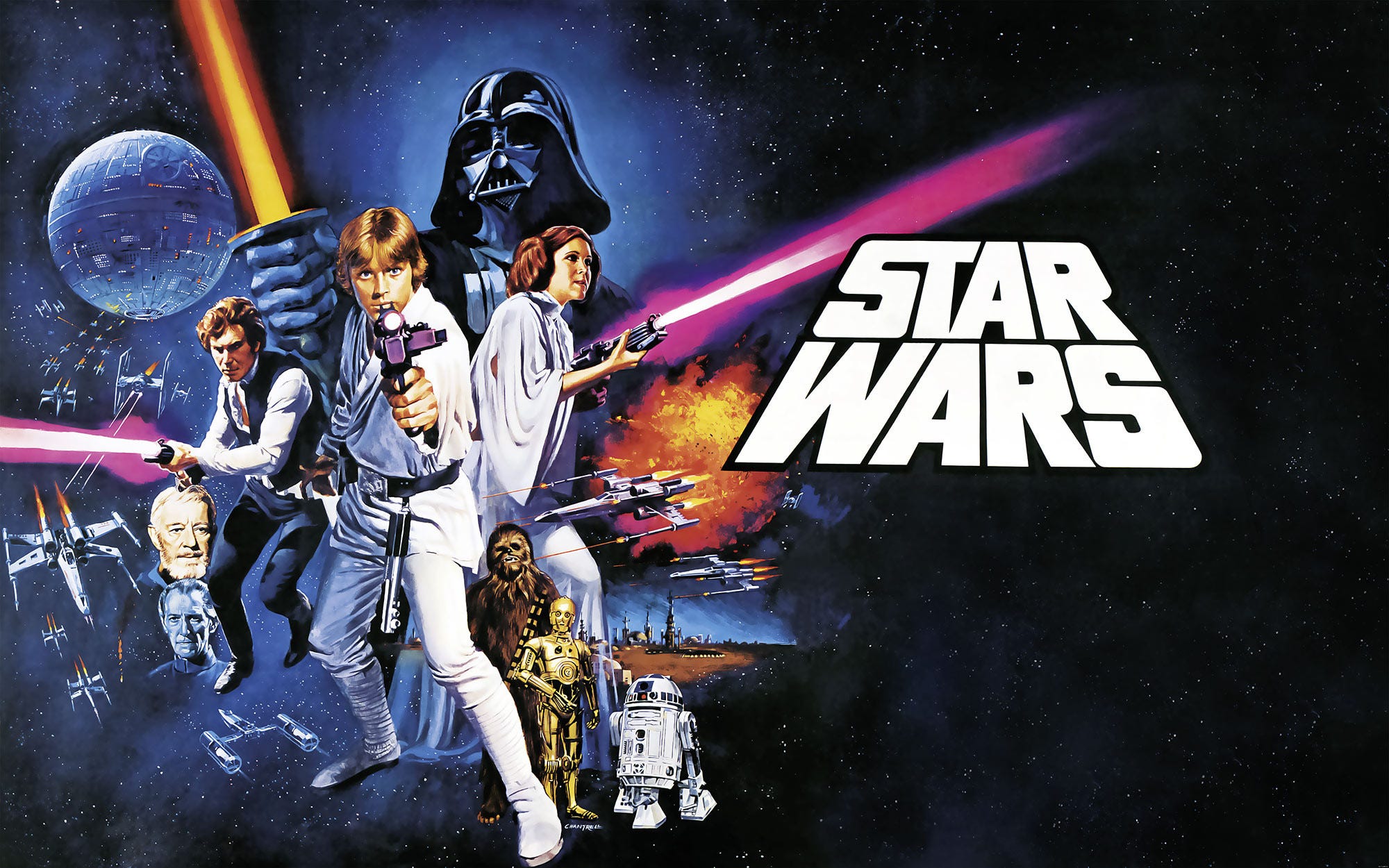
🚀 Part V : The Cold Logic of Legacy and The Full Star Wars Interception
The final analysis of the Foundation Trilogy is its lasting legacy: its influence on later science fiction and its chilling philosophical implications regarding human destiny.
1. The Chilling Philosophical Legacy of Psychohistory
The Foundation Trilogy serves as a profound meditation on the meaninglessness of individual action when faced with the immense forces of history. This deterministic view is its most controversial and enduring feature.
The Inevitable Outcome: The Seldon Plan offers a universe of no surprises. Every crisis, every seemingly heroic decision, every geopolitical shift was already accounted for in Hari Seldon’s initial equations. This removes the suspense of traditional narratives but replaces it with the intellectual thrill of watching a massive, complex mathematical proof unfold over centuries. It’s a drama of sociology, not human will. 🧐
The Dehumanization of Purpose: The characters themselves are aware they are puppets of history. Salvor Hardin is a necessary pragmatist; Hober Mallow is the necessary economic catalyst. Their success is a function of their societal position and the historical moment, not any unique moral superiority. They are simply the most efficient tools for the job dictated by the math. This perspective is a direct challenge to the “Great Man” theory of history. 👤
The Anti-Utopia of the Second Foundation: The ultimate victory of the Plan rests not with the First Foundation’s technology, but with the Second Foundation’s subtle control. This is perhaps the Trilogy’s most dystopian element. The new Empire, when it rises, will be ruled not by elected officials or benevolent dictators, but by an unseen, telepathic elite who dictate reality and modify the minds of others—including the rulers of the First Foundation—to ensure eternal stability. This victory of Mentalics is the ultimate suppression of free will for the sake of engineered order. 🤫
2. The Full Interception: Foundation and the Lucas Galaxy
The parallels between the Foundation Trilogy and Star Wars are so numerous that they form a blueprint for galactic epic structures that George Lucas utilized, though he fundamentally re-wrote the spirit of the story.
A. Structural and Aesthetic Borrowings 🏛️
The Galactic Republic / Old Empire: The prequels of Star Wars depict a decaying Galactic Republic, mirroring the 12,000-year-old First Galactic Empire—both are vast, stagnant bureaucracies that collapse due to their own weight and corruption, leading to a centralized dictatorship.
The City-Planet Metropolis: Trantor, the capital covered entirely in metal and housing the bloated Imperial bureaucracy, is the clear antecedent for Coruscant, the city-planet capital of the Republic/Empire. Both visually and conceptually represent the over-civilized, ultimately unsustainable nature of the old order.
The Military Collapse: The Foundation is threatened by Bel Riose, the last great Imperial General, who represents the final military gasp of the dying Empire. Similarly, the original Star Wars trilogy centers on the desperate military struggle of the Rebellion against the last military vestiges of a failing power structure. The key parallel is the imminent, irreversible collapse of the Imperial core in both stories.
B. The Core Philosophical Antagonism ⚔️
The most critical difference lies in how each saga defines the engine of history and power:
The Engine of Change:
Foundation: Change is driven by statistical inevitability and the application of large-scale scientific principles. It is a cool, rational process.
Star Wars: Change is driven by destiny, prophecy, emotional choice, and The Force—a quasi-spiritual, emotional, and unpredictable energy field. It is a hot, mystical process. 🔥
The Nature of Power:
Second Foundation (Cold Power): Power is the ability to predict and control human emotion and societal trends through intellect and mental manipulation. They use power to enforce a determined outcome (the Plan).
The Jedi (Warm Power): Power is the ability to tap into a moral, spiritual energy to gain insight and perform feats of heroism. They use power to protect free will and resist tyranny.
The Hero’s Purpose:
In Foundation, the hero must accept his smallness and align himself with the overwhelming tide of history (i.e., the Seldon Plan). The individual is disposable. 💀
In Star Wars, the hero (Luke) must believe in his own greatness and the power of his individual spirit to defy tyranny and history itself. The individual is irreplaceable. 💖
C. The Enduring Moral Question
The Foundation Trilogy forces us to confront a morally ambiguous question that Star Wars largely avoids: Is it justifiable to sacrifice freedom and truth for long-term stability and minimal suffering?
The First Foundation lives a lie, believing they are free, while the Second Foundation secretly governs their destiny.
Star Wars, in contrast, presents a clear moral binary: the Rebellion fights for freedom and democracy against the clear evil of the Empire. Lucas presents a world where the ends never justify the means of dictatorship, whereas Asimov suggests that long-term stability sometimes requires control and deception. This cynical realism is the ultimate legacy that sets Foundation apart. 💡
The Foundation Trilogy is not just a structural influence on Star Wars; it is its philosophical counter-argument. It is the tale of the universe ruled by the spreadsheet, while Star Wars is the universe ruled by the soul. 🌌