The Nature Of Time
This article explores time through quantum and relativistic lenses. In classical physics, time is absolute; in quantum mechanics, it may be a parameter, an observable, or an emergent property of complex systems. Black holes dramatically distort time: gravitational dilation freezes infalling objects from an external view, while inside the event horizon, space and time swap roles, making the singularity an inevitable future. Hawking radiation suggests black holes evaporate, raising the information paradox—does unitarity hold? The piece surveys leading perspectives: Rovelli's emergent "thermal time," Carroll's low-entropy cosmological arrow, Penrose's singularities and conformal cycles, Turok's CPT-symmetric mirror universe, and DeWitt's timeless Wheeler-DeWitt equation—highlighting that a unified theory of time remains physics' deepest challenge.
The Time Dimension: A Quantum Perspective
The nature of time is one of the greatest mysteries in physics. In classical mechanics, time is absolute and universal, flowing constantly and independently of any observer or event. However, quantum physics offers us a much more complex and intriguing view.
Definitions and Perspectives:
Time as a parameter: In most formulations of quantum mechanics, time is treated as an external parameter, similar to time in classical physics. The Schrödinger equation, for example, describes how the quantum state of a system evolves in time.
Time as an observable: Some interpretations of quantum mechanics suggest that time could be treated as an observable, just like position and momentum. This means that time could, in principle, have uncertainties associated with it.
Emergence of time: Another perspective is that time is an emergent property of complex systems. In quantum cosmology, for example, time may arise from quantum fluctuations in the early universe.
Multiple time dimensions: Some advanced theories, such as string theory, propose the existence of extra time dimensions, beyond the one we experience daily.
Challenges and Open Questions:
Relativity and Quantum Mechanics: Reconciling general relativity (where space and time are intertwined) with quantum mechanics is one of the greatest challenges in theoretical physics.
The Arrow of Time: Why does time appear to flow in a single direction, from the past to the future? Fundamental physics still does not offer a definitive answer to this question.
The Measurement Problem: Quantum mechanics describes how systems evolve in time deterministically, but the process of measurement introduces randomness and the collapse of the wave function. How can these two aspects be reconciled?
Summary
In summary, the nature of time in quantum physics is a complex and constantly evolving subject. The different perspectives and challenges presented above demonstrate that a complete understanding of time requires a profound revision of our fundamental concepts about reality.
Time In Black Holes
The nature of time in black holes is a fascinating and complex topic that sits at the intersection of General Relativity (Einstein’s theory of gravity) and Quantum Mechanics. The intense gravity of a black hole distorts spacetime so profoundly that our everyday understanding of time completely breaks down.
Here is a breakdown of the key theories and phenomena related to time in black holes:
1. Time Dilation (General Relativity)
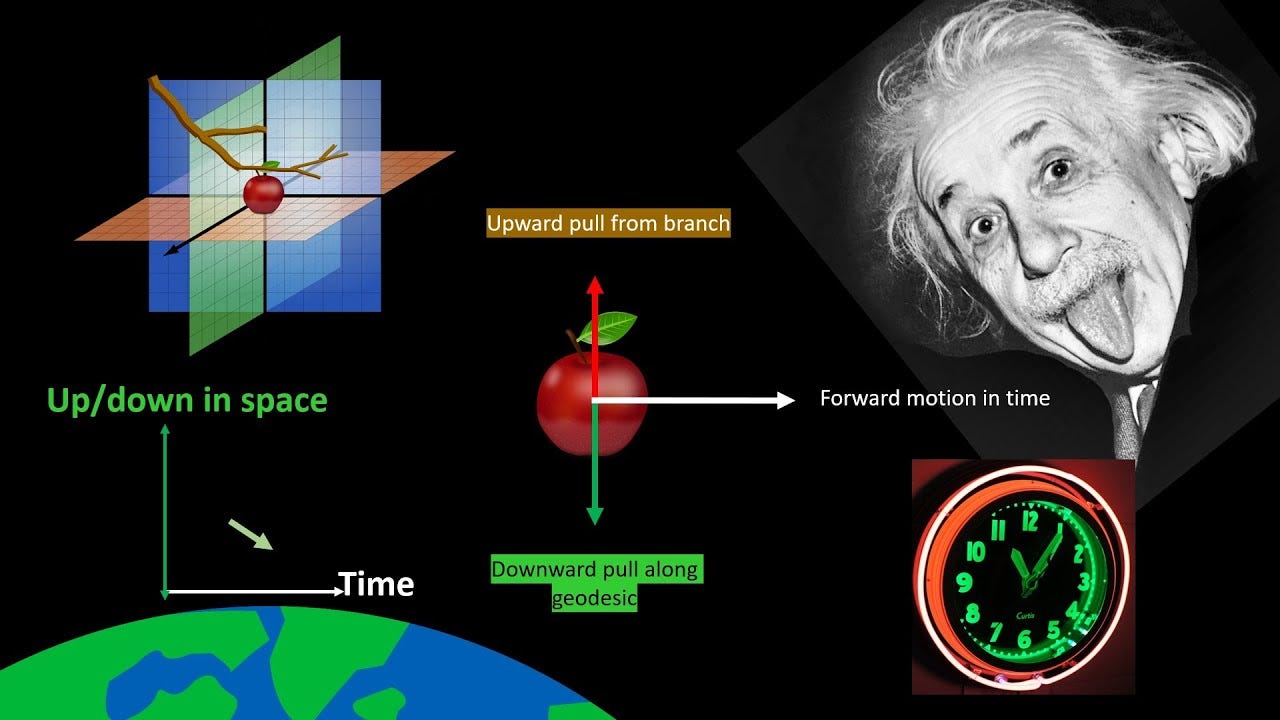
This is the most established effect, directly predicted by Einstein’s theory of General Relativity.
The Phenomenon: As an observer or object approaches a region of stronger gravity (like a black hole), time slows down relative to an observer far away. This is known as gravitational time dilation.
External Viewpoint: To an observer far from the black hole, a clock falling toward the event horizon would appear to tick slower and slower. As the clock approaches the event horizon (the point of no return), its time seems to slow down infinitely, making it appear to freeze or hover, never quite crossing the boundary. The light it emits also becomes increasingly redshifted until it is undetectable.
Infalling Viewpoint: To the observer falling into the black hole, time passes normally. They feel no immediate effect when crossing the event horizon. However, as they look outward, they would see the entire future of the external universe rush by in a flash.
2. The Singularity (General Relativity)
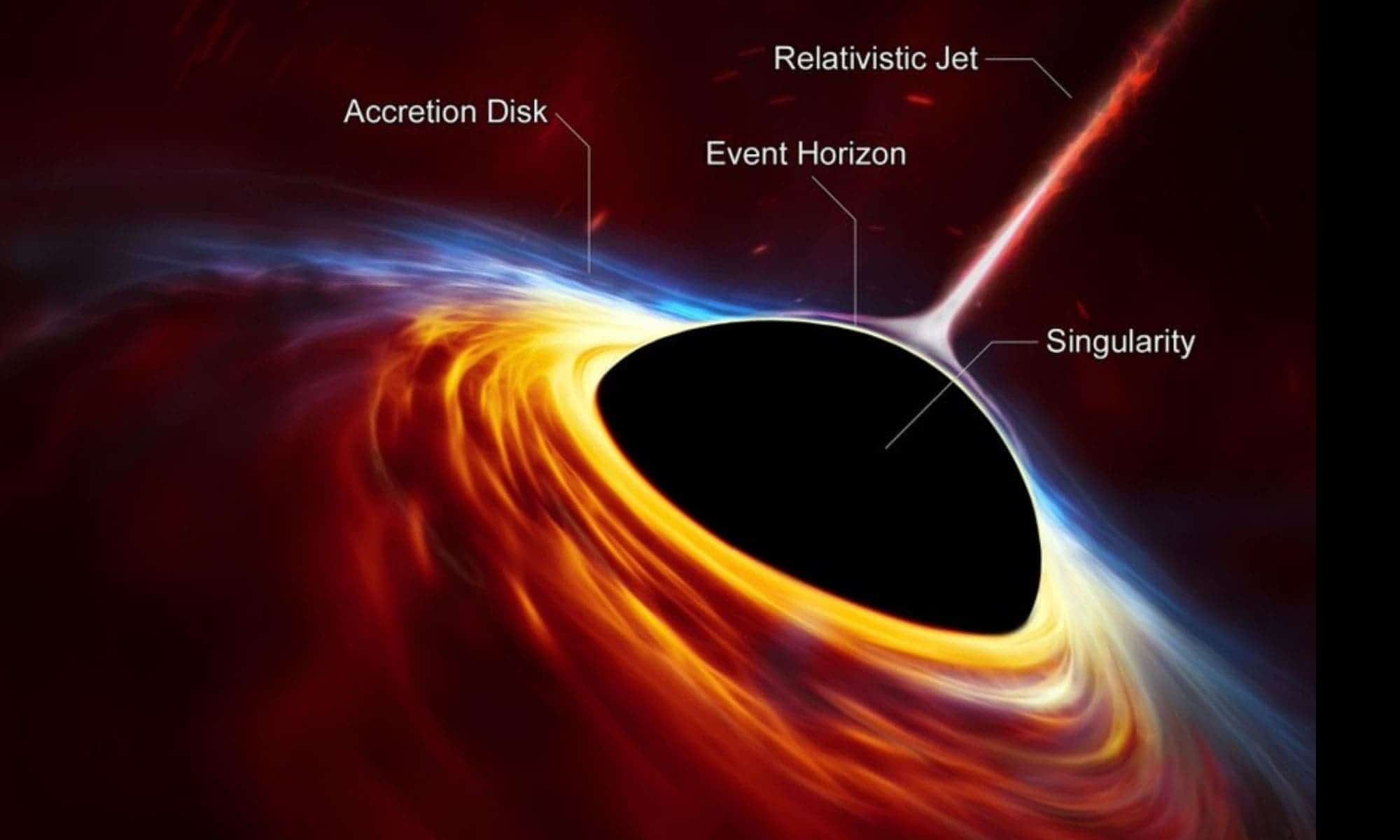
Inside the event horizon, the structure of spacetime is so warped that the roles of space and time are effectively interchanged.
The Interchange: Within the black hole, all paths (geodesics) lead inexorably towards the center, the singularity. Instead of the forward arrow of time, the singularity itself acts as a forward arrow of space. Moving towards the singularity is no longer a spatial choice; it is as unavoidable as moving forward in time.
The Collapse: The singularity is a point of infinite density where all the mass of the black hole is concentrated, and the spacetime curvature is infinite. At this point, the conventional laws of physics, including the standard concept of time, are predicted to break down.
3. Black Hole Evaporation and Time (Quantum Mechanics)
This perspective introduces quantum effects near the event horizon, leading to profound implications for the fate of time and the black hole itself.
Hawking Radiation: According to Stephen Hawking, quantum effects cause black holes to slowly emit Hawking Radiation (a form of thermal energy) and lose mass.
Implication for Time: Over an unimaginably vast timescale, this radiation causes the black hole to shrink and eventually evaporate completely. This evaporation process gives the black hole a finite lifetime and suggests that time is not permanently “trapped” or destroyed.
4. The Information Paradox and Time’s Arrow
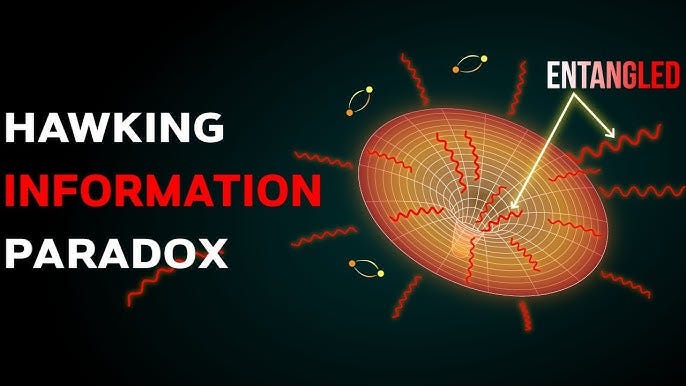
The process of black hole formation and evaporation leads to one of the biggest conflicts in modern physics, which challenges the fundamental nature of time’s evolution.
The Paradox: Quantum Mechanics requires that information about a system’s initial state is always conserved (a property called unitarity). However, a black hole formed from a complex star eventually evaporates into simple, thermal Hawking radiation. If the original star’s information is truly gone, it violates the principle of unitarity, suggesting that the fundamental “arrow of time” in physics is irreversible in a way that quantum mechanics usually forbids.
Proposed Resolutions:
Information Escapes: Information is somehow encoded in the subtle correlations of the Hawking radiation or stored on the event horizon (a “holographic” principle). This requires a complex interaction between gravity and quantum mechanics that preserves the forward, unitary evolution of time.
Black Hole Remnants: The black hole does not fully evaporate but leaves behind a tiny, stable remnant containing the lost information.
5. Alternative and Speculative Theories
More recent or unconventional theories attempt to fully merge General Relativity and Quantum Mechanics to resolve the paradoxes:
Temporal Dynamics/Emergent Time: Some frameworks propose that time itself is not fundamental but is an emergent property that arises from the underlying structure of a quantum theory of gravity. In a black hole, the extreme conditions may reveal this underlying, non-temporal reality.
No Singularities/Fuzzballs: Theories like String Theory propose that black holes are not singularities at all, but rather “fuzzballs” (a quantum structure without a point of infinite density). This eliminates the problem of physics breaking down at the singularity and suggests a smoother, unitary evolution of time.
Relational Time/Change: A more philosophical perspective suggests that “time” is merely a way of tracking change between physical observables. At the singularity, where change is extreme or ill-defined, the concept of time simply loses its meaning, rather than being destroyed.
Here are the views of Carlo Rovelli, Sean Carroll, Sir Roger Penrose, Neil Turock, and Bryce DeWitt:
1. Carlo Rovelli: The Disappearance of Time
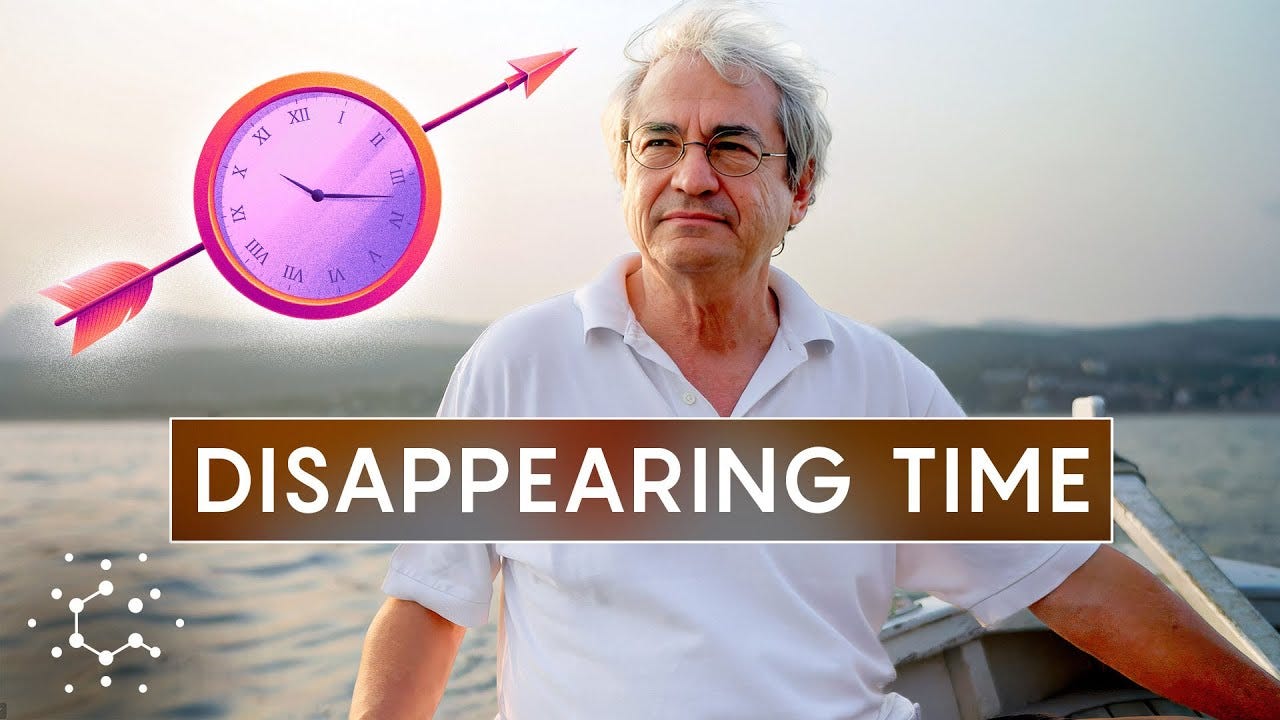
Carlo Rovelli, a key developer of Loop Quantum Gravity (LQG), argues that time is not a fundamental variable in the universe but an emergent phenomenon tied to our macroscopic perspective.
Time is an Illusion (at the Fundamental Level): Rovelli asserts that in the fundamental equations of quantum gravity (like those in LQG), the time variable ‘$t$’ vanishes entirely. The theory describes the world not as evolving in time, but as a set of relative, evolving relationships between quantum variables.
The World is a Network of Events: The universe is fundamentally a collection of events (or processes) rather than a collection of objects that persist through time.
The Emergence of Time (Thermal Time): Our experience of an ordered, flowing time, or the Arrow of Time, is a result of thermodynamics and our limited information about the universe.
Entropy and Blurring: Time emerges when we “blur” the microscopic details of the universe and only look at macroscopic variables. The direction of time (past to future) is tied to the increase of entropy (disorder), which is an observer-dependent concept.
Black Holes and White Holes: Rovelli has explored the idea that black holes don’t evolve to a singularity but eventually “quantum tunnel” into a White Hole (a time-reversed black hole). The time for this process is extremely short from the perspective of an infalling observer, but almost infinite for an external observer due to time dilation.
2. Sean Carroll: The Cosmological Arrow of Time
Sean Carroll’s view centers on explaining the Arrow of Time through cosmology and the second law of thermodynamics, which is also key to understanding black holes.
The Low-Entropy Past: Carroll argues that the asymmetry of time (the fact that we remember the past, not the future) is not due to the fundamental microscopic laws of physics (which are time-reversible) but due to the initial conditions of the universe.
Cosmic Origin: The Big Bang began in a state of extremely low entropy (high order). The irreversible flow of time is simply the universe constantly moving from that improbable, low-entropy state toward the more probable, high-entropy future.
Black Holes and Information: Black holes are the highest-entropy objects known. Their existence and evaporation via Hawking radiation contribute to the universe’s overall entropy increase, consistent with the arrow of time.
Multiverse Hypothesis: To explain why the Big Bang had such low entropy, Carroll has proposed a model where our universe is one tiny patch within a larger, time-symmetric multiverse. The overall multiverse is in a high-entropy state, but fluctuations within it occasionally create new universes starting in a low-entropy state, providing the initial conditions necessary for our arrow of time.
3. Sir Roger Penrose: Time, Singularities, and Conformality
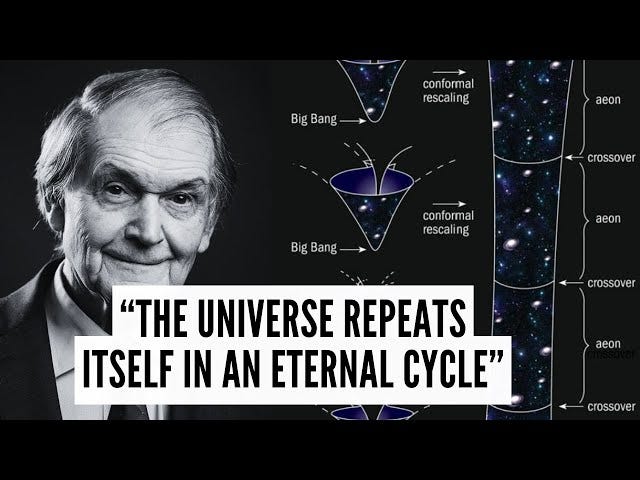
Roger Penrose is foundational to the study of black holes. His work focuses on the geometry of spacetime and the existence of singularities, which fundamentally limit the concept of time.
Singularity Theorems: Penrose’s most famous contribution is the Penrose–Hawking Singularity Theorems, which mathematically proved that if General Relativity is correct and matter satisfies reasonable energy conditions, then a gravitational collapse (like a black hole formation) must inevitably lead to a singularity—a point where spacetime curvature (and thus the concept of time) breaks down.
Limits of Time: For an infalling observer, the singularity is a future boundary to their timeline—they inevitably hit it in a finite, proper time. Inside a non-rotating black hole, the singularity is spacelike, meaning moving towards it is as unavoidable as moving into the future.
Conformal Cyclic Cosmology (CCC): Penrose proposes that the remote future of our universe, as it expands and becomes dominated by radiation, will look mathematically identical to the Big Bang.
Time and Infinity: In this view, time itself is stretched to infinity, and the infinity of one “aeon” becomes the Big Bang (or the beginning of time) of the next. This requires that mass (like that in black holes) eventually dissipates entirely (Hawking evaporation), allowing the universe to become purely conformal and restart the cycle.
4. Neil Turok: Time as a Mirror in a CPT-Symmetric Universe
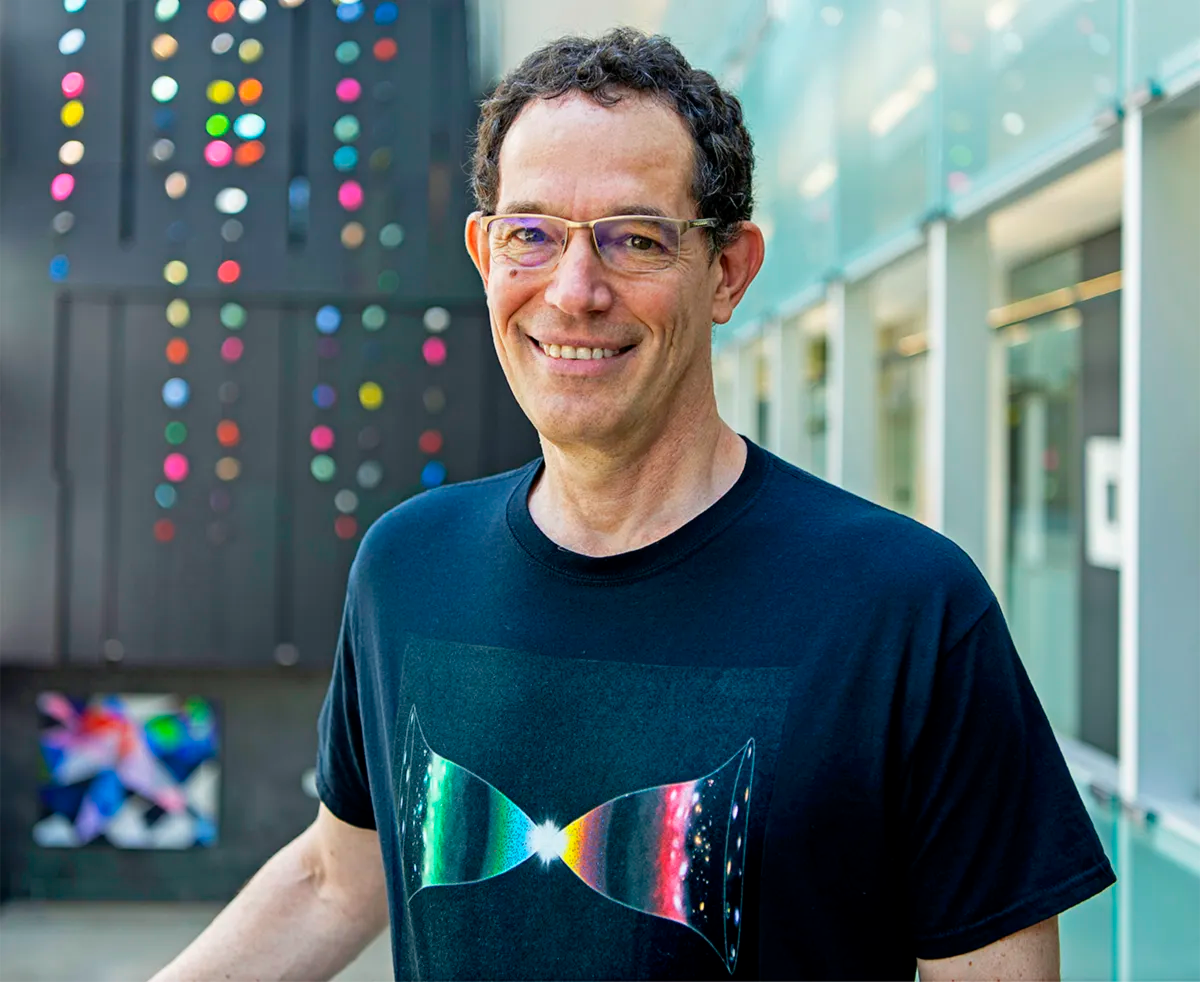
Neil Turok, along with Latham Boyle and others, proposes that the universe is governed by fundamental simplicity and symmetry. Their most recent model, the CPT-Symmetric Universe, radically reinterprets the Big Bang not as a singular beginning, but as a moment of perfect temporal reflection.
1. The CPT Symmetry Principle
The core of Turok’s view is the principle of CPT symmetry, a bedrock concept in quantum field theory that states that the laws of physics remain the same if you simultaneously reverse:
Charge (replace particles with antiparticles).
Parity (reflect all coordinates—a mirror image).
Time (reverse the direction of time).
Turok proposes that the total universe—including what came before the Big Bang—must obey this symmetry.
2. The Big Bang as a Temporal Mirror
In this model, the Big Bang is not the starting point of time, but the moment where the universe is perfectly reflected.
Our Universe: The universe we inhabit expands forward in time ($+t$) from the Big Bang.
The Anti-Universe: On the other side of the Big Bang (in the negative time direction, $-t$) exists a mirror image, an anti-universe. This anti-universe is the CPT reflection of ours: it expands backward in time, consists primarily of anti-matter, and its spatial coordinates are mirrored.
Eliminating the Initial Condition Problem: This elegant symmetry automatically solves the deep mystery of why the Big Bang had to start in a state of extremely low entropy. The overall CPT-symmetric state is intrinsically simple and ordered, meaning there’s no need to invoke chaotic inflation or complex initial conditions.
3. Implications for Time and Black Holes
Turok’s view has profound implications for the nature of time:
Time is Fundamental, but Symmetric: Unlike Rovelli’s view that time is emergent, Turok treats time as a fundamental coordinate. However, he argues it must be symmetrically spanned—it is not a ray that starts at the Big Bang, but an axis that passes through it.
The Arrow of Time is Local: The arrow of time we observe (the increase in entropy) is a feature of our side of the universe expanding away from the simple, symmetrical state of the Big Bang. The anti-universe has its own arrow of time moving away from the Big Bang in the opposite direction.
Black Holes Must Be Unitary: The CPT-symmetric nature of the total universe strongly suggests that the quantum laws (unitarity) must hold. This means that information lost in a black hole must be recovered through its Hawking evaporation. Black holes cannot destroy information, as that would introduce irreversibility that violates the global time symmetry. The model thus requires a clean resolution of the Black Hole Information Paradox.
Cyclical Universe (Earlier Work): Turok’s previous work, the Cyclic Ekpyrotic Model, offers a related but distinct view where time is cyclical and eternal. Here, the Big Bang is actually a Big Bounce resulting from the collision of higher-dimensional membranes. This also ensures time has no true beginning or end.
In summary, Neil Turok’s perspective challenges the notion that time began at the Big Bang, proposing instead that the event was a temporal mirror reflecting our universe into an anti-universe, thereby imposing a powerful, time-reversing symmetry on the cosmos.
5. Bryce DeWitt: The Problem of Time
Bryce DeWitt, along with John Wheeler, introduced the canonical approach to quantum gravity, which is the source of the deepest challenge to the concept of time in physics.
The Wheeler-DeWitt Equation: This equation is the core of canonical quantum gravity. It is an attempt to apply quantum mechanics to the entire universe as a single system. Its structure is:
H^Ψ=0
where $\hat{H}$ is the Hamiltonian operator (which usually governs time evolution) and $\Psi$ is the wave function of the entire universe.
The Problem of Time (Timelessness): Because $\hat{H}\Psi = 0$, the equation is timeless. It suggests that the total energy of the universe is zero, and the wave function of the universe does not depend on any external time variable ‘$t$’.
Time is Not Fundamental: For DeWitt, this means that time, as we know it, must be entirely internal or emergent. It is not a fundamental parameter of the universe but perhaps arises from the correlation between different parts of the universe (e.g., between an observer and a “clock” system).
Implications for Black Holes: If the universe is fundamentally timeless, then black holes, like all other systems, must be described in a way that doesn’t rely on time evolution. The challenge is to recover the smooth, time-dependent behavior of General Relativity (like time dilation) from this underlying timeless quantum state.
Each of these five physicists tackles the nature of time from a different angle—Rovelli focuses on emergent time from thermodynamics, Carroll on cosmology and initial conditions, Penrose on spacetime geometry and singularities, DeWitt on the timelessness of the quantum universe, and Turok on fundamental time symmetry and cyclical cosmology.