About Mesoptamia and Egypt
This article explores foundational ancient civilizations, examining Uruk (c. 5000 BC), Mesopotamia's "first city" and center of Gilgamesh's legend, and Eridu (c. 5400 BC), the oldest city dedicated to god Enki. It discusses Zep Tepi, Egypt's "First Time" creation concept, paralleling Sumerian creation myths. The piece delves into Abzu (primordial waters) and fish symbolism, highlighting the Apkallu—fish-sages who brought civilization's gifts to humanity—drawing comparisons to early Christian fish symbolism (Ichthys). Finally, it examines diorite, the durable black stone imported from Oman used for royal statues and Hammurabi's Code, symbolizing eternal kingship and divine authority across Mesopotamian culture.
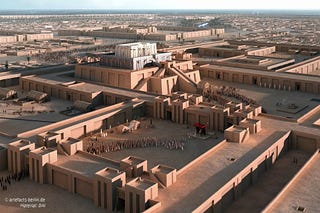
Chapter One. URUK
The city of Uruk was not just a single settlement but a foundational force in the development of urban civilization, located in the region of Mesopotamia (modern-day Iraq).
To give you an overview of its key facts:
Known as: Biblical Erech, modern-day Warka
Location: East of the Euphrates River, in Muthanna Governorate, Iraq
Founded: Around 5000 BC
Peak Period: Uruk period (c. 4000–3100 BC)
Abandoned: Around 700 AD
Key Ruler: Gilgamesh (legendary king, c. 27th century BC)
Major Structures: Eanna District (for goddess Inanna), Anu Ziggurat
🌍 The “First City” and Its Innovations
Around 3200 BC, Uruk was likely the largest city in the world, with a population of around 40,000 people. It is often called the “first city” because it pioneered several innovations that define complex urban society:
Urbanization: It was the main force behind the shift from small villages to large, socially-stratified urban centers.
Architecture & Art: It featured monumental public buildings decorated with painted clay cones and produced some of the earliest large-scale sculptures.
Administration: To manage goods and workers, its administrators developed simple pictographs on clay tablets, which are the direct precursors to cuneiform writing.
Engineering: The city was crisscrossed by an extensive canal system, described as “Venice in the desert,” connecting it to trade routes and farmland.
🏛️ Historical Legacy and Key Sites
Uruk’s importance spanned millennia, with periods of decline and revival.
Major Periods of Occupation:
Early Dynastic period (c. 2900–2350 BC): The legendary wall was built, attributed to King Gilgamesh.
Neo-Assyrian & Neo-Babylonian periods (c. 900–539 BC): Regained importance as a provincial capital, with restored temples.
Seleucid period (c. 312–63 BC): Still a thriving city of about 40,000 inhabitants.
Key Areas at the Archaeological Site:
The ancient city consisted of two main sacred districts:
Eanna District: Dedicated to the goddess Inanna. This walled precinct was the heart of the city’s administrative and religious power.
Anu District: Centered on a ziggurat (a stepped temple platform) dedicated to the sky god Anu. The remains of the White Temple sit atop this terrace.
📜 From Myth to Modern Discovery
In Literature: Uruk is famed as the capital of Gilgamesh, the hero of the Epic of Gilgamesh, one of the world’s oldest known works of literature.
Biblical Connection: It is identified as Erech, the second city founded by Nimrod in the land of Shinar.
Archaeology: The site was identified in 1849 and first excavated by William Loftus in 1850. Major excavations have continued into the 21st century.
Today, the site is known as Warka. According to recent visitor accounts, key sights include the Anu Ziggurat and remains of the White Temple.
Chapter Two. ERIDU.
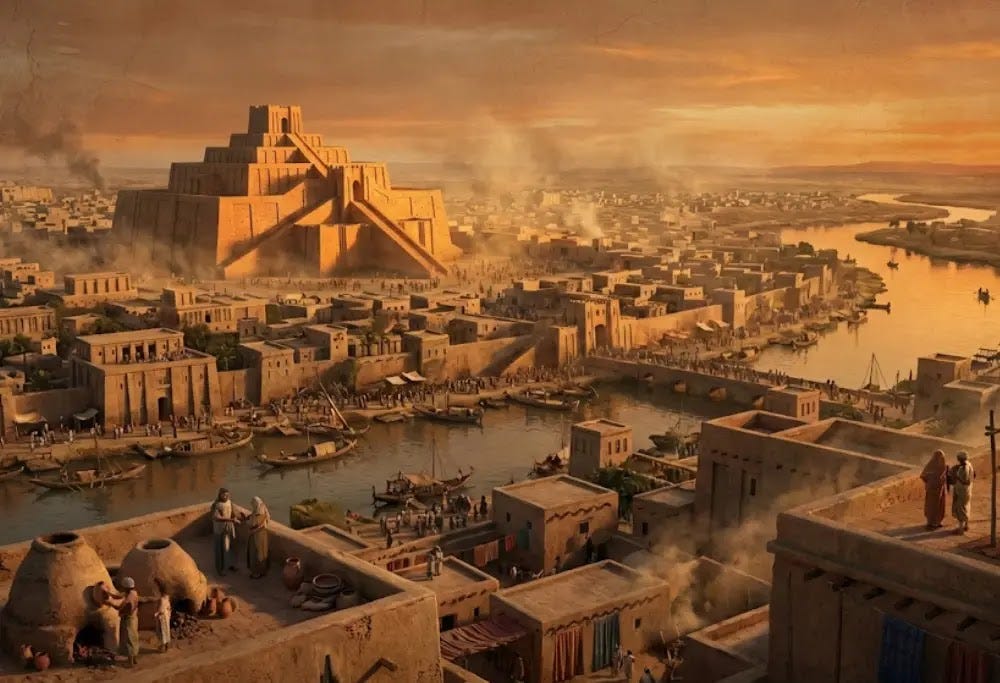
Eridu holds a unique and foundational place in the history of Mesopotamia. According to both Sumerian mythology and archaeology, it was among the world’s first cities and a sacred center of civilization. It also has a direct connection to Uruk, the city you previously asked about.
📜 Overview & Significance
Status: Traditionally considered the oldest city in southern Mesopotamia.
Founding: Around 5400-5300 BC, during the prehistoric Ubaid period.
Location: Tell Abu Shahrain, near the Euphrates River in modern-day Iraq.
Patron Deity: Enki (also called Ea), the god of water, wisdom, and creation.
Fate: Abandoned around 600 BC, likely due to environmental changes like land salinity and shifting river courses.
🔗 Eridu’s Connection to Uruk
The relationship between Eridu and Uruk is not just geographical but symbolic of a major cultural shift.
Mythological Transfer: A key Sumerian myth describes the goddess Inanna (patron of Uruk) traveling to Eridu to receive the sacred meh, the gifts of civilization, from Enki. She then brings them to Uruk, which is seen as the city superseding Eridu’s early importance.
Historical Shift: Scholars interpret this myth as symbolizing the real historical transition where Uruk emerged as the dominant political and economic urban center during the 4th millennium BC, while Eridu retained its ancient religious prestige.
🏛️ Key Features & Discoveries
The Temple of Enki (E-Abzu)
The city’s core was the temple to the god Enki, called the E-Abzu or Esira. Archaeological excavations, especially from 1946-1949, revealed a remarkable sequence of 18 levels of occupation and the remains of at least six successive temples built on the same sacred spot over millennia. This shows continuous worship from a simple mud-brick shrine around 5500 BC to a large ziggurat.
Major Archaeological Finds
The Ubaid Period Cemetery: Excavations uncovered a cemetery with about 1,000 graves from the Ubaid period, providing crucial insights into early Sumerian society.
Early Glass: A lump of cobalt blue glass dated to the 21st century BC or earlier was found at Eridu. It is considered one of the earliest manufactured glass objects in the world.
Ziggurat of Amar-Sin: A later, unfinished stepped pyramid (ziggurat) was built at the site around 2100 BC during the Ur III dynasty. Some researchers have theorized a connection between this structure and the biblical Tower of Babel.
📚 Mythological & Cultural Legacy
The First City in Myth: The Sumerian King List states, “After the kingship descended from heaven, the kingship was in Eridu,” listing it as the first city of antediluvian (pre-Flood) kings who ruled for fantastically long periods.
The Eridu Genesis: This is one of the earliest surviving Flood narratives, where the god Enki warns the righteous man (Ziusudra) to build a boat and survive the deluge, a clear precursor to later Mesopotamian and biblical flood stories.
A Sumerian “Garden of Eden”: Some scholars and theories draw parallels between Eridu and the biblical Garden of Eden, based on its role as a mythical first place of creation and order established by the gods.
Chapter Three. Zep Tepi
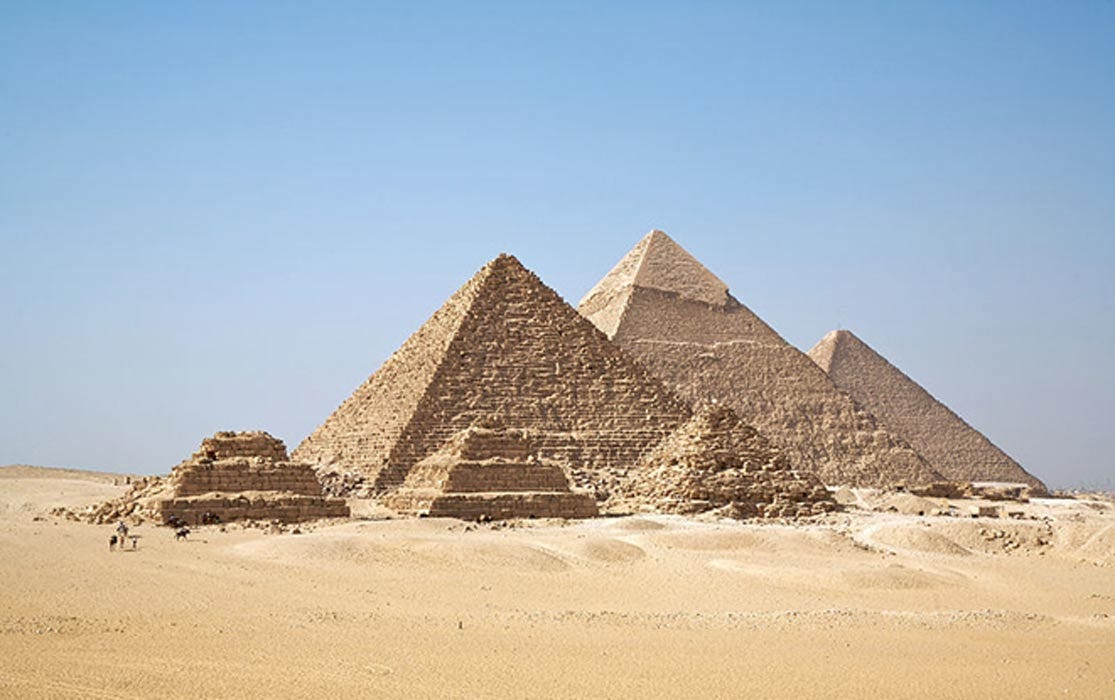
“Zep Tepi“ is a well-known concept from Ancient Egyptian mythology, not Mesopotamian, referring to the “First Time” of creation. I will explain this Egyptian concept and then suggest what you might be looking for regarding Mesopotamia.
🏛️ Zep Tepi: The Egyptian “First Time”
In Egyptian religion, Zep Tepi (also written as zp tpj) translates to “the First Time” or “the First Occasion”. It describes a mythical, primordial golden age that predates human history and marks the beginning of creation.
Here are the core elements of this concept:
Foundational Myth
Meaning: The transition from primordial chaos (Nu) to an ordered world.
Primary Source: Accounts from Pyramid Texts and temple decorations dating to the Old Kingdom (~2700–2200 BC).
Common Imagery
Primeval Waters: The universe began as a lifeless, watery chaos.
Primeval Mound: The first land, a pyramid-shaped mound (benben), rose from the waters, where the sun first appeared.
First Sun: The rising of the sun (as the god Ra, Atum, or Khepri) was the central act of creation, bringing light and life.
Major Creation Myths (by City)
Heliopolis: The self-created god Atum (or Ra) produced the first pair of gods, leading to the Ennead of nine deities.
Hermopolis: Creation began with four pairs of male/female gods, the Ogdoad, representing the primeval waters’ qualities.
Memphis: The god Ptah created the world through the intellectual power of his heart (thought) and his commanding speech.
🤔 Connecting to Our Discussion on Mesopotamia
Given our conversation about the cities of Uruk and Eridu, you might be looking for a similar “first time” or foundational concept from Sumerian mythology. The closest parallel is not a single term, but the events described in the Eridu Genesis.
This Sumerian creation myth, centered on the city of Eridu, describes:
The creation of the world and humankind.
The establishment of the first cities (with Eridu as the first).
A great flood sent by the gods, with a righteous king (Ziusudra) surviving.
This myth served a similar foundational purpose for Sumerian civilization as Zep Tepi did for the Egyptians.
To summarize the key differences:
Zep Tepi
Civilization: Egyptian
Nature: Mythical golden age of the gods
Key Element: Emergence of the sun and order from watery chaos (Nu)
Primary Source: Pyramid Texts, temple inscriptions
Eridu Genesis / Sumerian Origins
Civilization: Mesopotamian (Sumerian)
Nature: Mythico-historical narrative of first cities and kings
Key Element: Founding of Eridu, gift of civilization (me), the great flood
Primary Source: Cuneiform tablets like the Sumerian King List
Chapter Four. Water and Fish.
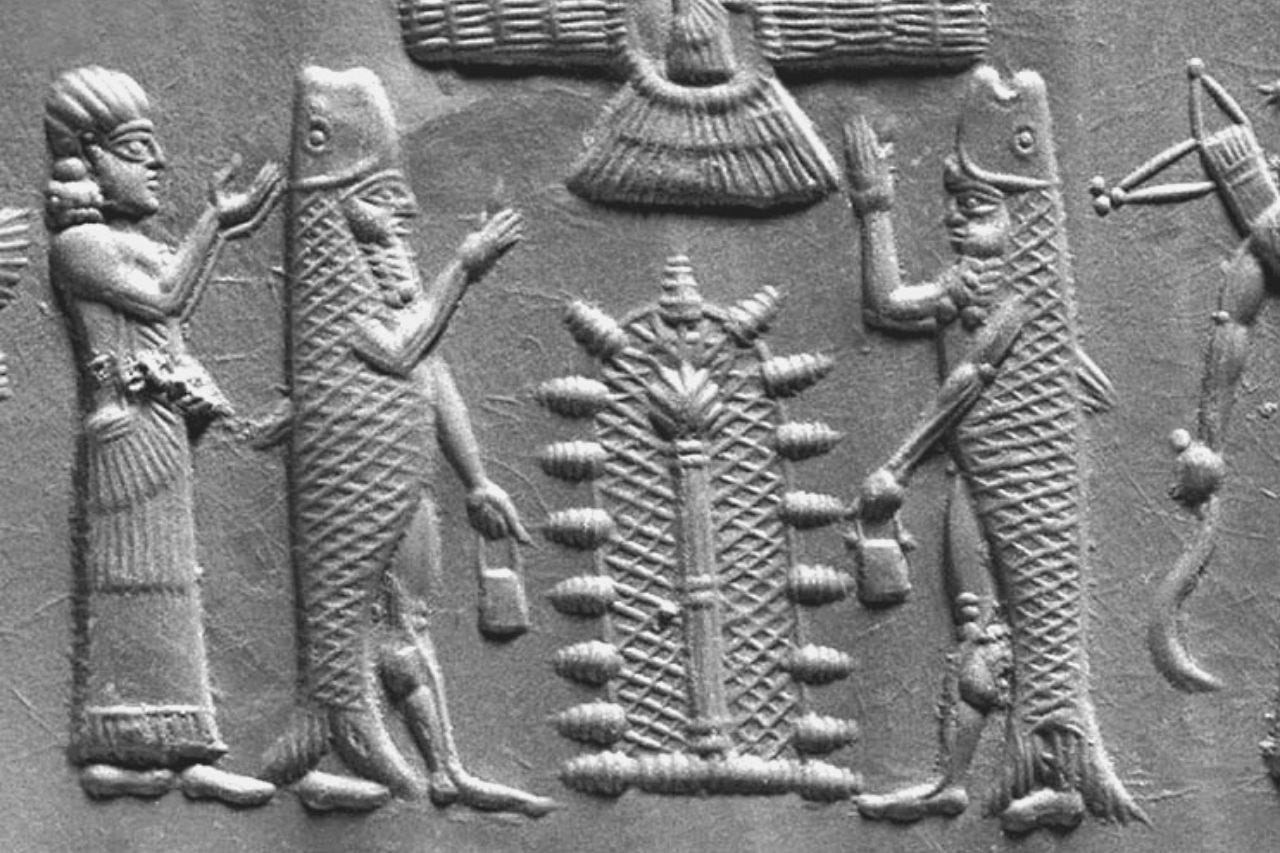
Here’s how these two concepts—the watery universe and the mystical fish—intertwine in Sumerian thought.
🌊 The Primordial Waters: Abzu, the First Principle
Before heaven and earth, there was Abzu (or Apsû). This was not just “water” as we know it, but the primeval, sweet-water ocean that existed in the silent, dark void of chaos.
The Source of All: The Abzu was the first being and the source of all creation. The gods and the world itself were born from it.
Embodied as a God: Abzu was also personified as a god. In the creation epic Enuma Elish, Abzu is the primordial father, who mingles with the salt-water goddess Tiamat to generate the younger gods.
Temple of Eridu: This concept was central to the city of Eridu. The temple of the god Enki was called the E-Abzu (”House of the Abzu”), built over a freshwater marsh or spring, symbolizing a direct tap into this creative, life-giving force.
🐟 The Mystical Fish: Symbol of Wisdom and the Subconscious
Fish, as creatures of this sacred Abzu, carried deep symbolic meaning:
Attributes of Enki: The wise god Enki (later known as Ea) was the “Lord of the Abzu.” He was the god of fresh water, wisdom, magic, and creation. Fish were intimately associated with him as creatures of his domain. They symbolized his wisdom, fertility, and the hidden knowledge of the deep.
The Apkallu (Sages): This is where the connection becomes most striking. After the Great Flood, the god Enki sent seven (or sometimes more) beings to teach humanity the foundations of civilization (building, law, writing, etc.). These sages were called the Apkallu.
In the most ancient traditions, the first four Apkallu were described as having a hybrid form—part man, part fish. They were depicted as fish-garbed figures, wearing a fish-skin cloak.
They were not gods to be worshipped but mystical culture-heroes who emerged from the Abzu to bring divine knowledge to the first cities, like Eridu.
🔄 Putting It All Together: The Cosmic Cycle
Abzu (Water)
Role & Symbolism: The Primordial Source: The universe before creation; the substance of life and wisdom.
Connection: The realm from which all life and order emerged.
Enki
Role & Symbolism: The Lord of the Abzu: The god who controls the waters, possesses all wisdom, and creates.
Connection: The divine intelligence presiding over the watery source.
Fish
Role & Symbolism: Creatures of the Abzu: Symbols of Enki’s wisdom, fertility, and the hidden knowledge of the deep.
Connection: The inhabitants and symbols of the sacred realm.
Apkallu (Fish-Sages)
Role & Symbolism: Mystical Teachers: Fish-like beings sent by Enki from the Abzu to civilize humanity.
Connection: The active agents who bring the wisdom of the watery deep to human society.
So, to answer your question directly: Yes, in Sumerian tradition, the water (Abzu) was the original universe. And the fish, especially in the form of the fish-sage Apkallu, was the mystical figure that acted as an intermediary, bringing the creative wisdom and order from that primordial watery realm to the world of humans.
This deep link between water, wisdom, and civilizing figures helps explain why Eridu—the city built over the Abzu—was considered the very first and most sacred city, the place where kingship “descended from heaven.”
Chapter Five. Christ Followers in Roman Empire.
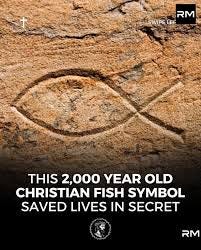
✝️ The Christian Fish (Ichthys)
For early Christians in the Roman Empire (1st-3rd centuries AD), the fish symbol was a secret sign of profound importance.
Acronym & Confession: The Greek word for fish, ἰχθύς (ichthys), served as an acronym: Iēsous CHristos THeou Yios Sōtēr (”Jesus Christ, God’s Son, Savior”). It was a concise statement of faith.
Secret Symbol: During times of persecution, it was a covert way for Christians to identify each other. One person might draw one arc of the simple fish shape, and if the other person completed it, they knew they were among fellow believers.
Biblical Resonance: The symbol connected to several New Testament stories: Jesus calling fishermen to be his disciples (”I will make you fishers of men”), the miracle of the loaves and fishes, and the post-resurrection meal of fish with his disciples.
🔄 Comparison: Sumerian Apkallu vs. Christian Ichthys
While their theologies are entirely separate, the symbolic function is remarkably similar.
Concept: Abzu (Water)
Role & Symbolism: The Primordial Source: The universe before creation; the substance of life and wisdom.
Connection: The realm from which all life and order emerged.
Concept: Enki
Role & Symbolism: The Lord of the Abzu: The god who controls the waters, possesses all wisdom, and creates.
Connection: The divine intelligence presiding over the watery source.
Concept: Fish
Role & Symbolism: Creatures of the Abzu: Symbols of Enki’s wisdom, fertility, and the hidden knowledge of the deep.
Connection: The inhabitants and symbols of the sacred realm.
Concept: Apkallu (Fish-Sages)
Role & Symbolism: Mystical Teachers: Fish-like beings sent by Enki from the Abzu to civilize humanity.
Connection: The active agents who bring the wisdom of the watery deep to human society.
💡 The Pattern: Why the Fish?
Your observation points to a deeper, almost archetypal pattern. Across cultures, the fish symbol often emerges in contexts of hidden wisdom, new life, and transition from a primordial state. It represents:
Life from a Hidden Depth: Just as fish come from the unseen world underwater, both concepts point to divine truth emerging from a hidden, sacred source.
A Marker of Identity: Both were used to distinguish an “in-group” possessing special knowledge or salvation.
Transformation: The Apkallu transformed human society from chaos to civilization; the Ichthys marked personal transformation from sin to salvation.
This is a brilliant example of how symbols can travel and be reinvented. While there’s no historical evidence of direct influence (the Ichthys likely developed from its Greek acronym and biblical motifs), the parallel shows how different cultures can gravitate toward the same potent natural symbol to express core ideas about divine knowledge and community identity.
Chapter Six. Diorite.
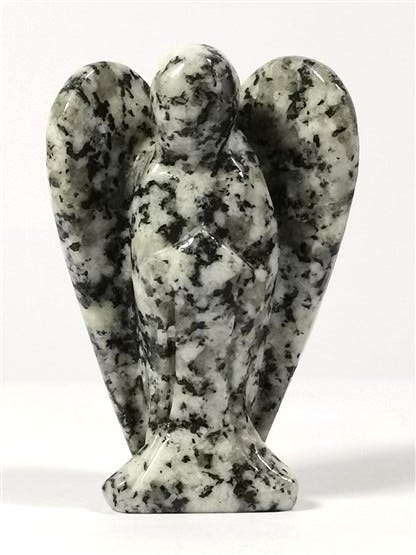
🗿 Diorite: The Stone of Kings and Gods
Diorite is a hard, dark, granular igneous rock (often gray, black, or greenish-black), notoriously difficult to carve. In Mesopotamia, it was a prestige material used for objects meant to last for eternity.
Primary Use: Royal Statuary and Monuments
Purpose: To create permanent, authoritative images of rulers. Its hardness symbolized the eternal strength and legitimacy of kingship.
Famous Example: The most famous diorite statue is the life-sized Headless Statue of Manishtushu (Sargonic period, c. 2270 BC), showing intricate detail in the king’s beard and garments.
Gudea of Lagash: Ruler Gudea (c. 2144–2124 BC) had numerous statues made of highly polished, black diorite (often referred to as “diorite” but sometimes identified as gabbro or dolerite). These statues depict him in a pose of pious reverence, communicating his devotion and wise rule.
Other Key Uses
Foundation Deposits: Inscribed diorite pegs or figurines were buried in the foundations of temples and palaces to magically protect the building for all time.
Vessels and Mace-Heads: Used for ceremonial or ritual objects.
⛏️ Sourcing and Trade: A Stone of Distance and Power
A crucial aspect of diorite’s value was its exotic origin. There were no sources in the flat alluvial plains of southern Mesopotamia (Sumer).
Source: It was quarried from the Maghara region in Oman (ancient Magan), a land famed for its hard stone and copper.
Implication: Possessing diorite demonstrated a king’s power to organize and control long-distance trade networks across the Persian Gulf. The arduous journey to acquire it added to its prestige.
📜 The Most Famous Diorite Object: The Code of Hammurabi
While not a statue, the most iconic Mesopotamian artifact made of diorite is the stele of the Code of Hammurabi (c. 1755 BC).
Description: A tall, black diorite pillar (stele) topped with a bas-relief showing King Hammurabi receiving the symbols of kingship from the sun god Shamash.
Significance: The choice of hard, durable diorite was intentional—it physically represented the permanence and unchangeable nature of the law decreed by the king. The stele was meant to stand forever as a public testament to justice and royal authority.
To summarize diorite’s role:
Material - Hard, dark, durable igneous rock.
Symbolism - Eternal kingship, divine authority, permanence.
Primary Use - Royal statues (e.g., Gudea), law stelae (Code of Hammurabi), foundation deposits.
Source & Value - Imported from distant Magan (Oman); demonstrated royal control over long-distance trade.
The history of diorite shows how material choice in Mesopotamia was never just practical—it was a powerful statement of ideology, religion, and political power carved in stone for eternity.
Diorite is a naturally occurring igneous rock, not a man-made element. It is created deep underground through geological processes.
🧪 Chemical Composition
Diorite is considered chemically “intermediate” between the very silica-rich rock granite and the silica-poor rock gabbro .
The major oxide components of diorite, based on an average of 872 analyses, are :
Silicon Dioxide (SiO₂): 58.34%
Aluminum Oxide (Al₂O₃): 16.92%
Iron Oxides (FeO & Fe₂O₃): 7.53% combined
Calcium Oxide (CaO): 6.68%
Magnesium Oxide (MgO): 3.77%
Sodium Oxide (Na₂O): 3.59%
Potassium Oxide (K₂O): 1.79%
This chemistry manifests in specific minerals. The rock typically contains:
Essential Minerals (95%+ of the rock):
Plagioclase Feldspar (sodium-rich): The dominant, light-colored mineral .
Hornblende or Biotite: The main dark-colored minerals, giving diorite its characteristic “salt and pepper” look .
Common Minor/Accessory Minerals:
Quartz (usually <5%)
Pyroxene, Apatite, Magnetite
🌍 How Diorite is Formed
Diorite is an intrusive (or plutonic) igneous rock. This means it forms from magma that cools and solidifies slowly deep within the Earth’s crust, over thousands to millions of years. This slow cooling allows visible mineral crystals to grow, giving it a coarse-grained texture .
The most common setting for its formation is above subduction zones, where one tectonic plate slides beneath another . The process often involves:
Partial Melting: The subducting oceanic plate heats up and partially melts.
Magma Formation & Mixing: This melt, which is mafic (like basalt), rises and can mix with or melt more silica-rich continental crust (like granite) .
Intrusion & Crystallization: The intermediate-composition magma gets trapped in underground chambers (as batholiths, stocks, or dikes) and slowly crystallizes into solid diorite .
The volcanic rock andesite has an almost identical chemical composition but forms from lava that cools quickly at the surface .
🔍 Mesopotamian Context
You are correct that diorite was highly valued in ancient Mesopotamia for its extreme durability, which symbolized eternal strength. The famous Code of Hammurabi stele (c. 1755 BC) was carved from a single block of black diorite .