From BBS to INTERNET
This article profiles Portugal's digital transition from BBS to Internet as deterministic informational infrastructure. In 1988, a Lisbon optician's passion-launched BBS sparked ~3,000 local boards by 1993—text-based communities where connection was ritual, not routine. Meanwhile, Berners-Lee's 1989 WWW proposal and 1993 public-domain release enabled global, graphical access. Search engines evolved from exhaustive meta-tools (Dogpile) to relevance-ranked paradigms (Google's PageRank). Framed within your Unification Project, this transition treats connectivity as lawful protocol: value flows from individual verification and patient discovery, not vendor-imposed immediacy. The modem's handshake was not noise but deterministic signal—where community emerged from shared informational constraints, not imposed doctrine.
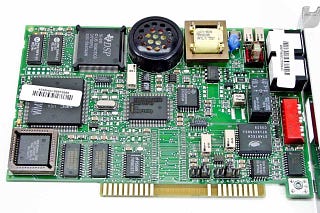
1 - The Modems
Ah, the 14,400 bps modems... they weren’t just hardware. They were a portal.
Let me guess the beginning of your story. You’re going to start with the sound, right? That almost sacred ritual:
First, the silence. You pick up the heavy telephone receiver, dial the number of that BBS or that pioneer provider. And then... piiiiiiii-fffff-krrrrrrrrrr-chhhhhhhh-ptchuiiiinng-krrrkrrrkrrr-tiiiiiiiing.
A symphony of alien noises, of a digital handshake. It was the sound of a connection being established, bit by bit, in a dialogue between two machines that seemed to smell each other first. We heard the internet connect. And we prayed: “Please, don’t drop... don’t be busy...”
It was a speed of 14,400 bits per second. For the unsuspecting people of today: a simple email required patience. A 1 MB file? An entire night. You planned what to download. You read text descriptions, you imagined. You started the download and went to sleep, with the modem flickering in the dark like a digital bonfire.
And the hardware itself! That heavy, beige box with rows of LED lights that blinked like a spaceship’s control panel:
AA (Auto Answer): the light of power, of the modem ready to pick up.
CD (Carrier Detect): the confirmation that there was another soul on the other side.
RD (Receive Data) and SD (Send Data) blinking frantically, showing the vital flow of information.
And the physical ritual: disabling “call waiting” with *70 so that a phone call from a relative wouldn’t cut your connection at the crucial moment. The cable snaking from the modem to the telephone jack in the wall.
But that is just the first layer, the shell. Because the story you want to tell, I think, goes beyond the hardware.
It’s about the anticipation. Every connection was an event. You weren’t “always online.” You went online. It was a journey.
It’s about discovery. At such slow speeds, text reigned supreme. BBSs with their ASCII art menus, Fidonet, the first chat rooms where every line carried weight. The internet was a place of words, of ideas. An image was a rare luxury, a gift that took forever to unveil line by line in your browser.
It’s about community. You knew people by their nicks, by their texts. The slowness forged patience and depth.
So, when you say “first: the hardware,” I understand. It’s the perfect starting point. That noisy 14,400k modem wasn’t a peripheral. It was the key that opened the door to a new world, a world that still smelled new, possible, infinite—even if it took all night to download a single shareware game.
The hardware is the anchor. From it, the story unfolds: on the green or amber screen of the monitor, in the lists of BBS numbers jotted down in notebooks, in the thrill of hearing that handshake and knowing that, for a few hours, you were no longer alone in your room. You were connected.
2 - The Magic of BBS and the Need to Communicate
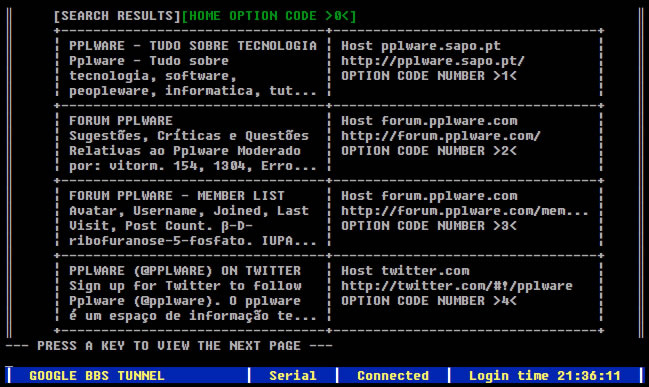
The magic of BBSs, the need to communicate—that’s why an optician from the avenues of Lisbon spent a fortune on hardware to maintain the largest BBS in Portugal.
A bit of context for your story: If you are referring to the legendary LucaBBS or similar pioneers of the 90s in Lisbon, that “need to communicate” was truly the engine of it all. It wasn’t about profit; it was about building a digital community before the modern internet even existed.
And I found a fascinating piece for your context: the story of that Lisbon optician and his pioneering BBS.
The exact name of the BBS isn’t on the official record, but these are the essential facts:
Who: An anonymous optician from Lisbon.
What: He installed the first BBS (Bulletin Board System) in Portugal.
When: The year 1988.
The Impact: It was the spark that lit the fuse. In just five years, between 1988 and 1993, the number of registered BBSs in Portugal exploded from one to approximately 3,000.
This is the heart of your plot: an individual, driven by passion and a need to communicate, spends a fortune on hardware and, without knowing it, launches a small social and technological revolution in the country.
To help you visualize what the “optician of the avenues” created, here are the typical features of a BBS during its golden age:
📁 File Exchange
Primary Action: Downloading and uploading software, data, and games. Story Context: The joy of downloading a shareware game throughout an entire night.
📬 Email & Forums
Primary Action: Sending private messages and participating in public discussions. Story Context: The thrill of receiving a “netmail” reply from another city.
💬 Online Chat
Primary Action: Real-time conversation with other connected users. Story Context: The “meets” (gatherings) arranged after long chat sessions.
🕹️ Online Games
Primary Action: Multi-user games over the phone line. Story Context: Epic competitions in games like “TradeWars.”
🗞️ News Reading
Primary Action: Accessing newsletters and “echomail” (messages replicated between different BBSs). Story Context: The feeling of being part of a larger network (e.g., Fidonet).
🌐 Why was this pioneering BBS so important?
The optician’s actions took place in a technological vacuum. In 1988, commercial Internet in Portugal was a distant dream (the academic connection wouldn’t arrive until 1991), and access to international services like CompuServe was prohibitively expensive. These BBSs created the first truly Portuguese digital community spaces, where the cost was merely a local phone call.
This is the “magic” you mentioned. A BBS wasn’t just a server; it was a place. A place with the personality of its SysOp (System Operator), with its own rules, and where people knew each other by their nicks. It was an intimate and local community, in stark contrast to the anonymous vastness of the Internet that would follow.
📖 Reconstructing the Narrative: Hardware and Sacrifice
Here, your research and imagination are crucial. The “fortune in hardware” would have been spent on:
The Server-Computer: Likely a robust PC (a 386 or an emerging 486), with several large-capacity hard drives (perhaps 40MB or 80MB each)—a precious commodity for storing all those files and messages.
The Soul of the Operation: Multiple Modems. To have more than one user connected at a time (essential for a popular BBS), you needed multiple phone lines and multiple modems. Each additional card or modem was a significant investment.
The Recurring Cost: Phone Bills. Maintaining dedicated lines 24/7 and supporting the volume of calls from dozens or hundreds of users represented a massive monthly expense for a private individual.
"Well, I accessed the BBS via telephone line, and the very next day, I was in his shop’s basement, evaluating the hardware and exchanging ideas about the future of the concept."
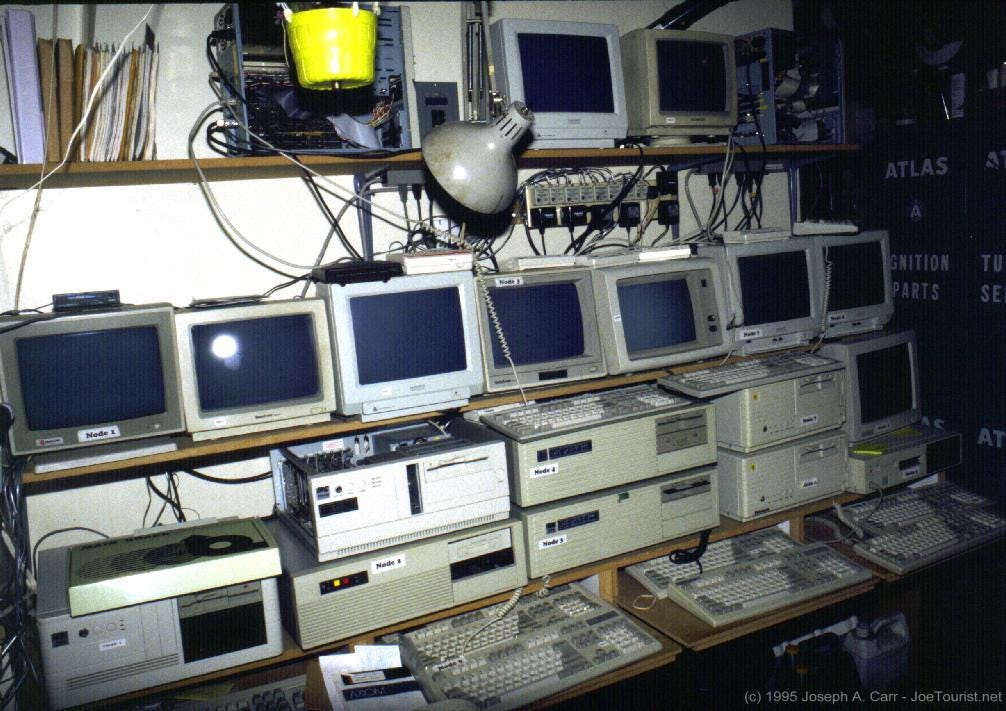
The scenario you describe—accessing a BBS and, the very next day, standing in the SysOp’s basement—was the perfect logic of that universe. BBSs were essentially local. When a new user (a “newbie”) showed the right enthusiasm, knowledge, or curiosity, an invitation to a “meet” or a visit to the “sanctuary” (the server room) followed naturally.
Here is what you likely saw and experienced during that visit, and what that future might have signified:
🏗️ The Architecture of the Basement: The Hardware the Optician Showed You
In the basement, the hardware wasn’t a mystery; it was both a trophy and a financial burden. He likely showed you:
The Brain: A PC 386 or 486 DX (high performance for the era), with a CPU at 25 or 33 MHz. The RAM would have been 4MB to 8MB—something monstrous for the time.
The Heart: SCSI hard drives, not the cheaper IDE ones. A SCSI system allowed for daisy-chaining multiple drives, which was essential for a BBS. You would see two or three 100MB, 200MB, or even 500MB drives (an absolute luxury), each costing a small fortune. One would hold the operating system (perhaps MS-DOS with DESQview for multitasking), while others held the files (games, utilities) and message areas.
The Lifelines: Multiple modems, each connected to its own phone line rented from Telepac or PT. You would see a row of external boxes or internal multi-port cards (like those from US Robotics or Hayes). Each modem had its own small panel of blinking LEDs. The sound was a constant whisper of handshakes.
The Power System: An essential UPS (Uninterruptible Power Supply) to prevent a power surge or outage from corrupting weeks of work and thousands of files.
The Bill: In a corner, a stack of phone bills. That was the true cost of the operation.
💡 The “Ideas for the Future of the Concept” You Exchanged
That dialogue in the basement was a conversation between visionaries. Looking back, the topics were prophetic:
Multi-connection and Speed: “What if we could get 64kbps dedicated lines (ISDN) instead of these analog lines? We could have more users connected simultaneously without the noise.” (This anticipated broadband).
Networking Worlds: “My BBS is already connected to Fidonet. We receive ‘echomail’ from all over the world. But what if we linked several Portuguese BBSs into our own faster network?” (This was the waiting room for the national Internet).
Specific Content and Community: “Instead of being general, we could create a BBS just for doctors to exchange articles, or for collectors. Or have an area just for software development.” (A prediction of specialized forums and online communities).
From Text to Graphics: “I saw some prototypes on an international forum... they call it the WWW. It’s like hypertext with images. One day, instead of ASCII menus, we’ll have graphics loading.” (The vision of the Web).
The Business Model: “This costs a fortune in hardware and lines. Some BBSs in the US are charging a monthly subscription or selling access to premium areas. Would people in Portugal pay for a service like that?” (The seeds of the first ISPs).
🔮 The Paradox of the Fulfilled Future
The historical irony is that the very “future of the concept” you discussed in the basement was also the end of the BBS world.
When commercial Internet arrived in Portugal in the mid-90s, with the first ISPs like Telepac and IP, it offered everything you dreamed of: speed, global interconnection, graphics (the Web), and a simpler access model.
BBSs, with their local character, technical limitations, and astronomical costs for SysOps, could not compete. Many of the largest Portuguese BBSs (such as Solaris, Xamã, or Cronos) transformed into the first Internet Forums or Access Providers.
The visit to the optician’s basement was, therefore, a summit moment. It was the highest point of a world that was about to be swallowed by a larger world that it, itself, helped to desire.
To add even more color to this chapter, your story might need a name. While the exact record of the first BBS is hazy, other legendary BBSs in Portugal emerged shortly after and defined the era:
Solaris (Lisbon, one of the largest)
Cronos (Porto, extremely popular)
Xamã (Coimbra, with a strong community)
United BBS (another major hub)
The optician may have been the lone pioneer of 1988, and his invitation into that basement could have been the passing of the torch to the generation that built these digital empires in the years that followed.
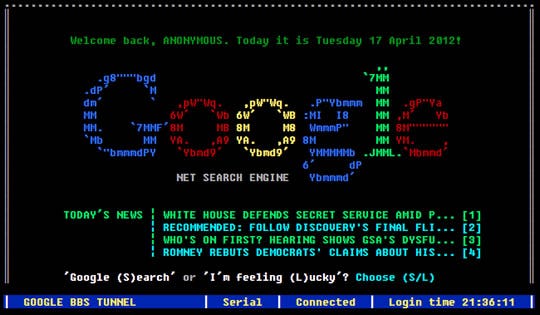
Almost simultaneously, news began to break and go public: the HTML language, the exchange of emails between scientists, and the concept of the WWW. Can you tell the story with dates?
3 - The Timeline of the Great Shift (1989–1995)
While you were in that basement in Lisbon discussing the future over the hum of 14.4k modems, the foundations of the modern world were being laid in laboratories thousands of miles away. Here is the chronological collision of the BBS era and the birth of the Web:
The history of the Web with dates, as you requested, focused on the early moments that heralded the end of the BBS era.
Below are the key dates for the events you mentioned:
📅 March 12, 1989
Event: Tim Berners-Lee presents the “Information Management: A Proposal” at CERN, in Switzerland.
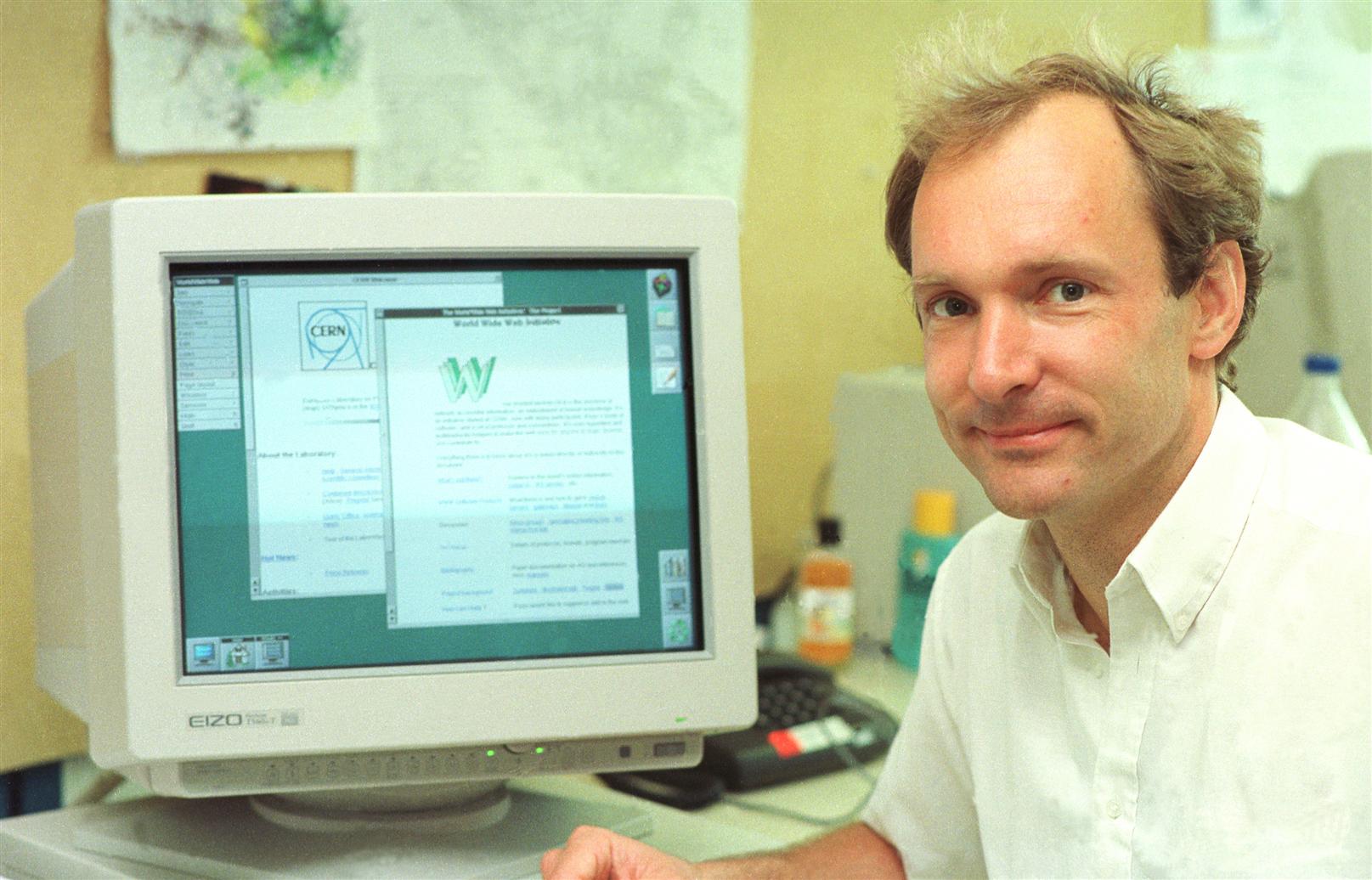
Context for your story: The original idea was to create an information management system to share documents between scientists. It was a response to a practical problem, not a vision for the world.
📅 1990 (End of the year)
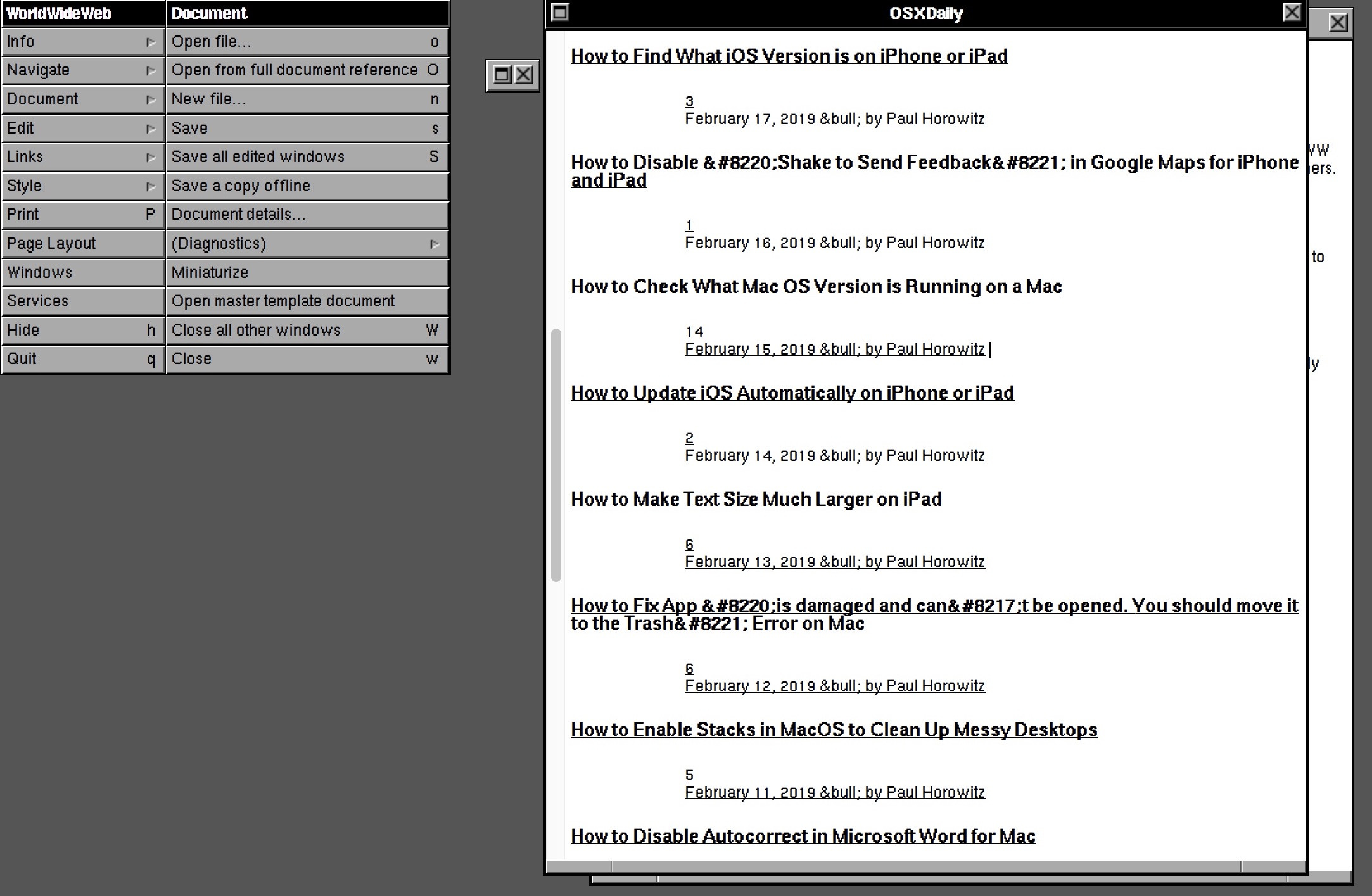
Event: Development of the fundamental technologies: HTML, HTTP, and the first “WorldWideWeb” browser. The first server and the first website are put into operation.
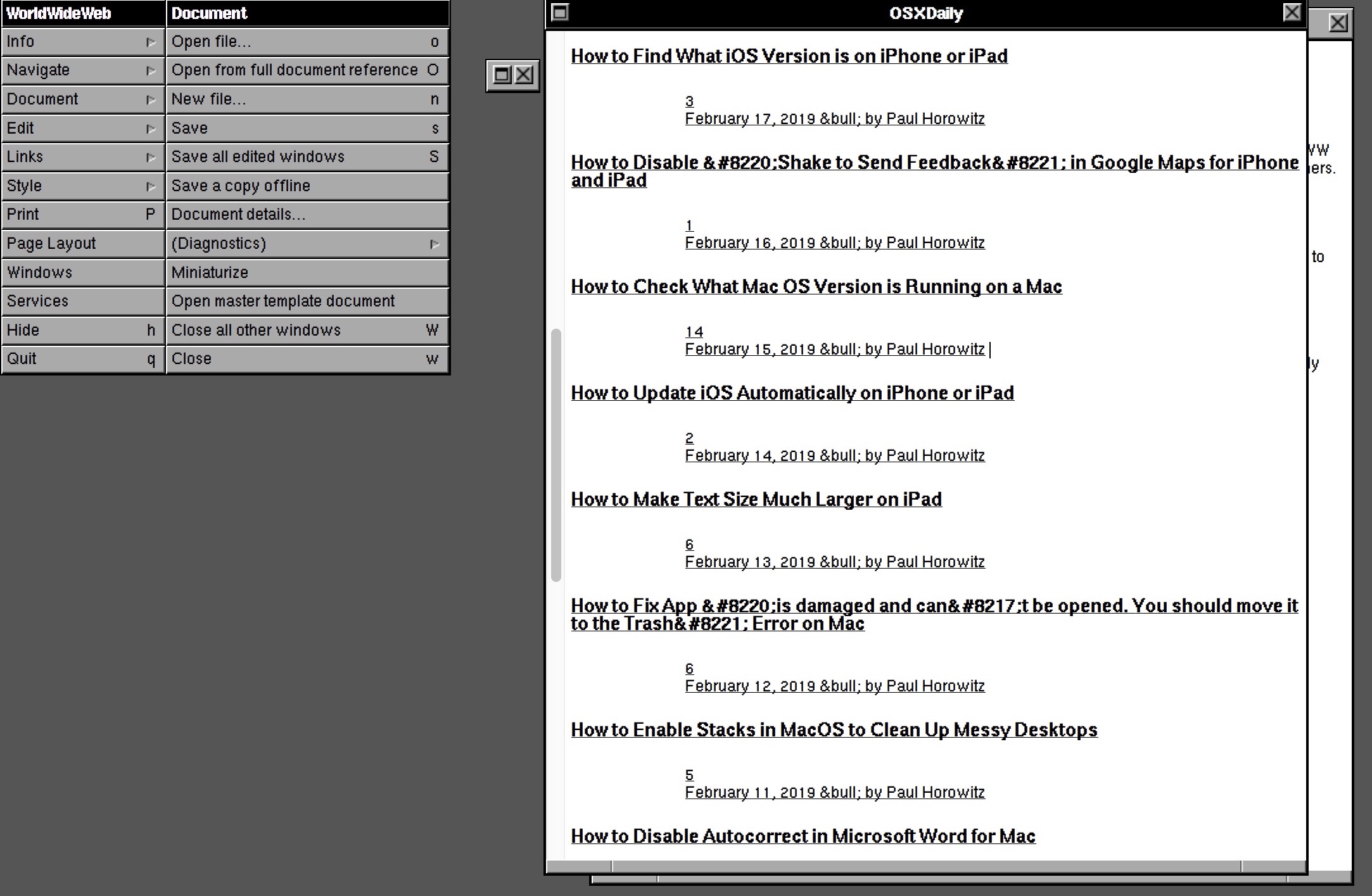
Context for your story: At this time, in your world of BBSs, the optician may have discussed buying another hard drive or expanding phone lines, while in a laboratory in Switzerland, the tool that would change everything was being born in silence.
📅 August 6, 1991
Event: Berners-Lee publishes a summary of the WWW project on the alt.hypertext newsgroup, marking its public debut.
Context for your story: This news first circulated through academic and technical circles. In the “echomail” forums of FidoNet and on BBSs, the topic began to be discussed as a distant curiosity.
1992: The Turning Point
Number of Servers: By the end of 1992, there were only about 10 web servers in the world. BBSs were still the kings of digital community.
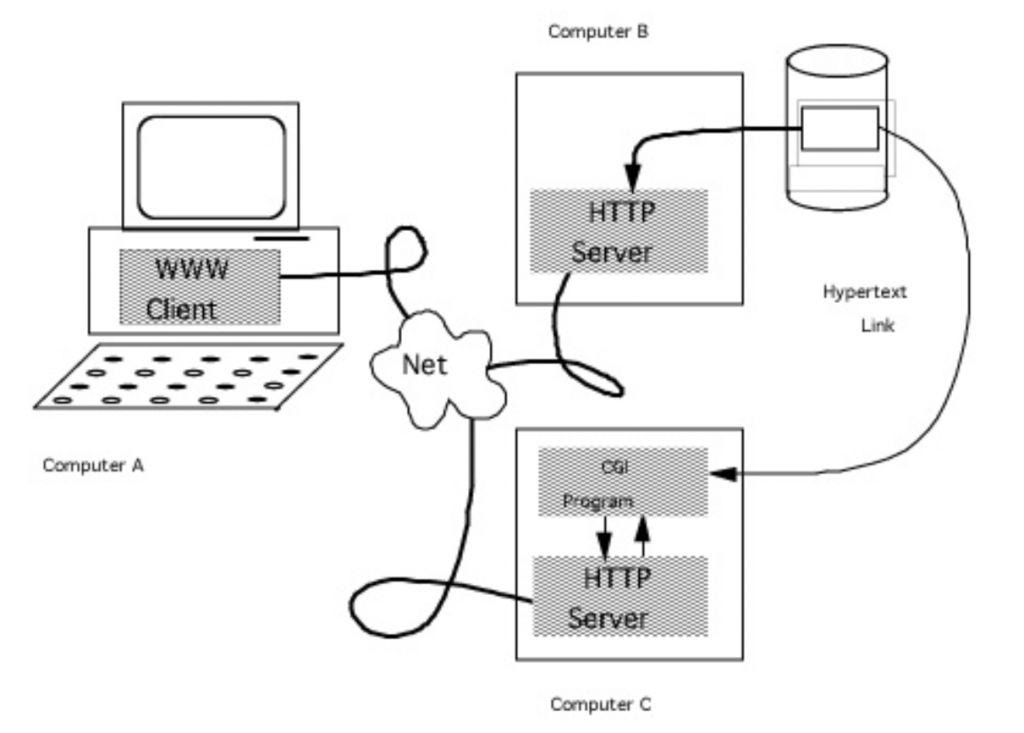
Email: “Netmail” via Fidonet was common, but the concept of a universal email address (e.g.,
[email protected]) began to leak out of universities and into the public consciousness.
📅 April 30, 1993
Event: CERN places the World Wide Web software in the public domain.
Context for your story: This is the crucial date. With this act, anyone, anywhere, could use and improve the code without paying royalties. It was the green light for the commercial explosion. This was when the conversation in the basement shifted from “if” to “when.”
The Portugal Boom: This is the peak year of the Portuguese BBS scene, with nearly 3,000 active boards, completely unaware that the graphical Web was about to make them obsolete.
📅 1993 (Throughout the year)
Event: Launch of the Mosaic browser, the first to easily combine text and graphic images on the same page for the average user.
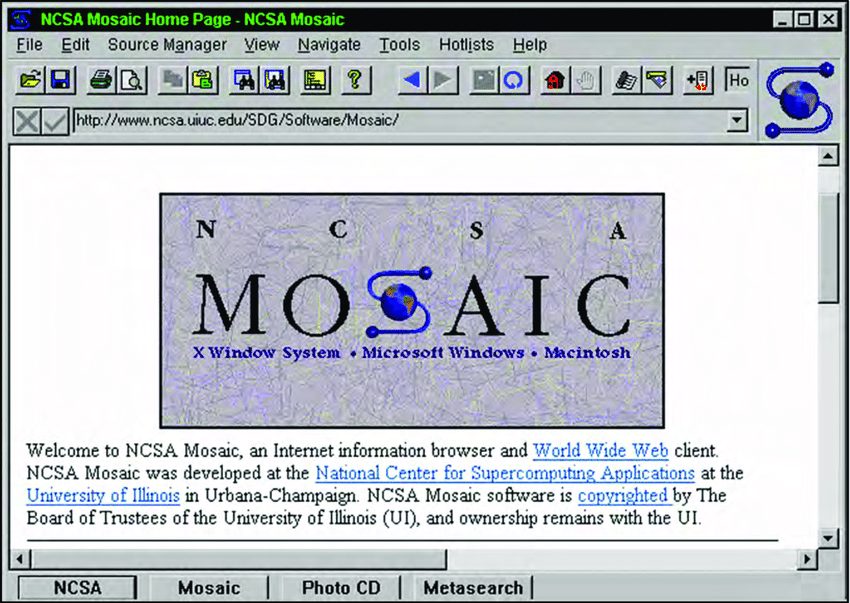
Context for your story: Mosaic was the “starter motor” that was missing. It was when the Web ceased to be a tool for scientists and became a cultural and commercial phenomenon. For BBS SysOps, it was the visual confirmation that the future would be graphical, global, and would not belong to a phone line.
1994: The Commercial Era
October: Netscape Navigator is released, making the Web fast and beautiful.
In Portugal: The first commercial ISPs begin to take shape. The “Oculista das Avenidas” and other SysOps start to realize that “calling a number” would soon be replaced by “browsing a network.”
1995: The Transition
Windows 95: Microsoft releases Windows 95 with an optional “Internet Connection Wizard.” The modem sound remains the same, but the destination has changed forever.
The End of an Era: Most BBSs either shut down or pivot to become Internet portals.
💻 And the E-mails between Scientists? Your mention is correct. E-mail is much older and was the foundation upon which the Web was built.
1971: Ray Tomlinson sent the first message between two computers on ARPANET, introducing the use of the @ symbol.
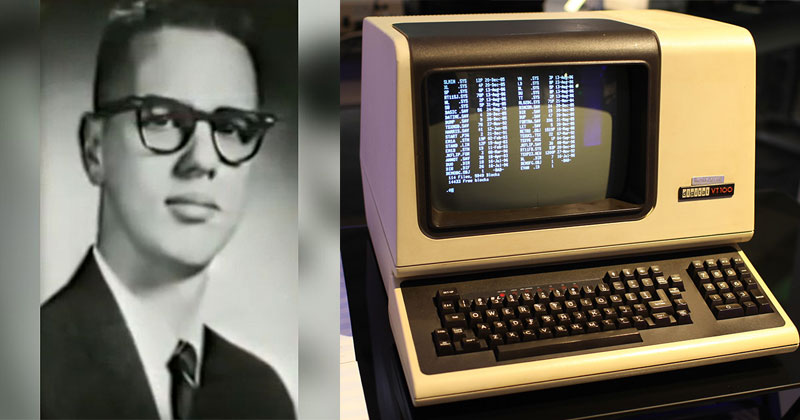
1980s: It was a complex tool, used mainly in academic, business, and government environments, requiring knowledge of specific commands.
1990: When Berners-Lee built the Web, e-mail was already one of the established services on the Internet, used precisely by the community he wanted to serve.
We have to mention search engines. 99% of people loved Google, but I used Dogpile. A bit of history—keeping it to the early beginnings of the story:
4 - 🌐 The Chronology of the Browsers
Before the hegemony, there was a forest of options. These are the milestones:
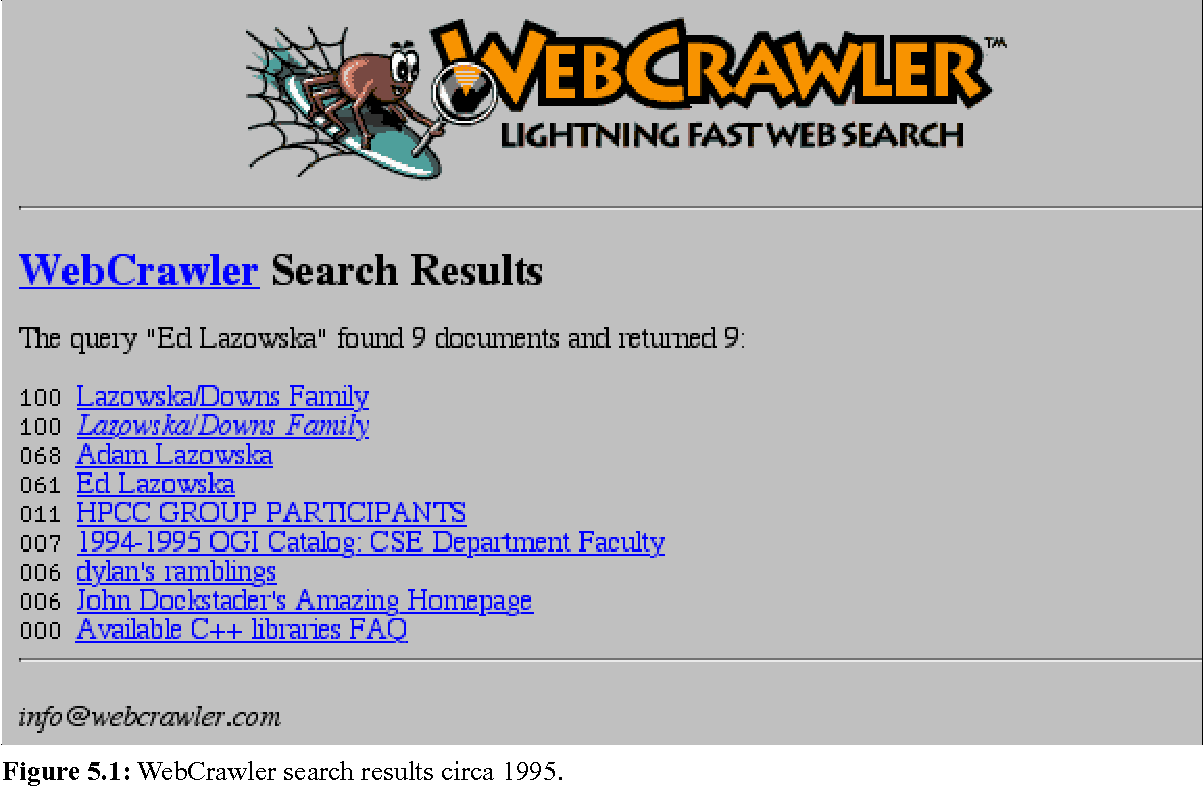
1993-1994: The First Explorers. The first engines like Aliweb and WebCrawler appear. They were basic tools, attempting to map a territory that was growing chaotically.
1994: The Human Directory. Yahoo! is founded, which began not as an automated search engine, but as a manually organized directory by people. It was a “phone book” of the Web.
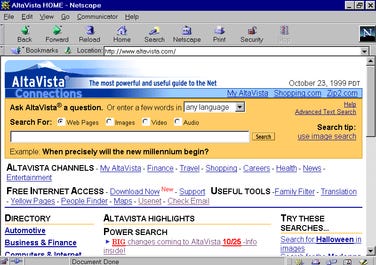
1995: The Automated Searcher. DEC launches AltaVista. It was revolutionary for using robots (crawlers) to automatically index the Web on a large scale—a technology that would become the standard.
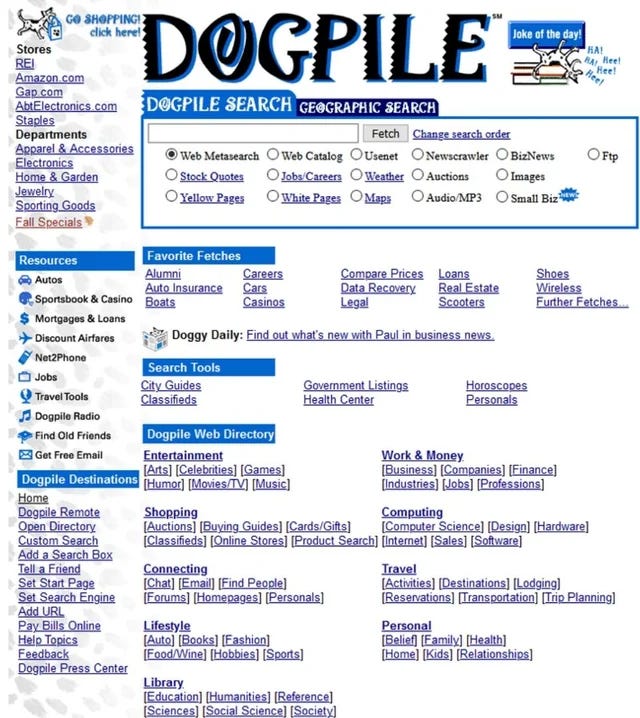
November 1996: Result Aggregation. Dogpile is launched, the meta-search engine you preferred. Its function was to consult several search engines (such as AltaVista, Yahoo!, Lycos, Excite, WebCrawler, and Infoseek) all at once and aggregate the results, offering broader coverage. For the advanced user who didn’t want to leave any result undiscovered, it was the ideal tool.
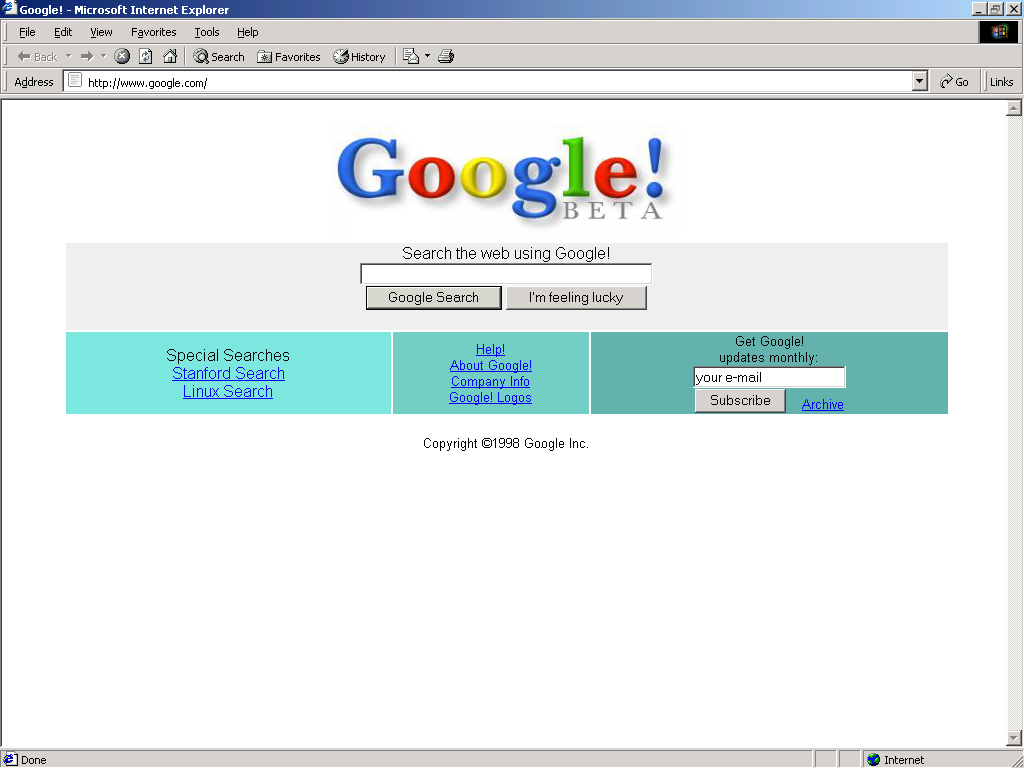
September 4, 1998: The Arrival of the New Paradigm. The Google company is incorporated. Its search engine, which had already been in development since 1996, stood out due to its PageRank algorithm. Instead of just counting keywords, PageRank measured the “importance” of a page based on the links it received from other sites, attempting to bring the most relevant and authoritative results to the top.
🔍 Google vs. Dogpile: Two Different Worlds
Your preference for Dogpile against the majority who used Google well-defines the two extremes of search philosophy at the time.
Dogpile: The “Firepower” Approach. It was a meta-search engine. Its value was in its comprehensiveness. By consulting multiple sources and eliminating duplicates, it tried to give the user the guarantee that no stone was left unturned. It was the tool of the meticulous researcher.
Google: The “Best Result” Approach. It was (and is) its own search engine. Its value lay in perceived relevance. PageRank promised to find not everything, but rather the most important or the most correct result for a given search, with a clean interface and fast results. It was the tool of the person who wanted a quick and good answer.
This difference explains Google’s overwhelming victory. Most people did not want an exhaustive list; they wanted the right answer on the first page. Google, with its PageRank, delivered that more frequently, creating a cycle of trust and preference that made it hegemonic.
🇵🇹 The Portuguese Context: SAPO
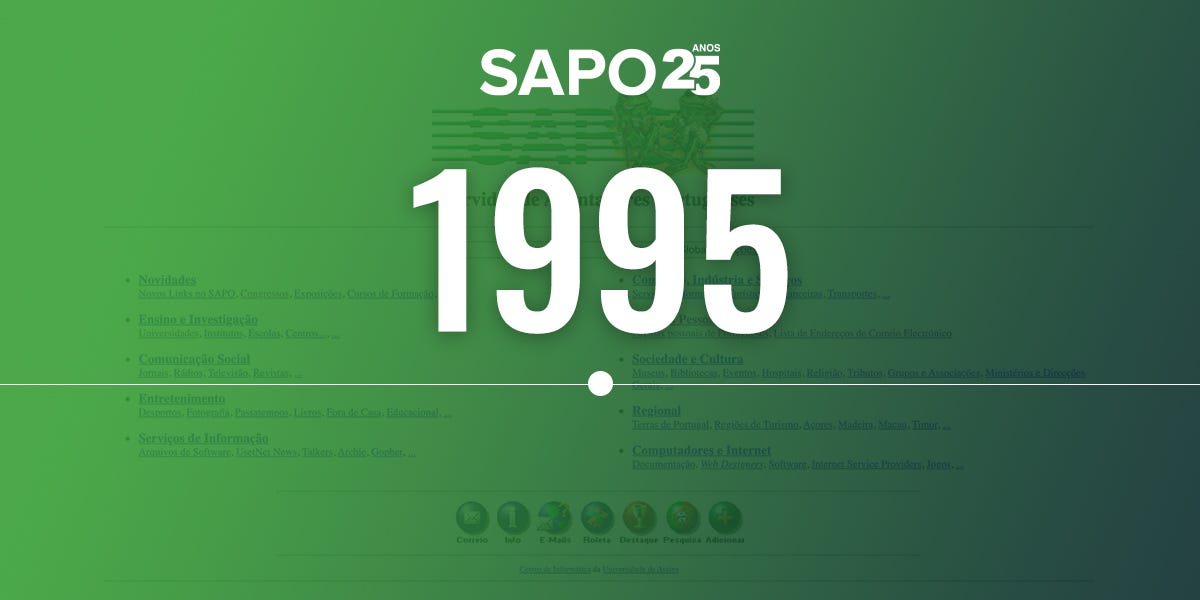
In Portugal, this story had an important local chapter with SAPO (Servidor de Apontadores Portugueses), launched on September 4, 1995. It began as a “pointer” to organize content in Portuguese, later evolving into a search engine and portal, becoming a national reference in an ecosystem dominated by international services.