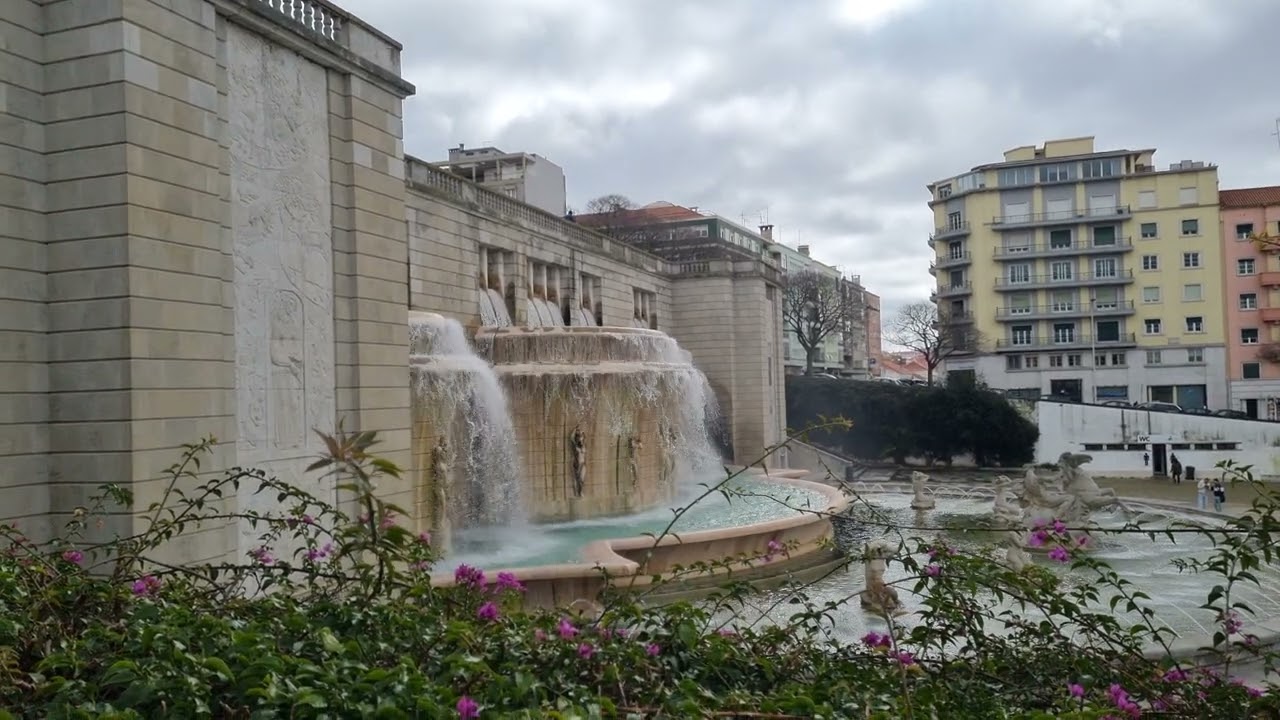
The Luminous Fountain: The Heart of Alameda
This article profiles the Luminous Fountain (1948) as informational architecture of power: celebrating water supply via the Alviela Aqueduct, it also served as a demonstration of the grandeur of the Estado Novo. Designed by the Rebelo de Andrade brothers, with sculptures by Diogo de Macedo and Maximiano Alves, it is a prime example of the Portuguese Suave style—the official style that fused modern techniques (reinforced concrete) with traditional elements (granite, tile, statuary), seeking functional modernity without breaking with historical roots. Framed within your Unification Project, the fountain treats public space as a testable protocol: value flows from individual verification, not imposed doctrine. Today, it is a testament to prestige urbanism where engineering and ideology intersect—a heart of stone and light that defines Lisbon's visual identity through symmetry, monumental scale, and noble materials, resulting in an emblematic space of permanence and order.
January 30, 2026
The Luminous Fountain: The Heart of Alameda
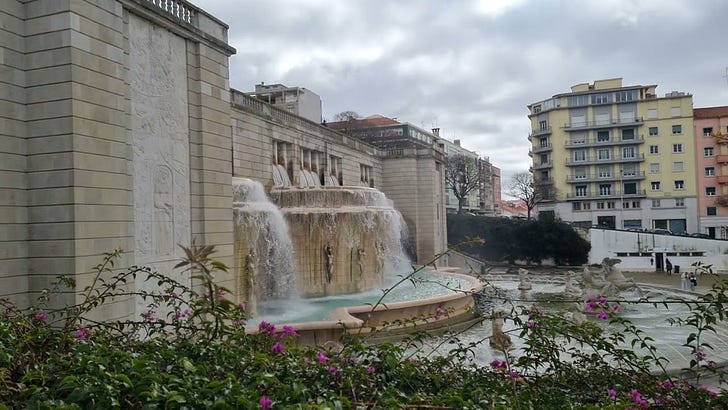
Inaugurated in 1948, the Luminous Fountain of Alameda Dom Afonso Henriques was conceived to celebrate the water supply to the eastern part of the city through the Alviela Aqueduct. But for the regime of the time, it was much more: it was a demonstration of grandeur and technical modernity.
Designed by the brothers Carlos and Guilherme Rebelo de Andrade, the fountain stands out for its monumentalism. The ensemble is adorned with sculptures by Diogo de Macedo and Maximiano Alves, which depict allegorical figures linked to the sea, the earth, and work, reinforcing the narrative of a hardworking and historic Portugal. When turned on, the play of water and lights creates a visual spectacle that still attracts locals and tourists today, serving as the perfect vanishing point for the vast green expanse of Alameda.
The Portuguese Suave Style
The Luminous Fountain is one of the purest examples of the so-called Portuguese Suave. This architectural style dominated the Portuguese urban landscape between the 1940s and 1950s, during the Estado Novo.
The Portuguese Suave was not a spontaneous artistic movement, but rather an official aesthetic directive that sought a "third way":
Functional Modernity: It used modern construction techniques, such as reinforced concrete.
Conservative Nationalism: It clad these structures with traditional decorative elements, such as eave roofs, granite stonework, tiles, and classical statuary.
The goal was to create an architecture that seemed "modern," but that did not lose contact with the rural and historical roots of the country. In Alameda, this is reflected in the rigorous symmetry, the monumental scale of the surrounding buildings, and the use of noble materials that confer a sense of permanence and order.
A Legacy of Stone and Light
Today, the Luminous Fountain and the surroundings of Alameda are testimonies to a prestige urbanism. Although the style was later criticized for being "scenographic," it is impossible to deny its importance in defining the visual identity of Lisbon. It is a place where engineering intersects with ideology, resulting in one of the most emblematic public spaces in the capital.