The Metabolism of Reality: Beyond the Illusion of Time
A Synthesis of Agency, Complexity, and the 2nd Law
1. The Death of the “Clock”
For a long time, physics has tried to tell us that time is either a fixed dimension (like a frozen loaf of bread) or a total illusion (as Julian Barbour suggests). But these views leave a gap: they don’t explain change. If we follow the “Relational” path of thinkers like Carlo Rovelli, we realize that “Time” isn’t a thing that exists on its own. Instead, it is the name we give to the interactions between agents.
2. The Universe as a Single Field
Rejecting the “Dualism” that places laws in one realm and matter in another, we start with a Monist view: The Quantum Field is all there is. There are no external “Platonic” blueprints. Instead, “Laws of Nature” are actually Ancestral Habits. They are the paths the universe has learned to take because they are the most efficient.
3. The Triple-Engine of Reality
To understand how the universe “becomes,” we look at three fundamental trends that explain the Why behind the How:
* Trend 1: Agency Generates Entropy. The 2nd Law of Thermodynamics isn’t just about things breaking down; it is the “metabolism” of the universe. The universe “wants” to dissipate energy. Agents (from particles to people) are the engines that perform this dissipation.
* Trend 2: Agency Generates Complexity. To dissipate energy more effectively, the universe must become more complex. Complexity isn’t a fluke; it is a strategy. The more complex an agent is, the better it can process information and produce “effective entropy.”
* Trend 3: The Principle of Least Action. This is the cosmic “efficiency expert.” It ensures that as complexity grows, it follows the path of least resistance. This is why we see recurring patterns in nature—they are the most “economical” ways for the field to organize itself.
4. The Footprint in the Field
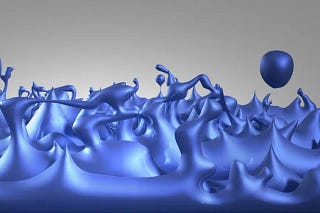
In this scenario, every agent—every “Actual Entity” in Whitehead’s terms—leaves a footprint of information in the field. As these footprints accumulate, they create the “thickness” of history. We aren’t moving through a pre-existing timeline; we are weaving the timeline through our agency.
Conclusion: A Universe with Purpose
We don’t need a PhD to see the big picture: The universe is not a machine, but a process. It is a learning organism that uses Agency to turn Potential into Information, guided by the simple need to flow efficiently toward higher complexity. Time is not a cage; it is the record of our creative advance.