Denmark and Prime Minister Mette Frederiksen
This article profiles Mette Frederiksen as deterministic governance architecture: youngest Danish PM (2019), Social Democratic leader, working-class roots. Her "left-conservative" synthesis defends the welfare state while enforcing strict immigration controls—treating social cohesion as a testable constraint, not ideological dogma. Key policies: Ukraine support (largest per-GDP military aid), climate action, Greenland sovereignty, economic fairness. Framed within your Unification Project, value flows from individual verification, not imposed doctrine. Hygge complements this: a cultural protocol of presence, togetherness, and simple pleasures—where well-being emerges from lawful, reproducible social constraints, not consumption. Denmark's happiness reflects this balance: sovereignty + solidarity + intentional contentment. Frederiksen treats governance as epistemic practice: policies as protocols, not persuasion.
February 11, 2026
Biography
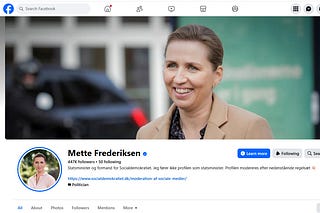
Mette Frederiksen (born November 19, 1977, in Aalborg) is the Prime Minister of Denmark and the leader of the Social Democratic Party. She made history as the youngest prime minister in Danish history (taking office at age 41 in June 2019) and only the second woman to hold this office
.
Background & Career Path
Working-class roots: Her father was a typographer, her mother a teacher. As a teenager, she campaigned for rainforest preservation, whale protection, and ending apartheid
Education: Bachelor’s in Administration and Social Science from Aalborg University, master’s in African Studies from University of Copenhagen
Early career: Briefly worked as a trade unionist (2000–2001) before entering politics
Political rise: Elected to Parliament (Folketing) in 2001 at age 24, served as Minister of Employment (2011–2014) and Minister of Justice (2014–2015) under Prime Minister Helle Thorning-Schmidt
Party leadership: Became leader of the Social Democrats in 2015 after her party’s election defeat, then led them to victory in 2019
Re-election: Won a second term in November 2022, forming a historic coalition with center-right parties
Causes She Defends
1. The Danish Welfare State
Frederiksen champions Denmark’s comprehensive social safety net—universal healthcare, strong labor protections, and robust public services. She believes in state intervention to ensure social cohesion and economic security for workers
.
2. Strict Immigration Control
Perhaps her most controversial stance: Frederiksen has taken a hard line on immigration, arguing that unregulated migration undermines the working class and social cohesion. Her government has implemented some of Europe’s strictest policies, including:
The “paradigm shift” making repatriation rather than integration the goal of asylum policy
A cap on non-Western immigrants
Policies requiring immigrants to work 37 hours weekly to receive benefits
Attempts to process asylum seekers outside Europe
She famously stated: “For me, it is becoming increasingly clear that the price of unregulated globalisation, mass immigration and the free movement of labour is paid for by the lower classes”
3. Climate Action
Environmental protection remains a priority, building on her early activism. Her government has pursued policies to tackle climate change while balancing economic concerns
.
4. Strong Defense & Ukrainian Support
Since Russia’s invasion of Ukraine in 2022, Frederiksen has emerged as one of Ukraine’s staunchest supporters. Denmark has become the largest military contributor to Ukraine relative to GDP, with approximately $11 billion in military aid pledged as of 2025
. She has also:
Abolished Denmark’s EU defense opt-out via referendum (2022)
Extended military conscription to include women
Increased defense spending to over 3% of GDP
5. Danish Sovereignty & International Standing
She made international headlines in 2019 by firmly rejecting Donald Trump’s proposal to purchase Greenland, calling the idea “absurd” and defending territorial sovereignty
In 2025, she has continued to resist renewed U.S. pressure regarding Greenland, warning that military action against a NATO ally would destroy the alliance .
6. Economic Fairness & Anti-Globalization
Frederiksen has moved her party leftward on economic issues, criticizing neoliberal policies and arguing that globalization has eroded workers’ rights and increased inequality. She supports greater state intervention in the economy to protect Danish workers
.
Frederiksen represents a distinctive brand of “left-conservative” social democracy—combining traditional welfare state policies with culturally conservative stances on immigration and national identity.
Her approach has been described as prioritizing the interests of the native working class through both economic protectionism and strict border controls.
What is Hygge?
Hygge is often translated as “coziness,” but it’s much more than that. It’s a cultural philosophy about creating warm, intimate atmospheres and enjoying life’s simple pleasures with good people .
The Essence of Hygge
Atmosphere: Soft lighting (candles are essential!), warm blankets, comfortable spaces
Togetherness: Small gatherings with close friends and family—no pretense, no performance
Presence: Being in the moment, free from stress and distractions
Simple pleasures: Good food, hot drinks, conversation, board games, books
Gratitude: Appreciating the small comforts of daily life
Why It Matters to Danes
Denmark consistently ranks among the world’s happiest countries, and many attribute this to hygge culture. It’s not about buying expensive things—it’s about intentional, low-stress social connection .
Examples of Hygge
A rainy evening with tea, a book, and a candle
Dinner with friends where everyone helps cook and clean
A bike ride followed by hot chocolate
Board games by the fireplace
“Fredagsmys” (cozy Friday) — a Swedish-Danish tradition of relaxing at week’s end
The Danish Mindset
Hygge reflects broader Danish values: equality, modesty, and balance. Success is celebrated quietly; wealth is downplayed. The goal is contentment (lykke), not constant achievement .
There’s even a word for the opposite: “uhygge” — the uncomfortable, unsettling feeling when hygge is broken .