The Colonization Of The American Continent
This article profiles the colonization of the Americas as informational architecture of power: English, French, and Spanish practiced direct extermination (wars, diseases, forced labor); Portuguese developed "chico-espertismo" (cunning self-interest)—forced assimilation via miscegenation, African slavery, and bureaucratic control. The transfer of the Court to Brazil (1808) mirrors "new-richism": an elite that uses the State as property, ostentatiously displays power, and ignores popular reality. In 2026, the Portuguese political elite replicates this pattern: rhetoric of triumph in adversity, state apparatus as currency of loyalty, escape to media "paper capital." Value flows from individual verification, not imposed doctrine—where history is a testable protocol, power is a reproducible protocol.
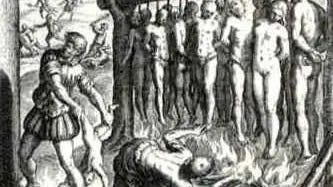
“Each people has their own style”
The English Exterminated
United States (English America)
1607: Founding of Jamestown (Virginia). First permanent settlement. The conflict with the Powhatan Confederacy resulted in intermittent wars (1622–1644), leading to the massacre of thousands of natives and the expulsion of the survivors.
1636–1638: Pequot War (Connecticut). The English colonists surrounded and burned the main Pequot village in Mystic. Approximately 400 to 700 indigenous people (including women and children) were burned alive or executed. The tribe was declared extinct by the Treaty of Hartford.
1675–1676: King Philip’s War (Metacom). This was the final attempt by the indigenous peoples of New England to expel the English. It resulted in the destruction of 12 colonial towns, but the indigenous extermination was massive: about 40% of the region’s native population was killed or sold as slaves to the Caribbean.
1763: Royal Proclamation. The crown’s attempt to limit expansion west of the Appalachians to avoid costly wars, which was ignored by the colonists, intensifying the massacres on the frontier.
1763: Siege of Fort Pitt. Recorded as one of the first uses of biological warfare: the English distributed blankets contaminated with smallpox to the Delaware and Shawnee with the intent to “extirpate this execrable race.”
Canada (English Dominion)
1749: Father Le Loutre’s War (Nova Scotia). English Governor Edward Cornwallis offered a bounty (scalp) for every Mi’kmaq killed, including women and children, aiming at the clearing of the territory for English settlers.
1876: Indian Act. It institutionalized segregation. Although the phase of military extermination had diminished, systematic cultural and physical extermination began through the Residential Schools, where thousands of children died from neglect and abuse.
Caribbean (Insular English America)
1624–1626: Massacre of St. Kitts. English and French colonists joined forces to massacre about 2,000 indigenous Kalinago (Caribs) to prevent resistance to the occupation of the islands.
1650–1700: Extermination in Dominica and St. Vincent. English naval military campaigns focused on the destruction of indigenous villages and plantations to force the total evacuation of the islands for the introduction of sugar cane.
The French Exterminated
Canada (New France)
1608: Founding of Quebec by Samuel de Champlain. Beginning of the occupation.
1634–1650: War and Diseases. The French alliance with the Hurons (Wyandot) for the fur trade introduced European diseases (smallpox and measles). In less than two decades, the Huron population was reduced from 30,000 to about 9,000 individuals, a demographic collapse caused by direct contact.
1640–1701: Iroquois Wars. Although the conflict was between tribes, the French armed allies and participated in “scorched earth” expeditions (destruction of crops and villages), aiming at the famine and extermination of groups hostile to French trade.
United States (Louisiana and Mississippi Valley)
1729–1731: Extermination of the Natchez. After French colonists demanded sacred lands for tobacco plantations, the Natchez revolted. In retaliation, Governor Étienne Perier organized a military force that surrounded the Natchez nation. Hundreds were killed and over 400 survivors were captured and sold as slaves to French plantations in Saint-Domingue (Haiti), effectively extinguishing their social structure on the continent.
1730: Fox (Meskwaki) Massacre. In the Illinois territory, French forces and allies surrounded the Fox tribe. The siege resulted in the massacre of approximately 500 to 1,000 indigenous people (including warriors, women, and children) who were trying to surrender.
Caribbean (French Antilles)
1635–1660: Extermination War against the Caribs (Kalinago). On the islands of Guadeloupe and Martinica, the French launched systematic campaigns to “clear” the islands. 1658: A French army of 600 men attacked the last Carib strongholds in Martinica, massacring the majority and forcing the few survivors to flee the island, ensuring total control for the sugar economy.
1660: Treaty of Saint Kitts. Formalized the expulsion of the indigenous peoples from the fertile islands, confining the survivors to smaller islands (Dominica and St. Vincent), under threat of death.
French Guiana
1643: Founding of Cayenne.
17th Century: Violent “pacification” campaigns against the Galibi tribes. The use of military force to displace coastal populations inland resulted in thousands of deaths from direct conflict and the disruption of livelihoods.
The Spanish Exterminated
Caribbean (Hispaniola, Cuba and Puerto Rico)
1492–1519: Collapse of the Taínos. In Hispaniola (today’s Dominican Republic and Haiti), the native population was subjected to the encomienda system (forced labor). Those who did not die from diseases or famine were executed for resistance. In 1492, the population was estimated in the hundreds of thousands; in 1514, the Spanish census recorded only 26,334 survivors. By 1550, the ethnic group was virtually extinct on the islands.
Mexico (Aztec Empire and Surroundings)
1520: Massacre of the Great Temple. During a religious festival in Tenochtitlán, Pedro de Alvarado’s troops surrounded and massacred the unarmed Aztec warrior elite and nobility, killing thousands and precipitating the final war.
1521: Siege of Tenochtitlán. Hernán Cortés cut off the water and food supply to the Aztec capital for 80 days. It is estimated that 240,000 indigenous people died during the siege, most from starvation, contaminated water, and smallpox.
1545–1548: Cocoliztli Epidemic. A hemorrhagic fever (enhanced by the conditions of colonial exploitation) killed between 5 to 15 million natives in Mexico, reducing the population by about 80%.
Peru and Andean Region (Inca Empire)
1532: Massacre of Cajamarca. Francisco Pizarro lured Emperor Atahualpa into an ambush. Even after the payment of a colossal ransom in gold and silver, Atahualpa was executed. Thousands of unarmed indigenous people were killed in the plaza of Cajamarca in a few hours.
1545–1812: The Hell of Potosí. With the discovery of silver in Bolivia, the mita system forced indigenous people to work in the mines under inhumane conditions. It is estimated that about 8 million indigenous people died in the mines of Potosí over the centuries due to exhaustion, cave-ins, and mercury poisoning (used to purify the silver).
Argentina and Chile
1541–1600: Arauco War. In Chile, Mapuche resistance led to Spanish campaigns of “war by blood and fire,” where prisoners were mutilated (hands and noses cut off) or executed to terrorize the tribes that refused submission.
18th Century: Punishment Expeditions in the Río de la Plata. Military campaigns against the Chaco and Guaycuru peoples that resulted in the extermination of groups that did not accept being settled in missions.
The Portuguese Created “Chico Espertismo” (Cunning Self-Interest).
1 - Military Action and Slavery (The Focus on Direct Extermination)
1555 – 1567: Confederation of the Tamoios. The Portuguese, led by Mem de Sá, carried out systematic massacres against the Tupinambás on the coast of Rio de Janeiro and São Paulo. In just one campaign in the Cabo Frio region, the extermination of entire villages was recorded to “clear” the coast for the foundation of the city and the expansion of sugar mills.
1628 – 1632: Destruction of Guairá. The Bandeirantes (settlers from São Paulo) attacked the Jesuit missions in present-day Paraná. The objective was the capture of labor, but the result was the physical extermination of those who resisted. Thousands of indigenous people were killed on the spot or died during the forced marches barefoot to the slave markets of São Paulo.
1750: Guaraní War. After the Treaty of Madrid, Portuguese and Spanish forces joined forces to massacre the Guaranís who refused to abandon their lands in the Seven Peoples of the Missions. The leader Sepé Tiaraju was executed and thousands of natives were slaughtered by European artillery.
Marriage as a Tool of Domination
Marriage was not just a social act, but a tactic of occupation:
Portuguese colonists used indigenous women to generate a class of mestizos (mamelucos) who knew the territory and served as soldiers on the front lines against their own tribes of origin. It was a way to dilute resistance through forced assimilation.
New Richism and the Substitution with African Labor
The Portuguese colonial elite (Sugar Mill Owners and, later, the Gold Barons) built their “new richism” on a structure of extreme ostentation:
The “Nobility of the Land”: The profit from sugar and gold was used to buy enslaved Africans in massive quantities. Having many slaves was the greatest symbol of social status.
Absolute Servitude: The enslaved African was used for everything: from the “tray negresses” who sold sweets for their masters, to the litter slaves (people carriers), ensuring that the Portuguese “new rich” never had to touch the ground or perform any physical effort.
Mining Exploitation (1700–1800): In Minas Gerais, the life expectancy of an African in the mines was only 7 to 10 years due to the brutality of the work, but the wealth generated financed the luxury of the elites in Portugal and the colonial towns.
2 - The Transfer of the Portuguese Court to Brazil
1. The Escape and Arrival (1807–1808)
November 29, 1807: Date on which the royal fleet, composed of about 36 ships (warships and merchant vessels), set sail from Lisbon under British escort, fleeing Napoleon’s troops.
The Entourage: It is estimated that between 10,000 to 15,000 people (the entire nobility, state bureaucracy, and the royal treasury) embarked, abandoning the metropolis.
January 22, 1808: Arrival in Salvador (Bahia), where D. João signed the Decree Opening the Ports to Friendly Nations, breaking the colonial pact and initiating direct commercial enrichment in Brazil.
March 8, 1808: The Court disembarks in Rio de Janeiro, which becomes the seat of the Portuguese monarchy.
2. The Impact on Indigenous Peoples: Official War (1808)
The arrival of the King did not bring peace to the interior. On the contrary:
May 13, 1808: D. João signs the Royal Charter declaring offensive war against the Botocudo Indians (Minas Gerais and Espírito Santo). It was the first time the Crown officially declared a war of extermination in Brazil to “clear” the lands for settlers and ensure the security of communications between the mines and the coast.
3. The “New Richism” and Life in Rio de Janeiro
With the Court, Rio de Janeiro underwent a metamorphosis from colonial village to imperial capital:
House Requisition (P.R.): Thousands of houses were confiscated from local inhabitants to house the nobles coming from Portugal. The doors were marked with the initials P.R. (Príncipe Regente), which the people ironically said meant “Põe-te na Rua” (Get Out to the Street) .
Ostentation: The creation of the Bank of Brazil (1808) and the massive distribution of nobility titles served to co-opt the local elite (merchants and slave traders), who in exchange for prestige financed the Court’s expenses.
The “Paper Court”: A structure of European luxury in the tropics was created, with the founding of the Royal Press, the Botanical Garden, and the Royal Theatre, all sustained by the exploitation of labor.
4. The Intensification of African Slavery
The “new richism” of the Court depended entirely on the increase in trafficking:
Increased Flow: Between 1808 and 1821, the volume of enslaved Africans brought to Rio de Janeiro increased dramatically to sustain not only the plantations, but the luxurious domestic service of the nobility.
Slaves for Hire and Luxury Slaves: The newly arrived nobility and the local new rich competed for the number of well-dressed slaves they displayed on the streets as a symbol of power, while the heavy infrastructure work of the new capital was carried out by Africans under brutal conditions.
The 2026 Presidential Elections
In the current context of January 2026, with the presidential elections taking place (or just concluded), the comparison becomes direct with the political scenario we are experiencing.
The “new richism” mentioned, applied to the Portuguese socialists in the context of advancing to the second round in 2026, mirrors the behavior of the Court of 1808 in the way the political elite deals with the maintenance of power.
Here are the concrete points of contact between the Court of D. João VI and the PS Elite in 2026:
1. The Rhetoric of Triumph in Adversity
Just as the Court in 1808 sold the “escape” to Brazil as a “strategy for preserving the empire” and not as a defeat against Napoleon, the socialists in 2026 use the advancement to the second round (even with results below expectations) as a moral and strategic victory.
The Parallel: In 1808, parties were held in Rio while Lisbon was occupied; in 2026, “goals achieved” and the “halting of the right” are celebrated while the country faces the same structural problems.
2. The State Apparatus as “Private Property”
The “new richism” manifests itself in the use of the State to sustain the political clientele:
1808: D. João VI created hundreds of new nobility titles (Barons and Viscounts) to reward those who supported him financially in Brazil.
2026: The socialist elite is accused of maintaining a structure of advisors, appointments in public companies and “observatories” that function as the new system of favors and commendations, ensuring the loyalty of the apparatus for the second round.
3. The Disconnection from Reality (The “Bubble”)
The Lifestyle: The “new rich” of 2026, like that of the Court of 1808, lives in a parallel reality. While in 1808 silk and porcelain were imported to Rio de Janeiro with a starving people, in 2026 the political elite discusses “victory narratives” and cabinet alliances, often oblivious to the loss of real purchasing power of the Portuguese.
The Second Round as “Salvation”: The socialist euphoria over the second round is seen by many as an attempt to “save the throne” (the positions and influence), ignoring the sign of wear and tear given by voters in the first round.
4. The Escape to the “New Capital”
If in 1808 the escape was geographical (Lisbon to Rio), in 2026 the escape is ideological and media-driven. The socialists of Seguro (and their successors in the apparatus) take refuge in a “paper capital” made of statistics and promises, trying to ignore that their hegemony is being challenged.
Summary of the Comparison: The behavior described as “new richism” is the manifestation of an elite that feels itself owner of the State and that uses any electoral survival (such as advancing to the second round) to justify the maintenance of a lifestyle and exercise of power that harkens back to the absolutism of D. João VI, but with a democratic guise.