São Tomé's Cofee
Profiles São Tomé coffee as deterministic cultural architecture: volcanic terroir + colonial engineering (Roças) created Atlantic "black gold"—low acidity, chocolatey finish. Post-1975 independence, jungle reclaimed plantations; restoration required generational artisanal commitment, preserving unique genetic strain. Personal ritual: 1970s Lisbon, 25 tostões, godmother Lurdes, grinder's fragrance—coffee as embodied memory. Present continuity: A Mariazinha roastery (Av. Rio de Janeiro) maintains traditional torrefacção, direct link to origin. Framed within your Unification Project, value flows from individual verification, not imposed doctrine—where authenticity is lawful, reproducible protocol. São Tomé coffee is not commodity but cultural persistence: volcanic earth, sea salt, generational craft. The "real thing" endures because memory calibrates the palate; everything else is shadow.

Rui Manuel de Almeida Pinheiro
Mainframe Analyst. Prompt Engineering. Content Engineering. Framework Design.
February 24, 2026
The Resurrection of Black Gold: A São Tomé Coffee Odyssey
The Volcanic Cradle: A Century of Supremacy
The story of São Tomé coffee is not merely one of agriculture; it is a story of geology and destiny. In the mid-19th century, the Portuguese realized that the “Chocolate Islands”—with their nutrient-rich volcanic soil and the humid, high-altitude mists of the Obô (the native jungle)—were the perfect laboratory for the Coffea arabica bean.
By the early 20th century, the island’s Roças (plantations) were marvels of engineering. Estates like Roça Agostinho Neto or Monte Café were self-contained cities, with hospitals, railways, and drying terraces (terreiros) that stretched as far as the eye could see. The coffee produced here was prized for its low acidity and chocolatey finish. It was the gold standard of the Atlantic.
The Great Decay: When the Jungle Claimed the Roças
The 1970s brought seismic shifts. With the independence of São Tomé and Príncipe in 1975, the colonial structure of the Roças collapsed almost overnight. As the Portuguese administration left, the complex logistics required to maintain the coffee plants—which need precise pruning and shade management—vanished.
The Struggle of Restoration: Restoring a ruined plantation is a Herculean task. It is a battle against the “green wall” of the jungle.
The Overgrowth: Within years, the aggressive tropical vegetation strangled the coffee trees. Reclaiming a plantation meant clearing the land by hand, avoiding the destruction of the delicate “mother trees” that provided necessary shade.
The Lost Infrastructure: The drying ovens and massive copper machinery imported from Europe in the 1880s lay in rusted ruins. To restore production, families had to innovate, often blending ancient sun-drying techniques with modern organic standards.
The Human Factor: It took generations of local families, who stayed on the land they loved, to transition from “laborers” to “owners and artisans,” preserving the specific genetic strain of the São Tomé bean that exists nowhere else.
The 25 Tostões Ritual: A Lisbon Childhood
While the islands were in flux, the aroma of their harvest remained anchored in the streets of Lisbon. In the 1970s, the Portuguese capital was a city of neighborhoods, and every neighborhood had its “soul.”
For you, that soul was channeled through your godmother, Lurdes. Sending a child to buy 25 tostões of coffee was a rite of passage. In those days, 25 tostões (2.50 Escudos) represented more than just a transaction; it was the price of a daily luxury.

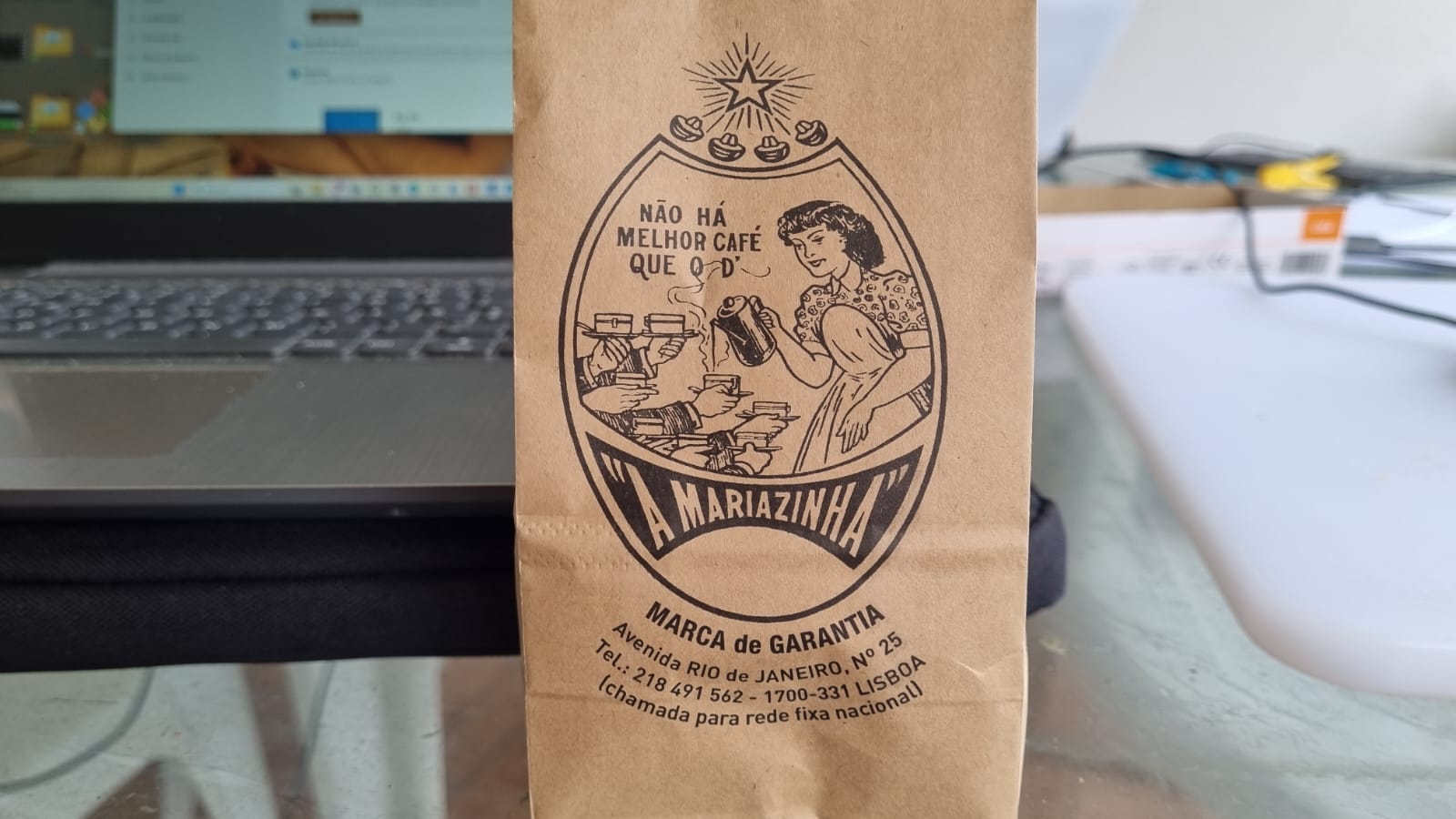
You would walk to the shop, the silver coins clinking in your hand, tasked with bringing back the “real stuff.” The shopkeeper would reach for the sack labeled “São Tomé,” and the mechanical hum of the grinder would release a fragrance so potent it felt like you could breathe in the island itself. By the time you got back to Lurdes, the paper bag was warm, oily, and intoxicating.
“A Mariazinha”: The Guardian of the Flame
If you want to step back into that 1970s memory today, there is only one destination: A Mariazinha, located on Avenida Rio de Janeiro in Lisbon.
In an era of generic pods and tasteless franchises, A Mariazinha stands as a temple to the traditional Portuguese torrefacção (roasting). It is one of the few places that has maintained a direct, spiritual link to the origins of the bean.
The Tradition: They understand that São Tomé coffee is a “mood.” It requires a specific roast to bring out the earthy, smoky undertones without burning the delicate oils.
The Experience: Stepping into the shop on Av. Rio de Janeiro is like stepping into your childhood. The wooden counters, the vintage scales, and, most importantly, the unmistakable scent of freshly roasted São Tomé beans. It is where the legacy of people like Lurdes lives on.
Why We Never Forget
People who know what is “good” aren’t being snobs; they are being faithful. Once your palate has been calibrated by the intensity of a São Tomé blend—a coffee that tastes of volcanic earth and sea salt—everything else feels like a shadow.
The difficulty of restoring those ruined plantations in the Gulf of Guinea is justified every time a bag is opened at A Mariazinha. It is a victory of culture over time, and of memory over the mundane.