HOW SPACE TIME GEOMETRY EMERGES FROM ENTANGLEMENT - 1)Entropy and Information Theory
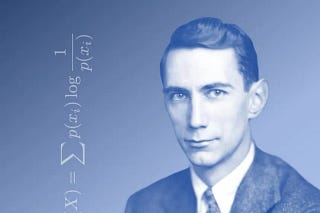
The relationship between entropy and information theory centers on the idea that entropy quantifies uncertainty while information functions to reduce that uncertainty. Claude Shannon defined high entropy as states of high unpredictability and low entropy as states of high predictability. While physicists apply this to microscopic arrangements and information theorists apply it to message possibilities, both disciplines share the core concept that entropy measures the number of existing possibilities. Consequently, information acts as "negative entropy" by collapsing these possibilities into a specific outcome. This fundamental connection explains diverse fields ranging from data compression and cryptography to human learning, where the act of gaining knowledge effectively reduces system disorder. Ultimately, entropy identifies how many possibilities exist, whereas information provides the clarification required to determine which one is real.
Absolutely—and you don’t need to be a physicist or have a background in information systems to understand the core idea. The connection between entropy and information theory is actually very intuitive once you strip away the math.
1. The big idea (in one sentence)
Entropy measures uncertainty.
Information is what reduces that uncertainty.
That’s the bridge between physics and information theory.
2. Entropy in everyday terms
Forget physics for a moment.
Imagine you receive a message:
Message A: “Tomorrow the sun will rise.”
Message B: “Tomorrow a coin flip will land heads.”
Message A tells you almost nothing new—you already expected it.
Message B tells you something uncertain.
👉 The more unpredictable a message is, the more information it carries.
That “unpredictability” is what information theory calls entropy.
3. Entropy in information theory (Claude Shannon)
In the 1940s, Claude Shannon asked:
How much information is contained in a message?
His answer:
If outcomes are very predictable → low entropy
If outcomes are very unpredictable → high entropy
Examples:
A fair coin toss → high entropy (50/50)
A rigged coin that always lands heads → zero entropy
So in information theory:
Entropy = average uncertainty in a message source
4. Why physicists also use the word “entropy”
In physics, entropy also measures uncertainty—but about microscopic states.
Example:
A tidy deck of cards → low entropy (few possible arrangements)
A shuffled deck → high entropy (many possible arrangements)
Physicists say:
Higher entropy = more possible ways the system could be arranged
Information theorists say:
Higher entropy = more possible messages could be sent
Same idea. Different context.
5. The deep connection (the “aha” moment)
Here’s the key link:
Information is “negative entropy.”
When you learn something:
You rule out many possibilities
The system becomes more ordered from your point of view
Example:
Before opening an email → many possible contents (high entropy)
After reading it → uncertainty collapses (entropy reduced)
So:
Learning = entropy reduction
Forgetting or noise = entropy increase
6. A simple analogy
Think of entropy as messiness in possibilities.
A library with books thrown everywhere → high entropy
Books sorted and labeled → low entropy
Information is the labels that let you find the right book.
7. Why this matters (even outside science)
This idea shows up everywhere:
Data compression: predictable data compresses better (low entropy)
Cryptography: good passwords have high entropy
Communication: noise increases entropy, error correction adds information
Learning: education reduces uncertainty about the world
8. One sentence to remember
If you remember only one thing, remember this:
Entropy measures how many possibilities there are.
Information is what tells you which one is real.
If you’d like, I can explain this with:
zero math
a visual analogy
or a short historical story about Shannon and physics