Fertile Crescent and Mediterranean Cultures - Chapter 1
The history of Neolithic Near Eastern civilizations progressed through distinct cultural phases characterized by evolving settlement patterns and technological advancements. The Mureybetian culture (10,200–8,000 BCE) and the Sultanian culture (9,500–8,000 BCE) marked the transition from mobile foraging to sedentary life, with the latter building the monumental Tower of Jericho. By the Pre-Pottery Neolithic B (8,800–6,500 BCE), societies adopted rectangular houses and ritualistic practices like plastered skulls. Subsequent cultures including the Halaf (6,100–5,100 BCE), known for fine pottery, and the Samarra (5,500–4,800 BCE), which pioneered complex irrigation, set the stage for the Ubaid period (6,500–3,800 BCE). This culminated in the rise of Eridu, the legendary first city associated with the god Enki and the Sumerian King List, which begins with the rulers Alulim and Alalgar.
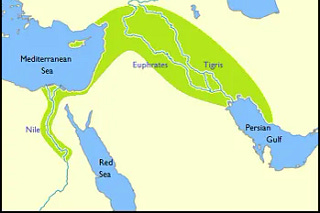
10.500 - 8.200 BCE - The Mureybetian (Northern Syria/Euphrates)
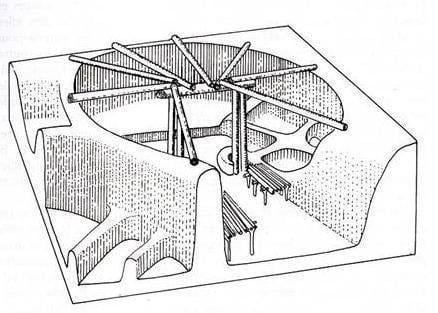
Centered on sites like Mureybet, Jerf el-Ahmar, and Tell ‘Abr 3, this culture exhibited significant advances in round architecture, specialized tools, and early plant cultivation before domestication was widespread.
Key Aspects of the Mureybetian Culture:
Location and Timeline: It developed in the middle Euphrates valley of northern Syria, specifically during the PPNA period, with occupation spanning roughly 10,200 to 8000 BC.
Eponymous Site: The culture is named after Mureybet (Tell Mureybet), which was excavated extensively before being submerged under Lake Assad.
Transition to Agriculture: Mureybetian communities were early adopters of plant cultivation (particularly cereals) while maintaining a high reliance on hunting, acting as a precursor to fully domesticated Neolithic farming.
Architecture: Early villages featured curvilinear (round) structures, which later evolved into rectangular forms in the final stages of occupation, marking a shift in social organization and building techniques.
Cultural Traits: The culture is known for its sophisticated chipped stone tool industries, bone tools, and the development of artistic or ceremonial items, such as carved limestone slabs.
Key Mureybetian Sites:
Mureybet: The main site showing a clear transition from late Natufian hunter-gatherers to early sedentary farmers.
Jerf el-Ahmar: A significant site showcasing, among other things, the shift from circular to rectangular buildings.
Tell ‘Abr 3: Another crucial, contemporary site along the Euphrates demonstrating similar cultural practices.
The Mureybetian culture played a crucial role in the development of the Neolithization process in the Near East, illustrating that advanced, permanent, or semi-permanent settlements existed in northern Syria prior to the widespread use of domesticated crops.
9.500 - 8.000 BCE - The Sultanian (Southern Levant)
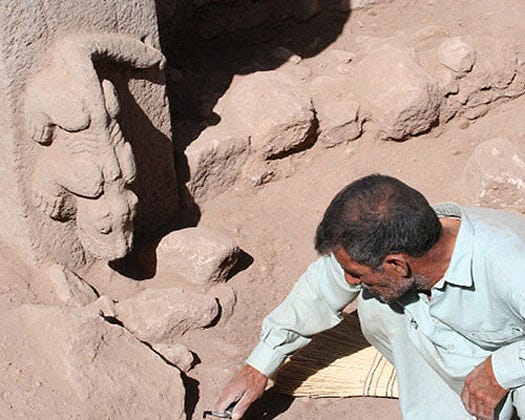
It represents the definitive transition from mobile foraging to settled village life.
The name comes from Tell es-Sultan, the site of ancient Jericho, where this culture was first identified by archaeologist Kathleen Kenyon.
Core Features
The Tower of Jericho: The most famous Sultanian achievement is a massive stone tower (8.5 meters high) with an internal staircase. It is one of the earliest examples of monumental architecture in the world.
Round Architecture: People lived in circular or oval houses made of sun-dried mud bricks (often shaped like loaves) on stone foundations.
Stone Tools (Lithics): The Sultanian is defined by its bifacial tools, such as polished stone axes and adzes, used for clearing timber or tilling soil. It also features the “El-Khiam” point—a specific type of notched arrowhead.
Early Farming: While hunting gazelle remained common, this period saw the systematic cultivation of “founder crops” like emmer wheat, barley, and lentils.
Key Sultanian Sites
Tell es-Sultan (Jericho): The largest and most complex site, featuring the famous tower and walls.
Netiv HaGdud: A well-preserved village in the Jordan Valley providing evidence of early cereal cultivation.
Gesher: A site crucial for understanding the transition in flint tool technology.
Hatoula: Located on the western slopes of the Judean hills, showing the geographic reach of the culture.
The Sultanian ended around 8,000 BCE as it evolved into the Pre-Pottery Neolithic B (PPNB), which introduced rectangular houses and full animal domestication.
8.800 - 6.500 BCE - Pre-Pottery Neolithic B (PPNB)
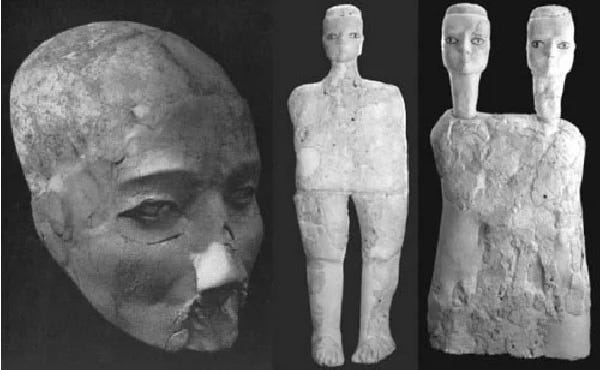
This is the “main” culture of the Fertile Crescent during this window (approx. 8800–6500 BCE).
The Shift to Squares: This is when humans famously stopped living in round houses (like the earlier Natufians) and started building rectangular mud-brick houses. This allowed houses to be built right next to each other, creating the first dense “neighborhoods.”
The Plaster Obsession: They are famous for burnished lime plaster floors, which were often stained red or white and polished until they shone.
Ancestor Worship: They practiced a unique ritual of “plastered skulls.” They would exhume the heads of the dead, cover them in plaster to recreate facial features, and use shells for eyes. These were kept inside the homes.
6500 – 3800 BCE - The Ubaid Culture
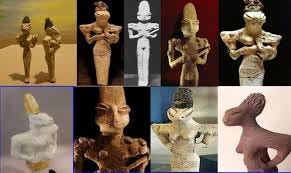
Originating on the alluvial plains of southern Iraq, it eventually spread northward to the Mediterranean and southward along the Persian Gulf coast.
Key Characteristics
Settlement and Architecture: The Ubaid people moved from small hamlets to large, unwalled village settlements. They introduced rectangular mud-brick houses with multiple rooms and built the first public temples in Mesopotamia, notably at sites like Eridu.
Agriculture and Technology: They pioneered large-scale irrigation systems, which allowed for surplus food production and population growth. Other technological advances included the early use of the wheel and the beginning of the Copper Age (Chalcolithic).
Distinctive Art: The culture is famous for its monochrome painted pottery decorated with geometric designs. Archaeologists have also found unique baked clay figurines, often female, featuring slender bodies and distinctive “lizard-like” heads.
Social Structure: Early Ubaid society was relatively egalitarian, but over time, it became more stratified. An elite class of chieftains or priests likely emerged to manage irrigation and communal labor.
The Metropolitan Museum of Art +10
Important Archaeological Sites
Tell al-Ubaid: The “type site” near ancient Ur where the culture was first identified.
Eridu: Often cited as the oldest Ubaid settlement, featuring a long sequence of superimposed temples that grew in complexity over centuries.
Tepe Gawra: A key site in northern Iraq that demonstrates how Ubaid culture spread and influenced northern regions.
‘Ain Ghazal & Bahra 1: Sites providing evidence of Ubaid influence and trade as far as the Arabian Peninsula.
6100 – 5100 BCE - The Halaf Culture
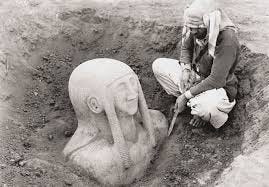
A prehistoric Neolithic civilization that flourished in northern Mesopotamia, Syria, and southeastern Turkey between approximately 6100 BC and 5100 BC, named after the type site of Tell Halaf in northeastern Syria.
This society is best known for its exceptionally fine, polychrome painted pottery, featuring intricate geometric and zoomorphic designs in black, red, and white on a buff background, which was widely traded across the region. Tell Arpachiyah in Iraq is considered the most important site for the Halaf tradition, producing the finest examples of this ceramic ware, while other key sites include Tell Sabi Abyad, Yarim Tepe, and Tepe Gawra.
Economy and Settlement: The Halaf people practiced dry farming (rain-fed agriculture) of emmer wheat, barley, and flax, alongside herding cattle, sheep, and goats, living in villages that featured distinctive circular tholoi (domed structures) alongside rectangular houses.
Social Structure: Early Halaf communities appear to have been egalitarian with little evidence of rigid social hierarchy, though the culture saw the earliest appearance of stamp seals in the Near East, suggesting the development of concepts regarding personal property and administrative control.
Origins and Decline: Recent archaeology indicates the culture developed indigenously from local Neolithic traditions in northern Syria rather than through foreign migration, and it eventually transitioned into the Halaf-Ubaid Transitional period (c. 5400–5000 BC) before being absorbed by the Ubaid culture.
5.500 - 4.800 BCE - Samarra Culture
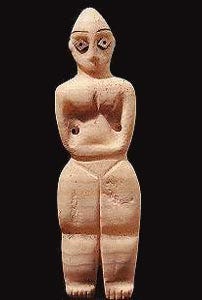
The Samarra culture was a significant Neolithic archaeological culture in northern and central Mesopotamia, flourishing roughly between 5500 and 4800 BCE. It is widely regarded as a pivotal precursor to the Ubaid period and, eventually, the Sumerian civilization.
Key Characteristics
1. Pioneering Irrigation
The Samarrans were among the first people to move into more arid regions of Mesopotamia where rainfall alone was insufficient for crops. They developed early irrigation techniques, allowing them to cultivate flax, emmer wheat, and barley. This shift represented a major technological leap, as it required organized communal labor and led to more permanent, prosperous settlements.
2. Sophisticated Architecture
Samarran architecture introduced several features that became standard in later Mesopotamian building styles:
T-Shaped Houses: They built large, multi-roomed houses, often in a T-shape or “tripartite” plan.
Mud-Brick Construction: They used standardized, cigar-shaped mud bricks.
Buttresses and Niches: External walls often featured buttresses, which served both as structural support for roofs and as decorative elements.
3. Distinctive Pottery (Samarra Ware)
Their pottery is some of the most recognizable of the era. It is characterized by:
Design: Intricate geometric patterns and stylized figures of humans (such as “dancing ladies” with streaming hair) and animals like scorpions, birds, and fish.
Manufacturing: The use of a slow wheel or “tournette,” which allowed for more uniform shapes.
Social Markers: Some pottery bears “potter’s marks,” suggesting specialized artisans and perhaps a level of commercial trade between settlements.
4. Social Structure and Burial
Evidence from sites like Tell es-Sawwan suggests a highly organized society. Excavations have revealed:
Fortified Villages: Some settlements were surrounded by ditches or walls, indicating a need for defense.
Burial Goods: Graves often contained alabaster or marble female figurines, turquoise beads, and finely crafted stone vessels, pointing to social stratification and specific religious or ideological beliefs.
Major Archaeological Sites
Samarra: The type site where the culture was first identified.
Tell es-Sawwan: Provided extensive evidence of their irrigation systems and architecture.
Choga Mami: A site near the Iranian border that shows clear evidence of Samarran irrigation channels.
5.400 - 4.700 BCE - ERIDU “First” City (c. 5400 BCE), (Ubaid 1)
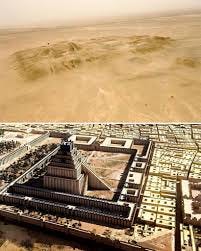
Eridu (modern Abu Shahrein, Iraq) was founded during the Ubaid period. While older settlements like Jericho exist, Eridu is considered the first “city” because of its complexity: it had a specialized priesthood, a centralized economy, and monumental architecture.
Location: It was originally situated near the mouth of the Euphrates on the Persian Gulf (though the shoreline has since receded 90 miles).
The Virgin Site: Excavations show it was built on a “virgin” sand dune, meaning it was a deliberate new creation rather than an evolved campsite.
2. The Abzu and the Temple of Enki
The city was the cult center for Enki (later Ea), the god of water, knowledge, and creation.
The Sequence of Temples: Archaeologists found 18 levels of temples built one on top of the other. It began as a tiny, one-room shrine in 5400 BCE and evolved over thousands of years into a massive Ziggurat.
The Abzu: Enki was believed to live in the Abzu, a freshwater ocean beneath the earth. This reflects Eridu’s early environment of freshwater marshes meeting the sea.