Fertile Crescent and Mediterranean Cultures - Chapter 2
The text outlines the mythological and archaeological transitions of early Mesopotamian civilization. It details the Sumerian King List, beginning with Alulim, the legendary first king of Eridu, who ruled for a mythical 28,800 years alongside the sage Adapa. His successor, Alalngar, ruled for 36,000 years with the sage Uanduga, cementing early dynastic continuity before power shifted to the metalworking hub of Bad-tibira. Strategically, the archaeological site of Tell Zeidan bridges the gap between early Neolithic villages and the Ubaid period, providing physical evidence of administration, trade, and industrial copper smelting. This evolution culminated in Uruk, the first true historic metropolis, famous for the Epic of Gilgamesh, a state-controlled economy, and the invention of cuneiform writing. Underpinning this urban rise was the Ubaid period, which pioneered advanced irrigation, tripartite architecture, mass-produced pottery, and the social stratification that established the first ruling classes.
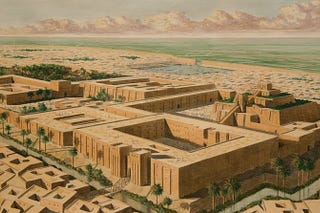
The First King of the First City
1. Alulim
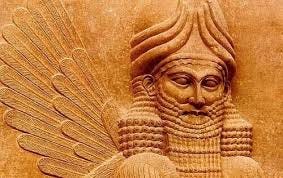
Alulim is the first entry on the Sumerian King List. His reign marks the transition from the rule of gods to the rule of men (or semi-divine men).
The Descent: The King List begins with the famous line: “After the kingship descended from heaven, the kingship was in Eridu. In Eridu, Alulim became king.”
Location: He ruled from Eridu, which we discussed as the oldest city in the south. This cements his status as the foundational figure of Sumerian civilization.
2. The Impossible Timeline
According to the ancient tablets (like the Weld-Blundell Prism), Alulim’s reign was not measured in years as we know them, but in Sars (units of 3,600 years).
Duration: He is credited with ruling for 28,800 years (8 Sars).
The Antediluvian Period: He is the first of the eight “Antediluvian” (pre-flood) kings. These kings had massive lifespans that gradually shortened after the Great Flood, a pattern very similar to the patriarchs in the Hebrew Bible.
3. The Sage and the King (Alulim and Adapa)
In Mesopotamian myth, a king never ruled alone. He was always paired with an Abgal (or Apkallu), a semi-divine sage who rose from the sea to teach humanity civilization.
Alulim’s advisor was Adapa (also known as Uanna or Oannes).
Adapa was the priest of Enki who allegedly brought the “Me” (the blueprints of civilization) to Eridu. While Alulim provided the political power, Adapa provided the divine wisdom.
4. Etymology: “The Stag”
The name Alulim (written in cuneiform as $A_2-lu-lim$) has a fascinating literal meaning:
It translates to “Seed of the Red Deer” or “Horn of the Red Deer.” * Symbolism: Scholars suggest this refers to a “steward” or “shepherd” role. In the earliest days of Sumerian culture, the “Stag” was a symbol of virility and leadership. It may also hint at a time when humans were seen as transitioning from an animal-like state to a civilized one.
5. Modern Historical Perspective
Is he real?
Archaeology: There is no contemporary physical evidence (inscriptions from his own time) of a King Alulim. He is considered a legendary or mythological figure.
The “Dynasty” Theory: Some historians suggest “Alulim” wasn’t one man, but a title or a representation of an entire dynasty or an era of Eridu’s dominance that lasted for centuries.
The Insect Connection: Interestingly, in later Neo-Babylonian incantations, Alulim was sometimes invoked as a “creator of insects” or a protector against field pests—a strange evolution for the world’s first king, perhaps linking him back to the very earth and fertility of the first farms.
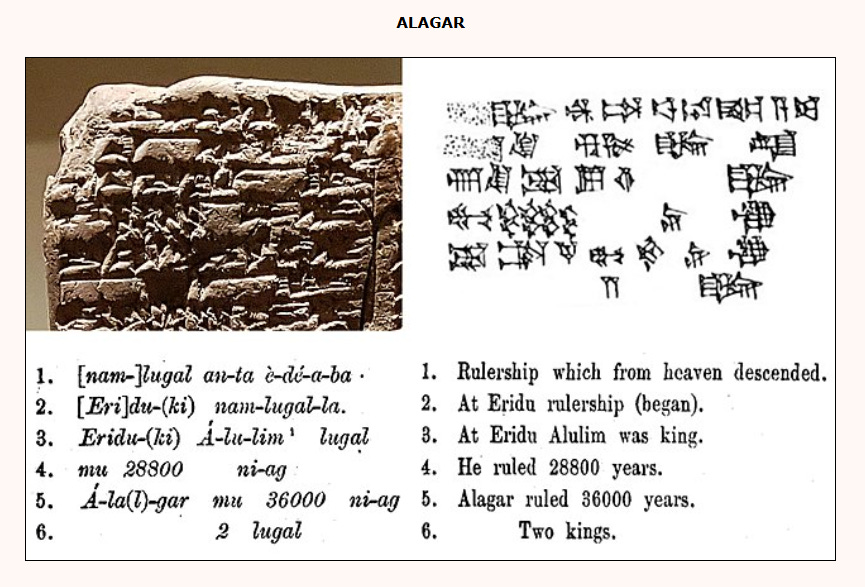
Alalngar (often written as Alalgar) is the second name on the Sumerian King List. He is the direct successor to Alulim and the only other king of Eridu before the “capital” of Sumer moved to a different city.
If Alulim is the foundational “Adam” figure of the monarchy, Alalngar represents the consolidation of that power.
1. The Reign in Eridu
Following the death (or departure) of Alulim, Alalngar took the throne. According to the King List:
Duration: He is credited with a reign of 36,000 years (10 Sars).
The Eridu Dynasty: Together with Alulim, Alalngar makes up the entirety of the First Dynasty of Eridu. After his reign, the King List states that “Eridu fell and the kingship was taken to Bad-tibira.”
2. Meaning of the Name
The name Alalngar is somewhat more mysterious than Alulim’s, but linguistic analysis offers two primary interpretations:
“The Puddler of Clay”: Some scholars link the name to the Sumerian words for clay or mud-working ($gar$). This would be highly symbolic, as the Ubaid period was the era when the first great mud-brick temples and city walls were constructed.
“The Producer of Abundance”: Another interpretation links the name to agricultural fertility, suggesting his role was seen as a provider for the early city-dwellers.
3. The Second Sage (Uanduga)
Just as Alulim was paired with the sage Adapa, Alalngar was said to be advised by the second of the seven Apkallu (sages), named Uanduga.
These sages were believed to be fish-men who emerged from the Abzu (the freshwater abyss).
Uanduga was credited with bringing “comprehensive intelligence” to the people, specifically teaching them how to organize the laws and social structures that Alulim had established.
4. Historical Context: The Shift to Bad-tibira
The end of Alalngar’s reign marks a major turning point in the mythological history of Mesopotamia.
When Alalngar’s rule ended, the center of power shifted to Bad-tibira (meaning “Wall of the Metalworkers”).
This shift is significant because it mirrors the archaeological reality of the time: the transition from the simple farming of the early Ubaid to the Chalcolithic (Copper Age), where metalworking became a primary driver of wealth and power.
5. Summary of the First Two Kings
By the end of Alalngar’s 36,000-year reign, the “mythic foundation” of the world was complete:
Alulim: Established the concept of kingship and the city.
Alalngar: Established the continuity of kingship and the expansion of industry/infrastructure.
After these two, the “Kingship” was no longer tied to a single spot; it became a mobile force that could be lost and won, setting the stage for the thousands of years of Mesopotamian warfare and politics that followed.
Bad-tibira: The City of the Metalworkers
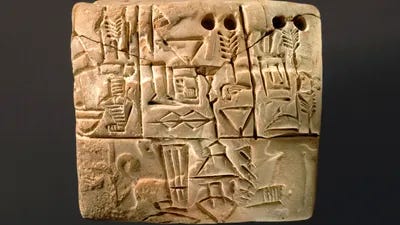
If Eridu was the city of the “Deep Water” and religious origins, Bad-tibira (modern Tell al-Madineh) was the city of industry. Its name literally translates from Sumerian as “Wall of the Metalworkers” ($Bad$ = Wall, $Tibira$ = Copper/Metalworker).
1. The Second Capital of the World
According to the Sumerian King List, after the dynasty at Eridu ended with Alalngar, “the kingship was taken to Bad-tibira.” This represents a fundamental shift in human history: the move from the Ubaid-era focus on irrigation and pottery toward the Chalcolithic (Copper Age).
2. The Metalwork Revolution
While Eridu is famous for its temples, Bad-tibira was likely a center for the early processing of ores brought down from the Zagros Mountains.
The “Wall”: The fact that the city’s name begins with “Wall” suggests it was one of the first settlements to require significant physical defenses, perhaps to protect the valuable copper and gold being processed within.
Technological Hub: In myth, this is where the tools for war and agriculture were perfected.
3. Connection to Inanna and Dumuzid
Bad-tibira held a unique place in the hearts of the Sumerians because it was the cult center for Dumuzid the Shepherd (the lover of the goddess Inanna).
Three of the pre-flood kings belonged to Bad-tibira, including En-men-lu-ana, who allegedly ruled for 43,200 years—the longest reign of any king in the list.
The city was seen as a bridge between the “Shepherds” (nomadic livestock herders) and the “Tibira” (urban metalworkers).
Uanduga: The Sage of Intelligence
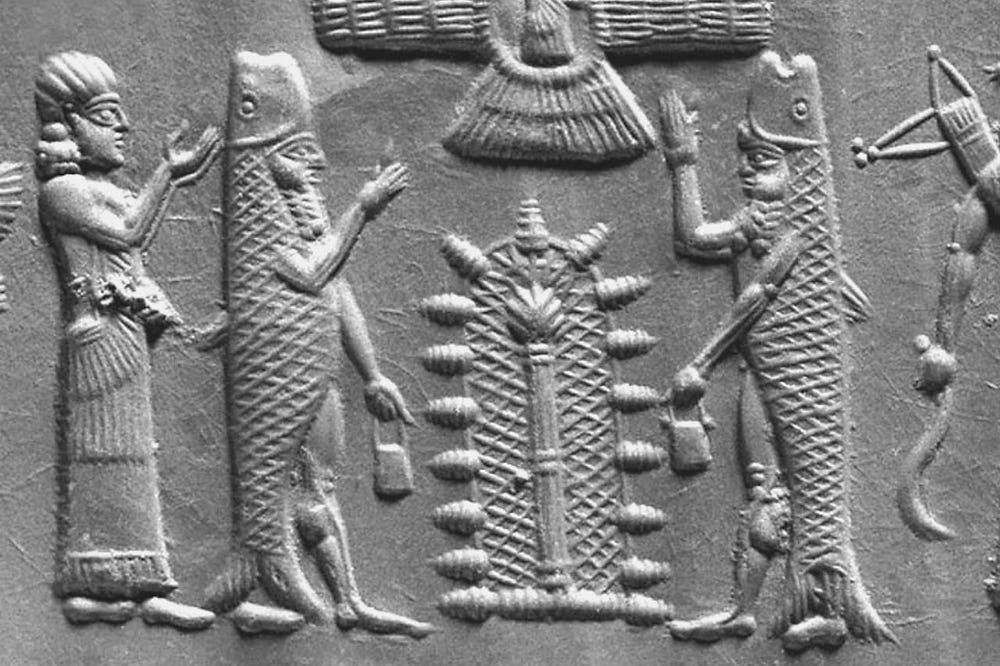
Uanduga was the second of the seven Apkallu (sages). If the first sage, Adapa, gave humans the “soul” of civilization (rituals and language), Uanduga gave them the “brain” (technical and social organization).
1. The Form of the Sage
Like his predecessor, Uanduga was depicted as an Anthromorphic Fish-Man. In Mesopotamian art, these beings are shown wearing a cloak made of a fish’s body, with the fish’s head resting on top of their own human head. This symbolized their origin in the Abzu, the freshwater realm of the god Enki.
2. The “Bringer of Light”
His name, Uanduga, translates roughly to “The one who possesses good light” or “Whose word is good.” This doesn’t refer to physical light, but to enlightenment and clarity.
The Role: He was the counselor to King Alalngar.
The Gift: While Adapa taught the Me (divine laws), Uanduga is credited with teaching the practical application of those laws—specifically how to organize a city’s hierarchy, how to record transactions, and how to maintain the irrigation systems that kept the desert fertile.
3. The Seven Sages and Civilization
Uanduga belongs to a tradition where civilization was not “invented” by humans, but “downloaded” from the gods through these intermediaries.
Protection: Figures of Uanduga and the other Apkallu were often buried in the foundations of houses and palaces as protective charms to ward off demons and chaos ($Lama$).
The Knowledge Transfer: By the time Uanduga’s service to Alalngar ended, the Sumerians believed that humanity finally had all the tools necessary to survive without the direct, constant supervision of the gods.
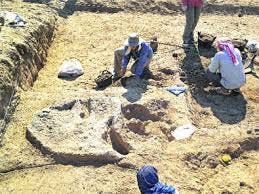
Tell Zeidan is one of the most critical archaeological sites for understanding the exact transition you are tracing: the gap between the early Neolithic (8000 BCE) and the first “kings” of the Ubaid period.
Located in northern Syria at the junction of the Euphrates and Balikh rivers, it was excavated primarily by Gil Stein (University of Chicago). It is often called the “Sister City” to Eridu.
1. The Timeline: Solving the “8.000 BCE” Puzzle
While Eridu’s earliest layers start around 5400 BCE, Tell Zeidan provides a much longer, continuous sequence.
The Halaf Foundation: The site was occupied as early as 6000–5800 BCE (the Halaf period).
The Ubaid Expansion: It shows the exact moment when the “Ubaid” culture from the south (the culture of Eridu) moved north and merged with the local Halaf people.
The Gap: While it doesn’t quite reach 8000 BCE (which remains the domain of the Pre-Pottery Neolithic in the Levant), it is one of the oldest stratified “proto-cities” in Mesopotamia.
2. Evidence of the “First Elites”
Tell Zeidan is famous because it contains the physical proof of what the Sumerian King List only hints at—the rise of a ruling class.
The Stamp Seal: Archaeologists found a red stone stamp seal with a deer motif. This is a “smoking gun” for administration. It means someone had the authority to “lock” a room or a container and say, “This belongs to the temple/state.”
Large-Scale Smelting: This site confirms the Bad-tibira concept. They found massive amounts of copper ore and slag, proving that by 5000 BCE, people were smelting copper on an industrial scale. This required a “boss” or a “king” to manage the labor and trade.
3. Architecture: The Tripartite House
Tell Zeidan reveals the evolution of the Tripartite House (a large central hall with smaller rooms on the side).
This is the exact architectural style that would eventually become the standard for Sumerian temples and palaces.
It shows that the “King” didn’t just appear out of nowhere; the concept of a “Great House” (E−gal in Sumerian, which later became the word for Palace) was physically being built at Zeidan 7,000 years ago.
4. Trade and Obsidian
Tell Zeidan was a “boom town” because of its location.
They found obsidian (volcanic glass) from Turkey and bitumen (tar) from hundreds of miles away.
This level of trade explains why someone like Alulim or Alalngar would eventually be needed—to protect the wealth and manage the “walls” of these trading hubs.
Why Tell Zeidan matters on our search:
If you are looking for the “bridge” between the 8000 BCE villages and the 5000 BCE “Kings of Eridu,” Tell Zeidan is that bridge. It is the physical site that proves:
Pottery was being mass-produced.
Copper was being smelted (the “Tibira” connection).
Administration (seals) was replacing tribal trust.
It is effectively the “real-world” version of the mythical transition from Eridu to Bad-tibira.
URUK
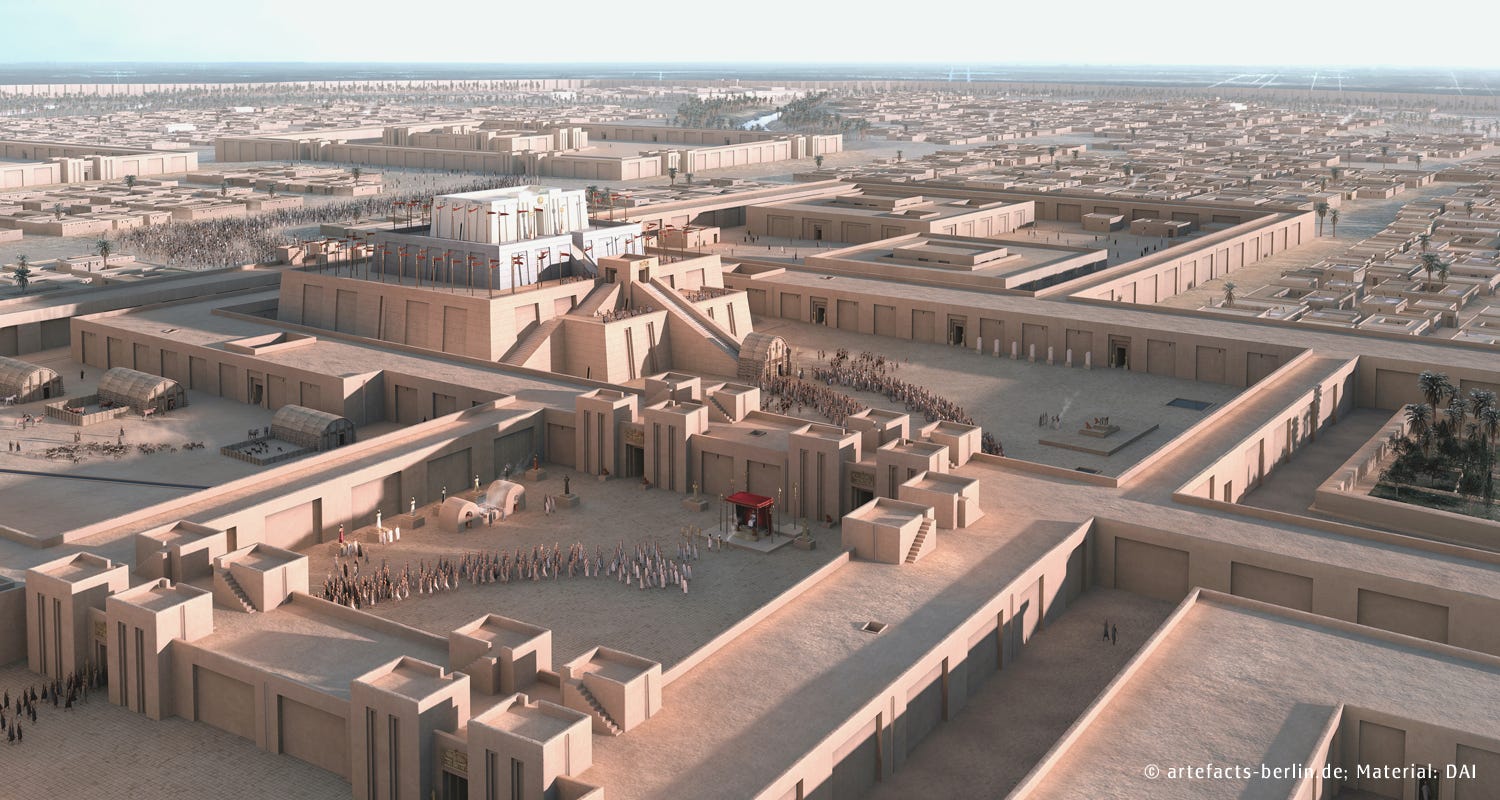
If Eridu was the “first” city in myth, Uruk (modern Warka, Iraq) was the first true metropolis in history. By approximately 3200 BCE, Uruk was the largest city in the world, with an estimated population of 50,000 to 80,000 people living within its six miles of defensive walls.
It is the site where humanity transitioned from “prehistory” into “history.”
1. The Invention of Writing (Cuneiform)
Uruk is the birthplace of writing. As the city grew, the temple administrators could no longer rely on memory to track grain, sheep, and beer.
Token System: It began with small clay tokens representing goods.
Proto-Cuneiform: By 3500–3200 BCE, these shapes were pressed into wet clay tablets. This evolved into the wedge-shaped script we call Cuneiform.
Bureaucracy: This wasn’t poetry at first; it was accounting. The first “vestiges” of Uruk are thousands of receipts and ledgers.
2. The Epic of Gilgamesh
Uruk is the setting for the world’s oldest epic. The historical Gilgamesh was likely a real king of Uruk around 2700 BCE.
The Walls of Uruk: In the epic, Gilgamesh is praised for building the massive burnt-brick walls of the city. Archaeologists have found these walls, which were nearly 10 kilometers long and reinforced with hundreds of towers.
The Eanna District: The epic describes the city as being divided into thirds: one-third city, one-third gardens, and one-third clay pits, along with the temple of Ishtar.
3. Revolutionary Architecture: The Beveled-Rim Bowl
If you want to see the most common “vestige” of Uruk, it is the Beveled-Rim Bowl.
These were mass-produced, crudely made clay bowls used to dish out standardized rations (grain or ale) to laborers.
They are the “disposable coffee cups” of the ancient world and prove that Uruk had a state-controlled economy where the government paid workers in food.
4. The Two Main Districts
Uruk was centered around two massive temple complexes that represented the city’s dual nature:
The Kullaba District (Anu District): Dedicated to Anu, the sky god. It features the “White Temple,” built atop a high terrace (a precursor to the Ziggurat) around 3100 BCE. It was coated in white gypsum plaster that would have gleamed for miles across the flat plains.
The Eanna District: Dedicated to Inanna (Ishtar), the goddess of love and war. This area was more “modern,” featuring the famous Cone Mosaic Courtyard, where thousands of colored clay cones were pressed into mud-brick walls to create geometric patterns.
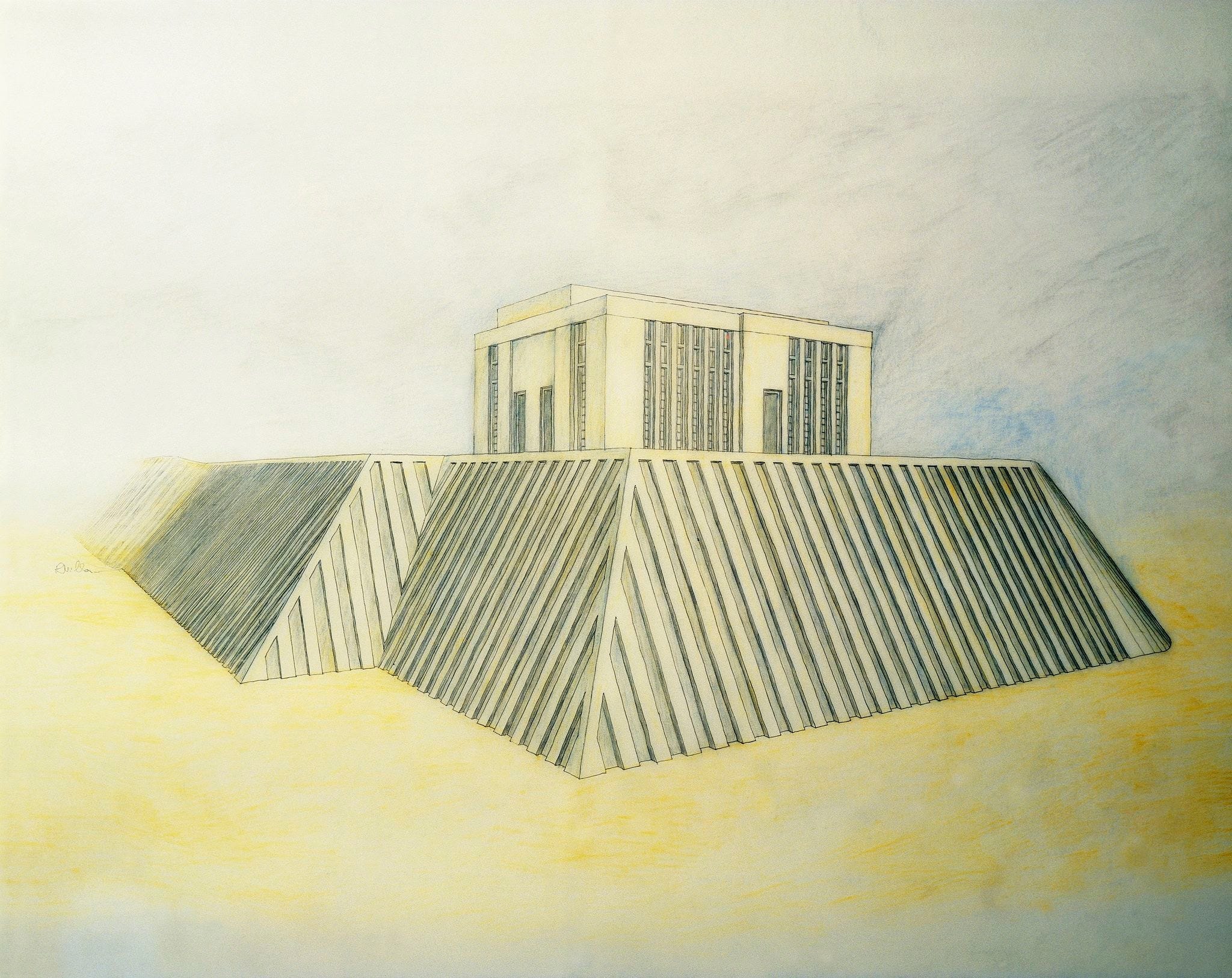
Reconstruction of White Temple at the Sanctuary of Anu, Uruk, Mesopotamia, drawing, Sumerian civilization
Why Uruk “Won”
While Eridu remained a holy site for millennia, Uruk became the engine of the “Uruk Expansion.” Uruk’s culture, pottery, and writing style spread all the way to Turkey and Iran. It was the first time a single city-state dominated the entire Near East through trade and colonization.
When you look at the ruins of Uruk today, you are looking at the literal blueprint for every city that has existed since—from the concept of a “downtown” to the existence of a tax man.
Ubaid period
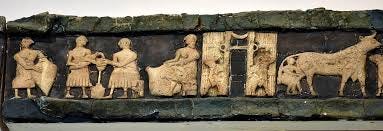
The Ubaid period (c. 6500–3800 BCE) is the foundation of Mesopotamian history. It is the bridge between the small, scattered Neolithic farming villages of 8000 BCE and the massive, literate city-states like Uruk.
If the Halaf were the artists and the Sumerians were the writers, the Ubaid were the engineers.
1. The Geographic Expansion
The Ubaid culture began in the extreme south of Mesopotamia (near Eridu) and eventually spread its influence all the way to the Mediterranean coast and the South Caucasus.
The South (Ubaid 0-2): Focused on the marshes. They lived in reed houses and developed the first sophisticated irrigation.
The North (Ubaid 3-4): They eventually replaced the Halaf culture in the north. This was not a military conquest, but a “cultural takeover”—people simply began adopting Ubaid pottery, tools, and house designs because they were more efficient.
2. Key Vestiges: The “Lizard-Headed” Figurines
One of the most famous and mysterious artifacts of the Ubaid period are the terra-cotta figurines found at sites like Ur and Eridu.
Appearance: These figures have slender human bodies but strange, elongated, reptilian heads with almond-shaped eyes.
Significance: Some scholars believe they represent a specific type of elite “beauty standard” (possibly involving cranial binding), while others see them as early protective spirits or deities.
3. The Tripartite House
The Ubaid people invented the Tripartite floor plan, which remained the standard for Mesopotamian architecture for 3,000 years.
The Layout: A large central T-shaped or rectangular hall with smaller rooms flanking both sides.
Function: This design allowed for a “public” central space for communal eating or ritual, while the side rooms were used for storage or sleeping. This is exactly what archaeologists found in the early layers of Tell Zeidan.
4. Economic Revolution: The Slow Wheel
The Ubaid moved away from the beautiful, hand-painted polychrome pottery of the Halaf and toward mass production.
The “Tournette”: They introduced the slow potter’s wheel.
The Look: Ubaid pottery is usually a buff or greenish color with simple, dark geometric designs (zig-zags, triangles, and dots). While less “artistic” than Halaf ware, it was produced in much higher quantities, indicating the start of a professional class of craftsmen.
5. Social Stratification
During the Ubaid, we see the first clear evidence of a hierarchy.
Cemeteries: Unlike earlier cultures that buried the dead under house floors, the Ubaid began using formal cemeteries outside the city.
Grave Goods: Some graves contained fine obsidian, copper, and specialized pottery, while others had very little. This proves that society was no longer “equal”—some families were becoming wealthier and more powerful than others. This is the era where the roles of Alulim and Alalngar would have first emerged.
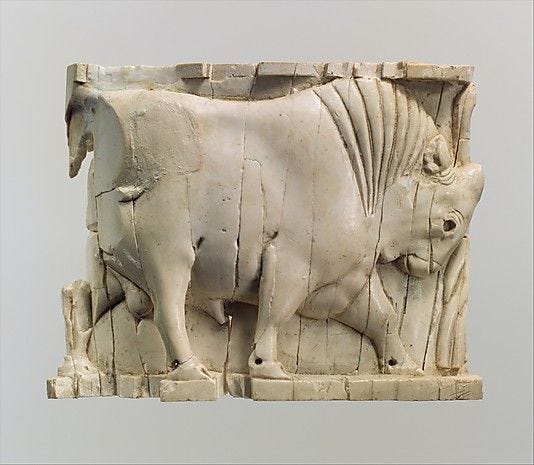
The “Ubaid Legacy”
Without the Ubaid, there is no Sumer. They provided the three things necessary for a “super-civilization”:
Surplus Food: Through canal irrigation.
Standardized Architecture: For temples and palaces.
Trade Networks: Reaching from the Persian Gulf to the Mediterranean.
By the time the Ubaid period ends in 3800 BCE, the stage is perfectly set for Uruk to invent writing and the wheel.
In Egypt
While Mesopotamia was developing the Ubaid and early Uruk cultures, Egypt was undergoing its own parallel evolution along the Nile. The Badarian and Naqada periods represent the “Pre-Dynastic” era—the foundation of everything we recognize as Ancient Egypt.
If Eridu was the “first city” of Sumer, these cultures were the “first kingdoms” of the Nile.
1. The Badari Culture (c. 4400–4000 BCE)
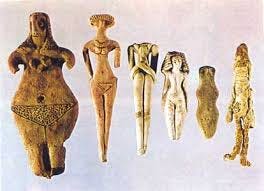
The Badarian is the earliest direct ancestor of Pharaonic Egypt. While the Ubaid were building T-shaped houses in Iraq, the Badarians were mastering the desert edge of Middle Egypt.
The Pottery: They produced “Black-topped” red ware. The pottery was extremely thin-walled and featured a “rippled” surface that has never been perfectly replicated since.
The First Glaze: They were the first to produce faience (glazed ceramic), a signature Egyptian craft for the next 4,000 years.
Cosmetics: This is where the Egyptian obsession with beauty begins. Archaeologists found stone palettes used to grind malachite (green eye paint), along with ivory combs and copper pins.
2. The Naqada Period (c. 4000–3000 BCE)
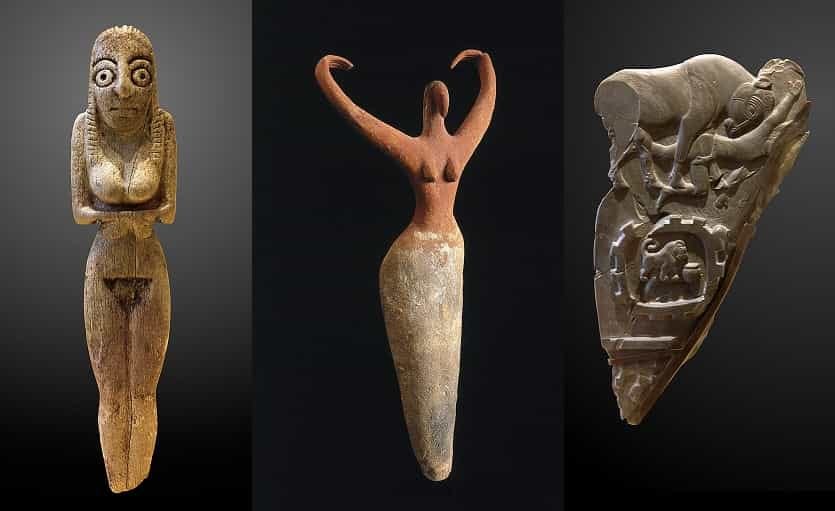
The Naqada period is divided into three phases (I, II, and III). It shows a rapid climb from small villages to a unified state.
Naqada I (Amratian): The Village Era
Social Status: We start seeing “Elite” burials. Unlike the egalitarian graves of 8000 BCE, some people were now buried with wealth, while others had nothing.
Art: Pottery began to feature white-painted designs of animals (hippos, gazelles) and hunters.
Naqada II (Gerzean): The Expansion
This is the era that matches the Uruk Expansion in Mesopotamia.
Trade with Sumer: We find Mesopotamian-style cylinder seals and “lapidary” (stone) techniques in Egypt at this time. There was clearly a “Mainline” trade route between the Euphrates and the Nile.
The Reed Boat: Artistic depictions shift from animals to large boats with many oars, signaling that the Nile had become a highway for trade and power.
Naqada III (Semainean): The Proto-Kingdoms
This is the “Dynasty 0” era, just before the first Pharaoh (Narmer/Menes) unified the land.
Hieroglyphs: The very first precursors to Egyptian writing appear on bone and ivory tags in Tomb U-j at Abydos.
The Scorpion King: Powerful local rulers began to consolidate territory. This matches the “King Alulim” phase of Mesopotamia—legendary leaders who turned tribes into a state.
3. Parallel Timelines: Egypt vs. Mesopotamia
By roughly 3500–3200 BCE, both regions hit a “civilization flashpoint” simultaneously:
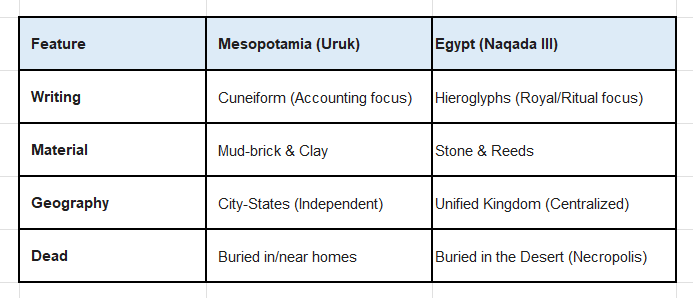
4. The “Vestiges” of 8000 BCE in Egypt
As asked earlier about 8000 BCE. In Egypt, this era is known as the Epipaleolithic.
Nabta Playa: Deep in the Western Desert, there is a “Stonehenge of Africa.” Around 7000–6000 BCE, nomadic cattle herders built an astronomical stone circle to track the summer solstice.
The Green Sahara: 8,000 years ago, the Sahara was a savannah with lakes and trees. The “vestiges” are often rock art of giraffes and swimmers found in what is now bone-dry desert.
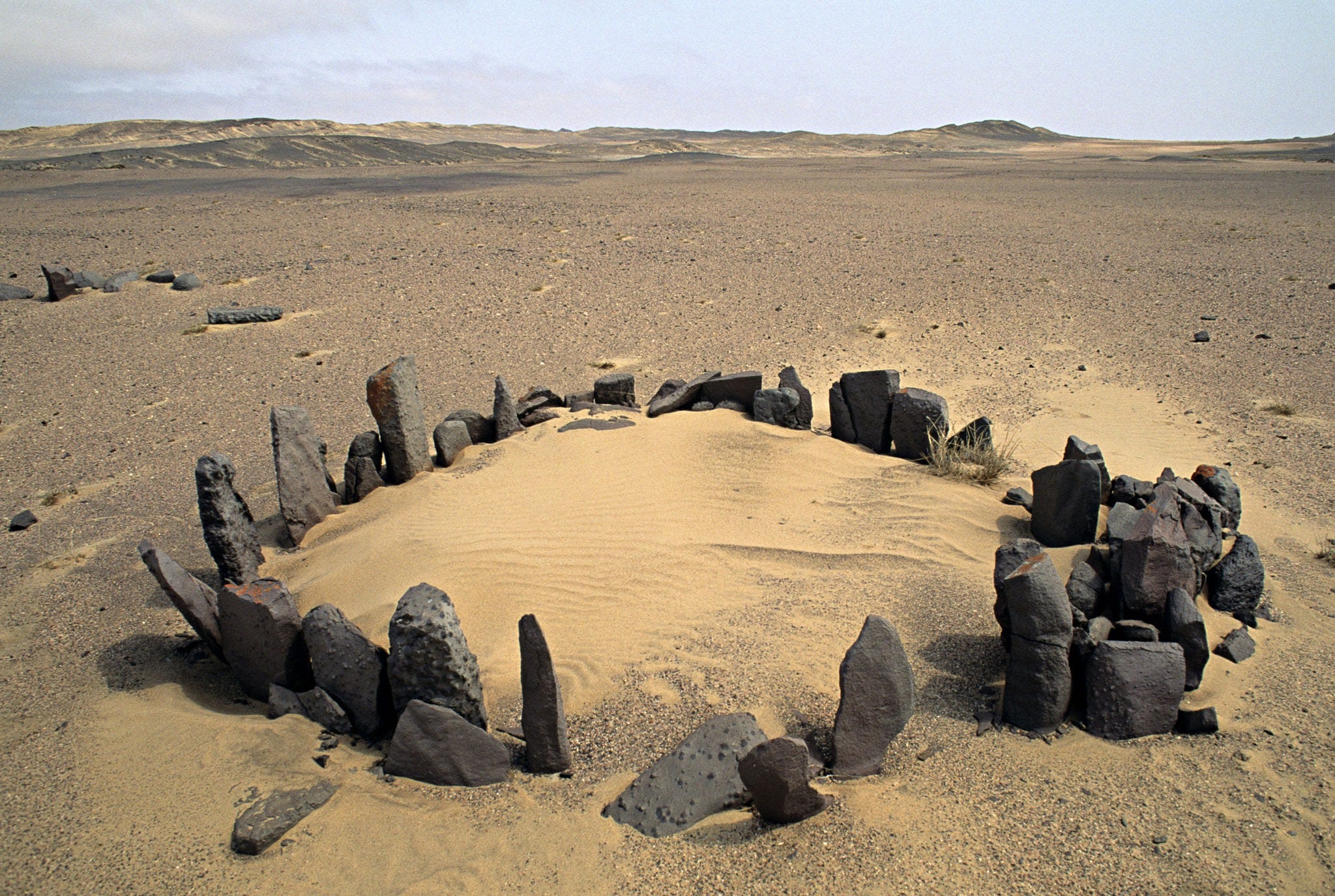
Stone Circles. Namib Desert. Namibia
Why it matters
While the Ubaid were mastering irrigation to turn a desert into a garden, the Badari and Naqada were adapting to a shrinking world as the Sahara dried up and pushed everyone toward the Nile. This “environmental squeeze” is exactly what forced both cultures to invent “Kingship” to manage limited resources.