Fertile Crescent and Mediterranean Cultures - Chapter 3
The transition to early writing marked a monumental shift, beginning as practical accounting in Mesopotamia with cuneiform and as royal propaganda in Egypt with hieroglyphs. These physical records captured ancient myths, including the Apkallu, the legendary seven sages depicted as fish-men who supposedly brought civilization and knowledge from the sea. The earliest literate culture, the Sumerians, referred to themselves as the Black-Headed People. While their unique, isolated language once suggested they might be foreign invaders, modern archaeogenetics reveals they were actually a continuous, local population blending Anatolian, Iranian, and Levantine hunter-gatherer roots. Closely genetically related to modern Marsh Arabs, this indigenous population received a massive cultural and technological upgrade—likely from a small, dominant group that introduced the Sumerian language and Apkallu myths—allowing them to build the first great urban civilization without replacing the local populace.
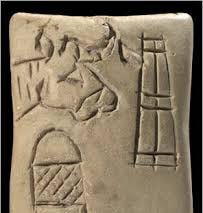
The transition from tokens and oral tradition to the first written records represents a monumental shift in human consciousness. In both Mesopotamia and Egypt, writing began not as literature, but as a practical tool for power and accounting.
1. The First Pictograms: Mesopotamia (c. 3500–3200 BCE)
In the city of Uruk, the first pictograms were born from the need to track temple assets. Before there were “letters,” there were “pictures of things.”
The Medium: Scribes used a sharpened reed (stylus) to draw into wet clay tablets.
The Content: These early signs were literal. A picture of a bull’s head meant “bull”; a bowl meant “food” or “rations”; a triangular shape with a slit meant “woman.”
The Evolution: To express abstract ideas, they combined pictograms. For example, the symbol for “mouth” combined with the symbol for “food” created the verb “to eat.”
The Shift to Cuneiform: Over centuries, these curved drawings became too slow to produce. Scribes began using the edge of the reed to make wedge-shaped impressions, turning the “pictures” into the abstract script we call Cuneiform.
2. The First Pictograms: Egypt (c. 3300–3100 BCE)
Egyptian pictograms (Hieroglyphs) emerged around the same time as Uruk’s script, but with a different primary purpose: Royal Propaganda and Ritual.
The Medium: While Mesopotamians used clay, Egyptians used bone, ivory tags, and stone (and later papyrus).
The Content: Early vestiges from Tomb U-j at Abydos show tiny bone tags with drawings of birds, mountains, and plants. These weren’t just labels for grain; they often represented the names of specific administrative districts or “estates” belonging to the King.
The Narmer Palette: This famous artifact (c. 3100 BCE) shows the transition from pure picture-telling to true writing. It uses rebuses—where a picture represents a sound. For example, a “catfish” ($Nar$) and a “chisel” ($Mer$) are placed together to write the name of the first King: Narmer.
3. The First Records of the Apkallu
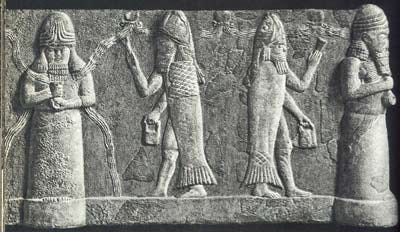
The Apkallu (the Seven Sages) represent the “memory” of the Ubaid and Samarra cultures being written down by the later literate civilizations.
The Earliest Physical Records (c. 2000–1000 BCE)
While the concept of the Apkallu dates back to the “foundation of the world” (the Ubaid period), the first time we see them explicitly named and described in text is later:
The Poem of Erra: This text explicitly mentions the “Seven Sages of the Abzu,” describing them as the ones who helped Enki build the foundations of the earth.
The Bit Meseri: This is a series of ritual incantations used to protect houses. It contains the most detailed list of the Seven Sages, pairing each one with a pre-flood king (like Adapa with Alulim and Uanduga with Alalngar).
Uruk List of Sages and Kings: A tablet found at Uruk (dating to the Seleucid period but copying much older traditions) provides a direct “Who’s Who” linking every legendary king to a specific Apkallu advisor.
The Visual Vestiges (The Fish-Men)
The earliest visual depictions of the Apkallu as “Fish-Men” appear in the Kassite period (c. 1500 BCE) and become iconic in the Neo-Assyrian palaces (c. 800 BCE).
The Iconography: They are shown with the skin of a giant fish draped over their backs, the fish’s head serving as a helmet. They usually carry a Banduddu (bucket) and a Mullilu (cone), which were used to sprinkle holy water to purify the King and the “Tree of Life.”
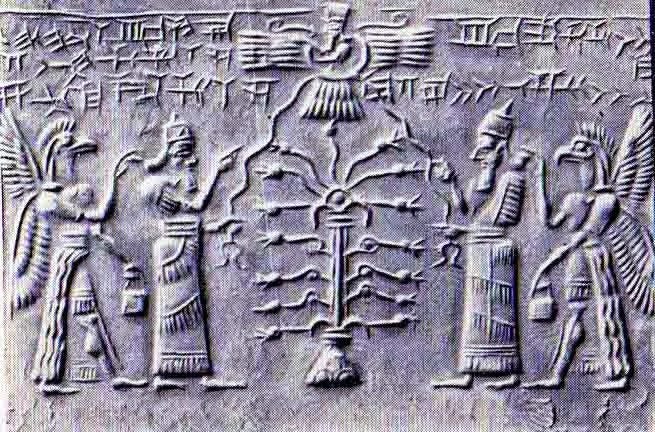
In both cases, these first records served the same purpose: they turned the "invisible" (thoughts, debts, and myths) into "visible" physical vestiges that could survive for 5,000 years.
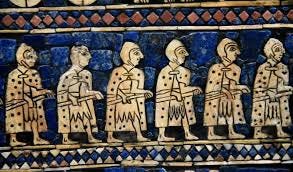
The term “Black-Headed People” (Sumerian: uˋg^−g^aˊ−sag^−gıˊg−ga) is the literal name the Sumerians used to refer to themselves. While we call their land “Sumer” (a name given to them by the later Akkadians), they called it Kengir and identified as the “Black-Headed ones.”
This identity is deeply rooted in the transition from the Ubaid to the Uruk periods you have been exploring.
1. The Meaning of the Name
In Sumerian, sag-giga translates to:
Sag: Head
Giga: Black
Why this name?
Historians and linguists offer three primary interpretations:
Physical Appearance: The most literal interpretation is that it referred to their black hair, distinguishing them from neighboring groups in the mountains or the desert.
Metaphorical Status: Some scholars argue it meant “the civilized ones” or “the subjects.” In their mythology, humans were created specifically to labor for the gods; “Black-Headed” may have been a collective term for “humanity” as a servant class to the divine.
The “Chosen” People: In the Epic of Gilgamesh and the Enuma Elish, the gods are said to have “created the black-headed people” and “assigned them to their places,” implying a settled, urban identity tied to the Mesopotamian soil.
2. The Great Migration Mystery
A long-standing debate in archaeology is the “Sumerian Problem.” Where did the Black-Headed people actually come from?
The Autochthonous Theory: Many modern archaeologists believe the Sumerians were simply the descendants of the Ubaid people (c. 5500 BCE) who lived in the marshes of Eridu. They didn’t “arrive”; they evolved.
The Migration Theory: Some older theories suggested they migrated from the east (the Zagros Mountains) or via the Persian Gulf around 4000 BCE, bringing their unique language—which is a Language Isolate (meaning it is related to no other known language on Earth)—with them.
3. The Religious Connection (The Apkallu)
The history of the Black-Headed people is inseparable from the Apkallu you asked about.
According to Sumerian tradition, the Black-Headed people were “wild” and “uncivilized” until Adapa and the other sages rose from the sea.
The sages taught them how to build cities, how to write, and how to farm. In their own eyes, their history didn’t begin with a king, but with Knowledge (Me) given to them by the god Enki.
4. The Social Structure
By the time of Uruk (c. 3200 BCE), the Black-Headed people had developed a rigid social hierarchy:
The En / Lugal: The “Big Man” or Priest-King (like Alulim or Gilgamesh).
The Priesthood: Managed the temples (Ziggurats) and the first writing systems.
The Bureaucracy: Scribes who tracked the grain and taxes.
The Commoners: Farmers, potters, and weavers who lived in the tripartite houses.
5. The End of the “Black-Headed” Identity
The Sumerian identity began to fade around 2000 BCE.
The Akkadian Empire: Sargon the Great conquered the Sumerian city-states. While the Akkadians adopted Sumerian writing and religion, they spoke a Semitic language.
The Language Death: By 1800 BCE, Sumerian was no longer a spoken language; it became a “dead” language used only by priests and scholars, much like Latin in the Middle Ages.
The Legacy: Even after they disappeared as a distinct ethnic group, the Babylonians and Assyrians continued to refer to the inhabitants of the region as “the black-headed people” in their royal inscriptions as a mark of respect for the ancient culture.
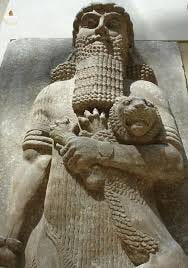
Summary: The Timeline of the Black-Headed People
6500–4000 BCE (Ubaid): The “Founding.” Living in marshes, developing irrigation.
4000–3100 BCE (Uruk): The “Urban Revolution.” Building the first true cities and inventing writing.
2900–2350 BCE (Early Dynastic): The “Heroic Age.” The time of legendary kings like Gilgamesh.
2350 BCE onwards: Assimilation into the Akkadian, Babylonian, and Assyrian empires.

The DNA banks (archaeogenetics) say about the “Black-Headed People” and their 10,000-year journey, the answer is a fascinating mix of continuity and complexity.
The latest data (2024–2026) from sites like Tell Zeidan and ancient Mesopotamian remains has rewritten the “migration” story.
1. The “Continuum” vs. The “Invasion”
For decades, people thought the Sumerians were “invaders.” The DNA now says No.
The Neolithic Continuum: Genetic studies of Pre-Pottery Neolithic (8000 BCE) and Pottery Neolithic (6000 BCE) remains show that the people of Mesopotamia were a stable, local “continuum.”
The Mixture: They were a blend of three ancient hunter-gatherer groups: Anatolian (West), Caucasus/Iranian (East), and Levantine (South).
The Verdict: The “Black-Headed People” didn’t arrive from somewhere else; they were the local population that had been in the Fertile Crescent since the end of the Ice Age.
2. The “Marsh Arab” Connection
One of the strongest links to the ancient Ubaid and Sumerian people is found in the modern Marsh Arabs (Ahwari) of Southern Iraq.
Y-DNA Haplogroup J1: This specific lineage is found in extremely high frequencies (over 80%) in the Marsh Arabs.
The Timeline: This lineage has been present in the region for over 10,000 years.
The Link: This suggests that the people living in the marshes today are the direct genetic descendants of the people who founded Eridu and followed kings like Alulim. They have lived in the same environment, in the same types of reed houses, for 7,000+ years.
3. The “Ghost” Ancestry
There is, however, a “No” in the DNA data as well.
The Language Mystery: While the DNA shows they were local, the Language (Sumerian) remains a complete isolate.
The Interpretation: This suggests that a small, culturally dominant group—perhaps the people who moved up from the now-submerged Persian Gulf—brought the Sumerian language and the Apkallu myths with them. They merged with the local Ubaid farmers, leaving a massive cultural mark but a very small “genetic footprint.”

The “Apkallu” Perspective
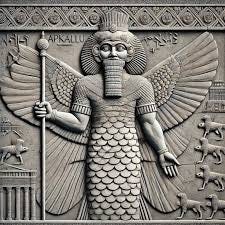
If the Sages (Apkallu) brought “knowledge” from the sea, the DNA suggests they brought ideas, not a new race. The “Black-Headed People” were the result of an ancient local population receiving a “technological upgrade” (irrigation, writing, and metalworking) that allowed them to explode into the first great civilization.