Fertile Crescent and Mediterranean Cultures - Chapter 7
The ancient city of Mari functioned as a crucial globalized customs gateway on the Euphrates, showcasing masterful urban engineering with its circular shape, defensive levees, and a 120 km canal. As a major logistics hub, Mari controlled massive north-south and east-west trade routes, distributing timber, silver, and metals across a network extending to the Mediterranean and the Iranian plateau. Its prominent Royal Palace of Zimri-Lim contained 20,000 cuneiform tablets, which were accidentally preserved when Hammurabi of Babylon burned the city in 1761 BCE. Concurrently, the Early Dynastic Period (2900–2334 BCE) marked a major transition from independent temple-cities to warring dynastic states led by military leaders (Lugals) rather than high priests. This 600-year era saw elite burials at Ur, intense border conflicts, and institutionalized religious validation at Nippur, before Sargon of Akkad unified the region into the world's first centralized empire.
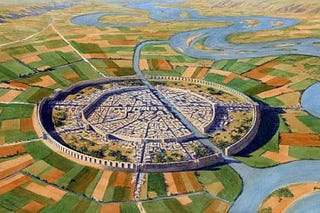
The city of Mari (Tell Hariri) is the ultimate proof that the “Black-Headed People” and their neighbors created the world’s first globalized economy. Situated on the middle Euphrates in modern-day Syria, Mari was a purpose-built “Customs House” city.
If Uruk was the heart of the system, Mari was the gate.
1. The Circular City (c. 2900–1760 BCE)
Mari was not a “natural” settlement that grew from a village. It was a masterpiece of urban engineering.
The Shape: The city was a perfect circle, nearly 2 km in diameter, protected by a massive levee to prevent flooding from the Euphrates.
The Canal: They dug a 120 km long canal (the Nahr Belit) to link the Euphrates to the Khabur river, allowing boats to bypass dangerous rapids.
The Population: At its peak, it housed approx. 20,000 to 30,000 citizens.
2. The Ceramic Evidence: “Far Away”
You noted that Mari’s ceramics were found far away. This is because Mari was the Silicon Valley of Logistics.
The North-South Axis: Mari controlled the flow of timber and silver from the Taurus Mountains (Turkey) and cedar from Lebanon down to the wood-starved cities of Sumer (Kish, Uruk, Ur).
The East-West Axis: It sat on the route for Tin (essential for bronze) coming from the East and Gold coming from Egypt/Levant.
The “Uruk Expansion” Vestiges: Mari-style pottery and cylinder seals have been found as far as the Mediterranean coast and deep into the Iranian plateau. This proves that by 2600 BCE, a merchant in Mari could “invoice” a shipment that would travel 1,500 miles.
3. The Palace of Zimri-Lim
The most spectacular vestige of Mari is the Royal Palace. It was so famous in antiquity that the King of Ugarit (on the coast) sent his son 600 miles just to see it.
Size: Over 300 rooms covering 6 acres.
The Archives: Archaeologists found 20,000 cuneiform tablets. These aren’t just myths; they are “emails”—letters between kings, reports from spies, and receipts for luxury goods.
The “Fish” Connection: The archives contain specific orders for the transport of salted fish from the Persian Gulf up to the Syrian desert, showing that the “Fish Myth” was backed by a massive commercial fishing industry.
4. The “Investiture” Mural
Inside the palace, a famous fresco was found: The Investiture of Zimri-Lim.
The Content: It shows the King receiving the “rod and ring” (symbols of power) from the goddess Ishtar.
The Apkallu Vestige: Flanking the scene are water-goddesses holding overflowing jars (the fresh waters of the Apsu). This proves that even in Syria (far from Eridu), the “Black-Headed People’s” belief in the divine water-origin of kingship was the standard.
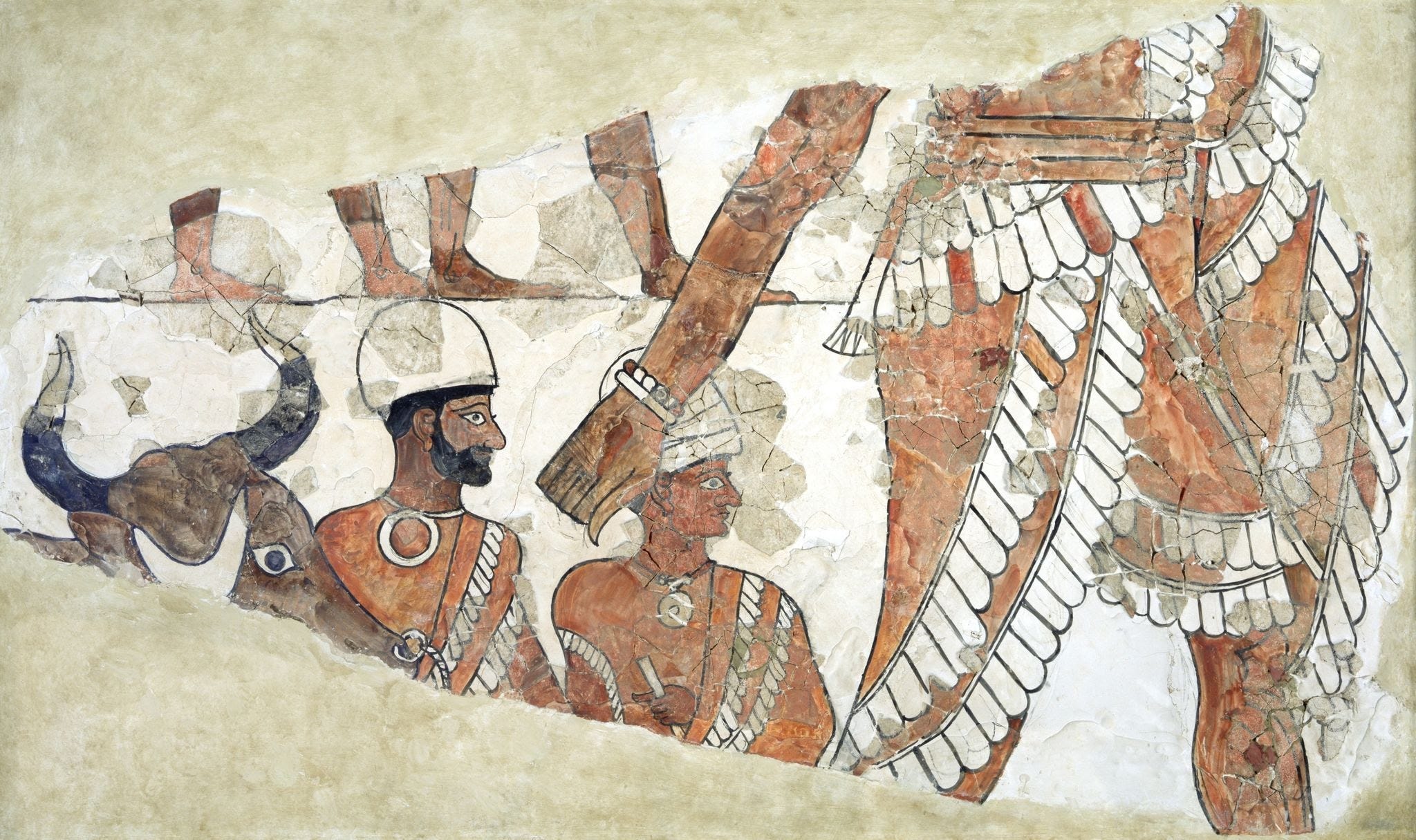
Louvre, Paris, France
Why Mari Fell
Mari’s success was its downfall. Because it controlled the “Tap” of the Euphrates, it was a constant target.
Sargon of Akkad (c. 2300 BCE): He destroyed the city to consolidate his empire.
Hammurabi of Babylon (1761 BCE): He finally burned the palace to the ground.
The Irony: By burning the palace, Hammurabi accidentally “baked” the 20,000 clay tablets in the archives, preserving them perfectly for us to find 3,800 years later.
Summary Table: Mari’s Global Reach
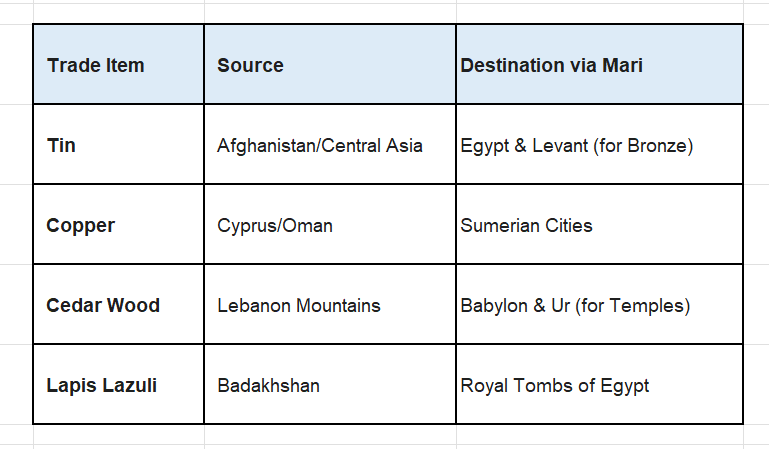
Mari proves that by 2600 BCE, "Human Knowledge" was no longer local. A discovery in the Edubba (school) of Nippur would be known in the palace of Mari within weeks.
The Early Dynastic (ED) Period is the era when the “Black-Headed People” transitioned from a collection of temple-cities into a landscape of warring dynastic states. This is the age of the Sumerian King List, the first massive social hierarchies, and the peak of the “Network State” architecture.
History divides this 600-year span into three stages (ED I, II, and III), each defined by a specific shift in technology and power.
1. Early Dynastic I (2900–2750 BCE): The Post-Flood Recovery
Following the end of the Uruk expansion, cities became more isolated and fortified.
The “Flood” Stratum: In cities like Shuruppak, Kish, and Ur, archaeologists found a literal layer of clean river silt. This corresponds to the mythological “Great Flood” that reset the kingship.
Architecture: The transition to Plano-Convex Bricks (curved on top) became universal. This allowed for faster building of rounded walls and defensive fortifications.
The Vestige: The “City Seals”—small impressions showing the symbols of multiple cities together—suggest a “League of Cities” that cooperated on religious matters even before they had a single king.
2. Early Dynastic II (2750–2600 BCE): The Age of Heroes
This is the era of the “legendary” kings whose names appear in the Epics.
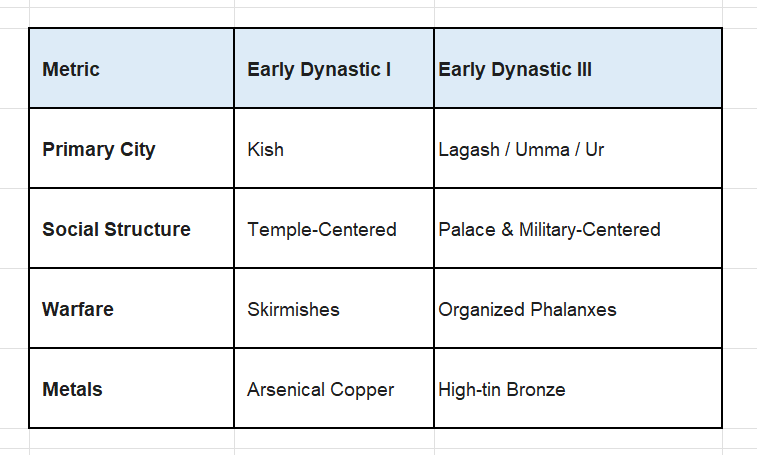
The Power Shift: The En (High Priest) was replaced by the Lugal (Big Man/Military Leader). The temple was no longer the only power; the Palace emerged as a rival institution.
Key Figures: Enmerkar, Lugalbanda, and Gilgamesh of Uruk; Enmebaragesi of Kish.
Writing: Cuneiform moved beyond mere accounting into Royal Inscriptions. We find the first “I am King X, I conquered Y” texts.
3. Early Dynastic III (2600–2334 BCE): The Golden Age of Wealth
This sub-period (divided into IIIa and IIIb) represents the peak of Sumerian art and the most intense warfare.
The Royal Tombs of Ur (ED IIIa): Queen Puabi’s tomb revealed staggering wealth—gold headdresses, lapis lazuli jewelry, and the “Great Lyre.” It also confirmed the “Thinite” parallel of human sacrifice; dozens of court attendants were buried with the royalty.
The First Border War (ED IIIb): The conflict between Umma and Lagash.
The Stele of the Vultures: The first historical monument showing a professional, disciplined army moving in a phalanx with shields and spears.
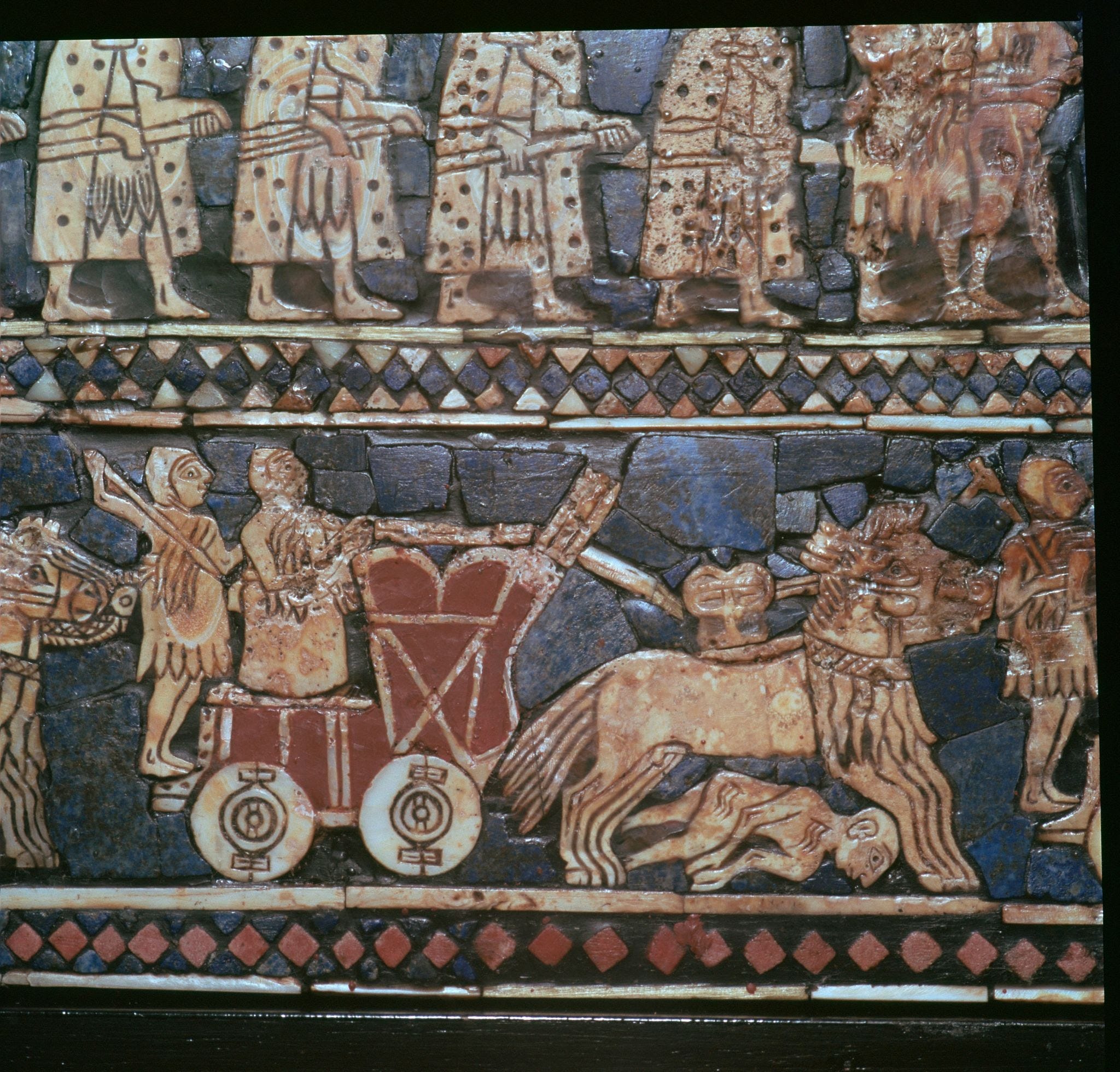
Detail of the Standard of Ur, showing a Sumerian War-Chariot, southern Iraq, about 2600-2400 BC.
4. Societal Metrics of the ED Period
5. The “Apkallu” Role in the ED
During this 600-year stretch, the role of the Abgal (Sages) became “Institutionalized.”
Every King now claimed to have “Ancient Wisdom” passed down from the Sages to justify his wars.
The Me: The “Divine Powers” were now stored in the temples of cities like Nippur. To rule Sumer, a King had to travel to Nippur to seek the “Enlil-ship”—the religious stamp of approval.
6. The End of the Era (2334 BCE)
The ED Period ended abruptly when Sargon of Akkad (a Semitic-speaking official from the court of Kish) overthrew his king and conquered all of Sumer.
He tore down the walls of the cities (including the walls Gilgamesh built).
He replaced the independent “City-State” model with the world’s first Empire.
The “Black-Headed People” didn’t disappear, but their era of independent city-kings was over. The Akkadian Period began, blending Sumerian “Knowledge” with a new, centralized imperial power.