Fertile Crescent and Mediterranean Cultures - Chapter 8
The text explores the political and theological frameworks of ancient Egypt and Sumeria during the third millennium BCE. Egypt’s Old Kingdom (c. 2686–2181 BCE) consolidated from regional chiefdoms into a centralized divine monarchy, marked by monumental stone architecture like the step and true pyramids, an organized state cult centered on the sun god Re, and a highly structured bureaucracy managed by the Vizier. Internal collapse eventually occurred due to a severe mega-drought and a weakened central authority following the lengthy reign of Pepi II. In contrast, Sumeria developed a decentralized, city-state system governed by a technical theology. The Anunnaki acted as a top-down divine board of directors—led by An, Enlil, and Enki—and cosmic concepts were represented by physical, transferable blueprints called the Me. To the Sumerians, these deities were the literal, active owners of their cities, inextricably linking human labor and survival directly to divine behavior and environmental mechanics.
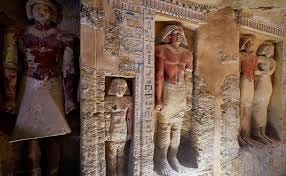
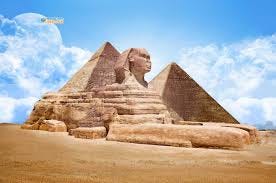
2686 - 2181 BCE: The Egyptian Old Kingdom
The Old Kingdom (c. 2686–2181 BCE) represents the “Age of the Pyramids.” This is the era when Egypt transformed from the regional “Thinite” chiefdoms into a massive, centralized divine monarchy. It is the golden age of stone architecture, the standardization of the solar religion, and the peak of the Pharaoh’s absolute power.
1. The Dynastic Architecture of Power
The Old Kingdom is divided primarily into four dynasties (3rd through 6th). Each represents a step toward larger and then more decorated monuments.
3rd Dynasty (c. 2686–2613 BCE): The transition. Djoser and his architect Imhotep built the Step Pyramid at Saqqara, the first large-scale stone building in the world.
4th Dynasty (c. 2613–2494 BCE): The peak of engineering. Sneferu (the greatest builder) perfected the “True Pyramid” shape at Dahshur. His son Khufu built the Great Pyramid at Giza.
5th Dynasty (c. 2494–2345 BCE): The shift to the Sun God Re. Pyramids became smaller and less precise, but “Sun Temples” became the dominant religious buildings.
6th Dynasty (c. 2345–2181 BCE): The decline. Power began to leak away from the Pharaoh and into the hands of provincial governors (Nomarchs).
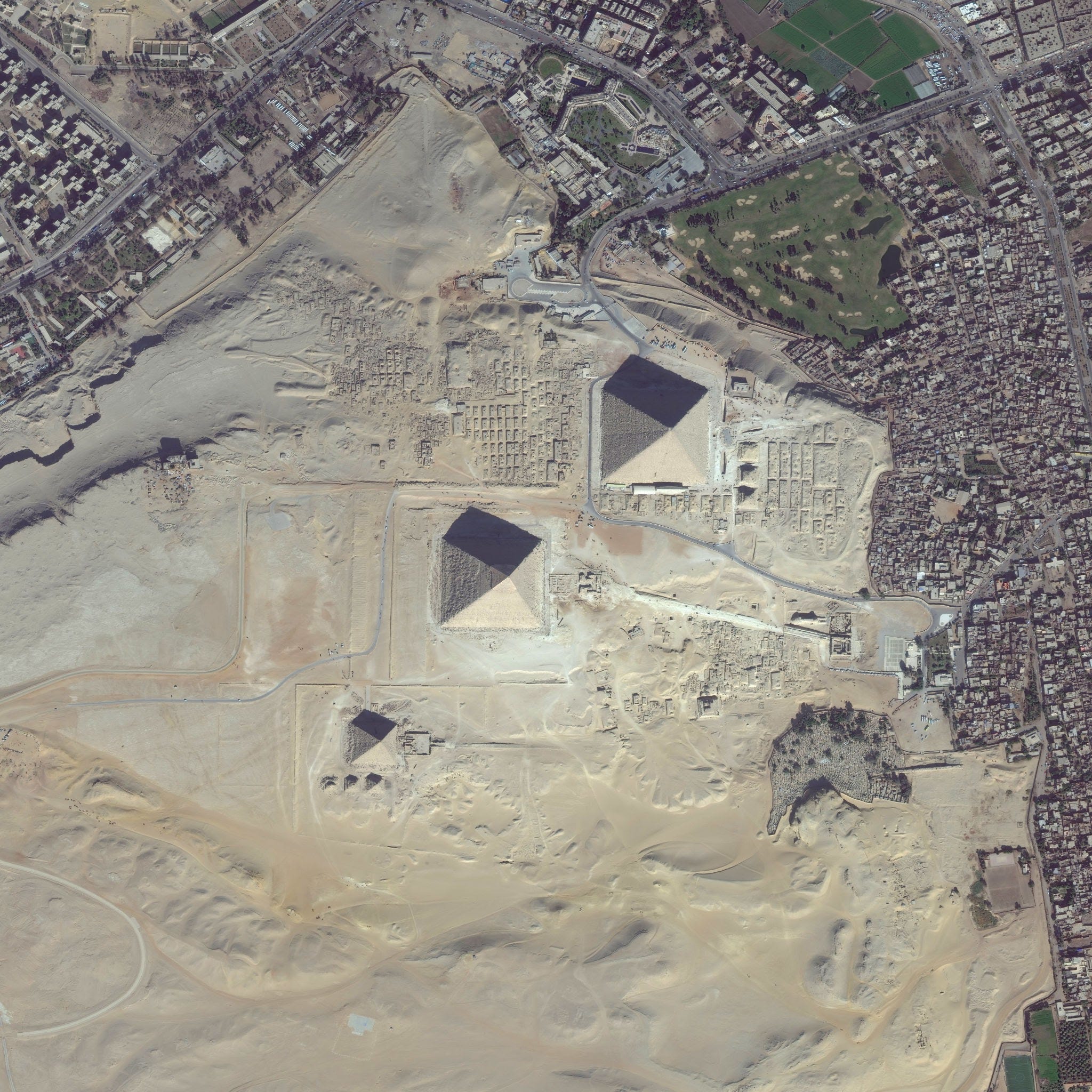
THE GREAT PYRAMIDS OF GIZA - JANUARY 3, 2017: DigitalGlobe overview satellite imagery of the Giza Pyramid Complex on the outskirts of Cairo, Egypt.
2. The “Divine Bureaucracy”
Unlike the Sumerian city-states (Kish, Uruk) which were often at war with each other, Old Kingdom Egypt was a single, unified machine.
The Vizier: The “Prime Minister” who managed the treasury, the Nile’s irrigation, and the labor force.
The Census: Every two years, the “Following of Horus” (the King’s tax tour) counted the cattle and grain across the nation.
Labor, not Slaves: The pyramids were built by a professional workforce of farmers during the Nile’s flood season (Aket), paid in bread, beer, and tax breaks.
3. Religion: The Solar Ascent
By 2600 BCE, the “Fish Myth” and local animal cults were overshadowed by the State Cult of Re.
The Pyramid as a Machine: The pyramid was not just a tomb; it was a “Resurrection Machine.” Its shape represented the Benben (the first mound of earth) and the rays of the sun, allowing the King’s soul to “ascend” to the stars.
The Pyramid Texts: In the 5th Dynasty (King Unas), the interior walls were covered in the world’s oldest religious spells. These texts describe the King joining the “Imperishable Stars” and hunting the gods to gain their power.
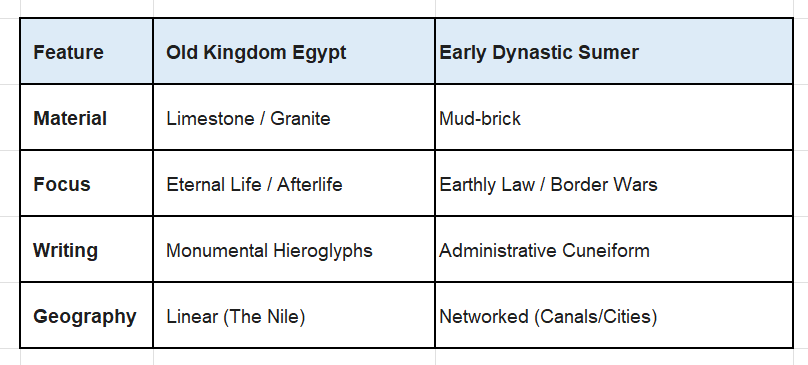
4. Comparison: Old Kingdom Egypt vs. ED III Sumer
While they lived at the same time (c. 2500 BCE), their “Human Knowledge” took different paths:
5. The Collapse (c. 2181 BCE)
The Old Kingdom did not fall to an invader like Sargon. It collapsed from within due to two factors:
Climate Change: A massive “Mega-Drought” led to low Nile floods, causing widespread famine.
Long Reign: Pepi II ruled for roughly 90 years. By the time he died, the central government was frail, and the local Nomarchs simply stopped sending tax grain to the capital at Memphis.
6. The “Vestiges” of 2181 BCE
Archaeologists find a sudden “darkness” in the soil layers at the end of the 6th Dynasty.
The Autobiography of Harkhuf: A governor who traveled deep into Africa to bring back a “dancing dwarf” for the young King Pepi II. It shows the reach of Egyptian trade was still vast, but the central authority was becoming obsessed with luxury over survival.
The First Intermediate Period: After 2181 BCE, Egypt fractured into warring provinces, similar to the Sumerian city-state model, until it was reunified 150 years later.
2500–2000 BCE In Sumeria
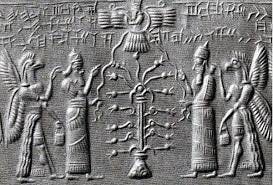
By 2500–2000 BCE, the Sumerian religious system had matured into a “Divine Super-Structure.” This was the era of the Anunnaki (Sumerian: A-nun-na), a term meaning “those of royal blood” or “the offspring of An.”
While thousands of local spirits existed, the “Great Gods” formed a supreme council that mirrored the human political assembly of the city-states.
1. The Triad of Command
The universe was governed by a top-down hierarchy. If the Sumerian city was a corporation, these were the board of directors.
An (Anu): The Chairman.
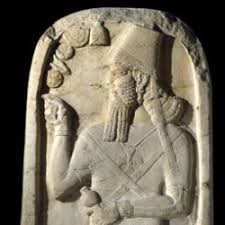
Domain: The high heavens.
Role: The source of all authority. He was the “Father of the Gods.” While he was the highest, he was also the most distant (an “idle god”). He rarely interfered in human affairs directly, delegating power to his son, Enlil.
City: Uruk (The White Temple).
Enlil: The Executive Officer.
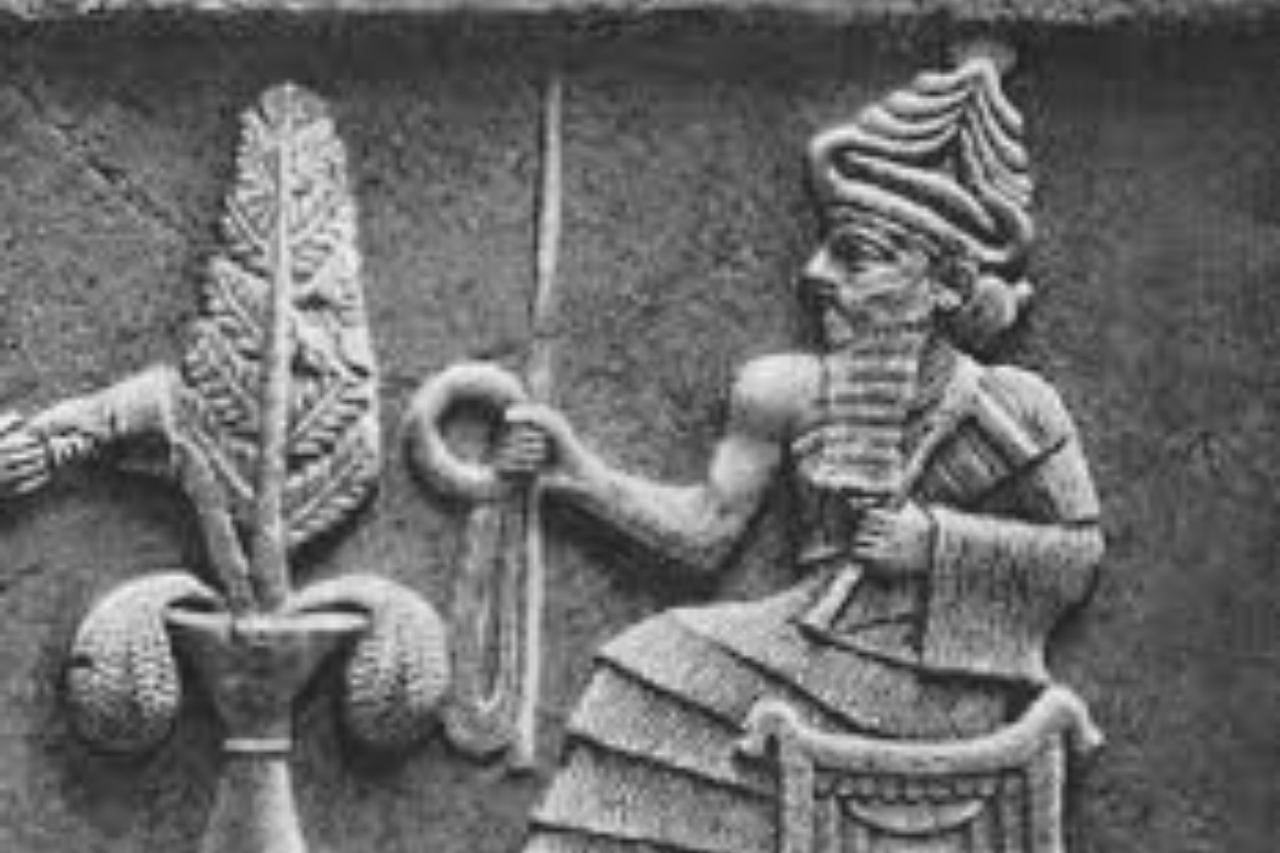
Domain: The atmosphere and the surface of the earth.
Role: The most powerful active god. He held the Tablet of Destinies, which gave him the power to determine the fate of nations. He was often portrayed as “The Raging Storm”—unpredictable and capable of bringing both life-giving rain and destructive floods.
City: Nippur (The Ekur temple). Because Enlil lived here, Nippur was the most holy city in the world.
Enki (Ea): The Chief Engineer.
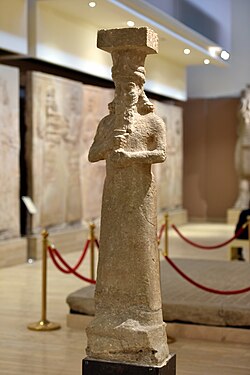
Domain: The Abzu (freshwater abyss).
Role: The god of wisdom, crafts, and “The Me” (the divine blueprints). Unlike the distant Anu or the harsh Enlil, Enki was the protector of humanity. He is the one who warned Utnapishtim (Ziusudra) about the Flood. He represents the “Knowledge” side of the Fish-Myth.
City: Eridu.
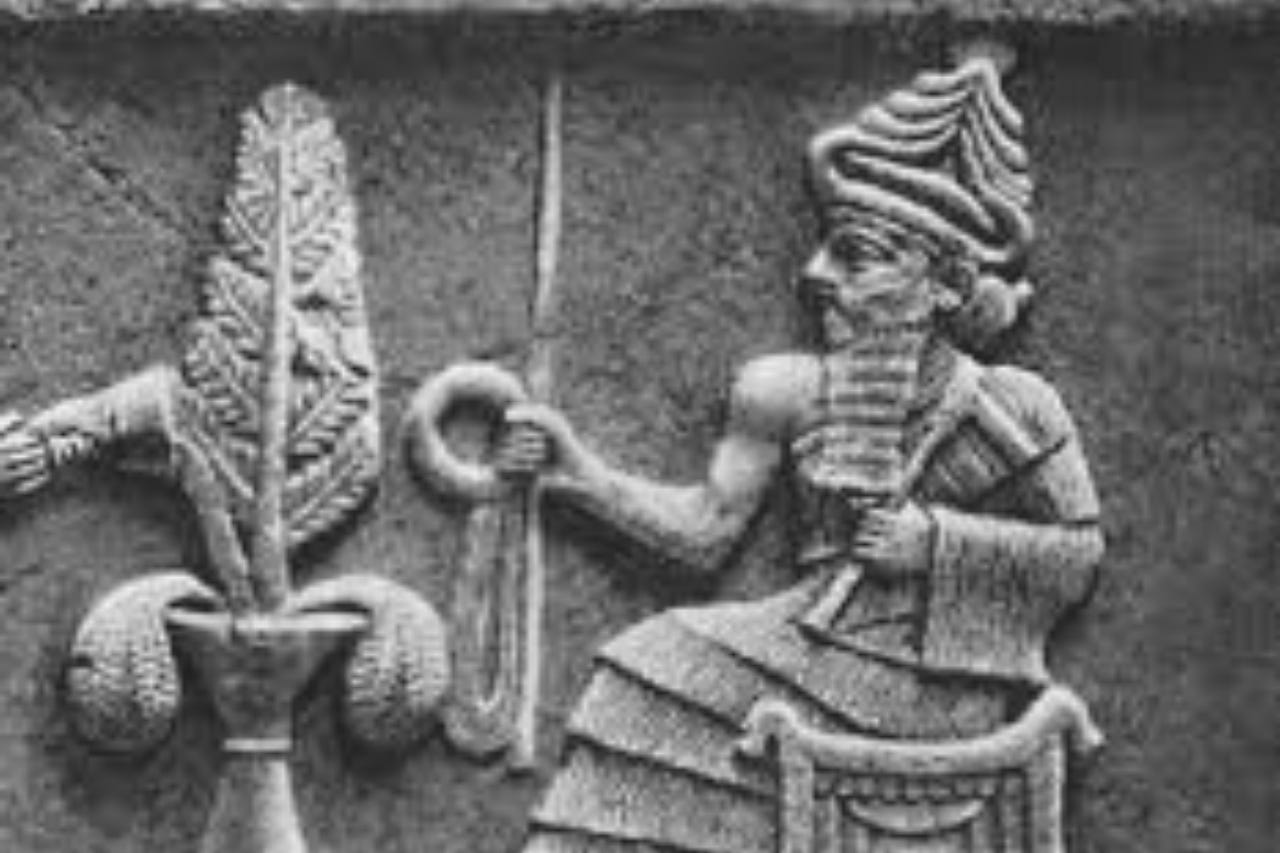
2. The Great Mother: Ninhursag
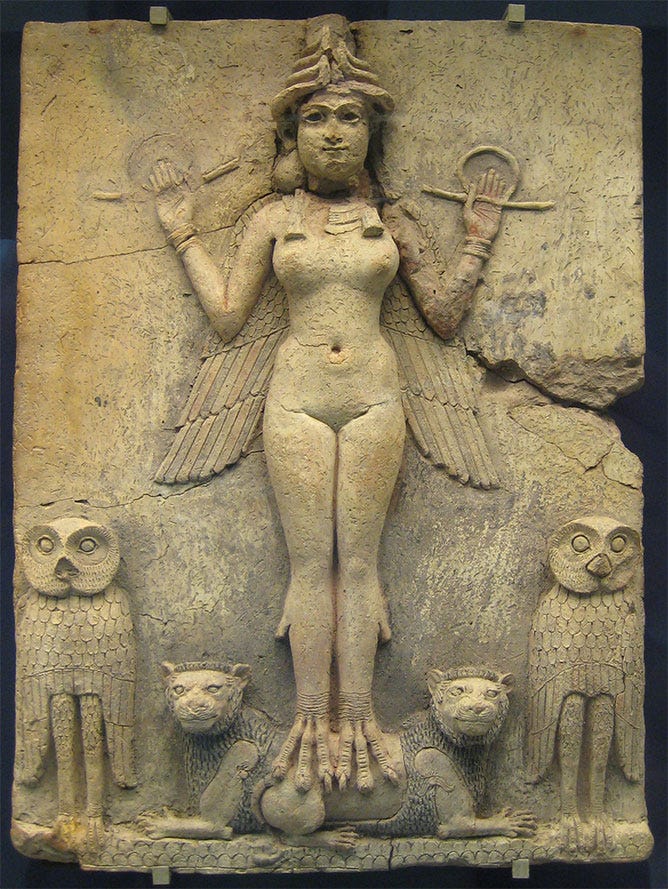
Domain: The “Stony Ground” or the foothills.
Role: The Mother Goddess and the “Womb” of the Earth. She is credited with creating the first humans out of clay and the blood of a sacrificed god.
The DNA Link: She was often called the “Midwife of the Gods.” In later periods, her role was slowly absorbed by Inanna/Ishtar, but in 2500 BCE, she was a standalone power equal to the male triad.
3. The Second Generation: The Astral Powers
By 2100 BCE (the Ur III period), the focus shifted toward the celestial bodies that regulated the calendar and the law.
Nanna (Sin): The Moon God. He was the son of Enlil and the patron of Ur. Because the Sumerians used a lunar calendar, he was the “Lord of Time.”
Utu (Shamash): The Sun God. The god of Justice. Like the sun that sees everything, Utu was the judge who saw all crimes. He is the one who gave the laws to the kings of Sippar and Larsa.
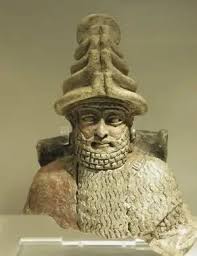
Inanna (Ishtar): The Goddess of War and Sexual Love. The most complex figure in the pantheon. She represented the “In-between”—the planet Venus (Morning and Evening star), the transition from life to death, and the chaos of the battlefield.
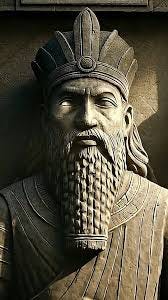
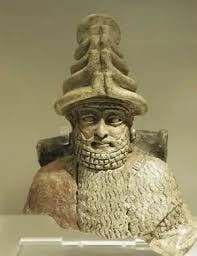
4. The “Superior Pantheon” Mechanics: The Me
The Sumerians didn’t just believe in “magic”; they believed in a Technical Theology.
The Me: These were physical objects (like data disks) that contained the essence of a concept. There was a “Me” for “Kingship,” a “Me” for “Prostitution,” a “Me” for “Victory,” and even a “Me” for “The Shepherd’s Staff.”
The Theft of the Me: In a famous myth, Inanna gets Enki drunk and steals the “Me” from Eridu to take them to her city, Uruk. This is a mythological explanation for why the “Center of Knowledge” shifted from the oldest city (Eridu) to the rising metropolis (Uruk).
5. Summary: 2500–2000 BCE Pantheon Roles
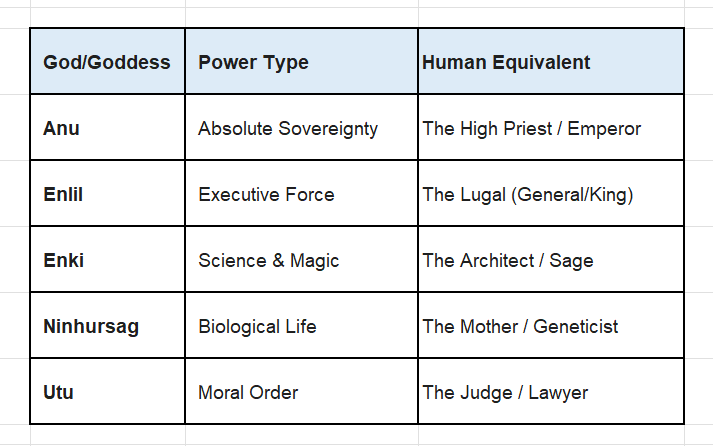
The “Black-Headed” Perspective
To the Sumerians, this wasn’t “religion”—it was Reality. The Gods were the literal owners of the cities. When a city-state went to war, it wasn’t just men fighting; it was Ningirsu (Lagash) fighting Shara (Umma).
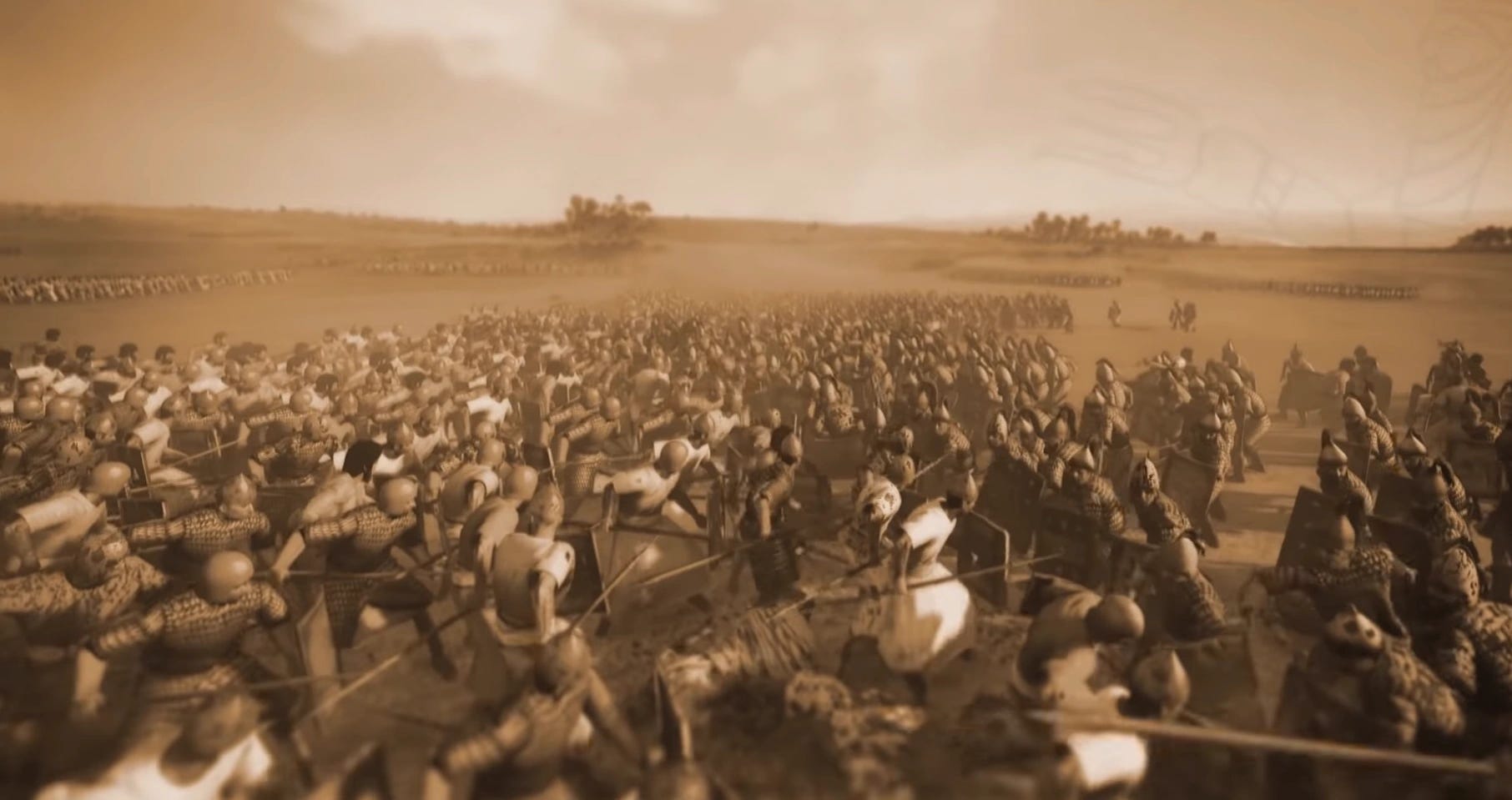
The Anunnaki were the “Super-Citizens” who managed the climate, the rivers, and the fate of the people. If the people stopped working the canals, the gods would starve; if the gods were angry, the rivers would dry up.
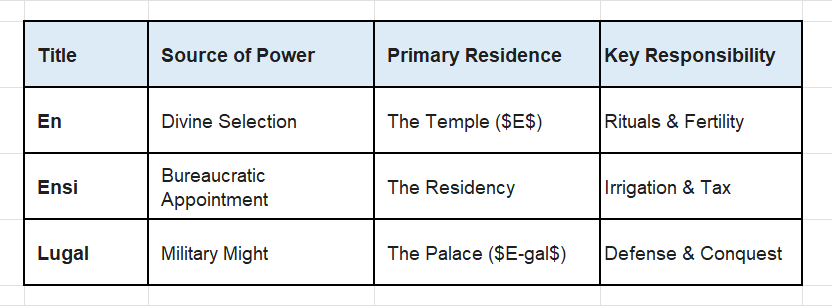
The Rulers: En, Ensi, Lugal
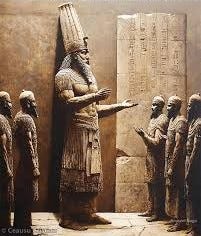
The transition from 2900 to 2000 BCE is defined by the evolution of these three titles. They represent the shift of the “Black-Headed People” from a religious collective into a militarized imperial state.
Think of it as the move from the Priest, to the Governor, to the King.
1. The EN (The Spiritual Anchor)
In the earliest “Uruk” phase (3100–2900 BCE), the En was the supreme authority.
Role: The High Priest or Priestess.
The Marriage: The En was the “Spouse” of the city’s patron deity. For example, the En of Uruk was the human husband of the goddess Inanna.
The Function: They managed the Abzu (waters) and the temple households. Their power was “charismatic” and ritualistic. They didn’t lead armies; they ensured the gods remained happy so the crops would grow.
Vestige: The “Priest-King” figures on cylinder seals, shown feeding sheep or presiding over rituals.
2. The ENSI (The City Manager)
As cities grew and the “Network State” became more complex, the title Ensi emerged.
Role: Originally the “Lord of the Plow” or “Arable Land Manager.”
The Function: The Ensi was a Governor. They managed the city’s specific resources—canals, grain storage, and local justice.
The Relationship: An Ensi usually acknowledged a higher power. During the Ur III empire (2100 BCE), the Ensi was a provincial governor appointed by the central King.
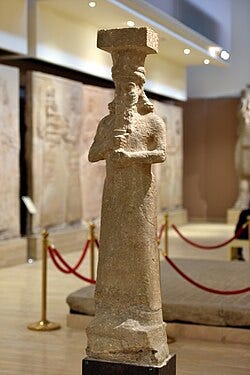
Famous Ensi: Gudea of Lagash, who focused on rebuilding temples rather than conquest. He is always depicted sitting peacefully, holding a plan for a temple.
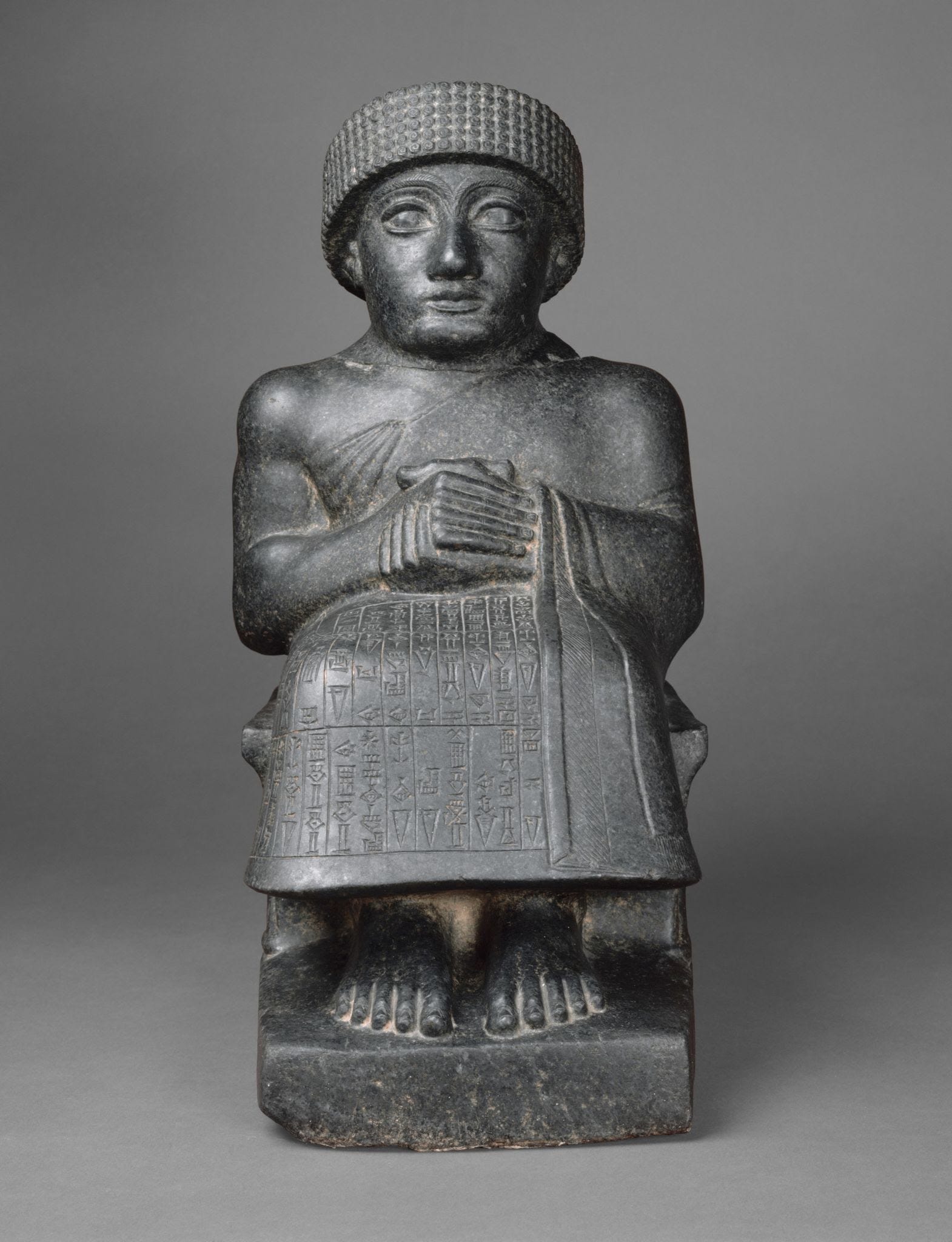
Statue of Gudea, Neo-Sumerian, ca 2090 BC, Mesopotamia, probably from Girsu (modern Tello), Neo-Sumerian, Diorite, 17 3/8 x 8 1/2 x 11 5/8 in (44 x 215 x 295 cm)
3. The LUGAL (The “Big Man”)
The title Lugal represents the birth of true political and military sovereignty.
Etymology: $Lu$ (Man) + $Gal$ (Big/Great).
The Function: The Lugal was a General. This title rose to prominence during the Early Dynastic II (c. 2700 BCE) when cities began fighting over water and land (like the Umma-Lagash war).
The mandate: Unlike the En, the Lugal’s power came from the Assembly of Elders and his success on the battlefield.
The Change: Eventually, the Lugal became superior to the En. The King moved out of the Temple and built a separate Palace ($E-gal$, or “Big House”).
The Evolution of Power (2900–2000 BCE)
4. The Synthesis: The “Divine King”
By 2100 BCE (the time of Shulgi of Ur), the titles merged into a new concept. The Kings of the Ur III Dynasty began to add the Dingir (star) symbol before their names, claiming they were both Lugal (Warriors) and Gods on earth.
They claimed to be the “sons” of Ninsun and the “brothers” of Gilgamesh. This was the ultimate “Human Knowledge” hack: by becoming gods, they made rebellion against the state a sin against the universe.
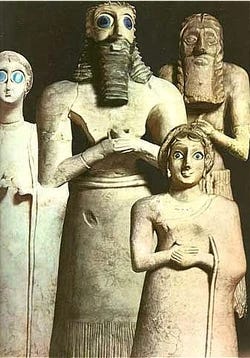
The Anunnaki Connection
The Anunnaki council was the “Lugal-ship” of the universe. Just as a Lugal ruled the “Black-Headed People,” Enlil was the Lugal of the Gods. This mirroring of Earth and Heaven made the social hierarchy feel natural and unbreakable for over a thousand years.
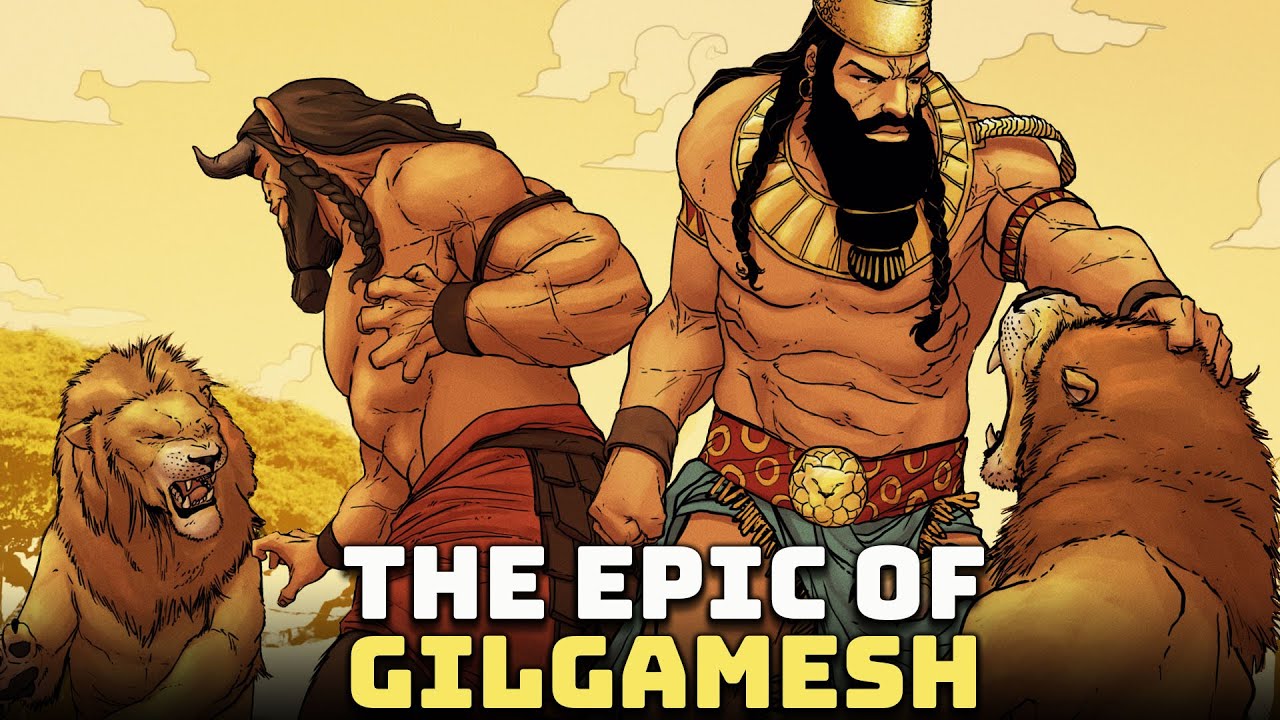
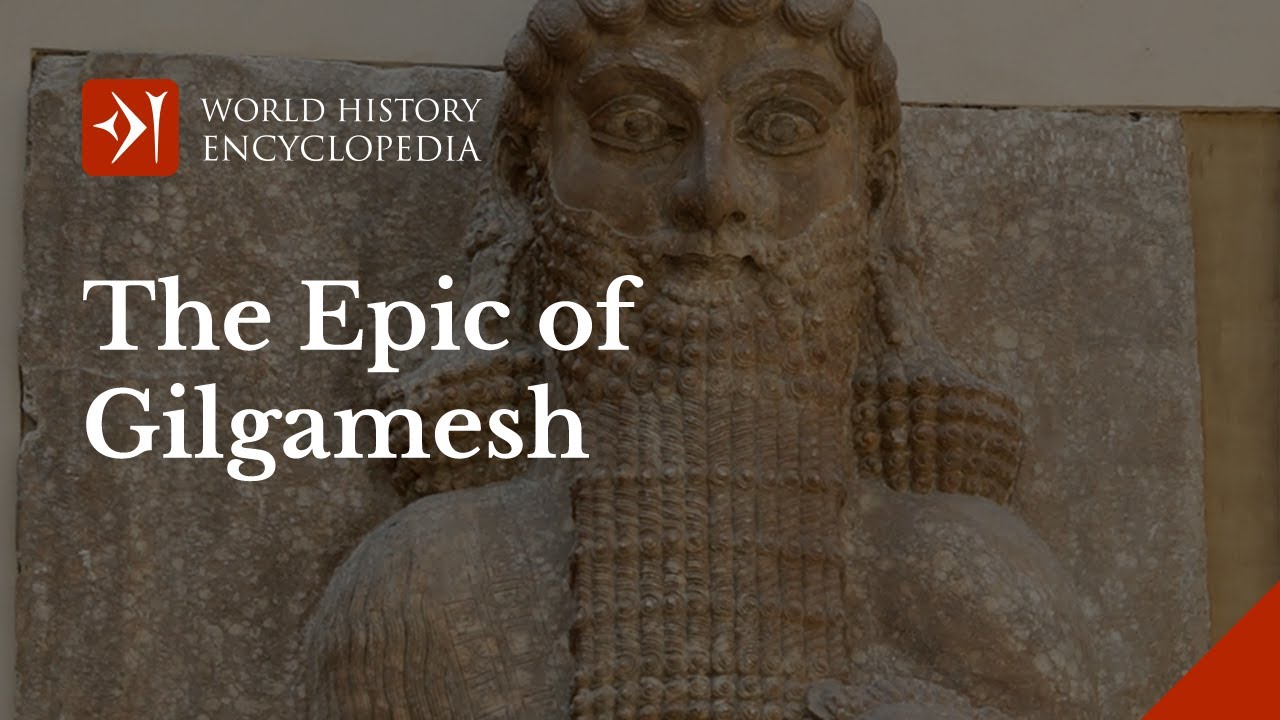
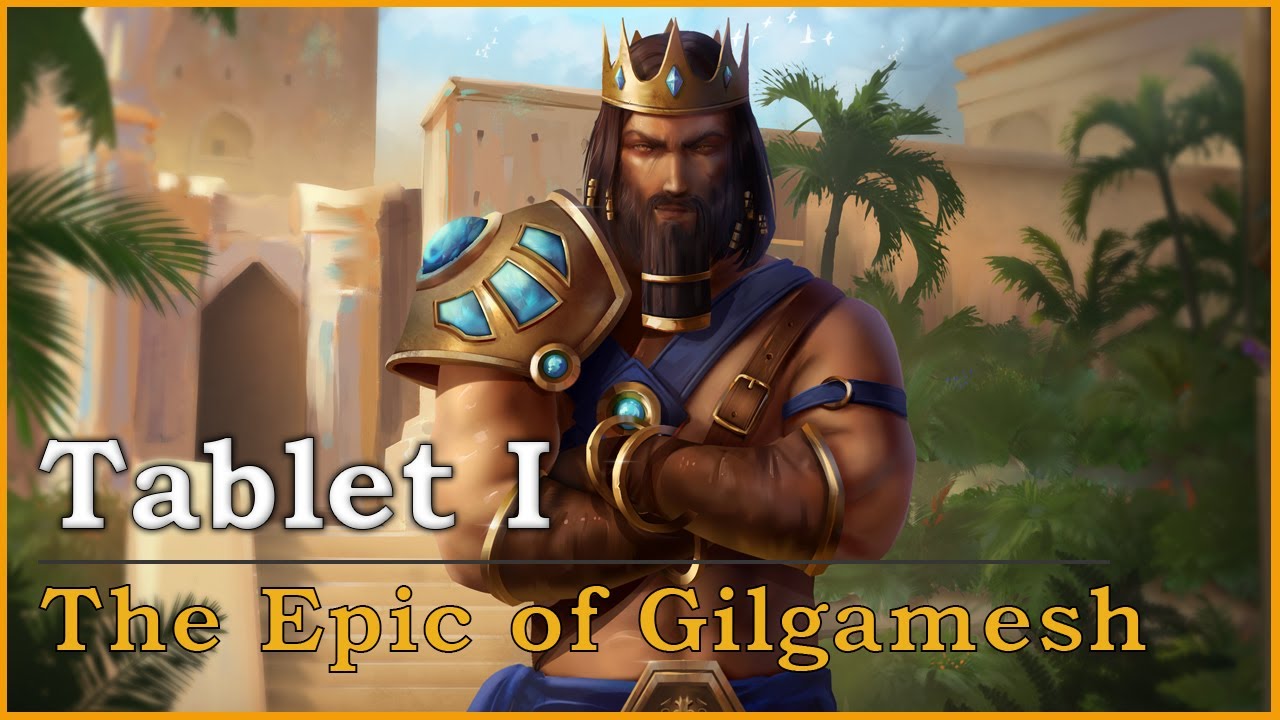
The Epic of Gilgamesh is the world’s oldest known work of epic literature, dating back to approximately 2100 BCE in ancient Mesopotamia. The poem follows the transformation of Gilgamesh, the semi-mythic King of Uruk, from a cruel tyrant into a hero humbled by the reality of mortality.
Plot Summary
The story is traditionally preserved on 12 clay tablets written in cuneiform script:
The Friendship with Enkidu: To curb Gilgamesh’s arrogance, the gods create Enkidu, a wild man. After a fierce battle that ends in a draw, the two become inseparable best friends.
Heroic Deeds: Together, they travel to the Cedar Forest to defeat the monster Humbaba and later slay the Bull of Heaven, sent by the goddess Ishtar after Gilgamesh rejects her advances.
The Death of Enkidu: As punishment for their defiance, the gods decree that Enkidu must die. Devastated by grief and terrified of his own death, Gilgamesh embarks on a quest to the ends of the earth.
The Search for Immortality: Gilgamesh seeks out Utnapishtim, a mortal granted eternal life by the gods for surviving a Great Flood.
Acceptance: Gilgamesh fails the tests for immortality and loses a youth-restoring plant to a serpent. He returns to Uruk and realizes that while he cannot live forever, his legacy—the massive walls of his city—will endure.
Historical & Literary Significance
The “First” Story: It is the prototype for the “Hero’s Journey,” predating and influencing Homer’s Iliad and Odyssey.
Biblical Parallels: Tablet XI contains a flood narrative strikingly similar to the story of Noah in Genesis, including the building of a boat, the preservation of animals, and the releasing of birds to find land.
Universal Themes: The epic remains relevant today because it tackles fundamental human questions about the meaning of life, the nature of friendship, and the inevitability of death.
1. What is the Epic of Gilgamesh? - The Epic of Gilgamesh is an ancient Mesopotamian poem that tells the story of Gilgamesh, the king of Uruk.
2. When was the Epic of Gilgamesh written? - The Epic of Gilgamesh is believed to have been written around 2100 BCE.
3. Who is Gilgamesh? - Gilgamesh is the main protagonist of the epic. He is the king of Uruk, known for his great strength and arrogance.
4. What is the central theme of the Epic of Gilgamesh? - The central theme of the epic revolves around the quest for immortality and the search for meaning in life.
5. Who is Enkidu? - Enkidu is a wild man who becomes Gilgamesh’s companion and friend. He is created by the gods to be Gilgamesh’s equal.
6. What is the purpose of Enkidu’s creation? - Enkidu is created to challenge Gilgamesh’s power and arrogance, ultimately leading to his transformation and growth.
7. What is the significance of the Cedar Forest in the Epic of Gilgamesh? - The Cedar Forest represents the realm of the gods and serves as the setting for Gilgamesh’s battle with the guardian of the forest.
8. Who is Ishtar? - Ishtar is the goddess of love and war. She is infatuated with Gilgamesh and proposes marriage to him, but he rejects her.
9. What is the role of dreams in the Epic of Gilgamesh? - Dreams play a significant role in the epic, as they often foreshadow events and provide guidance to the characters.
10. Why does Gilgamesh embark on a journey to seek immortality? - Gilgamesh embarks on a journey to seek immortality after the death of Enkidu, hoping to find a way to avoid his own mortality.
11. Who is Utnapishtim? - Utnapishtim is a character in the epic who was granted immortality by the gods. He survived a great flood and became the Mesopotamian equivalent of Noah.
12. How does Gilgamesh find Utnapishtim? - Gilgamesh finds Utnapishtim by crossing the Waters of Death and encountering various challenges along the way.
13. What is the significance of the serpent in the story of Gilgamesh? - The serpent steals the plant of immortality that Gilgamesh finds, symbolizing the impermanence of life and the futility of seeking eternal life.
14. Does Gilgamesh achieve immortality? - No, Gilgamesh does not achieve immortality. He learns to accept his mortality and the inevitability of death.
15. What is the moral lesson of the Epic of Gilgamesh? - The moral lesson of the epic is the importance of accepting one’s mortality and finding meaning and purpose in the finite nature of life.
16. How does the Epic of Gilgamesh reflect Mesopotamian culture? - The epic reflects Mesopotamian culture through its portrayal of gods, legends, and societal values of the time.
17. What are some common motifs found in the Epic of Gilgamesh? - Some common motifs include the hero’s journey, the quest for immortality, the power of friendship, and the inevitability of death.
18. How has the Epic of Gilgamesh influenced literature and storytelling? - The Epic of Gilgamesh is considered one of the earliest surviving works of literature and has influenced countless stories and epics throughout history.
19. What is the significance of the flood story in the Epic of Gilgamesh? - The flood story in the epic shares similarities with the biblical story of Noah’s Ark, highlighting the universal theme of destruction and rebirth.
20. How does the character of Gilgamesh evolve throughout the epic? - Gilgamesh evolves from a tyrannical and arrogant king to a more humble and reflective ruler who understands the importance of mortality.
21. What is the role of the gods in the Epic of Gilgamesh? - The gods in the epic play a significant role in shaping the events and challenging the characters, often serving as moral guides.
22. How does the Epic of Gilgamesh explore the concept of friendship? - The epic explores the transformative power of friendship through the bond between Gilgamesh and Enkidu, demonstrating the importance of companionship and loyalty.
23. What is the significance of the underworld in the Epic of Gilgamesh? - The underworld represents the realm of the dead and serves as a source of knowledge and wisdom for Gilgamesh.
24. How does the Epic of Gilgamesh portray the relationship between humans and nature? - The epic portrays a deep connection between humans and nature, emphasizing the harmony and balance that should exist between the two.
25. How does the Epic of Gilgamesh address the concept of heroism? - The epic challenges traditional notions of heroism, showing that heroes are not invincible and must confront their own mortality.
26. What are the major conflicts in the Epic of Gilgamesh? - The major conflicts include Gilgamesh’s struggle with his own mortality, his battle with the guardian of the Cedar Forest, and his quest for immortality.
27. How does the Epic of Gilgamesh explore the concept of power and kingship? - The epic explores the responsibilities and limitations of power, highlighting the importance of wise and just leadership.
28. What role does fate play in the Epic of Gilgamesh? - Fate is portrayed as an inevitable force that cannot be escaped, shaping the destinies of the characters.
29. How does the Epic of Gilgamesh address the concept of justice? - The epic raises questions about justice and the consequences of one’s actions, particularly through Gilgamesh’s encounters with various characters.
30. What is the role of storytelling in the Epic of Gilgamesh? - Storytelling serves as a means of preserving history, passing down wisdom, and providing entertainment in the epic.
31. How does the Epic of Gilgamesh explore the concept of civilization? - The epic explores the dichotomy between the wildness of Enkidu and the civilization of Uruk, highlighting the benefits and drawbacks of both.
32. What is the significance of the Bull of Heaven in the Epic of Gilgamesh? - The Bull of Heaven represents divine punishment and serves as an obstacle for Gilgamesh and Enkidu to overcome.
33. How does the Epic of Gilgamesh challenge gender roles? - The epic challenges traditional gender roles by portraying strong and independent female characters, such as Ishtar and Siduri.
34. How does the Epic of Gilgamesh address the concept of legacy? - The epic raises questions about the legacy one leaves behind and the impact of one’s actions on future generations.
35. What is the role of dreams in the Epic of Gilgamesh? - Dreams serve as a means of communication between the gods and humans, providing guidance and foretelling future events.
36. How does the Epic of Gilgamesh explore the concept of grief and mourning? - The epic explores the profound grief experienced by Gilgamesh after the death of Enkidu, highlighting the universal emotions associated with loss.
37. What is the role of wisdom in the Epic of Gilgamesh? - Wisdom is portrayed as a valuable and transformative quality, often gained through experience and reflection.
38. How does the Epic of Gilgamesh address the concept of redemption? - The epic explores the possibility of redemption through Gilgamesh’s journey and transformation, suggesting that personal growth is possible even after making mistakes.
39. What is the significance of the city of Uruk in the Epic of Gilgamesh? - Uruk represents a symbol of civilization and power, serving as the backdrop for Gilgamesh’s rule and his quest for immortality.
40. How does the Epic of Gilgamesh address the concept of love? - The epic explores various forms of love, including romantic love, friendship, and the love between gods and mortals.
41. What are some notable translations of the Epic of Gilgamesh? - Notable translations include those by Andrew George, N.K. Sandars, and Maureen Gallery Kovacs.
42. How does the Epic of Gilgamesh address the concept of identity? - The epic explores the search for personal identity and self-discovery, as Gilgamesh grapples with his own mortality and his role as a king.
43. What is the significance of the Shamhat character in the Epic of Gilgamesh? - Shamhat is a temple prostitute who tames Enkidu and introduces him to civilization, representing the transformative power of human connection.
44. How does the Epic of Gilgamesh address the concept of forgiveness? - The epic raises questions about forgiveness and redemption, particularly in the context of Gilgamesh’s actions and their consequences.
45. What is the role of music in the Epic of Gilgamesh? - Music is portrayed as a means of expressing emotions, celebrating victories, and creating a sense of unity among the characters.
46. How does the Epic of Gilgamesh address the concept of fear? - The epic explores the various fears experienced by the characters, including the fear of death, the fear of the unknown, and the fear of divine punishment.